Learning to Take It: Writing and Criticism

Criticism is a bit of a dirty word, isn’t it? Nobody wants it thrown in their direction. We fear it and worry that we might be its next target. More’s the pity, because criticism is a necessary part of the creative process. Heck, it’s a necessary part of being creative, period.

You learn to grow a thick skin when you’re a writer or artist or filmmaker. Putting your work out there … well, you’re going to get reactions. Some good, some bad, some just plain weird. When I gathered beta readers to read my work in progress, I asked for criticism. Demanded it really, because I need it. Where would we be without second opinions?

But the word has gone through an evolution that’s warped its original meaning. The way I see it, criticism isn’t a bad thing in and of itself. But look at how we use it in everyday conversation: “He criticized my tastes.” “She was critical of the restaurant he picked.” “They learned to ignore criticism of their actions.” It’s always in a bad context, isn’t it?

What criticism actually is is pretty simple: Evaluation of the quality of something. That’s it. Art critics evaluate the quality and merits of an art piece. Literary critics evaluate books. They are judges of whether something is good, based on more or less consistent criteria.

Oh, now there’s a dirty word. Judge. Who wants to be judged?

Well, if you’re writing a book, you’re going to be. People have opinions, and boy howdy are they happy to share them! Which can be a good thing, because otherwise how the blazes am I going to know if my work is any good or not? Or at the very least, if it’s having the effect on readers that I want it to have? And besides, plenty of people have stuff to say that is actually helpful and informative.

But criticism also invites the opportunity to show off one’s own creative side by inventing an endless tirade of elaborate insults that read well on websites and give people something to giggle at. Critics seem to have a knack for channeling their eloquence into spectacular putdowns. Doesn’t really portray the concept of criticism itself as something desirable.

Like I said, you have to grow a thick skin. And you have your own responsibility: Winnow out the kernels of useful feedback from the dross.

There’s positive criticism and there’s negative criticism. There’s evaluation of the failures and triumphs of your work. Listen, consider, and take the steps you need to improve. Criticism isn’t bad. We all need it to get better. Otherwise, we’re just working in isolation, never knowing if what we produce is truly worthwhile. And no writer can afford to be that solitary.  

Enjoy what you’re reading? Subscribe by email for updates on new posts and follow my writing career, musings on fiction and storytelling, and reflections about life in general.

The Greatest Teacher: What’s the Role of Failure in Life?

Do you know the magic word that society loves to hear? The Pied Piper’s song, leading us along without us giving it serious thought.

SUCCESS.

It’s the ultimate carrot on a stick.

SUCCESS.

It’s a wonderful word, so supreme and comfy in its vagueness that we rarely worry that we don’t really know what we mean by it.

SUCCESS. It’s the defining feature of happy people. If you’re not successful, then you must be … a loser!

Kids learn from an early age: Success is good. Failure is bad. Don’t fail. You must succeed at everything you do.

I submit for your consideration an alternative perspective: Failure is good. Failure is necessary. In fact, we should allow ourselves to fail. Failure is a good thing. Well, sort of. Let me explain.

Failure is the greatest teacher, as a very wise person once said. Think back on your life. Do you remember a great triumph? Maybe you finished a project that you were really satisfied with? Or gave an excellent presentation at work, or made a great speech to an audience? How do we get to these triumphs? Well, a couple ways. There’s sheer dumb luck, of course, but Lady Luck is a little fickle and I don’t trust her. She smiles too much.

Then there’s hard work, practice, and trial and error.

Wait a minute … Trial and error? Does that mean … mistakes are a part of succeeding? Well, yes. We learn from our mistakes. When everything is business as usual – let’s be honest – do we really notice? When I’m writing my book draft and all the words come out smoothly, I’m happy. But then the time for the next draft comes around and HOLY SMOKES WHERE DID ALL THESE TYPOS COME FROM? How did I misspell that word? I know the difference between “their” and “there!” And how could I use so many cliches? Shameful.

But I don’t forget the mistakes I made.

When you flunk a test in school, you’ll probably never remember the answers you got right. But you certainly remember the ones you got wrong. Failure educates us. And if we’re smart, we’ll remember our lessons for the next time.

It’s healthy to fail. In fact, it’s inevitable that we will, at some point and in some way, experience setbacks. Might as well learn that lesson ASAP.

Success is nice. We should try to achieve our goals in life. But success is kind of dimwitted. Success can’t really tell you anything you don’t already know. Failure is much more interesting. Failure has plenty to say. It will gladly talk your ear off if you pay attention. Failure is always willing to point out our shortcomings. And I’m very thankful for that, because otherwise I’d go through the rest of my life blissfully ignorant of flaws that could be remedied if I just put myself in a situation where they become obvious. Awkward? Yes. Useful? Very.

We shouldn’t seek to fail. But we should be more open to it. We should allow ourselves to fail. Don’t reject it. Don’t shun it. Learn from it, dust yourself off, and move on.

Think about it. If you want to succeed at something, how many times are you willing to deal with failure before you achieve it?

Enjoy what you’re reading? Subscribe by email for updates on new posts and follow my writing career, musings on fiction and storytelling, and reflections about life in general.
Revision Vs. Obliteration: When to STOP Revising Your Book

Editing is an addictive process for me. I love editing. I love digging into the guts of my story and tinkering with things, fixing typos and grammar, revising dialogue, picking better words to describe action and thought. It’s a huge amount of fun for me. Alas, like most things in life, too much of a good thing can be very bad indeed.

I go through many drafts, and in each draft I find something new that can be improved. And improved again. And again! As soon as I finish, I see something else that needs fixing. Eventually, the quotation marks of irony rear their ugly heads and improve becomes “improve.” Yes, I’m making my story “better” by constantly carving it and nitpicking it until there’s nothing left. I need to remind myself: You must set yourself a stopping point.

But the perfectionist in me screams out: What if you missed something? What if there’s a misspelled word somewhere in there? What if you misplaced a comma? What if there’s an extra space between words? What if, what if, what if!

I’ve gone through my drafts, I’ve had my book edited, and I’m going through my final proofreading. It’s almost done. And I must remind myself that it’s almost done. No last-minute check-ups that turn into another round of revisions. Done is done. Finis. Ready for publication. But am I ready to publish? Is anyone ever truly ready?

What if I missed something? Ah! There it is again! The dreaded “what if!”

In theory, authors could revise their books forever. The process can go on and on until, quite literally, nothing is left. You don’t have a book anymore. You’ve “revised” the living daylights out of it, cutting and cutting, until what made the book great has been destroyed by picky perfectionism.

Maybe that’s part of growing as an author, accepting that you, at any given point in your career, are NOT perfect. That your work is flawed, try as you might, and you must recognize those flaws, learn from them, and apply your lessons to the next project.

But I can’t perfect my craft by obsessing over one work forever. I must set myself a deadline and mark it as DONE, like it or not. Maybe that’s just my quirk. Maybe my fellow authors have struggles that are quite the opposite, or maybe you can relate. Feel free to share in the comments.

Sometimes, You Just Have to Laugh

There’s something special about laughter. A good laugh can not only brighten your day, it gives you the strength to get through it.

Life is a jerk. If Life is a person, it would be tall and bulky, with a bad haircut, an unbearably smug grin, and an annoying laugh. That’s certainly the impression one can get when you receive unexpected bills in the mail or your brand-new car that you just brought home two hours ago and haven’t had a chance to take out for a spin won’t start. Or when you’re cleaning the dishes and your favorite plate slips out of your hands and shatters on the floor. Life sure can be petty, can’t it?

So, what’s the deal with laughing it off? You can’t laugh off everything, right? True, but sometimes a good chuckle is good medicine. It takes the edge off your tension and helps you gather yourself to persevere through a tough time. Laughter can help you overcome difficulty. It’s like a shot of coffee – it gives you the pep you need.

There’s humor in our lives if you know where to look. Often, I find you just need to let go of your ego.

Laughing at ourselves. Now THERE’S something that takes Life off-guard. If Life, with its obnoxious grin, sees you laughing at your own antics and not taking things too seriously, it really takes away Life’s thunder, doesn’t it? And there it stands, dumbfounded that you’re not squashed by the difficulties and the trials, being content and joyful for a change, and Life realizes it really is just a big buffoon with a bad haircut. It sulks away and lets you go about your business.

It’ll come back –irritating little problems always do – but you have laughter on your side. Good humor is like good armor. It helps you weather Life’s next shove.

Laughter’s contagious, too. There aren’t enough good things that are contagious. You start laughing, your friends start laughing, you break down in giggles and hysterics. And for a few moments, problems and worries are pushed aside. There’s just the bond of guffawing over what is no doubt a very silly joke.

Let’s face it: a body can only take so much moping before all that angst builds up and you want to explode. A good cry can work wonders, too. I suspect crying and laughing are secret twins separated at birth. And there is a time for crying, don’t get me wrong. There’s a time for everything. But laughter is a good friend, always there for you in a tight spot. Let’s try not to forget that.

Enjoy what you’re reading? Subscribe by email for updates on new posts and follow my writing career, musings on fiction and storytelling, and reflections about life in general.
Finding the Right Words

Sometimes I wish there was a checklist for writing the perfect story. If I had a step-by-step guide that included everything I needed to put into a book to make it a guaranteed success, it would make life so much easier. All I would have to do is check off each step, and bam, instant bestseller.

Naturally, it’s not that simple. Grammar and spelling are one thing. There are rules for sentence structure that can be looked up easily enough. But what about choosing the right words for the story?

How do I know just the perfect words for a description, or exactly how to phrase a piece of key dialogue? How do I write down something precisely as I want it to be read? I confess, I don’t fully know. I’ve studied creative writing in school and written poems and short stories. I’ve dissected classic literature until I was left with a mess of symbols and metaphors and analogies. As an aspiring author, I’m learning more than ever. But for all that education, writing fiction involves as much instinct and intuition as it does obeying the laws of grammar.

Words have power. I think we can all agree that words can encourage or depress us. There are pieces of writing that really move us, maybe even motivate us to take action. So, I’m like a guy holding a lit match. I have to be careful where I set it. Or maybe I’m more like a guy juggling 50,000 matches who has be verrrrry particular about where each one lands. Words are nothing to be trifled with, but the thing is, a writer really doesn’t know what the damage is until the reviews start coming in. Maybe it’d be useful if my draft spontaneously combusted. Then I’d know if I was doing it right or not.

Finding the right words is a bit of a crapshoot. I’ve only just really developed a feel for what my writing style is, and I’ve gotten beta readers to give me feedback that helps me see my own work more objectively. Even so, sometimes I feel like I’m groping in the dark. How exactly do I convey what I see in my mind’s eye? How do I communicate it? Even harder, what should I leave out to allow readers to fill in the blanks for themselves?

I don’t know if anyone ever gets it right the first time. To paraphrase Ernest Hemingway, the first draft of anything is crap. There’s always another go-around, and another, and another. It’s like a sculptor chipping away at the marble until the proper shape is carved out of the stone. It takes time, thought, and effort to find the right words.

Does that make writing boring and tedious? Not at all! It’s part of the fun for the writer. It’s a game of imagination combined with a jigsaw puzzle. You cook something up out of your own head, look at what ended up on paper, then try to fit the pieces together into something remotely resembling what you originally envisioned. It’s a challenge. I think we writers like challenges. We certainly like tormenting ourselves over finding just that perfect word to use in that one sentence on page 72 that we know only five people on Earth will ever notice.

Will I ever find the right words? The perfect words? Maybe. Maybe not. It’s worth the struggle to try.

Enjoy what you’re reading? Subscribe by email for updates on new posts and follow my writing career, musings on fiction and storytelling, and reflections about life in general.

Heroes: Why Do We Have Them? Why Do We Need Them?

Some stories just stick around forever, don’t they? Wherever you go, there they are. A whole bunch of archetypes filling up the library. Some narratives have that special something we call “universal appeal.” They don’t fade away, they never become dated, they just multiply and assume new incarnations for every generation. There’s a broad appeal in certain stories. It’s an appeal, I think, to basic human desires and emotions. It gives some stories massive, MASSIVE staying power.

Tales of romance are always popular. We all want to love and be loved. On that note, tales of family bonds are warmly received. Coming-of-age stories are told everywhere in some shape or form. Tragedies play with our emotions like a harp. And there are always tales of heroes.

There are some things about human nature that stay constant. One of those is the desire for good to overcome evil. Enter the hero.

Heroes do cool things. They fight bad guys. They save people. They battle impossible odds and win. They ALWAYS win. Usually. Probably. At least, they win when it counts the most.

“Heroes” are different from “protagonists.” A protagonist is the primary character of a story around whom everything revolves and whose goal is the driving force of the plot. A hero, on the other hand, is a protagonist who fights specifically for good. A hero rights wrongs and fixes things that are broken. They’re helpers and defenders. They combat evil. Good guys.

Typical hero shenanigans
Hercules combats Achelous by juanedc // Louvre Museum // CC 2.0

Good and bad. Basic concepts. Powerful concepts. Provocative concepts. Maybe we like to skew around with them. Nothing is as straightforward as good or bad. There are shades of grey. Maybe, but steal a candy bar from a child and then explain to them that there isn’t just good and bad. No? The kid just needs to grow up and appreciate the nuances of life? Alright, get overcharged for a restaurant bill and forced to pay it, then come back and talk to me.

But seriously, heroes embody key values. Everyone has a basic sense of right and wrong, and heroes uphold the right. Virtue, justice, decency, compassion, courage, strength of character.

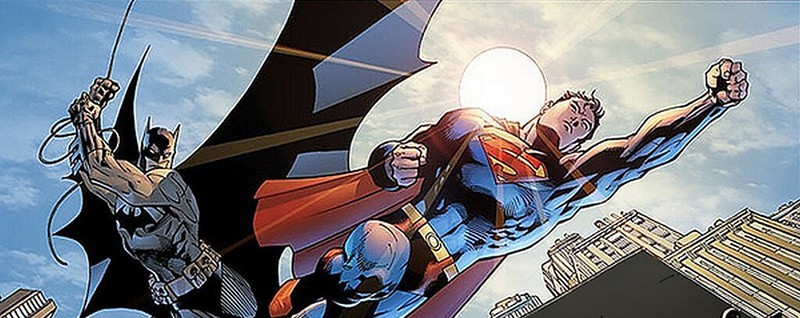
And no, fighting skill and the ability to punch someone in the face isn’t a required trait. Sure, Luke Skywalker is a hero, but so is Mister Rogers. Both show compassion and forgiveness, don’t they? Robin Hood steals from the rich and gives to the poor. Perry Mason works in the courtroom to defend the falsely accused and catch the perpetrator. Two very different people who both fight for justice. Batman catches crooks. So does Sherlock Holmes. Heroes come in all shapes.

I mentioned in an earlier post about the importance of fairy tales and dragon slayers. Heroes play a key role in those sorts of stories, too. Because there are bad things in the world – monsters, cruel people, injustices, and the like – we enjoy witnessing the defeat of those things. Heroes defeat evil. That’s what heroes do. It’s their job description.

And at the end of the day, heroes are fun. We like heroes. We like seeing them win, and wondering how they’ll win. We like seeing the bad guys lose and lose big. We like happy endings. Real life isn’t all rainbows, but stories help us weather the storms of reality. Heroes have been around for thousands of years. I think we can safely say that they are here to stay.

Enjoy what you’re reading? Subscribe by email for updates on new posts and follow my writing career, musings on fiction and storytelling, and reflections about life in general.