Tragic Writing Mistakes I Learned Firsthand

They say failure is the best teacher. If that’s true, then I am a very, very good student. I’ve already made some doozies in my nascent writing career. I’m glad I did.

A God Walks Up to the Bar isn’t the first book I’ve ever written. Way back when I was a wee college lad, I wrote another book. I put a lot of effort into it, and I was proud of it at the time. Looking back …

It’s absolute garbage. I’ll never let it see the light of day. So, what went wrong?

Mistake the first: I starting writing without any sort of pre-planning or outline. OOF.

Now, I know that there are some writers who are able to wing it and don’t rely on outlines and plotting out story beats ahead of time. I’m not one of those people. I need something more than nebulous ideas. Good preparation not only organizes my ideas, but I develop new ones and discover the real plot of my story as I outline.

Having done none of that for my first-ever project, the plot, such as it was, was confused and schizophrenic, and the pacing was a jaw-dropping mess. As a naïve beginner, I just figured all writers knew what they were going to write, as if by some magical gift granted to all authors. That belief has since been thoroughly exorcised from my brain.

Mistake the second: Overambition.

Have you ever started a novel thinking it’s going to be a grand six-hundred page epic that will sell thousands of copies, change the literary landscape, and maybe even get audited for a film adaptation? That was what I believed when I first started writing. Again, this was in regards to a book I had not even bothered preparing for. I wrote and expected, oh, it would just be good. Magically.

I crammed about three novels’ worth of material into one book, I was tracking multiple characters across multiple locations at once, I ended with a big epic battle … and I thought all this was setting up more sequels. Again, I had never written a novel before and I didn’t really know what I was doing. Oh, such hubris! Oh, such an education!

Speaking of sequels …

Mistake the third: I wrote for the sequel, not the current story.

When I wrote my horrific-yet-highly-instructive first novel, I wasn’t writing it as a standalone. I was writing for the sequel, and the installments after that. I didn’t give my current project the attention and respect it deserved.

It’s a presumptive way to write a story, treating it merely as the setup for a larger franchise. It isn’t given time to develop its own identity, because you’re too busy teasing at future events and building up to payoffs that may never happen. Thus, the current story is robbed of its own identity.

So, I learned that every story I write, even if part of a bigger universe, should be able to stand on its own merits regardless.

Mistakes aren’t something to fear. They will happen, so I might as well get used to making them. Ah, well, I got some of the worst of my inexperience out of my system, and I like to think I’ve gotten better. I suppose I’ll find out for sure after I get published, eh?

Enjoy what you’re reading? Subscribe by email for updates on new posts and follow my writing career, musings on fiction and storytelling, and reflections about life in general.
Why Even Bother? Thoughts About Motivation

What motivates me? I want to be a published author, but why even bother in the first place? And why stick to it after I’ve started?

Well, going after big questions today, aren’t I? Before I dive headlong into existentialism, I think I better draw the boundary right here: Why am I motivated to write and publish a book?

For me, the impulse to start a task comes in waves. I’ll begin a writing project and when I first start, I’m just thrilled. Think of all the things I’ll get done! Come two days later, I can’t muster up the effort to finish it. The document languishes in the depths of my computer’s files, neglected and lonely. But then, six months later, I’ll come back to it, because suddenly the urge has hit me again.

Truth be told, coming this far with my current novel is a milestone in my life. I started a project and stuck with it, whether I felt like it or not.

What’s the deal? What does it take to stay motivated?

Motivation. How is that word used in conversation? “Be motivated.” “Got to stay motivated.” “Keep yourself motivated.” We make it sound like a state of mind. Remain in that state and only then will you get things done.

You can accomplish a lot when you’re motivated enough …
Climb Ev’ry Mountain“//jermudgeon//CC BY-SA 2.0.

I don’t know about you, but I flip through about three dozen states of mind every day. Maybe it’s just me, but my emotions tend to jump around constantly. It’s kind of annoying, really. But it doesn’t matter. Seriously motivated people aren’t focused on their emotions, they’re looking at the goal. The climber ascending the mountain and the runner approaching the finish line aren’t driven by their feelings, they’re driven by what’s at the end of the struggle.

I’ve worked on my book when I was angry, when I was discouraged, when I was happy, and when I was convinced I was the hottest new thing in the industry. But it didn’t matter how I felt. The book had to get done. No amount of psyching myself up or putting it aside until I was “in the right mood” was going to produce tangible results. I just had to sit down, shut up, and do the work.

Motivation isn’t a state of mind. It’s actively striving. I didn’t just keep myself motivated; my motivation kept me in action.

I’m almost finished with my book. I’ll be releasing in within the next two months. I want people to read it and enjoy it. That’s my goal. That’s the thing that motivates me to finish it. And I believe that’s worth working towards.

Why bother? Because I choose to. And on that last, suitably dramatic note, I wish you a good day and your own goals to motivate you to do something great.

Enjoy what you’re reading? Subscribe by email for updates on new posts and follow my writing career, musings on fiction and storytelling, and reflections about life in general.

How to Slay a Dragon, Part 2

Daddy?

What is it, kiddo?

I’m afraid to go to sleep. There’s a dragon outside my window.

Don’t be afraid. Be brave.

But dragons are scary! They’re so big and mean!

Then settle down here with me. Let me read you a story …

Do you remember being a kid? Do you remember the joys and the wonders? And the fears?

Kids quickly learn what fear is. Bravery takes a little longer to catch on. Sometimes, we need a helping hand.

Good thing we have fairy tales to teach us. They tell us that no dragon – no monster, obstacle, or problem – is invincible. They inspire us to surmount the impossible.

First, you have the setup: A dragon appears. The people tremble. It gobbles up their herds and destroys their homes. It sets up shop, and who’s going to ask a razor-toothed lizard the size of a semi to move? It may demand tribute – your daughters and sons will do, nicely, for starters. Oh, terrible day! What can they do to free themselves from this beast?

The dragon may have a name – Fafnir, Cetus, Smaug, Yamata no Orochi, Apophis – but just as often it does not. It varies in appearance, but its function is always the same.

Enter the dragon slayer. He, too, has many names, and he, too, is always the same person. He is the courageous one, the honorable one, the compassionate one. He takes pity on the poor villagers and vows to help them. He may be an underdog or he may already be renowned. Whatever the case, he fights the dragon. He slays the dragon. He wins.

Evil is beaten. Good triumphs. The nightmare ends.

These are the stories children read in fairy tales. These are the messages passed down by folklore from generation to generation. Evil doesn’t always have to win. There is a spark of hope in the darkness. The dragon slayer inspires us to realize that we aren’t stuck in the mud for the rest of our lives. Dragons aren’t unbeatable.

We grow up, and the dragons no longer look like giant lizards. They take many shapes and forms. They may be different for each of us depending on our circumstances, but we learn to recognize them. And we know that they can be beaten. Not with sword and spear, mind you. But with courage, perseverance, knowledge, and hope.

Because fairy tales taught us so.

Enjoy what you’re reading? Subscribe by email for updates on new posts and follow my writing career, musings on fiction and storytelling, and reflections about life in general.
How to Slay a Dragon, Part 1

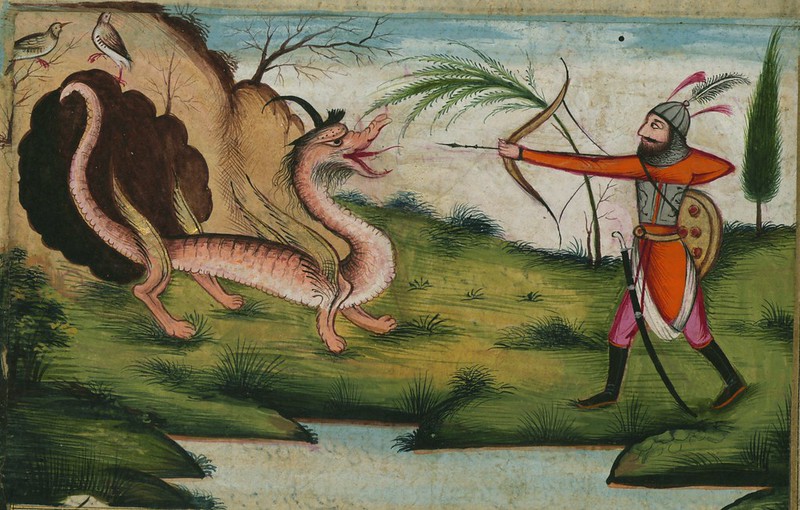
Fairy tales do not give the child his first idea of bogey. What fairy tales give the child is his first clear idea of the possible defeat of bogey. The baby has known the dragon intimately ever since he had an imagination. What the fairy tale provides for him is a St. George to kill the dragon

G. K. Chesterton

Fairy tales are just for kids. That’s what they say, at any rate. Stories of adolescent fluff, beneath the notice of adults. When you grow up, you leave behind the silliness of youth, after all. Bogeymen and monsters and dragons are the stuff of kids’ nightmares, nothing more. Aren’t they?

Ponder this: Parents don’t teach their children that there is a monster under the bed. Where does the idea come from? Do kids instinctually understand that there are bad things in the world? The monster under the bed, the one hiding in the closet, the ghouls and dragons out to get you … Children fear these things. Indeed, children learn very quickly what it means to be afraid.

Every child knows in their heart that monsters are real.

Oh, dragons and bogeymen aren’t real. Those are just trappings. But evil is very much a real thing in this world. The monsters of youth never go away. Adults just learn to recognize them for what they really are.

What does all this grim talk have to do with fairy tales? Think of fairy tales as road maps. Entertainment combined with important facts about life. Stories are tricky things, wrapping up lessons in playful guises.

They teach us that yes, evil things do exist, and yes, they are scary. They give a shape to that indefinable dread all children feel. And then the child is able to give evil its first names: the Big Bad Wolf, the Bogeyman, and of course, the Dragon.

Children’s stories are a primer’s guide to evil. How’s that for a fractured fairy tale? And no, I’m not trying to ruin your childhood. We shouldn’t rip a fairy tale out of a child’s hand because it’s scary. Children already know what scary is. I certainly did growing up. But fairy tales teach children why monsters are scary.

The Big Bad Wolf will trick you and gobble you up! The Dragon is a greedy beast that breathes fire and burns down villages! Be afraid! Fear isn’t weakness, it’s smart to be afraid of things that are dangerous.

But what else is there to do? Are we to spend our whole lives shivering in terror of what lurks outside?

No, that’s not what fairy tales teach us. The Big Bad Wolf is slain by the brave woodsman. A hundred dragon slayers have slain a hundred dragons.

Evil can be defeated. That is the greatest lesson of fairy tales. That is why they endure. They give us hope. Like Mr. Chesterton said, they provide children with the knowledge that monsters can be beaten.

Fairy tales are primers on the dragons of life. They are also primers on how to slay those dragons.

Enjoy what you’re reading? Subscribe by email for updates on new posts and follow my writing career, musings on fiction and storytelling, and reflections about life in general.

Being Patient in Today’s World

We live in the world of “now.” Want a cup of coffee? Stop by Starbucks and get it now. Want to watch a movie? Stream it online now. Want to talk face-to-face with your third cousin twice-removed who lives on the other side of the planet? Schedule a Zoom meeting on your computer right now. This is the age of the instantaneous. Everything can be gotten at the moment you decide you want it.

I’m not knocking on modern conveniences. Technology has improved life across the board. Medicine and communications and transportation have all benefited from technological progress. But progress has its price. We don’t value patience that much, anymore. And I can only really say that because being a writer has made me much more aware of the importance of patience.

Writing a book isn’t a quick and easy task. I have to invest a great deal of time in crafting my story, outlining it, going through multiple drafts, editing and formatting the final product. It’s easy to feel antsy at times and just want to push it to the side because I’ve been working on it for over a year and still don’t have a published product. Will it ever get done? Is it worth it? Should I just move on to something else that yields immediate results?

Patience isn’t something that comes naturally to everyone. Maybe there are people out there who don’t struggle with staying level-headed and calm in all situations. I’m not one of them. I tend to rush through life and need to remind myself to slow down. It isn’t a virtue I’m inclined towards because, quite frankly, being patient is scary.

Hourglass” by John-Morgan is licensed under CC BY 2.0.

After all, to wait for something implies trust in that thing’s value and worthwhileness. Grabbing an egg sandwich from McDonald’s is different from cooking an omelet. One is quick and easy, the other takes time and effort to prepare. And time is precious, isn’t it? It’s the ultimate currency. We only have a fixed amount in the bank. So, what we are willing to wait for determines what we value the most. And when you spend time on something, that’s time you can’t get back.

Writing has taught me patience, bit by bit. The value of taking time to prepare the story and to make sure that I’ve chosen the right words. The time to submit my work to others for evaluation and feedback. Patience leads to quality, too. A rushed product is often a shoddy product. The best things in life take time to make. And patience takes courage. I invest time in writing because I trust it is worthwhile in the end.

One last thought: Patience entails an assurance and certainty that waiting will bear results. It is a form of faith, if you will, because it requires one to trust that a future we cannot yet grasp will yield something positive for us. Otherwise, why wait for it at all?

Enjoy what you’re reading? Subscribe by email for updates on new posts and follow my writing career, musings on fiction and storytelling, and reflections about life in general.

Urban Fantasy is … Where, Exactly?

So, my last couple posts have discussed what urban fantasy is and what it isn’t. Now that your curiosity is piqued, some among you may be wondering: Where can I find works of urban fantasy?

Everywhere, really.

Just to encompass how versatile urban fantasy is as a framework for storytelling, here’s a brief list of films, books, video games and comics that can be defined as urban fantasy.

Percy Jackson & the Olympians

The Tenth Kingdom (the first episode, at least)

Ghostbusters

Gremlins

Kingdom of Landover series (sort of)

Evil Dead

Any Marvel or DC product with magic in it

Any Scooby-Doo movie where the monsters are real

It’s a Wonderful Life

Dog Soldiers

The Secret World

Dracula

Grimm

The Dresden Files

Night at the Museum

The Shaggy Dog

The Shadow Over Innsmouth (most of H.P. Lovecraft’s works, actually)

Alan Wake

The Picture of Dorian Gray

And so many, many more.

Urban fantasy is vast, so expansive in scope that it can serve more as a thematic foundation for different types of stories than a specific genre in and of itself. After all, Dracula and Night at the Museum are very different, but both meet the criteria for urban fantasy. One is horror, and the other is comedy.

Urban fantasy is a genre, but it is also a theme. It is flexible enough to encompass virtually any story you can imagine.

I’ll leave you with a visual representation that I think captures the spirit of urban fantasy very well: https://www.youtube.com/watch?v=MX6vSOAPAF4

Enjoy what you’re reading? Subscribe by email for updates on new posts and follow my writing career, musings on fiction and storytelling, and reflections about life in general.
Urban Fantasy is … When, Exactly?

Last week , I shared my definition of urban fantasy. To reiterate: Urban Fantasy is any work of fiction that features supernatural and magical elements juxtaposed with real life in the modern day.

Now, I have a confession to make: This definition isn’t quite right, either.

But wait, you may ask. Your previous post discussed the issue at length. What else is missing?

Well, this definition is ignoring a very important question:

When exactly is modern day?

Charles Dickens’ A Christmas Carol features a fantastical story of ghosts set in Victorian London. A historical piece, right? From our point of view, maybe, but not from Mr. Dickens’ perspective. He wrote in what HE would recognize as modern day. So, technically, by the definition we’ve arrived at, A Christmas Carol is urban fantasy.

“Modern” is a relative term, isn’t it? The current year as of this writing is 2023. But a hundred years ago, if you asked someone when modern day is, they would reply that it is 1923. And a thousand years from now, the time we currently experience will be ancient history.

It’s all quite relative, isn’t it? But, before you start dreading some sort of lecture on Einsteinian physics, let me reassure you that all I am saying is that phrasing more specific than “modern day” is needed to explain urban fantasy.

Any piece of urban fantasy I or any other author publishes this year won’t be “modern day” in fifty or a hundred years. But while it is not modern, it is contemporary.

Surprise! Urban fantasy isn’t just a genre, it’s a subgenre. It falls under a much larger and broader heading: contemporary fantasy, also known as modern fantasy. It’s exactly what is sounds like. Any fantasy story that takes place in the author’s modern day is contemporary fantasy.

Remember when I said Harry Potter isn’t urban fantasy, but it is fantasy that takes place in modern times? I still hold that urban fantasy as a genre is dependent on the juxtaposition between real life and fantasy, which carries in certain parts of that franchise, but not at all times. But Harry Potter undoubtedly always falls under contemporary fantasy because its story takes place within the time in which it was written (give or take a couple years). Sometimes urban fantasy, but always contemporary fantasy. It’s a mix. Stories do that, because nothing ever falls into simple, cleanly defined categories, do they?

Anyway, let’s revise that definition one last time.

Urban Fantasy: Any contemporary work of fiction that features supernatural and magical elements juxtaposed with real life.

In other words, urban fantasy is fantasy meets real life at the time the author wrote it. Therefore, A Christmas Carol is urban fantasy. So is It’s a Wonderful Life, for that matter.

Genres sure are surprising things, aren’t they?

Enjoy what you’re reading? Subscribe by email for updates on new posts and follow my writing career, musings on fiction and storytelling, and reflections about life in general.

Urban Fantasy is … What, Exactly?

Urban fantasy is a hot genre right now. You see works labeled as such in stores, sold on Amazon, talked about in online forums. But what IS it, anyway? Well, as someone who is writing a book that falls under the urban fantasy genre, I thought maybe I should dedicate some time to explaining my take on things. After all, words are just words until they’re explained, and genre names get bandied about too casually as it is.

You got two words, urban and fantasy. Okay, let’s break that down. “Fantasy” is magic and the supernatural and things that can’t be explained by science. Dragons and wizards and monsters and such. “Urban” is cities and industrialization and modern technology. So, urban fantasy is … fantasy in a city?

Merriam-Webster.com defines urban fantasy as follows: A genre of imaginative fiction featuring supernatural characters or elements in an urban setting.

So, fantasy in a city.

That seems a wee bit limiting, don’t you think?

In my humble opinion, the name is a misnomer. “Urban” is misleading. This is a genre that encompasses far more than just metropolises and towns. What about fantasy stories in a tiny hamlet in midwestern America or rural England? What about a story that takes place on a ship at sea, or in a forest cottage? I propose my own revised definition, because as an aspiring writer who hasn’t even been published yet, I’m TOTALLY qualified to do that, heh, heh.

Urban Fantasy: Any work of imaginative fiction featuring supernatural characters or elements in the modern day.

That’s a good start. It’s broader, but still succinct. But it’s missing something. It’s still not quite right.

There are plenty of fantasy works that take place in modern day that aren’t technically urban fantasy. Take Harry Potter, for example. Sure, the series takes place in the modern era, but its primary setting is so far removed from our mundane existence that it could be mistaken for a straight fantasy. Rarely do the supernatural elements interact with the “real” world. Sometimes, sure, but it’s not the core of the setting. Compare this to, say, The Dresden Files, which features the supernatural interacting with real life on a more consistent basis. In a pure urban fantasy, the magical and mundane collide regularly.

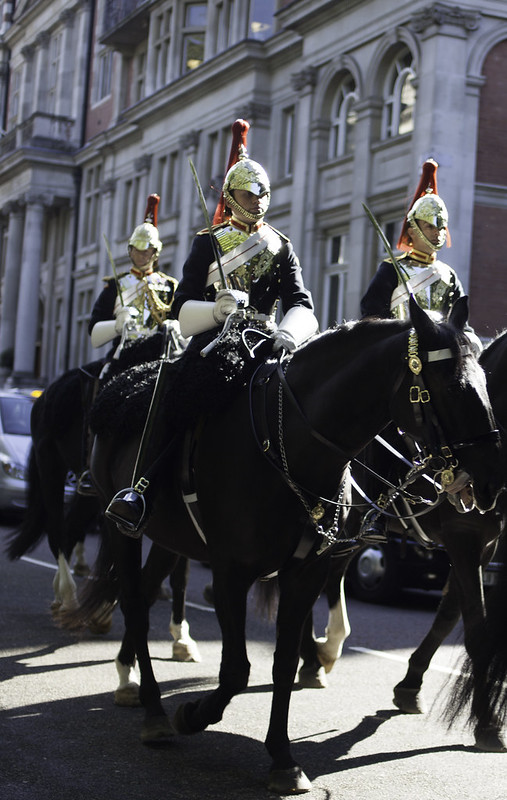
That’s the fun of the genre. Two disparate worlds clashing and coexisting. Goblins and fairies living alongside soccer moms and salarymen. The contrast is the striking and memorable part of urban fantasy. It’s like driving down a busy street and seeing uniformed men on horseback trotting past you.

So, here’s a revised definition. Urban Fantasy: Any work of fiction that features supernatural and magical elements juxtaposed with real life in the modern day.

That sounds a bit better, doesn’t it? We’re getting at the themes of the genre. How does magic exist alongside the real world? Does the fantastical hide itself, or does it live alongside what the readers recognize as normal? How do the two sides interact?

“Urban” fantasy covers a far broader range than its name suggests. My hope is that anyone who decides to pursue this genre, either for consumption or to create their own stories, won’t feel constrained by the label.

Enjoy what you’re reading? Subscribe by email for updates on new posts and follow my writing career, musings on fiction and storytelling, and reflections about life in general.

Cover Art is Here!

The cover art for my upcoming book has arrived! A hearty thanks to Ebook Launch for their great work and professionalism. They were a joy to work with.

A God Walks Up to the Bar, my very first published book, will be available later this year. Stay tuned!

My Characters are Alive and Won’t Listen to What I Tell Them

Me when I start a writing session, ignorant of the defiance I am about to face
Image by mohamed mahmouse hassan licensed under CC0
Me when I start a writing session, cocky and ignorant of the defiance I am about to face …
Image is licensed under CC0

So, I sit down, turn on my computer, pull up my story file, and start writing. All is well. What will I have my characters do today? Dialogue. Action. Characterization. Building a world from words. I’m king of this world. Everyone has to do what I say. Right?

Hang on. Why did Bob say that? I didn’t tell him to say that! Who does Bob think he is? I didn’t write him to be such a jerk!

And why is Tiffany suddenly a lot snarkier than I imagined her? And since when was Arnold so philosophical? I’m writing a thrilling adventure, not an excuse to sit around and contemplate our navels!

It’s happening again. My story is coming alive before my very eyes. And it does not recognize my authority.

It happens to the best of us. We outline our work, we prepare, we research, then we sit down and actually start writing – and it all gets away from us. Scenes don’t play out the way we planned them. Characters put words in our mouths, rather than the other way around. The story shifts and rumbles, it wakes up, and our creation becomes a living thing. IT’S ALIVE!

But how can this be? How can the imaginary have a will of its own?

Don’t look at me. All I know is that I had no idea Hermes liked tequila when I started writing A God Walks Up to the Bar.

They start talking to you, these characters. They start telling you their likes and dislikes, their hopes and fears. And when you acknowledge that they are real people, or as close to real as is possible, you reach an epiphany. Your story is better for it. Like the journalist who sits down for an interview with questions prepared and is sidetracked by the subject’s fascinating anecdotes, the population of your created universe reveals new and tantalizing quirks that flesh it out.

And lo, the author is revealed to not be master of his creations, but a mutt tailing behind their antics
fox writing with a quill pen by 50 Watts is licensed under CC BY 2.0.

Still, it is somewhat bewildering when your story gets away from you. Even when your cast deigns to submit control back to you, you can’t always shake the feeling that you’re just along for the ride. You’re graciously being allowed to witness events as they unfold. A giddy experience, to be sure. I don’t entirely know what to expect when I begin a writing session. But doggone it, these folks need to have some respect! Stop pulling me off-track. We have a story to write! We have deadlines! I can’t be distracted by Alice’s unfolding tragic backstory and face the temptation of adding another 3,000 words! I’m writing genre fiction, not Les Misérables!

And so it goes. The writer lays the foundation, the characters give their input, I tell them what I want them to do, they push back, I push back, and somehow, out of this beautiful mess, a story is born.

I love being a writer.

Enjoy what you’re reading? Subscribe by email for updates on new posts and follow my writing career, musings on fiction and storytelling, and reflections about life in general.