Success Takes Time

What’s something you believe that everyone should know?

Success takes time.

However you measure success – whether through contentment, accomplishing certain tasks, reaching certain milestones, or even just getting through the week – it takes time. Nothing comes instantly, especially nothing worthwhile.

When I say “time,” I don’t mean, “A few minutes” or even “A couple hours.” Days. Weeks. Sometimes, even years.

Cooking a good meal takes time. Reading (or writing!) a book takes time. Building your dream house takes time. Working up to your dream job takes time. Becoming a billionaire takes time. Building an intergalactic empire takes time.

Well, maybe don’t hold high expectations for that last one …

Anyway, if you have a goal and want to achieve it, expect to put in the hours. Nothing comes instantly or for free. Whatever you do, know that you will be putting in the hours and the sweat and maybe a few tears, as well.

***

Many thanks for visiting my blog. I post updates on my writing career, I muse over storytelling and fiction, and I reflect on the curious and wonderful things in life.
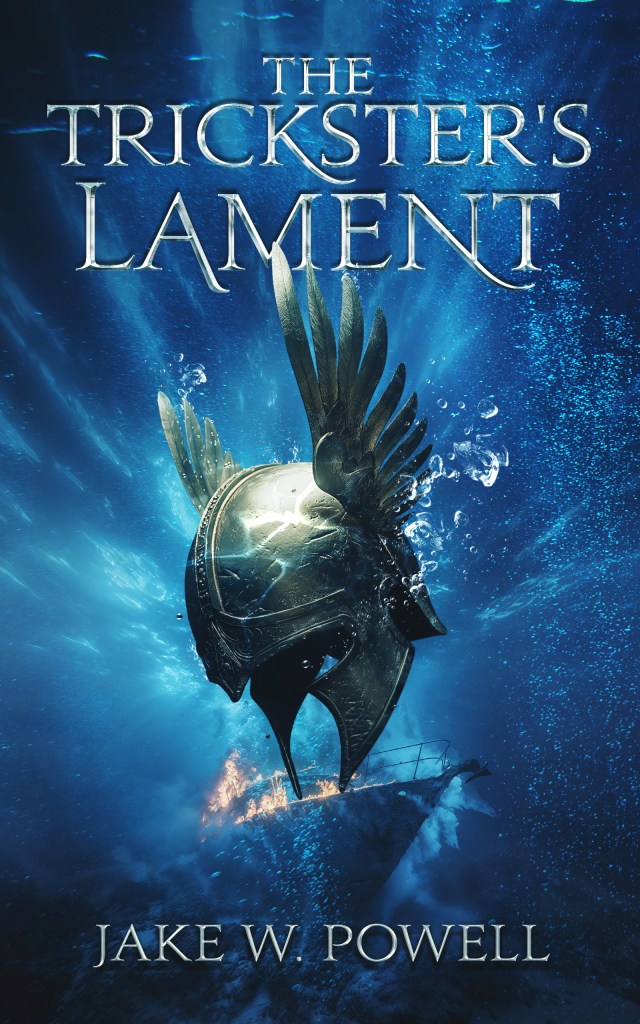
“Hermes is not having the best time. He walks a fine line, and his duty as messenger of Olympus weighs heavily on him. Being a god in the modern age means living in a world that no longer believes in gods. How much can one deity accomplish when no one respects him anymore? And why do his instincts tell him that he, the son of Zeus, is losing favor with his own family?

Tensions abound. The upstart Young Gods play dangerous games using entire cities as their boards. Formless monsters strike from the nighttime shadows, terrorizing hapless mortals. Agents of rival pantheons scheme to thwart Olympus’ designs. In the thick of it all, Hermes does what he does best: trick, lie, and cheat his way to victory.

The Moment I Knew I Had Grown Up Whether I Wanted to or Not

When was the first time you really felt like a grown-up?

Growing up is a tough thing. We don’t leave childhood behind. It simply skips away, leaving us behind. And we find ourselves in the world of grown-ups. We certainly do gain quite a few things as adults, though: Responsibilities, duties, jobs, bills …

But at what point does it hit home that we’ve grown up? Is it a slow, dawning realization, or a thunderbolt to the head?

I first felt the pangs of adulthood when I moved to college. I had never lived apart from my parents before. Well, there was that one week in summer school, but that didn’t really count. Now, I was in the car with my parents going to a campus miles away from home and with the full knowledge that I wouldn’t be coming back with them.

The moment I made that realization was the moment that I knew things were Different™. There was no going back to childhood ways. I was an adult. I would be living as an adult. That made me a little excited, a lot nervous, and very, very giddy.

You ever have that dream where you’re in freefall? And your whole body tingles with such severe giddiness that you feel like it will overwhelm you? That’s how I felt when I arrived at my college. I was falling, falling, falling, all the way down. The only thing keeping me from curling up into a ball of panic was the certainty that the fall would end with me hitting the ground standing upright. Everything was in order, my room was rented, my classes were scheduled, and my parents were still just a phone call away. I wasn’t going to fall forever.

And so I grew up. No more childhood games, just the memories of them. Big adult games, like Studying for the Test, Learning to Budget and Managing My Own Bedtime. Adulthood was upon me.

Of course, once I graduated and entered the Real World, I realized that college wasn’t a very grown-up place after all, but that’s a story for another time.

***

Many thanks for visiting my blog. I post updates on my writing career, I muse over storytelling and fiction, and I reflect on the curious and wonderful things in life.

“Hermes is not having the best time. He walks a fine line, and his duty as messenger of Olympus weighs heavily on him. Being a god in the modern age means living in a world that no longer believes in gods. How much can one deity accomplish when no one respects him anymore? And why do his instincts tell him that he, the son of Zeus, is losing favor with his own family?

Tensions abound. The upstart Young Gods play dangerous games using entire cities as their boards. Formless monsters strike from the nighttime shadows, terrorizing hapless mortals. Agents of rival pantheons scheme to thwart Olympus’ designs. In the thick of it all, Hermes does what he does best: trick, lie, and cheat his way to victory.

Out of Place, Out of Whack

Tell about a time when you felt out of place.

When I hear the phrase “out of place,” it makes me think that I have somehow misplaced myself or stumbled into something that is not meant for me. It implies being in the wrong place, not merely an awkward or unfitting one. And without a doubt, if I entered someone else’s home without their permission, I’d be very much out of place and rightfully kicked out.

Feeling out of place, though, is something different. That implies a sense of wrongness regardless of the reality. My position and my feelings on that position are at odds with each other. Things feel out of whack, not matching up, but I could very well still be exactly where I’m supposed to be.

I’ve felt out of place plenty of times, in places where I belong: at an employee staff meeting, hanging out with friends, and sometimes, even when writing my book. Sometimes it’s a brief flash of discomfort, sometimes it’s a persistent nagging in the back of my head.

Truth be told, I generally try to ignore it. We all end up somewhere in life, and if we feel out of place, it may well be because we took a wrong turn, but more often than not it’s because it takes time to settle into a new lifestyle, a new routine, a new step in our lives.

***

Many thanks for visiting my blog. I post updates on my writing career, I muse over storytelling and fiction, and I reflect on the curious and wonderful things in life.

“Hermes is not having the best time. He walks a fine line, and his duty as messenger of Olympus weighs heavily on him. Being a god in the modern age means living in a world that no longer believes in gods. How much can one deity accomplish when no one respects him anymore? And why do his instincts tell him that he, the son of Zeus, is losing favor with his own family?

Tensions abound. The upstart Young Gods play dangerous games using entire cities as their boards. Formless monsters strike from the nighttime shadows, terrorizing hapless mortals. Agents of rival pantheons scheme to thwart Olympus’ designs. In the thick of it all, Hermes does what he does best: trick, lie, and cheat his way to victory.

“Now” is Not “Forever”

What is the best piece of advice you’ve ever received?

“This too shall pass.”

Whenever you are feeling down, whenever you feel discouraged, whenever you’re stuck taking out the trash or behind a desk at work, or otherwise feel that time has shrunk to a single point that is infinite and eternal and will never, ever get better …

“This too shall pass.”

This is no call to passivity or apathy. This is a call to endure and push forward. Now is not forever. The current situation is not the whole of the future. Persevere. Get the dishes done. Finish your homework. Drive through after-work traffic. There is an endpoint. There is not merely a light at the end of the tunnel – the tunnel itself does indeed have an end.

“This too shall pass.”

There is hope in life. Even the most dire, the most awful, the most horrific and seemingly apocalyptic of times will eventually pass and become a distant memory. You need not fear that what you’re suffering through now will always be there. And most of all, this means that we do need to live in despair. Work through the hard times, build perseverance, and from that perseverance comes character, and from that character comes hope. Because this – yes, THIS, right now – will pass soon enough.

***

Many thanks for visiting my blog. I post updates on my writing career, I muse over storytelling and fiction, and I reflect on the curious and wonderful things in life.

“Hermes is not having the best time. He walks a fine line, and his duty as messenger of Olympus weighs heavily on him. Being a god in the modern age means living in a world that no longer believes in gods. How much can one deity accomplish when no one respects him anymore? And why do his instincts tell him that he, the son of Zeus, is losing favor with his own family?

Tensions abound. The upstart Young Gods play dangerous games using entire cities as their boards. Formless monsters strike from the nighttime shadows, terrorizing hapless mortals. Agents of rival pantheons scheme to thwart Olympus’ designs. In the thick of it all, Hermes does what he does best: trick, lie, and cheat his way to victory.

Is There Such a Thing as Life Without Music?

What would your life be like without music?

Life without music would be insufferably boring. And, I think, it would be impossible to live life without it.

Not because we would drop dead from lack of music or lose all motivation and will, but because humans must make music. We feel rhythm and melody in everything. Nature sings: birds, wind, waves, thunder and lightning. Small wonder that man found ways to make musical sounds of his own.

For me, personally, music is a means of relaxation and inspiration. Relaxation from stress and worries, and inspiration for my imagination and writing. I have no particular taste in music; all genres are fair game. I just enjoy music as a means of processing ideas and, perhaps, of hyping myself up for a project.

Music also helps keep me sane when I’m mired in boredom or doing repetitive chores. Music is very important in my life, and I would be lesser for its absence. I think most people would.

And it’s impossible to avoid it. Music runs through my head during the day with or without headphones. It’s always there, drawn from an archive of songs and melodies. We are musical beings. People need music. I certainly do.

***

Many thanks for visiting my blog. I post updates on my writing career, I muse over storytelling and fiction, and I reflect on the curious and wonderful things in life.

“Hermes is not having the best time. He walks a fine line, and his duty as messenger of Olympus weighs heavily on him. Being a god in the modern age means living in a world that no longer believes in gods. How much can one deity accomplish when no one respects him anymore? And why do his instincts tell him that he, the son of Zeus, is losing favor with his own family?

Tensions abound. The upstart Young Gods play dangerous games using entire cities as their boards. Formless monsters strike from the nighttime shadows, terrorizing hapless mortals. Agents of rival pantheons scheme to thwart Olympus’ designs. In the thick of it all, Hermes does what he does best: trick, lie, and cheat his way to victory.

What I Feel Isn’t Always What I Need

Share a lesson you wish you had learned earlier in life.

I wish I had learned much earlier in life that how I feel about something doesn’t change the need to do it. I wish that I had learned, a long time ago, that I shouldn’t only write when I feel inspired, that I only need to exercise when I feel good, and, in short, I should only do anything when I am “up to it.” Work still needs to be done regardless of my feelings on the matter, and even hobbies and joys can feel awfully dull sometimes.

I wish I better understood ten or twenty years ago that emotions shouldn’t dictate my actions, either to motivate me or restrain me. Emotion is separate from will. The will to do something is a conscious effort. Acting on passion is impulsive, and the burst of energy it gives is fleeting. The will to complete a task requires patience and quiet diligence.

Perhaps this seems obvious to you, and I’m just pointing out a fact that is clear as day. But I didn’t fully understand this when I was younger. I do now, and it has helped me better understand both myself and how life works.

***

Many thanks for visiting my blog. I post updates on my writing career, I muse over storytelling and fiction, and I reflect on the curious and wonderful things in life.

“Hermes is not having the best time. He walks a fine line, and his duty as messenger of Olympus weighs heavily on him. Being a god in the modern age means living in a world that no longer believes in gods. How much can one deity accomplish when no one respects him anymore? And why do his instincts tell him that he, the son of Zeus, is losing favor with his own family?

Tensions abound. The upstart Young Gods play dangerous games using entire cities as their boards. Formless monsters strike from the nighttime shadows, terrorizing hapless mortals. Agents of rival pantheons scheme to thwart Olympus’ designs. In the thick of it all, Hermes does what he does best: trick, lie, and cheat his way to victory.

What We Feel

How are you feeling right now?

When I saw this daily prompt, it turned me thoughtful. How am I feeling at this very moment? I considered that I could write about how I feel excited for today, hopeful for the future, disappointed, discouraged, content, happy, restless.

But I have been all these things in the span of a single day, and it makes me wonder if the question isn’t a flawed one. How I am feeling right now can change in a moment’s time.

And now I wonder if perhaps we all put too much stock in feelings. Emotions are flittery things, like butterflies twirling in a windstorm. Sometimes up, sometimes down, diving and soaring in all directions, rarely in one place for too long.

Emotions are … changeable. Their impact on our lives cannot be ignored, but I try not to direct my life by how I am feeling at the moment. If I only wrote when I feel good, I would still be on my first book. Action is a yardstick we can measure our lives by, not feelings.

And this makes me realize something else: Our feelings do not have to dictate our lives. They are not the measure of our worth or our successes or even our failures. They are important, for words of encouragement from a friend can gladden our hearts, and the thrill of a good story can inspire us, but they are not the sum total of our lives. We are more complex creatures than how we feel at any given moment.

We feel what we feel. We can rarely help it. But we are not puppets strung along by emotion. Emotion is a part of me, but it is not meant to be my master and commander.

And no, that really isn’t what the daily prompt was asking, was it? But there you have it. My daily thoughts, for better or worse.

***

Many thanks for visiting my blog. I post updates on my writing career, I muse over storytelling and fiction, and I reflect on the curious and wonderful things in life.

“Hermes is not having the best time. He walks a fine line, and his duty as messenger of Olympus weighs heavily on him. Being a god in the modern age means living in a world that no longer believes in gods. How much can one deity accomplish when no one respects him anymore? And why do his instincts tell him that he, the son of Zeus, is losing favor with his own family?

Tensions abound. The upstart Young Gods play dangerous games using entire cities as their boards. Formless monsters strike from the nighttime shadows, terrorizing hapless mortals. Agents of rival pantheons scheme to thwart Olympus’ designs. In the thick of it all, Hermes does what he does best: trick, lie, and cheat his way to victory.

TV and Nostalgia

What TV shows did you watch as a kid?

Nostalgia gets a bad rap for being a blindfold that prevents us from perceiving hard truths about our childhoods. That can be true, but let’s not throw the baby out with the bathwater. I have very fond memories of my childhood that nostalgia helps keep alive, and that includes the TV shows I watched. Particularly the animated ones.

I spent many evenings with my dad watching some of our favorite cartoons: Justice League, X-Men Evolution, Samurai Jack, Teen Titans. And also one Transformers show that I can’t remember the name of (and wasn’t really all that good, but it was in the same time block, so we watched it anyway).

It was very cozy, watching TV with my dad. Television is great entertainment, but it’s somehow more meaningful when enjoyed with others. I recall those days with no small amount of wistfulness. Simpler times, for him and for me.

It’s strange how as children we take things for granted that we yearn to have back now. Saturday morning cartoons were just part of the routine. They weren’t a golden age of our lives, a precious memory to hold near and dear to our hearts. They were just … there. Fun, sure, but not precious. Not yet, anyway.

And if that’s the case, nostalgia possesses at least one positive quality: It preserves our best memories.

***

Many thanks for visiting my blog. I post updates on my writing career, I muse over storytelling and fiction, and I reflect on the curious and wonderful things in life.

“Hermes is not having the best time. He walks a fine line, and his duty as messenger of Olympus weighs heavily on him. Being a god in the modern age means living in a world that no longer believes in gods. How much can one deity accomplish when no one respects him anymore? And why do his instincts tell him that he, the son of Zeus, is losing favor with his own family?

Tensions abound. The upstart Young Gods play dangerous games using entire cities as their boards. Formless monsters strike from the nighttime shadows, terrorizing hapless mortals. Agents of rival pantheons scheme to thwart Olympus’ designs. In the thick of it all, Hermes does what he does best: trick, lie, and cheat his way to victory.

Where Are My Glasses?

What is the most important thing to carry with you all the time?

What do I carry with me? That question can be a profound one. What abstract qualities do I carry that sustain me through the day? What precious items do I keep with me at all times that show what I truly value?

Well, it could be a profound question. Or it could be remarkably mundane and ordinary. Let’s go in that direction. There’s time for profundity later.

I always carry my glasses. Why? Because I need them. I can’t see well without them. I’d say that’s pretty important, wouldn’t you? My glasses are a part of me, whether I like it or not, and so they are either on my face or close at hand all the time.

It’s not emotional. It’s not soul-stirring. It’s not philosophical. But it’s real. If I didn’t have my glasses, I’d be straining to read these words as I’m writing them. If I couldn’t find them, I’d be tearing apart my room looking for them, crying fruitlessly, “Where are my glasses?”

***

Many thanks for visiting my blog. I post updates on my writing career, I muse over storytelling and fiction, and I reflect on the curious and wonderful things in life.

“Hermes is not having the best time. He walks a fine line, and his duty as messenger of Olympus weighs heavily on him. Being a god in the modern age means living in a world that no longer believes in gods. How much can one deity accomplish when no one respects him anymore? And why do his instincts tell him that he, the son of Zeus, is losing favor with his own family?

Tensions abound. The upstart Young Gods play dangerous games using entire cities as their boards. Formless monsters strike from the nighttime shadows, terrorizing hapless mortals. Agents of rival pantheons scheme to thwart Olympus’ designs. In the thick of it all, Hermes does what he does best: trick, lie, and cheat his way to victory.

As I Grow Older, These Grow in Value

What do you think gets better with age?

Aging is not a curse nor a tragedy. It is a fact of life, and like all things in life, brings both good and bad. Indeed, age brings many good things with it. Many things grow in joy and fulfillment as we grow older. Here are just a few:

  1. Friendship. As I grow older, I value my friends all the more. A fresh, new friendship is like an apple that hasn’t quite ripened. It may be a little sweet and hold promise, but it hasn’t yet reached full maturity. A friend who has been at your side for years is more precious than a brother or sister, and you can have full confidence they will stick with you through thick and thin, as they have for so many years already.
  2. Health. As we get older, our health can get a little rickety. I am grateful that I can get out of bed unassisted, that I can walk from one side of town to the other, and that I can take a breath without pain. Does that sound a little morbid? But I value every moment of good health, and strive to make the most of it. A child takes his good health for granted. With age comes an awareness of mortality, and with it, a deeply held joy in a robust life.
  3. Memories. The longer we live, the more memories we are given. Memories can be like old friends – or prodding critics – and reflecting on them helps us discover how full our lives truly are. Even if we think we lived a dull, uneventful life, looking back on our memories reminds us that nobody is uninteresting or boring. We all have memories that span the gamut from comedy to triumph to tragedy to drama to wonder. We all live, and we all remember.
  4. Time. Ah, time. The great equalizer. It bows to no one’s will or demands, no one’s wishful thinking or logical arguments. Time is an unceasing gear, turning with heedless inevitability. In other words, you can’t get more of it. I value time now more than I did as a ten-year-old, because I have less of it. Time is a nonrenewable resource. Make the most of it! I treasure moments that can never come again, for their fleeting nature makes them precious.

What about you? What do you think gets better as you age? What do you value more as you get older?

***

Many thanks for visiting my blog. I post updates on my writing career, I muse over storytelling and fiction, and I reflect on the curious and wonderful things in life.

“Hermes is not having the best time. He walks a fine line, and his duty as messenger of Olympus weighs heavily on him. Being a god in the modern age means living in a world that no longer believes in gods. How much can one deity accomplish when no one respects him anymore? And why do his instincts tell him that he, the son of Zeus, is losing favor with his own family?

Tensions abound. The upstart Young Gods play dangerous games using entire cities as their boards. Formless monsters strike from the nighttime shadows, terrorizing hapless mortals. Agents of rival pantheons scheme to thwart Olympus’ designs. In the thick of it all, Hermes does what he does best: trick, lie, and cheat his way to victory.