Editing is an addictive process for me. I love editing. I love digging into the guts of my story and tinkering with things, fixing typos and grammar, revising dialogue, picking better words to describe action and thought. It’s a huge amount of fun for me. Alas, like most things in life, too much of a good thing can be very bad indeed.
I go through many drafts, and in each draft I find something new that can be improved. And improved again. And again! As soon as I finish, I see something else that needs fixing. Eventually, the quotation marks of irony rear their ugly heads and improve becomes “improve.” Yes, I’m making my story “better” by constantly carving it and nitpicking it until there’s nothing left. I need to remind myself: You must set yourself a stopping point.
But the perfectionist in me screams out: What if you missed something? What if there’s a misspelled word somewhere in there? What if you misplaced a comma? What if there’s an extra space between words? What if, what if, what if!
I’ve gone through my drafts, I’ve had my book edited, and I’m going through my final proofreading. It’s almost done. And I must remind myself that it’s almost done. No last-minute check-ups that turn into another round of revisions. Done is done. Finis. Ready for publication. But am I ready to publish? Is anyone ever truly ready?
What if I missed something? Ah! There it is again! The dreaded “what if!”
In theory, authors could revise their books forever. The process can go on and on until, quite literally, nothing is left. You don’t have a book anymore. You’ve “revised” the living daylights out of it, cutting and cutting, until what made the book great has been destroyed by picky perfectionism.
Maybe that’s part of growing as an author, accepting that you, at any given point in your career, are NOT perfect. That your work is flawed, try as you might, and you must recognize those flaws, learn from them, and apply your lessons to the next project.
But I can’t perfect my craft by obsessing over one work forever. I must set myself a deadline and mark it as DONE, like it or not. Maybe that’s just my quirk. Maybe my fellow authors have struggles that are quite the opposite, or maybe you can relate. Feel free to share in the comments.
Sometimes I wish there was a checklist for writing the perfect story. If I had a step-by-step guide that included everything I needed to put into a book to make it a guaranteed success, it would make life so much easier. All I would have to do is check off each step, and bam, instant bestseller.
Naturally, it’s not that simple. Grammar and spelling are one thing. There are rules for sentence structure that can be looked up easily enough. But what about choosing the right words for the story?
How do I know just the perfect words for a description, or exactly how to phrase a piece of key dialogue? How do I write down something precisely as I want it to be read? I confess, I don’t fully know. I’ve studied creative writing in school and written poems and short stories. I’ve dissected classic literature until I was left with a mess of symbols and metaphors and analogies. As an aspiring author, I’m learning more than ever. But for all that education, writing fiction involves as much instinct and intuition as it does obeying the laws of grammar.
Words have power. I think we can all agree that words can encourage or depress us. There are pieces of writing that really move us, maybe even motivate us to take action. So, I’m like a guy holding a lit match. I have to be careful where I set it. Or maybe I’m more like a guy juggling 50,000 matches who has be verrrrry particular about where each one lands. Words are nothing to be trifled with, but the thing is, a writer really doesn’t know what the damage is until the reviews start coming in. Maybe it’d be useful if my draft spontaneously combusted. Then I’d know if I was doing it right or not.
Finding the right words is a bit of a crapshoot. I’ve only just really developed a feel for what my writing style is, and I’ve gotten beta readers to give me feedback that helps me see my own work more objectively. Even so, sometimes I feel like I’m groping in the dark. How exactly do I convey what I see in my mind’s eye? How do I communicate it? Even harder, what should I leave out to allow readers to fill in the blanks for themselves?
I don’t know if anyone ever gets it right the first time. To paraphrase Ernest Hemingway, the first draft of anything is crap. There’s always another go-around, and another, and another. It’s like a sculptor chipping away at the marble until the proper shape is carved out of the stone. It takes time, thought, and effort to find the right words.
Does that make writing boring and tedious? Not at all! It’s part of the fun for the writer. It’s a game of imagination combined with a jigsaw puzzle. You cook something up out of your own head, look at what ended up on paper, then try to fit the pieces together into something remotely resembling what you originally envisioned. It’s a challenge. I think we writers like challenges. We certainly like tormenting ourselves over finding just that perfect word to use in that one sentence on page 72 that we know only five people on Earth will ever notice.
Will I ever find the right words? The perfect words? Maybe. Maybe not. It’s worth the struggle to try.
Enjoy what you’re reading? Subscribe by email for updates on new posts and follow my writing career, musings on fiction and storytelling, and reflections about life in general.
Some stories just stick around forever, don’t they? Wherever you go, there they are. A whole bunch of archetypes filling up the library. Some narratives have that special something we call “universal appeal.” They don’t fade away, they never become dated, they just multiply and assume new incarnations for every generation. There’s a broad appeal in certain stories. It’s an appeal, I think, to basic human desires and emotions. It gives some stories massive, MASSIVE staying power.
Tales of romance are always popular. We all want to love and be loved. On that note, tales of family bonds are warmly received. Coming-of-age stories are told everywhere in some shape or form. Tragedies play with our emotions like a harp. And there are always tales of heroes.
There are some things about human nature that stay constant. One of those is the desire for good to overcome evil. Enter the hero.
Heroes do cool things. They fight bad guys. They save people. They battle impossible odds and win. They ALWAYS win. Usually. Probably. At least, they win when it counts the most.
“Heroes” are different from “protagonists.” A protagonist is the primary character of a story around whom everything revolves and whose goal is the driving force of the plot. A hero, on the other hand, is a protagonist who fights specifically for good. A hero rights wrongs and fixes things that are broken. They’re helpers and defenders. They combat evil. Good guys.
Typical hero shenanigans Hercules combats Achelous by juanedc // Louvre Museum // CC 2.0
Good and bad. Basic concepts. Powerful concepts. Provocative concepts. Maybe we like to skew around with them. Nothing is as straightforward as good or bad. There are shades of grey. Maybe, but steal a candy bar from a child and then explain to them that there isn’t just good and bad. No? The kid just needs to grow up and appreciate the nuances of life? Alright, get overcharged for a restaurant bill and forced to pay it, then come back and talk to me.
But seriously, heroes embody key values. Everyone has a basic sense of right and wrong, and heroes uphold the right. Virtue, justice, decency, compassion, courage, strength of character.
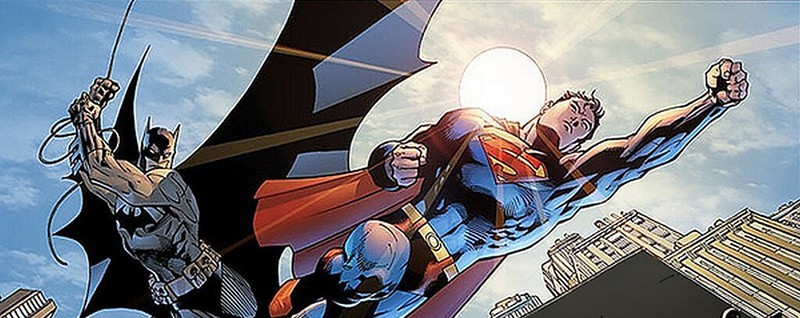
And no, fighting skill and the ability to punch someone in the face isn’t a required trait. Sure, Luke Skywalker is a hero, but so is Mister Rogers. Both show compassion and forgiveness, don’t they? Robin Hood steals from the rich and gives to the poor. Perry Mason works in the courtroom to defend the falsely accused and catch the perpetrator. Two very different people who both fight for justice. Batman catches crooks. So does Sherlock Holmes. Heroes come in all shapes.
I mentioned in an earlier post about the importance of fairy tales and dragon slayers. Heroes play a key role in those sorts of stories, too. Because there are bad things in the world – monsters, cruel people, injustices, and the like – we enjoy witnessing the defeat of those things. Heroes defeat evil. That’s what heroes do. It’s their job description.
And at the end of the day, heroes are fun. We like heroes. We like seeing them win, and wondering how they’ll win. We like seeing the bad guys lose and lose big. We like happy endings. Real life isn’t all rainbows, but stories help us weather the storms of reality. Heroes have been around for thousands of years. I think we can safely say that they are here to stay.
Enjoy what you’re reading? Subscribe by email for updates on new posts and follow my writing career, musings on fiction and storytelling, and reflections about life in general.
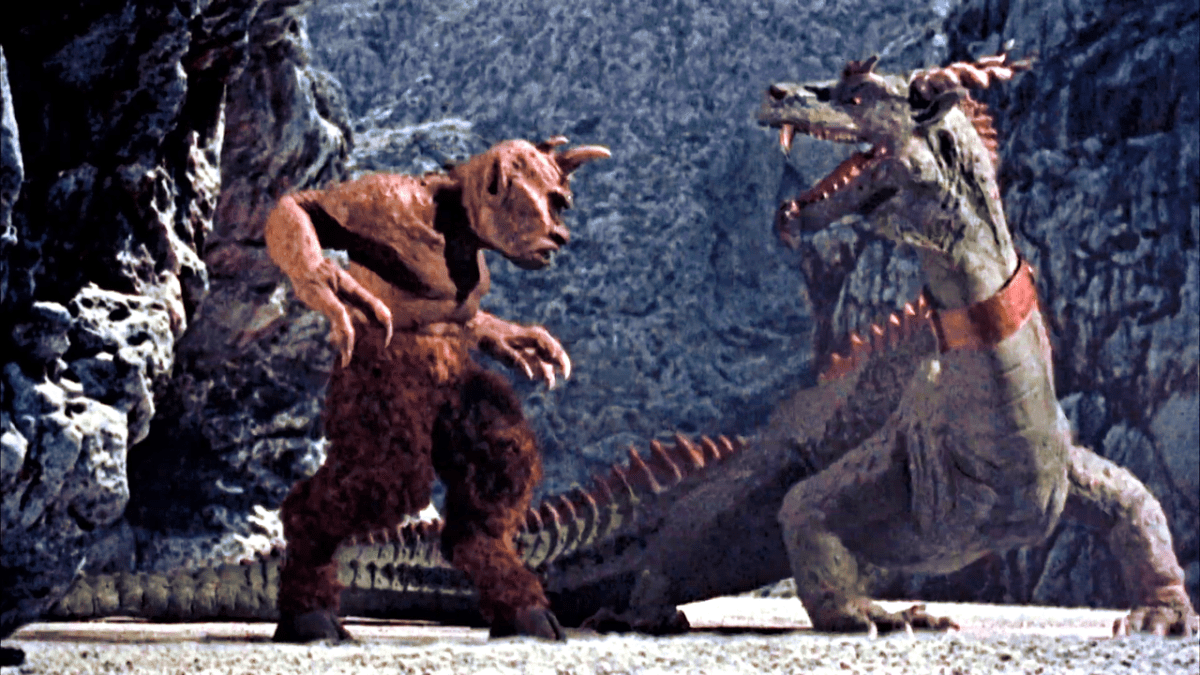
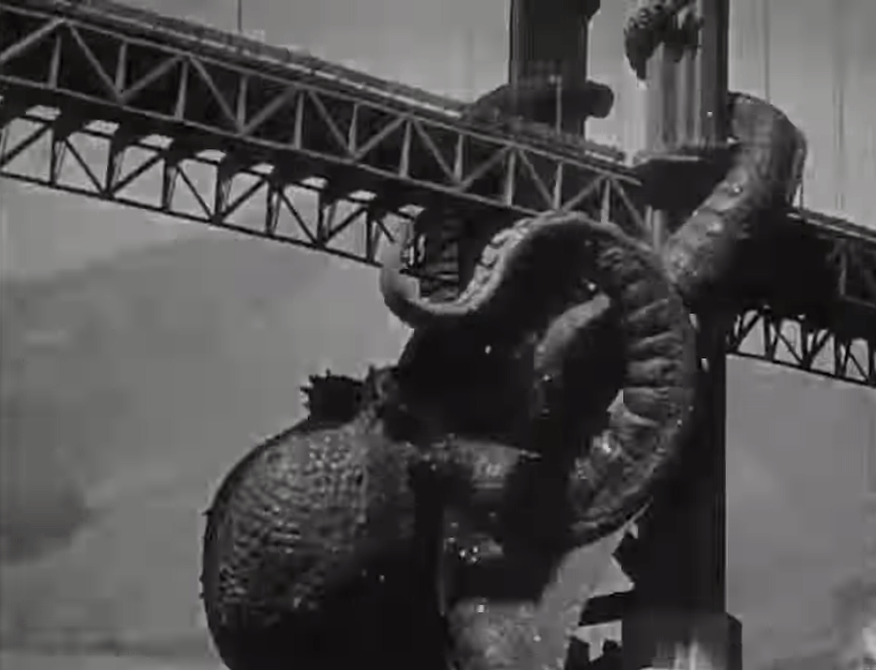
Today marks the 103rd birthday of cinema legend Ray Harryhausen. Whether you grew up with his films or have never heard of him, chances are that you’re familiar with his work, especially if you’re a fan of movie monsters like I am.
The Rhedosaurus // The Beast from 20,000 Fathoms // Warner Bros., 1953 // Public Domain
Never seen The 7th Voyage of Sinbad or Jason and the Argonauts? Don’t know what a Rhedosaurus or an Ymir is? Go check them out. They’re all great! Not to mention that Harryhausen’s special effects work has inspired thousands of storytellers, filmmakers, and video game designers all over the world. Ten years after his passing, his legacy is still going strong. Monster rule!
The Ymir // 20 Million Miles to Earth // Columbia Pictures, 1957 // Public Domain
Jason vs. the Hydra // Jason and the Argonauts // Columbia Pictures, 1963 // Public Domain
It Came from Beneath the Sea // Columbia Pictures, 1955 // Public Domain
Happy Birthday, Ray Harryhausen. May you never be forgotten.
The Trickster is an ancient archetype in storytelling. You’re probably very familiar with it. The Trickster is the cunning mischief maker who can be a force for good or for evil. Whether he follows a moral code or just does whatever depending on his mood, he can be heroic, villainous, chaotic, comforting, terrifying, and anything in between. He has many names: Loki, Hermes, Coyote, Bes, Maui, Robin Hood, Bugs Bunny, and Jack Sparrow, just to name a few.
What is a trickster all about, though? What is their purpose in storytelling?
Well, here’s the pattern that I see in trickster stories. Tricksters are all about testing social boundaries. They push against social norms and challenge taboos. Sometimes this a bad thing, and the trickster learns the hard way why things are the way they are. Seemingly oppressive restrictions actually keep us safe and orderly. On the other hand, sometimes their rebellious nature is a good thing. Tyranny is overturned when the trickster sets his wits against the tyrant.
Tricksters also make us think. What is right and wrong? Why do social mores exist? Do the things I do in life actually make sense? Tricksters are constantly challenging the status quo. Their deceptions and antics expose the logic and assumptions that make up our culture. They also challenge pride and haughtiness. Tricksters are great for bringing a proud character down a couple pegs.
And at their most extreme, tricksters can overturn their own culture to usher in something entirely new. Tricksters are a force of change. Loki kickstarted Ragnarök and the end of the Norse gods with his cruel deceits. Maui fished up the islands of Polynesia and created much of the world as his storytellers knew it. Tricksters aren’t creators or destroyers, strictly speaking. They’re changers.
They’re also very fun to write. One of the reasons why I’m writing A God Walks Up to the Bar is because I enjoy the trickster archetype. Hermes is a rascal and a scoundrel, but a surprisingly complex one. There’s quite a bit of tension in a character whose divine portfolio contains contradictions. He’s the god of merchants and the god of thieves. He is a god of boundaries and borders, and he crosses those borders effortlessly as the god of travelers and roads. He’s the messenger of the gods despite being an authority figure himself. It’s fun stuff to play with. And I confess that I enjoy a bit of vicarious living through his stories. I can write about things that I would never get away with in real life.
Tricksters are fun characters. And scary. And interesting. And revealing. Like any archetype, they are a building block of storytelling, because they’re everywhere. In fiction and real life.
Enjoy what you’re reading? Subscribe by email for updates on new posts and follow my writing career, musings on fiction and storytelling, and reflections about life in general.
You start reading a book, or watching a movie, and the beginning is a banger. You’re hooked. The characters are great, the story is enthralling, and the action is incredible. The first act is a masterclass in storytelling.
As you continue, though, you feel a nagging sensation that something has gone wrong. You aren’t gripped like you were in the first twenty minutes. Why all this pointless dialogue? Why spend five minutes on a scene that has no impact on the rest of the story? Did someone put the plot on a lifeboat and set it adrift? It’s just … wandering aimlessly.
But wait! You get to the end, and the last ten minutes suddenly pick up. Boom. Bam. Bang. The plot is resolved, the heroes win the day, end of story. It’s satisfying enough, but you’re left wondering why 70% of the story just dragged on and on.
Or maybe you run into a story with the exact opposite problem. You feel out of breath after finishing it, like you were never given a chance to rest. Who’s this person and why are they – never mind! Moving on! More action! More spectacle! Can’t contemplate our navels now!
You’re rushing from set piece to set piece at breakneck speed. Movies especially love to do this. The story is just an excuse to show off the cinematography. Maybe there IS a good story there, but it’s been broken up by a frenetic pace that prevents it from properly unfolding.
Pacing. That’s the keyword. A good story has good pacing. It’s the invisible, unappreciated ingredient that is key to cooking a good meal. Folks know when they dislike the protagonist. They understand bad writing. A poorly constructed setting betrays its flaws just by being experienced. Audiences know these things. But pacing is more subtle. When the pacing’s poor, you don’t always know what’s wrong, but you can sense that something is off.
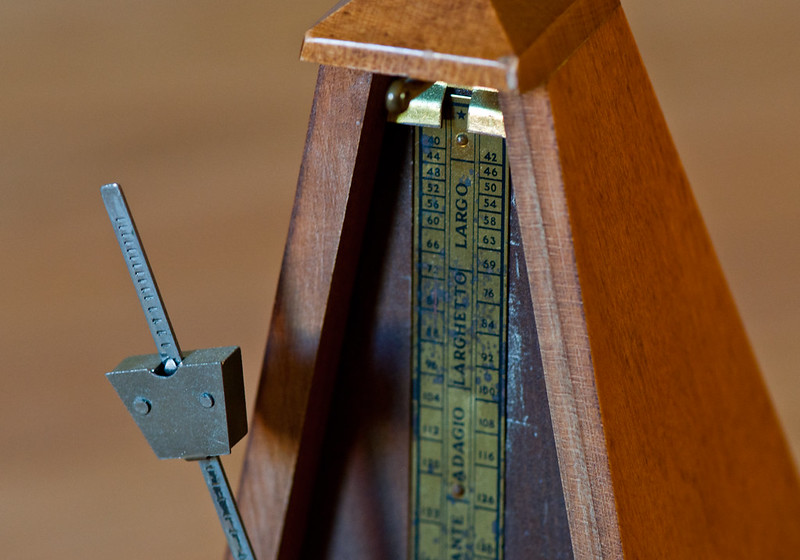
Pacing is the speed at which the story is told, in which everything, everything, you’ve written is unveiled at the times that best serve its progression, its development, the audience’s entertainment, and the impact of key scenes and events. Pacing is to storytelling like a metronome is to music. Go off-beat, and everything goes out of whack.
As the metronome helps the musician keep the proper rhythm, so does a writer keep their story at the proper pace “Metronome” by jronaldlee is licensed under CC BY 2.0.
To continue the earlier food analogy, a story is like a meal. Pacing is the speed at which you eat the meal. Eat too fast, and you barely get to taste the food. Eat too slowly, and the food is so cold and stale by the time you finish that it can hardly be considered tasty anymore. A writer needs to be like Goldilocks and find the pace that is juuuust right.
Naturally, stories being organic things with a knack for growing beyond the writer’s original intention – things that you could swear have minds of their own – there is no magic formula to apply to a story. Each tale is unique. There are so many factors to consider: the genre, the story’s message (if any), the amount of dialogue versus action, the length of the story, et cetera.
Moby Dick is a classic of American literature. It’s also all over the place with its pacing, stopping suddenly to discuss the physiology of whales and the philosophical repercussions of pursuing vengeance against the natural world. But it is as much a philosophical and encyclopedic work as it is a fable of the cost of revenge, and its opening chapter tells you to strap in for a long, introspective ride. There are certain expectations one automatically forms when seeing how much space that monster takes up on the shelf.
On the other hand, a short story is quite the opposite. It’s a short story, and a reader doesn’t go in expecting long, drawn-out retrospectives on life, the universe, and everything. The plot is much more straightforward, and the pacing moves swiftly. If you expect to finish a story in one sitting, you aren’t going to be pleased if nothing worthwhile happens in that time.
I could go on and on about this topic. Its poor execution is one of my biggest pet peeves in writing. But then, a blog post is a short piece of literature, too, isn’t it? Yes, even blogs need good pacing, and though I may complain about it, I’m no master myself. Live and learn, and occasionally complain about things you yourself aren’t very good at. But not too much, that’s just bad form.
Enjoy what you’re reading? Subscribe by email for updates on new posts and follow my writing career, musings on fiction and storytelling, and reflections about life in general.
They say failure is the best teacher. If that’s true, then I am a very, very good student. I’ve already made some doozies in my nascent writing career. I’m glad I did.
A God Walks Up to the Bar isn’t the first book I’ve ever written. Way back when I was a wee college lad, I wrote another book. I put a lot of effort into it, and I was proud of it at the time. Looking back …
It’s absolute garbage. I’ll never let it see the light of day. So, what went wrong?
Mistake the first: I starting writing without any sort of pre-planning or outline. OOF.
Now, I know that there are some writers who are able to wing it and don’t rely on outlines and plotting out story beats ahead of time. I’m not one of those people. I need something more than nebulous ideas. Good preparation not only organizes my ideas, but I develop new ones and discover the real plot of my story as I outline.
Having done none of that for my first-ever project, the plot, such as it was, was confused and schizophrenic, and the pacing was a jaw-dropping mess. As a naïve beginner, I just figured all writers knew what they were going to write, as if by some magical gift granted to all authors. That belief has since been thoroughly exorcised from my brain.
Mistake the second: Overambition.
Have you ever started a novel thinking it’s going to be a grand six-hundred page epic that will sell thousands of copies, change the literary landscape, and maybe even get audited for a film adaptation? That was what I believed when I first started writing. Again, this was in regards to a book I had not even bothered preparing for. I wrote and expected, oh, it would just be good. Magically.
I crammed about three novels’ worth of material into one book, I was tracking multiple characters across multiple locations at once, I ended with a big epic battle … and I thought all this was setting up more sequels. Again, I had never written a novel before and I didn’t really know what I was doing. Oh, such hubris! Oh, such an education!
Speaking of sequels …
Mistake the third: I wrote for the sequel, not the current story.
When I wrote my horrific-yet-highly-instructive first novel, I wasn’t writing it as a standalone. I was writing for the sequel, and the installments after that. I didn’t give my current project the attention and respect it deserved.
It’s a presumptive way to write a story, treating it merely as the setup for a larger franchise. It isn’t given time to develop its own identity, because you’re too busy teasing at future events and building up to payoffs that may never happen. Thus, the current story is robbed of its own identity.
So, I learned that every story I write, even if part of a bigger universe, should be able to stand on its own merits regardless.
Mistakes aren’t something to fear. They will happen, so I might as well get used to making them. Ah, well, I got some of the worst of my inexperience out of my system, and I like to think I’ve gotten better. I suppose I’ll find out for sure after I get published, eh?
Enjoy what you’re reading? Subscribe by email for updates on new posts and follow my writing career, musings on fiction and storytelling, and reflections about life in general.
I’m afraid to go to sleep. There’s a dragon outside my window.
Don’t be afraid. Be brave.
But dragons are scary! They’re so big and mean!
Then settle down here with me. Let me read you a story …
Do you remember being a kid? Do you remember the joys and the wonders? And the fears?
Kids quickly learn what fear is. Bravery takes a little longer to catch on. Sometimes, we need a helping hand.
Good thing we have fairy tales to teach us. They tell us that no dragon – no monster, obstacle, or problem – is invincible. They inspire us to surmount the impossible.
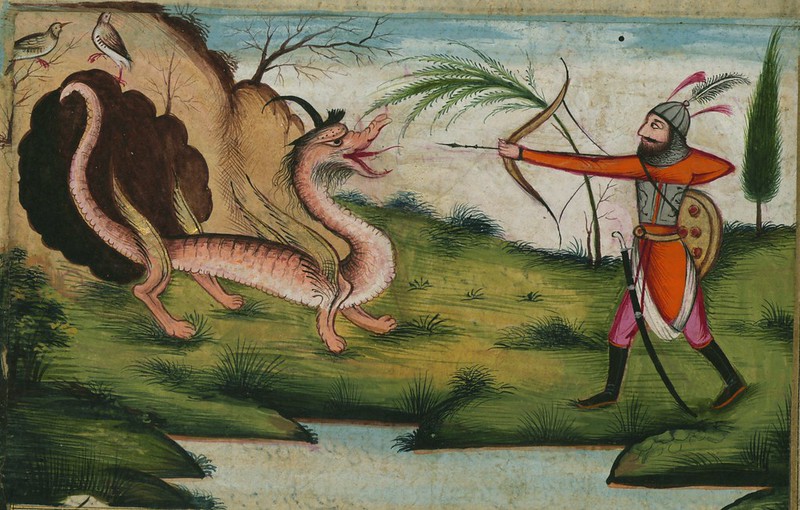
First, you have the setup: A dragon appears. The people tremble. It gobbles up their herds and destroys their homes. It sets up shop, and who’s going to ask a razor-toothed lizard the size of a semi to move? It may demand tribute – your daughters and sons will do, nicely, for starters. Oh, terrible day! What can they do to free themselves from this beast?
The dragon may have a name – Fafnir, Cetus, Smaug, Yamata no Orochi, Apophis – but just as often it does not. It varies in appearance, but its function is always the same.
Enter the dragon slayer. He, too, has many names, and he, too, is always the same person. He is the courageous one, the honorable one, the compassionate one. He takes pity on the poor villagers and vows to help them. He may be an underdog or he may already be renowned. Whatever the case, he fights the dragon. He slays the dragon. He wins.
Evil is beaten. Good triumphs. The nightmare ends.
These are the stories children read in fairy tales. These are the messages passed down by folklore from generation to generation. Evil doesn’t always have to win. There is a spark of hope in the darkness. The dragon slayer inspires us to realize that we aren’t stuck in the mud for the rest of our lives. Dragons aren’t unbeatable.
We grow up, and the dragons no longer look like giant lizards. They take many shapes and forms. They may be different for each of us depending on our circumstances, but we learn to recognize them. And we know that they can be beaten. Not with sword and spear, mind you. But with courage, perseverance, knowledge, and hope.
Because fairy tales taught us so.
Enjoy what you’re reading? Subscribe by email for updates on new posts and follow my writing career, musings on fiction and storytelling, and reflections about life in general.
Fairy tales do not give the child his first idea of bogey. What fairy tales give the child is his first clear idea of the possible defeat of bogey. The baby has known the dragon intimately ever since he had an imagination. What the fairy tale provides for him is a St. George to kill the dragon
G. K. Chesterton
Fairy tales are just for kids. That’s what they say, at any rate. Stories of adolescent fluff, beneath the notice of adults. When you grow up, you leave behind the silliness of youth, after all. Bogeymen and monsters and dragons are the stuff of kids’ nightmares, nothing more. Aren’t they?
Ponder this: Parents don’t teach their children that there is a monster under the bed. Where does the idea come from? Do kids instinctually understand that there are bad things in the world? The monster under the bed, the one hiding in the closet, the ghouls and dragons out to get you … Children fear these things. Indeed, children learn very quickly what it means to be afraid.
Every child knows in their heart that monsters are real.
Oh, dragons and bogeymen aren’t real. Those are just trappings. But evil is very much a real thing in this world. The monsters of youth never go away. Adults just learn to recognize them for what they really are.
What does all this grim talk have to do with fairy tales? Think of fairy tales as road maps. Entertainment combined with important facts about life. Stories are tricky things, wrapping up lessons in playful guises.
They teach us that yes, evil things do exist, and yes, they are scary. They give a shape to that indefinable dread all children feel. And then the child is able to give evil its first names: the Big Bad Wolf, the Bogeyman, and of course, the Dragon.
Children’s stories are a primer’s guide to evil. How’s that for a fractured fairy tale? And no, I’m not trying to ruin your childhood. We shouldn’t rip a fairy tale out of a child’s hand because it’s scary. Children already know what scary is. I certainly did growing up. But fairy tales teach children why monsters are scary.
The Big Bad Wolf will trick you and gobble you up! The Dragon is a greedy beast that breathes fire and burns down villages! Be afraid! Fear isn’t weakness, it’s smart to be afraid of things that are dangerous.
But what else is there to do? Are we to spend our whole lives shivering in terror of what lurks outside?
No, that’s not what fairy tales teach us. The Big Bad Wolf is slain by the brave woodsman. A hundred dragon slayers have slain a hundred dragons.
Evil can be defeated. That is the greatest lesson of fairy tales. That is why they endure. They give us hope. Like Mr. Chesterton said, they provide children with the knowledge that monsters can be beaten.
Fairy tales are primers on the dragons of life. They are also primers on how to slay those dragons.
Enjoy what you’re reading? Subscribe by email for updates on new posts and follow my writing career, musings on fiction and storytelling, and reflections about life in general.





 Jake W. Powell