A Reflection on Eclectic Interests

What are you an authority on?

Truth be told, I’ve never considered myself an authority on anything. Oh, sure, I write a blog and share my thoughts and insights on life, writing, and sundry subjects, but I don’t consider myself an expert on any of them. I certainly wouldn’t call myself an authority on writing, and I probably never will. I’m just sharing my experiences, for better or for worse.

To achieve mastery in an artistic pursuit is something I pursue, but it is not a goal I expect to ever achieve. I don’t think it is obtainable. The journey and the gradual improvement of skill over time is what makes such a thing worthwhile.

I’m just a guy with things to say who started a blog. Thanks for reading it, by the way!

That being said, there are things I know about more than others. You know, the kinds of intellectual scree that are useful for a game of Trivial Pursuit, to rekindle the embers of a dying conversation, or perhaps to insert into a livestream chat. I have an unhealthy knowledge of pop culture, for example, particularly video games and tabletop gaming.

I also have an interest in animation history. I have a keen interest in modern Japanese history – enough that I took a master’s degree in Japanese Studies. Actually, reading what I just wrote, I can conclude that I like history in general. The hard sciences scare me, but I’m always up for a discussion about the liberal arts. Go figure.

Jack of all trades, master of none? Yes, yes, I am.

What about you? Are there any subjects you consider yourself an authority on or have a wide range of knowledge about?

***

Many thanks for visiting my blog. I post updates on my writing career, I muse over storytelling and fiction, and I reflect on the curious and wonderful things in life.
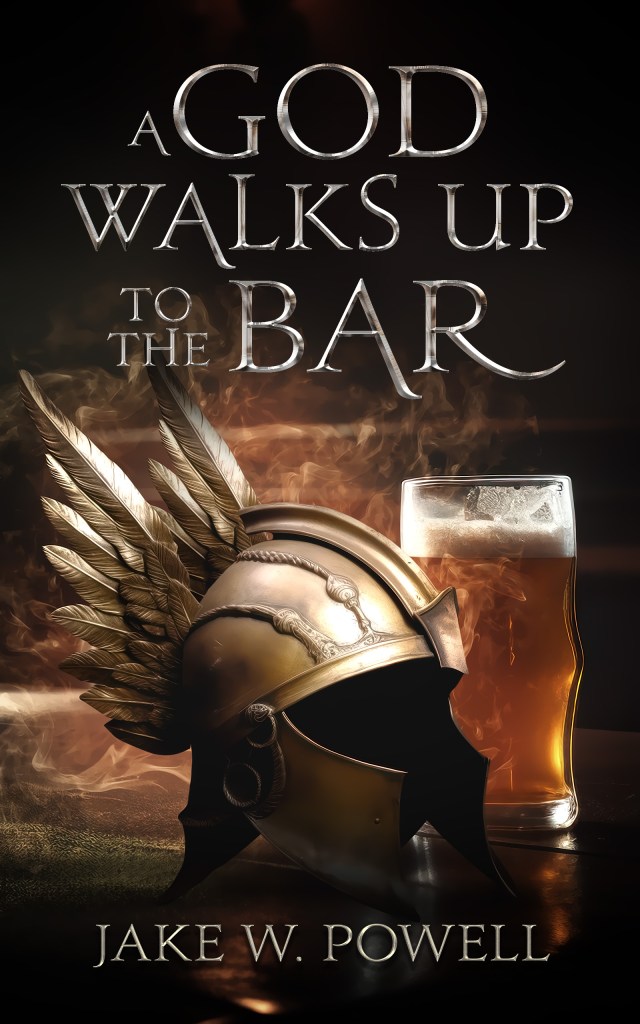
“Hermes is not having the best time. He walks a fine line, and his duty as messenger of Olympus weighs heavily on him. Being a god in the modern age means living in a world that no longer believes in gods. How much can one deity accomplish when no one respects him anymore? And why do his instincts tell him that he, the son of Zeus, is losing favor with his own family?

Tensions abound. The upstart Young Gods play dangerous games using entire cities as their boards. Formless monsters strike from the nighttime shadows, terrorizing hapless mortals. Agents of rival pantheons scheme to thwart Olympus’ designs. In the thick of it all, Hermes does what he does best: trick, lie, and cheat his way to victory.

What is Art?

The eternal pressing question: What is art? What defines it, what is its nature, how is it differentiated from the common dross, and how do we recognize it when we see it? What. Is. Art?

Ask a hundred people, and you’ll get a hundred and one different answers. Nobody can seem to decide, though everyone, from the working joe to the professional critic, seems convinced that they know exactly what art is. The artistic merits of literature, film, paintings, and even video games are debated again and again. Is it art? But can we know, when the definition of art is as fluid as the fresh paint dripping from a canvas?

Maybe we’re asking the wrong question. Maybe we should instead ask what isn’t art.

Can this process of elimination help answer this great question? Consider the humble spoon. Is a spoon art? Well, most people would say it isn’t. You use it to eat soup and cereal. It’s a mundane thing. It has an everyday utility. It isn’t art.

What about a car? Is a car art? Well, it also has a mundane use: transportation from point A to point B. But look at car commercials and car shows. Cars boast aesthetic pleasures and pleasing design. They are promoted based on appearance, performance, improvement, and flashy lights. People collect cars. People analyze cars. Are they art? Or are they merely utilities passed off as art? And how do we know, unless we can define what art is?

This is getting complicated.

Why do Jackson Pollack’s paintings get hung up in museums but a two-year old’s paint smears don’t? What’s the difference? Aren’t they both paintings? And aren’t both paintings art? Well, the latter obviously isn’t art art because nobody cares except the parents. But everyone must care about Sydney Pollack since he gets public exhibits.

Nobody cares about spoons unless they try eating soup with a fork. But everyone cares about cars, one way or another. They’re both a fact of life, but one is just plain more noticeable than the other.

Nobody cared about the pipe until René Magritte put up a picture of one alongside the words, “This is not a pipe.” A pipe is just a pipe until it isn’t.

Maybe that’s all there is to it. Maybe art isn’t art until you decide that it’s art.

Until you care whether or not it’s art.

If enough people say that something is true, does it become true? No. No matter how many people say you can fly by flapping your arms, you can’t. But it sure is easier to think you can.

Is that all that art is? A shared belief? A social construct? Just the idea that if we belief something has merit inherent in its composition, construction, appearance, and intent, it rises above the mundane to become something with social significance?

But what about your two-year-old’s paint splatters? Is that art? What loving parent would say, “No”? To them it’s art. It’s more precious than everything in the Louvre.

Maybe art is more than just innovation, messages, and composition. Maybe it’s something more personal than that. Maybe art lies in how much it is valued by the individual. I happen to think cars all look the same and are basically just glorified boxes on wheels. I don’t see the appeal. Cars aren’t art to me. But to others, they are masterpieces.

Critics say something is art, and so we believe them. They must know what they’re talking about, right? Then, a hundred years later, the great art of the time is depreciated. It’s not as important. And new art replaces it. Tastes and preferences change. The definition of art changes based on what we think is important.

A spoon can be a piece of art. In some ways, it is by default. “Art” is a relative of the word “artifice.” Artificial. Manmade.

Maybe everything is art. But if everything is, than nothing is art.

Oh, to heck with it. Art is whatever you want it to be.

If you just so happen to be enjoying my blog, feel free to subscribe. I post updates on my writing career, I muse over storytelling and fiction, and I reflect on the curious and wonderful things in life.

My first book, A God Walks up to the Bar, is available on Amazon.com. Witness the modern day adventures of the Greek god Hermes in a world much like our own – and with demigods, vampires, nymphs, ogres, and magic. The myths never went away, they just learned to move on with the times. It’s a tough job, being a god!

The Myth of the Easy Masterpiece

We’ve all heard the glorious stories of the writer who dashed out a masterpiece over the course of a weekend, solicited it, and made big bucks. Or we hear about someone writing a book for kicks, posting in on Amazon, and suddenly getting offers from film studios to turn their sudden runaway success into a show. It’s a tempting motivation to become an author, or scriptwriter, or whatever. These guys made it. How hard can it be?

Pretty hard, actually. After all, we only hear about the successes. What about those stories written over a weekend that never took off? How many books on Amazon do you think there are that nobody’s ever read?

I don’t know where I first heard the story that the screenplay for Good Will Hunting was written by Matt Damon and Ben Affleck over a weekend. Probably one of those motivational stories my teachers told me as an example of how life doesn’t actually work. It’s not true, by the by. Matt Damon wrote the original 40-page script as a drama class project, then worked with Affleck on revising it into a full Hollywood script. So, no, they didn’t conjure a masterpiece out of thin air in just a couple days. The foundation was already there, and they still had to work hard to translate it from written word to big screen.

Hugh Howey wrote Wool as a one-off short story that he put up for sale on Amazon. And yes, it did become so successful that he ended up writing sequels and selling the film rights and getting a good deal out of the whole thing. But as unusual as the success of Wool is, it was still based on years of writing experience and hard work. Howey had already been a diligent writer long before he published Wool. The story may have been a one-off, but Howey’s efforts weren’t. He goes into detail at length about his writing on his own blog.

All of which is to say, if you hear about a runaway success, that success is probably the result of a lot of hard work, blood, sweat, and tears that rarely make their way into the story told in magazines. The humdrum routine of writing, or scripting, or painting, or sculpting, or whatever medium you can think of doesn’t usually make for a good story, after all. Customers want the end product. The tedious hours of chipping away at marble or revising a fourth draft aren’t what they’re buying. And, quite frankly, do they even need to know about all that sweat and work?

If you’re truly devoted to something, you’ll put in the effort necessary to see it through to completion. Writing isn’t a “get rich quick” scheme. In fact, it may be the worst method possible for getting rich quickly. Sure, there are plenty of authors out there who make a living off their books. Many of them are quite wealthy, even. But only because they work to an almost obsessive degree on their projects. They devote extreme amounts of time to writing to the near-exclusion of all else. That’s not the easy path to wealth.

So, no, there aren’t any “easy masterpieces” in the world. Just a lot of grunt work and diligence that is never seen by the public eye.

Do what you love, not what you think will make you rich. That’s one thing that can make life a bit easier.

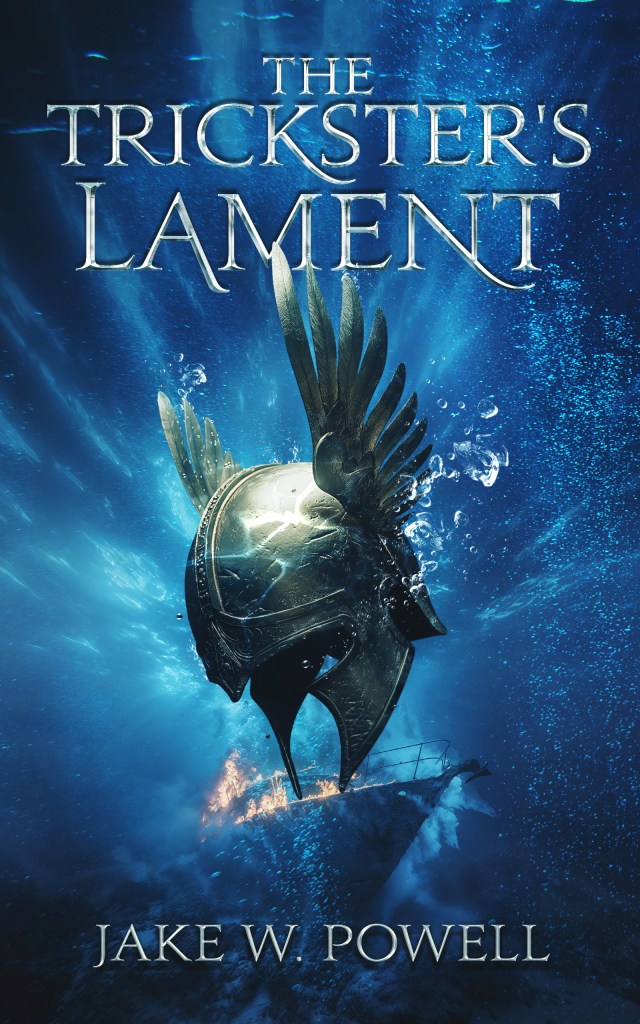
The gods and beings of ancient myth never went away. They just moved on with the times.

My book, A God Walks up to the Bar, is currently available on Amazon.com. Venture into the world of the Greek god Hermes, a world filled with demigods, vampires, nymphs, ogres, magic, and trickery. It’s a tough job, being a god!

Enjoying my blog? Don’t want to miss a single post? Subscribe for updates on when I post and follow my writing career, musings on fiction and storytelling, and reflections about life in general!