Putting Your Best Foot Forward: Thoughts on Confidence

You ever see someone walking down the street with an easy stride, good posture, and a sure expression on their face? You think to yourself, “Man, they’ve got it together. They know they’re going places in life.” You ever question if they actually did know what they were doing and where they’d end up? After all, if they look like they know what they’re doing, they probably do, right?

Well, maybe not.

How often did you ask mom and dad questions about the world when you were a kid? And you took their answers as gospel truth. Parents always know why the sky is blue, and why the moon disappears during the day, and how car engines work, and when Santa is coming down the chimney on Christmas Eve. They were the all-knowing arbiters of wisdom.

Then we grew up and figured out that our parents were barely keeping it together. Blazes if they knew the right answers to a young child’s innocent curiosity. We become parents ourselves and end up playing the same part, only to discover that we can barely manage a coherent sentence in response to our children’s relentless torrent of questions.

But our parents always LOOKED like they knew what they were talking about. And because of that, we never thought to question anything they said. They could have told us the world really was black and white with no color in the 1950s, and our young selves would have believed them.

What about the inverse? An expert – in mathematics, let’s say – lectures in front of an audience. He’s giving one of those TED talks or what have you. He knows exactly what he’s talking about. He’s foremost in his field. But he stutters. He’s nervous being out in public like this. Consequently, he can’t explain the concepts very well. He has a nervous laugh and shuffles his feet. An expert? Sure. But we aren’t inclined to take him seriously. Not like Dad, who has no idea how photosynthesis works, but is able to bluff his three-year-old with a bold smile and a ready answer.

Confidence is a funny thing. It’s no guarantee of truth or accuracy, but it is such a vital component of how others perceive us. We trust confident people. They at least have the decency to look like they know what they’re about. And hey, if they trust their own skill, why shouldn’t we? Well, that way lies potential catastrophe, but that’s the point. We follow those who look like they know where they’re going. Confidence is no substitute for competence, but it is an important ingredient in leadership and successful undertakings.

Writing your book is one thing. Selling it is another. The Internet is full of ways to advertise, but if you don’t believe in the product yourself, why should others? If you don’t have the self-assurance that your story is worth reading, how are you going answer the question, “Why should I care?” If you don’t have any confidence, any trust in your book’s quality, people notice. And who wants to read a book that even the author doesn’t think is very good? Have a little faith in your work!

We live in a superficial world. Sad, but true. People look at our appearance and how we carry ourselves. Before they get to know us, they spot little details –shirt stains, unkempt hair, untied shoelaces. And thus, our self-presentation impresses itself on people’s memories for far longer than a good conversation or a well-informed lecture. Likewise, if any aspiring writers are trying to convince someone to read their book and looks nervous and withdrawn when discussing the thing, that’s what our would-be readers will remember, not that we actually wrote a good story that they’ll enjoy.

Is that fair? Not really. But it’s real. Writing requires skill and practice and patience. But to get people to read that story? That requires the belief that the story you told is worth sharing with others. It requires confidence to say that your story is worth the effort.

If you just so happen to be enjoying my blog, feel free to subscribe. I post updates on my writing career, I muse over storytelling and fiction, and I reflect on the curious and wonderful things in life.

Image: “BASE jump” by santimolina; Licensed under CC BY-NC-ND 2.0.
Writing Your First Draft: The Vomit Draft

Having gotten halfway through the first draft of my second book, I look back on the progress I’ve already made and have mixed feelings about it. On the one hand, I’m fairly confident my skill has improved somewhat since my first book. On the other hand, I see the myriad flaws still there and wish I could write a perfect book straight out of the gate. But writing is a feat where one plays the tortoise more than the hare. Slow and steady wins the race.

Also, the first draft of anything is going to be garbage no matter how hard you try. It’s just the nature of the beast.

In fact, I’ve come up with a nickname for first drafts: the vomit draft.

The first bout of writing isn’t necessarily pretty or neat. In fact, it can be downright ugly as you not only try to type out a coherent story, but also struggle with phrasing, dialogue, vocabulary, writer’s block, and coming to the grim realization that your story’s direction is slowly but surely veering away from your original vision. It’s a beautiful mess.

Knowing this, my goal in the first draft isn’t to write a masterpiece. It’s to just get all the words written. Spewing them out as they come to mind, as it were. Hence, the vomit draft.

We got to start somewhere, right?

Sometimes, I get frustrated and think that the garbage I’m writing is going to stay garbage regardless of rewrites. Sometimes, I go through a brief existential crisis as I wonder if being a writer is even my calling in life and maybe I should just stick to my day job. Sometimes, my mind struggles with even the most basic words. Who will want to read this?

But that’s not what the vomit draft is about. Making your story readable comes later. Right now, just get it all out. No holding back, no second-guessing, no graceful prose. Just write something to fill in the pages. It’s the foundation for what comes later. Every beautiful building is built upon a pool of poured cement. It’s not pretty, and it isn’t supposed to be.

Fortunately, nobody ever has to see our vomit drafts except ourselves. And we get a small consolation in knowing that this sorry state of affairs can and will become something much, much better.

If you just so happen to be enjoying my blog, feel free to subscribe. I post updates on my writing career, I muse over storytelling and fiction, and I reflect on the curious and wonderful things in life.

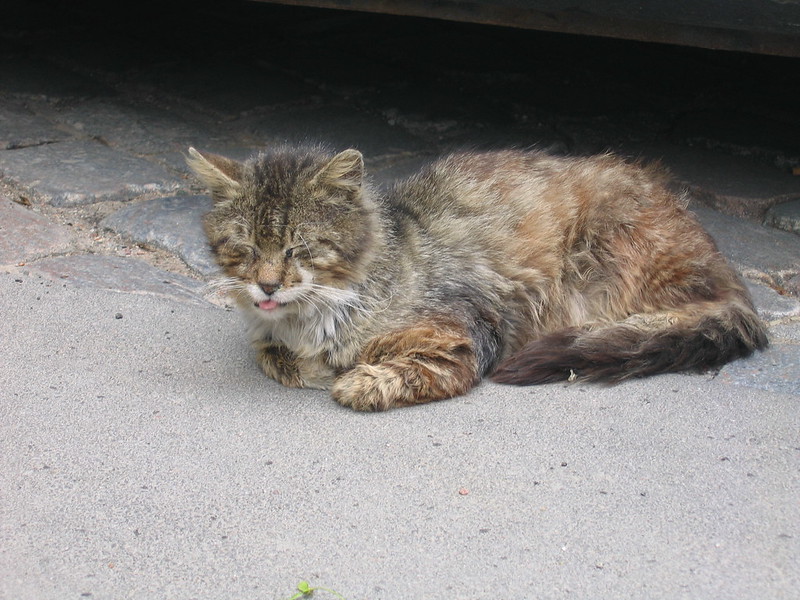
Image: “A sick cat” by wwhyte1968; Licensed under CC BY-SA 2.0.

Mind of a Child: Confidence and Growing Up

As a child, I looked at adults with a mixture of awe and envy. Oh, if only I could be like an adult, always knowing the right thing to say and the right thing to do! My parents could do no wrong, my teachers knew everything. Adults made everything better because they knew exactly what to do in every situation.

Then I became an adult.

We don’t know any better as children, do we? Lacking any breadth of experience, we don’t understand that nobody has any real idea what they’re doing. We’re all sort of stumbling through life, learning as we go, getting tossed into the deep end of the pool and working out how to tread water just enough to keep from sinking. It’s equal parts fun and terrifying. We’re all figuring it out together.

And we adults get philosophical about everything. What’s it all about? Why are we here? How can we do right? All the big questions.

Kids are cool. They don’t let deep thoughts and existential angst get in the way of living. They accept what they’re told, but are just innocent enough to ask those piercing questions that puncture our adult pretensions. It is grown-ups who tie themselves into knots trying to justify and rationalize every action they take at every moment of every day. Or maybe that’s just me. Ah, the tortured mind of the intellectual.

In all seriousness, confidence is a good thing. In many ways, kids are more confident than adults. They trust adult authorities because the thought of them being wrong doesn’t enter their minds. They trust things to work out without hesitation. They enjoy life wholeheartedly and unironically.

Confidence is an attitude. It’s not the magic formula to a perfect life, but it sure can help us endure hard times. Why? Because we become willing to work to succeed. If we expect to fail, we’re probably going to. And while failure isn’t something we should be afraid of, is it really healthy to sabotage ourselves? Where would the world be if we didn’t put our best foot forward and give it our all?

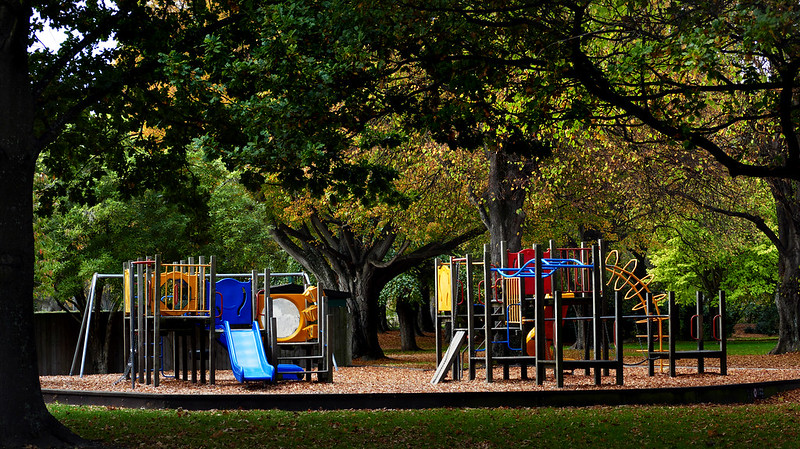
Kids give it their all. Childlike enthusiasm is a force of nature. When you see children playing on the playground, don’t you see the sheer grit and determination and lack of hesitation to throw themselves into their play? Kids never stop and have no fear, as many weary parents can attest to.

It’s funny. As children, we want to be adults. As adults, we envy the life of a child. I respect kids. They see the world differently and a little more simply than we clever grown-ups do. Maybe a confident and peaceful attitude comes from simplicity. Simple living, simple comforts, simple enjoyments. Or maybe I’m overthinking things … again.

Enjoy what you’re reading? Subscribe by email for updates on new posts and follow my writing career, musings on fiction and storytelling, and reflections about life in general.