Writing is a Whitewater Rapid, Writing is a Block of Marble

What do you enjoy most about writing?

Writing is an act of creation. It is the free exercise of imagination and the production of things unseen, undreamt, uncertain until that very moment. It is as dynamic as a mountain river and just as unpredictable. It ebbs and flows. Currents crisscross one another and pull me in this direction, and now in the other. I love it. I plunge into the unknown when I sit down to write. For all the preparations and outlines and forethought, which are important, I still don’t truly know what will happen.

I love the surprise. I love the way that my imagination detaches from my logical mind and soars on its own. And then, after I return to Earth and the giddiness fades, comes the really fun part: editing.

Editing is taking the uncouth block of marble that is my first draft and refining it into something I can show in public. I am an editor at heart. The initial draft, that whitewater rafting down the river of raw imagination, must be balanced against the delicate chiseling of the editing process. Careful carving, doing away with what isn’t needed, making my work into something better. I love the careful precision and attention to detail.

Truth be told, I just love making up stories. Good stories, bad stories, stories that teach, stories that entertain. Like rivers and stone, riding the rapids and nicking away at the marble, are stories made.

***

Many thanks for visiting my blog. I post updates on my writing career, I muse over storytelling and fiction, and I reflect on the curious and wonderful things in life.

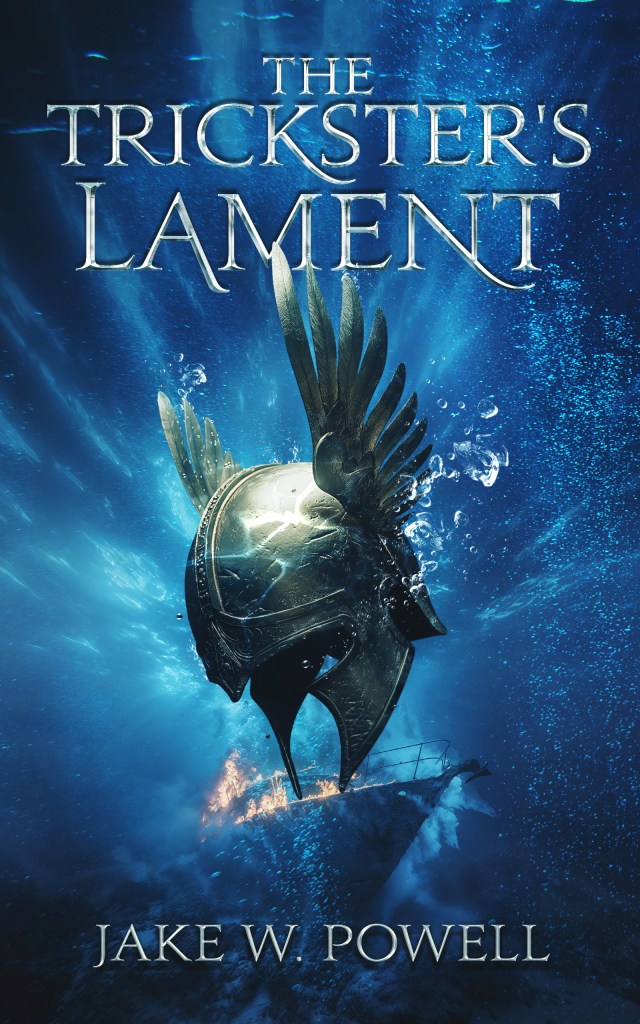
“Hermes is not having the best time. He walks a fine line, and his duty as messenger of Olympus weighs heavily on him. Being a god in the modern age means living in a world that no longer believes in gods. How much can one deity accomplish when no one respects him anymore? And why do his instincts tell him that he, the son of Zeus, is losing favor with his own family?

Tensions abound. The upstart Young Gods play dangerous games using entire cities as their boards. Formless monsters strike from the nighttime shadows, terrorizing hapless mortals. Agents of rival pantheons scheme to thwart Olympus’ designs. In the thick of it all, Hermes does what he does best: trick, lie, and cheat his way to victory.

Where Are My Glasses?

What is the most important thing to carry with you all the time?

What do I carry with me? That question can be a profound one. What abstract qualities do I carry that sustain me through the day? What precious items do I keep with me at all times that show what I truly value?

Well, it could be a profound question. Or it could be remarkably mundane and ordinary. Let’s go in that direction. There’s time for profundity later.

I always carry my glasses. Why? Because I need them. I can’t see well without them. I’d say that’s pretty important, wouldn’t you? My glasses are a part of me, whether I like it or not, and so they are either on my face or close at hand all the time.

It’s not emotional. It’s not soul-stirring. It’s not philosophical. But it’s real. If I didn’t have my glasses, I’d be straining to read these words as I’m writing them. If I couldn’t find them, I’d be tearing apart my room looking for them, crying fruitlessly, “Where are my glasses?”

***

Many thanks for visiting my blog. I post updates on my writing career, I muse over storytelling and fiction, and I reflect on the curious and wonderful things in life.

“Hermes is not having the best time. He walks a fine line, and his duty as messenger of Olympus weighs heavily on him. Being a god in the modern age means living in a world that no longer believes in gods. How much can one deity accomplish when no one respects him anymore? And why do his instincts tell him that he, the son of Zeus, is losing favor with his own family?

Tensions abound. The upstart Young Gods play dangerous games using entire cities as their boards. Formless monsters strike from the nighttime shadows, terrorizing hapless mortals. Agents of rival pantheons scheme to thwart Olympus’ designs. In the thick of it all, Hermes does what he does best: trick, lie, and cheat his way to victory.

Dogs and Cats

Dogs or cats?

Dogs. Definitely dogs. I love dogs. They’re jolly, gregarious and always ready to play. Dogs are cool. I like them in all varieties.

Well, except for small dogs. Little dogs lean a bit too much toward the yappy side for me. But retrievers, German shepherds and their ilk are totally fine.

Cats are chill, but sometimes too chill. They walk across your lap when you’re sitting on the couch, and if you try to move them, their claws dig into your pants. Cats are a little too aloof for my tastes.

I’m an introspective guy myself, and I like my privacy, but cats sometimes just flat out pretend you don’t exist. I also sometimes pretend people around me don’t exist, but nobody ever said that was a good thing. I don’t need the animal kingdom to reinforce a bad habit.

So, I prefer dogs. They enjoy life. And they always look like they’re smiling.

***

Many thanks for visiting my blog. I post updates on my writing career, I muse over storytelling and fiction, and I reflect on the curious and wonderful things in life.

“Hermes is not having the best time. He walks a fine line, and his duty as messenger of Olympus weighs heavily on him. Being a god in the modern age means living in a world that no longer believes in gods. How much can one deity accomplish when no one respects him anymore? And why do his instincts tell him that he, the son of Zeus, is losing favor with his own family?

Tensions abound. The upstart Young Gods play dangerous games using entire cities as their boards. Formless monsters strike from the nighttime shadows, terrorizing hapless mortals. Agents of rival pantheons scheme to thwart Olympus’ designs. In the thick of it all, Hermes does what he does best: trick, lie, and cheat his way to victory.

As I Grow Older, These Grow in Value

What do you think gets better with age?

Aging is not a curse nor a tragedy. It is a fact of life, and like all things in life, brings both good and bad. Indeed, age brings many good things with it. Many things grow in joy and fulfillment as we grow older. Here are just a few:

  1. Friendship. As I grow older, I value my friends all the more. A fresh, new friendship is like an apple that hasn’t quite ripened. It may be a little sweet and hold promise, but it hasn’t yet reached full maturity. A friend who has been at your side for years is more precious than a brother or sister, and you can have full confidence they will stick with you through thick and thin, as they have for so many years already.
  2. Health. As we get older, our health can get a little rickety. I am grateful that I can get out of bed unassisted, that I can walk from one side of town to the other, and that I can take a breath without pain. Does that sound a little morbid? But I value every moment of good health, and strive to make the most of it. A child takes his good health for granted. With age comes an awareness of mortality, and with it, a deeply held joy in a robust life.
  3. Memories. The longer we live, the more memories we are given. Memories can be like old friends – or prodding critics – and reflecting on them helps us discover how full our lives truly are. Even if we think we lived a dull, uneventful life, looking back on our memories reminds us that nobody is uninteresting or boring. We all have memories that span the gamut from comedy to triumph to tragedy to drama to wonder. We all live, and we all remember.
  4. Time. Ah, time. The great equalizer. It bows to no one’s will or demands, no one’s wishful thinking or logical arguments. Time is an unceasing gear, turning with heedless inevitability. In other words, you can’t get more of it. I value time now more than I did as a ten-year-old, because I have less of it. Time is a nonrenewable resource. Make the most of it! I treasure moments that can never come again, for their fleeting nature makes them precious.

What about you? What do you think gets better as you age? What do you value more as you get older?

***

Many thanks for visiting my blog. I post updates on my writing career, I muse over storytelling and fiction, and I reflect on the curious and wonderful things in life.

“Hermes is not having the best time. He walks a fine line, and his duty as messenger of Olympus weighs heavily on him. Being a god in the modern age means living in a world that no longer believes in gods. How much can one deity accomplish when no one respects him anymore? And why do his instincts tell him that he, the son of Zeus, is losing favor with his own family?

Tensions abound. The upstart Young Gods play dangerous games using entire cities as their boards. Formless monsters strike from the nighttime shadows, terrorizing hapless mortals. Agents of rival pantheons scheme to thwart Olympus’ designs. In the thick of it all, Hermes does what he does best: trick, lie, and cheat his way to victory.

Dinner with History’s Nameless

If you could host a dinner and anyone you invite was sure to come, who would you invite?

If I could invite anyone … I wouldn’t let a thing like time get in the way.

I would invite people long dead to learn their stories and the shape of history. Not famous people or those mentioned in the history books. The nameless, the common people, those whose names never made it into a textbook.

  1. A laborer who worked on the Great Pyramid of Giza. I would ask him how the pyramids were built, and what it was like to build one of them. I would ask what life was like for the common man in the ancient times of Egypt.
  2. A Viking from the 10th century. What were the raids like? What was your culture like? How do you see yourself, and how do you want others to see you?
  3. A peasant from 15th century Japan. What was it like to live during the Warring States period? I would ask him about daily life in Japan and how peasants related to samurai and other higher-ranking castes.
  4. Nez Perce, Comanche, Pueblo, Inuit, and Mohawk tribal members from before the first Europeans arrived in North America. I would ask them what their cultures were like, how they got on with their neighbors, and what North America was like before written history.
  5. One of Thomas Edison’s employees. Not the man himself, but someone who worked under him. What was it like? What was he like? And how did you contribute to his company?
  6. One of the first theater-goers to see Walt Disney’s Snow White and the Seven Dwarfs in 1937. I would want to know what the first audience’s impressions of the film was. And I would want to know what they thought Disney would do next.
  7. One of Microsoft’s first ever employees. I would love to know what his or her vision for the company was, what working under Bill Gates was like, and what it was like to build the first home computers.

And that would just be my first dinner party …

***

Many thanks for visiting my blog. I post updates on my writing career, I muse over storytelling and fiction, and I reflect on the curious and wonderful things in life.

“Hermes is not having the best time. He walks a fine line, and his duty as messenger of Olympus weighs heavily on him. Being a god in the modern age means living in a world that no longer believes in gods. How much can one deity accomplish when no one respects him anymore? And why do his instincts tell him that he, the son of Zeus, is losing favor with his own family?

Tensions abound. The upstart Young Gods play dangerous games using entire cities as their boards. Formless monsters strike from the nighttime shadows, terrorizing hapless mortals. Agents of rival pantheons scheme to thwart Olympus’ designs. In the thick of it all, Hermes does what he does best: trick, lie, and cheat his way to victory.

A Reflection on Eclectic Interests

What are you an authority on?

Truth be told, I’ve never considered myself an authority on anything. Oh, sure, I write a blog and share my thoughts and insights on life, writing, and sundry subjects, but I don’t consider myself an expert on any of them. I certainly wouldn’t call myself an authority on writing, and I probably never will. I’m just sharing my experiences, for better or for worse.

To achieve mastery in an artistic pursuit is something I pursue, but it is not a goal I expect to ever achieve. I don’t think it is obtainable. The journey and the gradual improvement of skill over time is what makes such a thing worthwhile.

I’m just a guy with things to say who started a blog. Thanks for reading it, by the way!

That being said, there are things I know about more than others. You know, the kinds of intellectual scree that are useful for a game of Trivial Pursuit, to rekindle the embers of a dying conversation, or perhaps to insert into a livestream chat. I have an unhealthy knowledge of pop culture, for example, particularly video games and tabletop gaming.

I also have an interest in animation history. I have a keen interest in modern Japanese history – enough that I took a master’s degree in Japanese Studies. Actually, reading what I just wrote, I can conclude that I like history in general. The hard sciences scare me, but I’m always up for a discussion about the liberal arts. Go figure.

Jack of all trades, master of none? Yes, yes, I am.

What about you? Are there any subjects you consider yourself an authority on or have a wide range of knowledge about?

***

Many thanks for visiting my blog. I post updates on my writing career, I muse over storytelling and fiction, and I reflect on the curious and wonderful things in life.

“Hermes is not having the best time. He walks a fine line, and his duty as messenger of Olympus weighs heavily on him. Being a god in the modern age means living in a world that no longer believes in gods. How much can one deity accomplish when no one respects him anymore? And why do his instincts tell him that he, the son of Zeus, is losing favor with his own family?

Tensions abound. The upstart Young Gods play dangerous games using entire cities as their boards. Formless monsters strike from the nighttime shadows, terrorizing hapless mortals. Agents of rival pantheons scheme to thwart Olympus’ designs. In the thick of it all, Hermes does what he does best: trick, lie, and cheat his way to victory.

What Makes a Teacher Great

The best teachers have no interest in being loved. Does that surprise you? Do you think that a teacher should want to be liked by his pupils? But that is not a teacher’s duty. Teachers teach. Easy lessons, hard lessons, the things that make a student stretch out beyond his comfort zone to grasp. A teacher pushes. Students do not always like being pushed.

Teachers are willing to endure ill-favor if it means the ones they teach are able to grow. Whether the elementary teacher who hushes whispered chatter and silences cell phones, the music instructor who demands the apprentice practice hours a night without fail, or the drill sergeant who shouts in cadets’ faces to strengthen their nerves, the best teachers do not mistake pleasantness for effectiveness.

Pleasant feelings are fleeting. Lessons well-learned are forever. A teacher who truly cares is one who places little value on popularity, and everything on the education of their students. Teachers lay a foundation in the minds of the taught. They ensure that deep roots are sunk, and that knowledge and experience grow ever higher. They nurture the student’s mind, and they test it. They see far beyond today’s temporary comforts. They see their student as they could be in ten, twenty, thirty years’ time.

What makes a teacher great? The desire and ability to make others great.

***

Many thanks for visiting my blog. I post updates on my writing career, I muse over storytelling and fiction, and I reflect on the curious and wonderful things in life.

“Hermes is not having the best time. He walks a fine line, and his duty as messenger of Olympus weighs heavily on him. Being a god in the modern age means living in a world that no longer believes in gods. How much can one deity accomplish when no one respects him anymore? And why do his instincts tell him that he, the son of Zeus, is losing favor with his own family?

Tensions abound. The upstart Young Gods play dangerous games using entire cities as their boards. Formless monsters strike from the nighttime shadows, terrorizing hapless mortals. Agents of rival pantheons scheme to thwart Olympus’ designs. In the thick of it all, Hermes does what he does best: trick, lie, and cheat his way to victory.

Writers Need Their Comfy Chairs

What is the oldest thing you own that you still use daily?

My chairs.

Writing requires a good and comfy chair to sit in. If you’re going to be at it for hours at a time typing away on your computer, you need to be sitting on something that won’t give you an aching back or sore bottom. Something that you don’t even notice you’re sitting in.

Likewise if you’re relaxing while watching TV, or even just taking a nap.

I really like my chairs. I have a desk chair and a lounge chair, the latter of which is by far the older. I don’t quite remember when I first got it, but it was a gift, and one that is still appreciated. True, it’s not that terribly old in the grand scheme of things, maybe only a decade or a little less, but we all sit down on a daily basis, don’t we? And it has served me well when I need to rest my eyelids.

My desk chair, meanwhile, is what I use when writing. A little worn, a little nicked and scratched, but always reliable. Better than laying on my knees at the desk, eh? And always there for me, like a good chair should be.

Well, maybe they are both showing their age with the wear and tear, and maybe they are getting what one might call “tatty,” but there’s a certain charm, a certain curious attachment that one grows for ragged things. Familiarity is a powerful thing.

They’re still comfortable.

***

“Hermes is not having the best time. He walks a fine line, and his duty as messenger of Olympus weighs heavily on him. Being a god in the modern age means living in a world that no longer believes in gods. How much can one deity accomplish when no one respects him anymore? And why do his instincts tell him that he, the son of Zeus, is losing favor with his own family?

Tensions abound. The upstart Young Gods play dangerous games using entire cities as their boards. Formless monsters strike from the nighttime shadows, terrorizing hapless mortals. Agents of rival pantheons scheme to thwart Olympus’ designs. In the thick of it all, Hermes does what he does best: trick, lie, and cheat his way to victory.

When I Retire …

How do you want to retire?

It’s never too early to plan for retirement, is it? Well, it’s never a bad idea to think ahead, at least.

How do I want to retire? Alive would be a good start. Wait, that’s kind of morbid. Let me start over ….

When I retire, I want to be healthy, active and with the ability to continue sallying forth to enjoy life. I really look forward to being able to travel more. And to do that, I need to be in good shape physically and psychologically. I also need to have money, of course, but that’s what saving up for retirement is all about.

But I don’t just want to engage in fun activities. I want to have fun with other people. What’s the point of retiring if you’re going to be alone, anyway? Friends and family get old with you, right? So why not enjoy a life without workdays together?

Retirement is something that I do look forward to, and I want to be ready for it. I want to be the sort of person who can get the most out of a life where weekends are a strange, distant, obsolete concept.

***

Many thanks for visiting my blog. I post updates on my writing career, I muse over storytelling and fiction, and I reflect on the curious and wonderful things in life.

“Hermes is not having the best time. He walks a fine line, and his duty as messenger of Olympus weighs heavily on him. Being a god in the modern age means living in a world that no longer believes in gods. How much can one deity accomplish when no one respects him anymore? And why do his instincts tell him that he, the son of Zeus, is losing favor with his own family?

Tensions abound. The upstart Young Gods play dangerous games using entire cities as their boards. Formless monsters strike from the nighttime shadows, terrorizing hapless mortals. Agents of rival pantheons scheme to thwart Olympus’ designs. In the thick of it all, Hermes does what he does best: trick, lie, and cheat his way to victory.

Ye Olden Internet Days

Do you remember life before the Internet?

I certainly remember life with less Internet, though I’m not quite old enough to remember a time predating it. I grew up in the days of dial-up when going online meant not being able to use landline phones (I remember those, too) and television had no online connection. In fact, quite a few things weren’t online. Phones weren’t, cars weren’t, watches weren’t, heck, even there wasn’t even Wifi.

Streaming certainly a thing. Once upon a time, watching Netflix meant having a physical copy mailed to you to rent and return. Speaking of TV and movies, you watched them on a channel, stuck a cassette into a VCR, or went to a movie theater. This was the days before YouTube, Instagram, Facebook, and Twitter. There was MySpace, but I never used that so I can’t say much about it.

I do remember early Internet sites fondly, for some reason. Wikis didn’t exist, so people made websites more or less from scratch. Fewer templates, though there was AngelFire and similar tools. No Wix or WordPress yet. Fan sites looked unique. Silly, too, at times, especially compared to today’s sleek designs. Graphics weren’t a big thing, so a web page was mostly a bunch of text and a few pictures. And we were happy with what we got, you young whippersnappers!

Anyway, I’m not that old, but technology has a habit of making you think you are. It moves very fast, and in another thirty years, we’ll probably look at today’s Internet as something akin to the abacus. Or maybe we’ll go back to using the abacus because our calculators keep spitting out ads after every sum.

Yeah, we didn’t get many ads back then, either. Heh.

***

Many thanks for visiting my blog. I post updates on my writing career, I muse over storytelling and fiction, and I reflect on the curious and wonderful things in life.

“Hermes is not having the best time. He walks a fine line, and his duty as messenger of Olympus weighs heavily on him. Being a god in the modern age means living in a world that no longer believes in gods. How much can one deity accomplish when no one respects him anymore? And why do his instincts tell him that he, the son of Zeus, is losing favor with his own family?

Tensions abound. The upstart Young Gods play dangerous games using entire cities as their boards. Formless monsters strike from the nighttime shadows, terrorizing hapless mortals. Agents of rival pantheons scheme to thwart Olympus’ designs. In the thick of it all, Hermes does what he does best: trick, lie, and cheat his way to victory.