Would I Dare Ride a Horse?

What’s something you would attempt if you were guaranteed not to fail.

Horse racing. If I was guaranteed not to fail spectacularly, I would try horse racing.

I’m not worried much about losing. I don’t care if I don’t come in first place. But I would love to try it with the absolute certainty that I wouldn’t fall off, get kicked in the face, have my fingers bitten off or otherwise end up twisting my horse in circles as I fumble with the reins.

I’ve ridden a horse exactly once, as a child, on a school field trip. “Riding” is a generous word, as the horse was simply following a predetermined route, and I had no control or input.

But to actually ride a horse, to race against other jockeys, to feel my mount kick into a full gallop, to jump fences and feel the horse’s legs pounding underneath – that would be a joy. But I don’t think I ever will try it. I think I lack the confidence that I would come away unscathed. But if there was actually some sort way to guarantee that I couldn’t fall off or get kicked or bit, if there was a way to make such wishes come true, then I might just try it.

***

Many thanks for visiting my blog. I post updates on my writing career, I muse over storytelling and fiction, and I reflect on the curious and wonderful things in life.
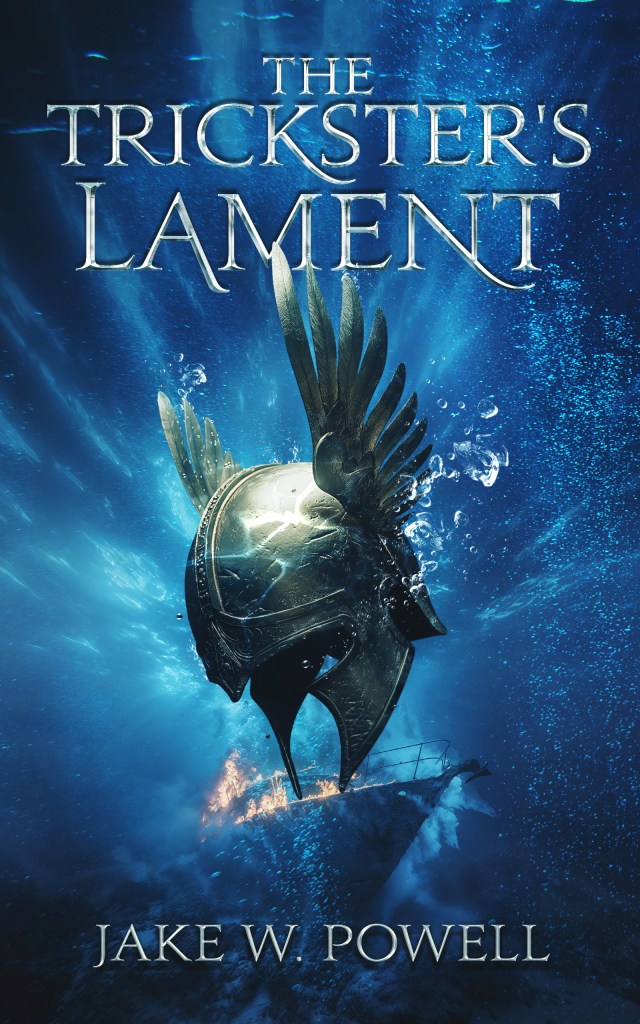
“Hermes is not having the best time. He walks a fine line, and his duty as messenger of Olympus weighs heavily on him. Being a god in the modern age means living in a world that no longer believes in gods. How much can one deity accomplish when no one respects him anymore? And why do his instincts tell him that he, the son of Zeus, is losing favor with his own family?

Tensions abound. The upstart Young Gods play dangerous games using entire cities as their boards. Formless monsters strike from the nighttime shadows, terrorizing hapless mortals. Agents of rival pantheons scheme to thwart Olympus’ designs. In the thick of it all, Hermes does what he does best: trick, lie, and cheat his way to victory.

A Little Room for Failure

Heeded my words not, did you? Pass on what you have learned. Strength, mastery. But weakness, folly, failure also. Yes, failure most of all. The greatest teacher, failure is.

Master Yoda, The Last Jedi

Leave it to the most controversial Star Wars movie to present one of the best lessons in the series. While people debate and rage over The Last Jedi’s merits as a film, an extremely valuable and important real life lesson slips by unnoticed. Somehow appropriate, in a poetic sort of way.


Failure is a fact of life, and it sticks with you more than success. It has a knack for engraving itself in your memory, whereas success is more like a sticker that peels off easily.


But what wise Master Yoda says (and many, many others beforehand – the quote didn’t originate with him) is true: Failure is a teacher. Do we learn from success? We are supposed to succeed, says society at large, and thus we tend to take it for granted. The shock of failing is a slap in the face. The wise person takes time to evaluate this shock and think over what went wrong.


When you fail and learn how you failed, you understand how to avoid making the same mistakes. You also learn generally uncomfortable truths, such as the limits of your abilities, your blind spots, skills that you need to practice or simply don’t have. So, you can either fail and learn and move on with life, or fail again and again in the exact same way, refusing to learn at all. Which is worse?


Failure is good and, dare I say, healthy. Kids should be allowed to fail at school. We shouldn’t be scared to let our children flunk exams. They’re in school to learn, so let them learn. And we adults aren’t so infallible, either. We mess up and trip over problems and don’t always make the right choices. We’re always learning, from our own mistakes and from others’.


So, don’t be afraid of failure. It will happen. When you goof up, it’s better to learn and move on than brood over a missed victory. Life has plenty of victories, but they tend to stay mum over their secret. Failure is always eager to teach.

***

Many thanks for visiting my blog. I post updates on my writing career, I muse over storytelling and fiction, and I reflect on the curious and wonderful things in life.

“Hermes is not having the best time. He walks a fine line, and his duty as messenger of Olympus weighs heavily on him. Being a god in the modern age means living in a world that no longer believes in gods. How much can one deity accomplish when no one respects him anymore? And why do his instincts tell him that he, the son of Zeus, is losing favor with his own family?

Tensions abound. The upstart Young Gods play dangerous games using entire cities as their boards. Formless monsters strike from the nighttime shadows, terrorizing hapless mortals. Agents of rival pantheons scheme to thwart Olympus’ designs. In the thick of it all, Hermes does what he does best: trick, lie, and cheat his way to victory.

The Greatest Teacher: What’s the Role of Failure in Life?

Do you know the magic word that society loves to hear? The Pied Piper’s song, leading us along without us giving it serious thought.

SUCCESS.

It’s the ultimate carrot on a stick.

SUCCESS.

It’s a wonderful word, so supreme and comfy in its vagueness that we rarely worry that we don’t really know what we mean by it.

SUCCESS. It’s the defining feature of happy people. If you’re not successful, then you must be … a loser!

Kids learn from an early age: Success is good. Failure is bad. Don’t fail. You must succeed at everything you do.

I submit for your consideration an alternative perspective: Failure is good. Failure is necessary. In fact, we should allow ourselves to fail. Failure is a good thing. Well, sort of. Let me explain.

Failure is the greatest teacher, as a very wise person once said. Think back on your life. Do you remember a great triumph? Maybe you finished a project that you were really satisfied with? Or gave an excellent presentation at work, or made a great speech to an audience? How do we get to these triumphs? Well, a couple ways. There’s sheer dumb luck, of course, but Lady Luck is a little fickle and I don’t trust her. She smiles too much.

Then there’s hard work, practice, and trial and error.

Wait a minute … Trial and error? Does that mean … mistakes are a part of succeeding? Well, yes. We learn from our mistakes. When everything is business as usual – let’s be honest – do we really notice? When I’m writing my book draft and all the words come out smoothly, I’m happy. But then the time for the next draft comes around and HOLY SMOKES WHERE DID ALL THESE TYPOS COME FROM? How did I misspell that word? I know the difference between “their” and “there!” And how could I use so many cliches? Shameful.

But I don’t forget the mistakes I made.

When you flunk a test in school, you’ll probably never remember the answers you got right. But you certainly remember the ones you got wrong. Failure educates us. And if we’re smart, we’ll remember our lessons for the next time.

It’s healthy to fail. In fact, it’s inevitable that we will, at some point and in some way, experience setbacks. Might as well learn that lesson ASAP.

Success is nice. We should try to achieve our goals in life. But success is kind of dimwitted. Success can’t really tell you anything you don’t already know. Failure is much more interesting. Failure has plenty to say. It will gladly talk your ear off if you pay attention. Failure is always willing to point out our shortcomings. And I’m very thankful for that, because otherwise I’d go through the rest of my life blissfully ignorant of flaws that could be remedied if I just put myself in a situation where they become obvious. Awkward? Yes. Useful? Very.

We shouldn’t seek to fail. But we should be more open to it. We should allow ourselves to fail. Don’t reject it. Don’t shun it. Learn from it, dust yourself off, and move on.

Think about it. If you want to succeed at something, how many times are you willing to deal with failure before you achieve it?

Enjoy what you’re reading? Subscribe by email for updates on new posts and follow my writing career, musings on fiction and storytelling, and reflections about life in general.