Outside of a dog, a book is a man’s best friend. Inside of a dog it’s too dark to read.
I find television very educating. Every time somebody turns on the set, I go into the other room and read a book.
Groucho Marx
Very important and enlightening commentary on reading by the great Groucho Marx. Good advice and to be followed. Reading is healthy. Being inside animals is not.
***
Many thanks for visiting my blog. I post updates on my writing career, I muse over storytelling and fiction, and I reflect on the curious and wonderful things in life.
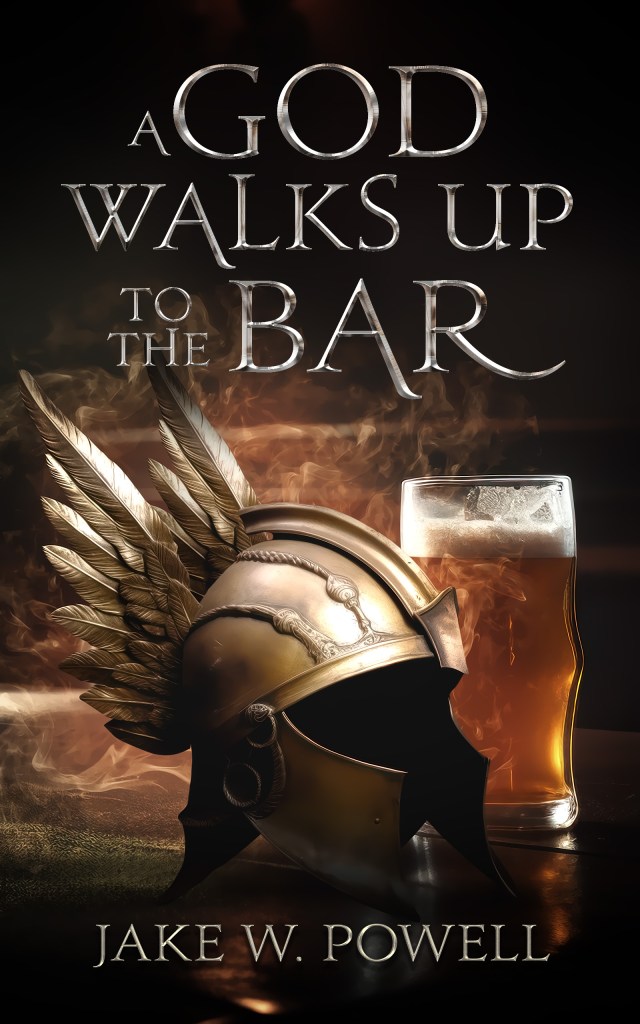
“Hermes is not having the best time. He walks a fine line, and his duty as messenger of Olympus weighs heavily on him. Being a god in the modern age means living in a world that no longer believes in gods. How much can one deity accomplish when no one respects him anymore? And why do his instincts tell him that he, the son of Zeus, is losing favor with his own family?
Tensions abound. The upstart Young Gods play dangerous games using entire cities as their boards. Formless monsters strike from the nighttime shadows, terrorizing hapless mortals. Agents of rival pantheons scheme to thwart Olympus’ designs. In the thick of it all, Hermes does what he does best: trick, lie, and cheat his way to victory.“
We live in an age of quips. Quipping has gripped modern entertainment. Quick, glib, clever one-liners are all the rage nowadays. You see it in blockbuster movies, television, comic books, and general writing. Pithy turns of phrase to sum up a situation, shove humor into it, or just to show off how clever the writer is.
And like anything in excess, people eventually become tired of it. One-liners aren’t bad in and of themselves, but I feel that overexposure to any style of writing can sour people against it. Like eating ice cream and pizza three meals a day for a month, something you originally enjoyed now just leaves you feeling sick and disgusted.
Humor is very important. Without it, a story can feel lifeless and dull. But humor comes in many forms, and we aren’t limited to the simple quip. I’m not saying that quipping is bad in and of itself. James Bond can get away with his cheeky one-liners all day long. But variety is the spice of life. More importantly, not every story needs that type of writing.
Maybe I should start from the beginning. What is quipping?
Dictionary.com defines “quip” as “a clever or witty remark or comment” or “a sharp, sarcastic remark; a cutting jest.” And that pretty much sums it up. Quips are one-liners, punchlines, and statements to show off a character’s biting wit. They can be used to characterize and flesh out the tone of a story, but modern writers, especially in film and television, have become obsessed with this one form of humor. What happens when you’re exposed to one, and only one, type of funny for ten years? It becomes boring.
What’s worse, writers can fall into the temptation to constantly strive to outdo themselves and each other. Stories lose their focus and become quip-a-thons. What wacky thing will the hero say next? And how will it completely disrupt the otherwise somber tone of the scene? Because that’s what a poorly used quip can do: It destroys the mood. Too often, I watch movies that are afraid to end on a quiet note. The tone needs “lightening up” with some funny, silly observation. And suddenly, the characters aren’t taking anything seriously. And if they aren’t, why should the audience? Main hero in mortal danger? He makes a quip, and it’s just a big joke, no reason to be on the edge of your seat. A scene of exposition establishing the stakes? Sum it up with some pithy, self-aware remark that illustrates the characters are more concerned with pointing out cliches and proving how clever they are than getting the job done. Guess the audience shouldn’t care, either.
Can you tell I really don’t like this style of humor?
I used to. I enjoyed Marvel movies. I liked Arnold Schwarzenegger’s cheesy one-liners. But overexposure soured me against quips. No, let me revise that statement. It soured me against every main character in the story using quips. That’s the biggest gripe I have against the style, because it makes every character basically the same. Oh, sure, they might have different motivations, different backstories, different personalities, but they all sound the same. Same remarks, same puns, same tendency toward glibness. They all react the same way to a situation. And that is, I emphasize again, boring.
That being said, there are stories I enjoy where quipping is used. I like The Dresden Files, and the protagonist’s tendency toward wise-guy remarks. And I don’t mind James Bond’s use of hilariously callous puns after killing someone. Heck, I enjoy the Marx Brothers’ old films, and Groucho Marx is a machine at quipping. A bona fide master. And you know why I can tolerate these examples? Because they are the only characters in the story who rely on quipping for humor. They stand out because of it. Other forms of humor are used by other characters. Rather than being the default fallback for extracting humor, their smart-aleck words are used to define their character and place in the story. It’s part of who they are.
What’s that old saying? If everyone is special, nobody is. I don’t know about that, but I do think that if everyone is funny in the same way, than nobody is funny at all. Put some variety into your story’s humor!
If you just so happen to be enjoying my blog, feel free to subscribe. I post updates on my writing career, I muse over storytelling and fiction, and I reflect on the curious and wonderful things in life.
My first book, A God Walks up to the Bar, is available on Amazon.com. Witness the modern day adventures of the Greek god Hermes in a world much like our own – and with demigods, vampires, nymphs, ogres, and magic. The myths never went away, they just learned to move on with the times. It’s a tough job, being a god!
Me when I start a writing session, cocky and ignorant of the defiance I am about to face … Image is licensed under CC0
So, I sit down, turn on my computer, pull up my story file, and start writing. All is well. What will I have my characters do today? Dialogue. Action. Characterization. Building a world from words. I’m king of this world. Everyone has to do what I say. Right?
Hang on. Why did Bob say that? I didn’t tell him to say that! Who does Bob think he is? I didn’t write him to be such a jerk!
And why is Tiffany suddenly a lot snarkier than I imagined her? And since when was Arnold so philosophical? I’m writing a thrilling adventure, not an excuse to sit around and contemplate our navels!
It’s happening again. My story is coming alive before my very eyes. And it does not recognize my authority.
It happens to the best of us. We outline our work, we prepare, we research, then we sit down and actually start writing – and it all gets away from us. Scenes don’t play out the way we planned them. Characters put words in our mouths, rather than the other way around. The story shifts and rumbles, it wakes up, and our creation becomes a living thing. IT’S ALIVE!
But how can this be? How can the imaginary have a will of its own?
Don’t look at me. All I know is that I had no idea Hermes liked tequila when I started writing A God Walks Up to the Bar.
They start talking to you, these characters. They start telling you their likes and dislikes, their hopes and fears. And when you acknowledge that they are real people, or as close to real as is possible, you reach an epiphany. Your story is better for it. Like the journalist who sits down for an interview with questions prepared and is sidetracked by the subject’s fascinating anecdotes, the population of your created universe reveals new and tantalizing quirks that flesh it out.
Still, it is somewhat bewildering when your story gets away from you. Even when your cast deigns to submit control back to you, you can’t always shake the feeling that you’re just along for the ride. You’re graciously being allowed to witness events as they unfold. A giddy experience, to be sure. I don’t entirely know what to expect when I begin a writing session. But doggone it, these folks need to have some respect! Stop pulling me off-track. We have a story to write! We have deadlines! I can’t be distracted by Alice’s unfolding tragic backstory and face the temptation of adding another 3,000 words! I’m writing genre fiction, not Les Misérables!
And so it goes. The writer lays the foundation, the characters give their input, I tell them what I want them to do, they push back, I push back, and somehow, out of this beautiful mess, a story is born.
I love being a writer.
Enjoy what you’re reading? Subscribe by email for updates on new posts and follow my writing career, musings on fiction and storytelling, and reflections about life in general.




 Jake W. Powell