Thoughts on Living a Long Life

I’d be lying if I said I didn’t care if I live a long life so long as it was a “meaningful” or “productive” one. The survival instinct is strong. I want to live as long as I am able to because I value my life, I don’t want to sadden my friends and family, and I enjoy life. And even if life were miserable and burdensome, I would still want to live on, if not for my own sake, then for the sake of others.

And yet, the issue is more complex than that, because I also believe that better a short and healthy life than a long and poor one. To live 90 years and have half those years be spent in perpetual sickness brought on by poor life choices or chronic illness would be a terrible thing. Would I rather I spent my days in and out of the hospital like a revolving door?

It’s easy to be glib with phrases like “I would rather die” when battered by life, but the reality is that the vast majority of humanity wants to keep living regardless of quality of life. Life in and of itself matters.

To the extent upon which it depends on my choices, I want to live a long life. I want to live healthily and happily. And ultimately, I want to live, period. In suffering and in happiness, I want to live.

Life is a chain reaction. Our lives create ripples that touch others and, to perhaps an even greater degree, so do our deaths. Life is lived not only for myself, but for those around me. Even strangers are affected by my life, and mine by theirs. Not something to take lightly.

Ultimately, the concept of a long life is one of ups and downs, struggles and victories, joys and sorrows. Life is meant to be lived, for however long we are on this Earth.

***

Many thanks for visiting my blog. I post updates on my writing career, I muse over storytelling and fiction, and I reflect on the curious and wonderful things in life.

“Hermes is not having the best time. He walks a fine line, and his duty as messenger of Olympus weighs heavily on him. Being a god in the modern age means living in a world that no longer believes in gods. How much can one deity accomplish when no one respects him anymore? And why do his instincts tell him that he, the son of Zeus, is losing favor with his own family?

Tensions abound. The upstart Young Gods play dangerous games using entire cities as their boards. Formless monsters strike from the nighttime shadows, terrorizing hapless mortals. Agents of rival pantheons scheme to thwart Olympus’ designs. In the thick of it all, Hermes does what he does best: trick, lie, and cheat his way to victory.

To Be Childlike, Not Childish

What does it mean to be a kid at heart?

Have you ever met someone who was not only physically old, but acted old? “Woe is me, I’m so aged. I can’t do anything anymore, and I must spend my days lamenting my remaining existence.” They’re not exactly fun to be around.

They’re kind of like Charlie’s parents from Willy Wonka and the Chocolate Factory, having given up and lying in bed all day.

Of course, then Grandpa Joe actually stands up, and this happens.

Being a kid at heart means never losing the spark of hope, creativity and optimism that permeates childhood. Everything is new, everything is exciting, and everything is worth running towards.

To be childlike, not childish. Anyone of any age can be childish. That’s the dark side of childhood: the whining, the screaming, the self-pity, the selfish delusion that everything exists to serve and coddle you.

To be childlike, though, encompasses the positives of childhood: an enjoyment of life, able to see the good and the fun in it, to charge into any situation and give it your all while laughing and smiling. Honest laughter. Sincere smiles. That strange concept of unironic, sarcasm-free fun that we seem to lose as adults. Adults like to analyze their existence. Kids just are.

In short, to be a kid at heart means to sincerely enjoy life, with all its ups and downs. To live life and embrace its challenges, its triumphs and all the people in it. To not lie in bed all day, but get out and breathe the fresh air.

Even those who have been hampered by age and injury can soak in the sun, if they so choose, rather than grumbling in the dark.

***

Many thanks for visiting my blog. I post updates on my writing career, I muse over storytelling and fiction, and I reflect on the curious and wonderful things in life.

“Hermes is not having the best time. He walks a fine line, and his duty as messenger of Olympus weighs heavily on him. Being a god in the modern age means living in a world that no longer believes in gods. How much can one deity accomplish when no one respects him anymore? And why do his instincts tell him that he, the son of Zeus, is losing favor with his own family?

Tensions abound. The upstart Young Gods play dangerous games using entire cities as their boards. Formless monsters strike from the nighttime shadows, terrorizing hapless mortals. Agents of rival pantheons scheme to thwart Olympus’ designs. In the thick of it all, Hermes does what he does best: trick, lie, and cheat his way to victory.

Out of Place, Out of Whack

Tell about a time when you felt out of place.

When I hear the phrase “out of place,” it makes me think that I have somehow misplaced myself or stumbled into something that is not meant for me. It implies being in the wrong place, not merely an awkward or unfitting one. And without a doubt, if I entered someone else’s home without their permission, I’d be very much out of place and rightfully kicked out.

Feeling out of place, though, is something different. That implies a sense of wrongness regardless of the reality. My position and my feelings on that position are at odds with each other. Things feel out of whack, not matching up, but I could very well still be exactly where I’m supposed to be.

I’ve felt out of place plenty of times, in places where I belong: at an employee staff meeting, hanging out with friends, and sometimes, even when writing my book. Sometimes it’s a brief flash of discomfort, sometimes it’s a persistent nagging in the back of my head.

Truth be told, I generally try to ignore it. We all end up somewhere in life, and if we feel out of place, it may well be because we took a wrong turn, but more often than not it’s because it takes time to settle into a new lifestyle, a new routine, a new step in our lives.

***

Many thanks for visiting my blog. I post updates on my writing career, I muse over storytelling and fiction, and I reflect on the curious and wonderful things in life.

“Hermes is not having the best time. He walks a fine line, and his duty as messenger of Olympus weighs heavily on him. Being a god in the modern age means living in a world that no longer believes in gods. How much can one deity accomplish when no one respects him anymore? And why do his instincts tell him that he, the son of Zeus, is losing favor with his own family?

Tensions abound. The upstart Young Gods play dangerous games using entire cities as their boards. Formless monsters strike from the nighttime shadows, terrorizing hapless mortals. Agents of rival pantheons scheme to thwart Olympus’ designs. In the thick of it all, Hermes does what he does best: trick, lie, and cheat his way to victory.

“Now” is Not “Forever”

What is the best piece of advice you’ve ever received?

“This too shall pass.”

Whenever you are feeling down, whenever you feel discouraged, whenever you’re stuck taking out the trash or behind a desk at work, or otherwise feel that time has shrunk to a single point that is infinite and eternal and will never, ever get better …

“This too shall pass.”

This is no call to passivity or apathy. This is a call to endure and push forward. Now is not forever. The current situation is not the whole of the future. Persevere. Get the dishes done. Finish your homework. Drive through after-work traffic. There is an endpoint. There is not merely a light at the end of the tunnel – the tunnel itself does indeed have an end.

“This too shall pass.”

There is hope in life. Even the most dire, the most awful, the most horrific and seemingly apocalyptic of times will eventually pass and become a distant memory. You need not fear that what you’re suffering through now will always be there. And most of all, this means that we do need to live in despair. Work through the hard times, build perseverance, and from that perseverance comes character, and from that character comes hope. Because this – yes, THIS, right now – will pass soon enough.

***

Many thanks for visiting my blog. I post updates on my writing career, I muse over storytelling and fiction, and I reflect on the curious and wonderful things in life.

“Hermes is not having the best time. He walks a fine line, and his duty as messenger of Olympus weighs heavily on him. Being a god in the modern age means living in a world that no longer believes in gods. How much can one deity accomplish when no one respects him anymore? And why do his instincts tell him that he, the son of Zeus, is losing favor with his own family?

Tensions abound. The upstart Young Gods play dangerous games using entire cities as their boards. Formless monsters strike from the nighttime shadows, terrorizing hapless mortals. Agents of rival pantheons scheme to thwart Olympus’ designs. In the thick of it all, Hermes does what he does best: trick, lie, and cheat his way to victory.

What I Feel Isn’t Always What I Need

Share a lesson you wish you had learned earlier in life.

I wish I had learned much earlier in life that how I feel about something doesn’t change the need to do it. I wish that I had learned, a long time ago, that I shouldn’t only write when I feel inspired, that I only need to exercise when I feel good, and, in short, I should only do anything when I am “up to it.” Work still needs to be done regardless of my feelings on the matter, and even hobbies and joys can feel awfully dull sometimes.

I wish I better understood ten or twenty years ago that emotions shouldn’t dictate my actions, either to motivate me or restrain me. Emotion is separate from will. The will to do something is a conscious effort. Acting on passion is impulsive, and the burst of energy it gives is fleeting. The will to complete a task requires patience and quiet diligence.

Perhaps this seems obvious to you, and I’m just pointing out a fact that is clear as day. But I didn’t fully understand this when I was younger. I do now, and it has helped me better understand both myself and how life works.

***

Many thanks for visiting my blog. I post updates on my writing career, I muse over storytelling and fiction, and I reflect on the curious and wonderful things in life.

“Hermes is not having the best time. He walks a fine line, and his duty as messenger of Olympus weighs heavily on him. Being a god in the modern age means living in a world that no longer believes in gods. How much can one deity accomplish when no one respects him anymore? And why do his instincts tell him that he, the son of Zeus, is losing favor with his own family?

Tensions abound. The upstart Young Gods play dangerous games using entire cities as their boards. Formless monsters strike from the nighttime shadows, terrorizing hapless mortals. Agents of rival pantheons scheme to thwart Olympus’ designs. In the thick of it all, Hermes does what he does best: trick, lie, and cheat his way to victory.

What We Feel

How are you feeling right now?

When I saw this daily prompt, it turned me thoughtful. How am I feeling at this very moment? I considered that I could write about how I feel excited for today, hopeful for the future, disappointed, discouraged, content, happy, restless.

But I have been all these things in the span of a single day, and it makes me wonder if the question isn’t a flawed one. How I am feeling right now can change in a moment’s time.

And now I wonder if perhaps we all put too much stock in feelings. Emotions are flittery things, like butterflies twirling in a windstorm. Sometimes up, sometimes down, diving and soaring in all directions, rarely in one place for too long.

Emotions are … changeable. Their impact on our lives cannot be ignored, but I try not to direct my life by how I am feeling at the moment. If I only wrote when I feel good, I would still be on my first book. Action is a yardstick we can measure our lives by, not feelings.

And this makes me realize something else: Our feelings do not have to dictate our lives. They are not the measure of our worth or our successes or even our failures. They are important, for words of encouragement from a friend can gladden our hearts, and the thrill of a good story can inspire us, but they are not the sum total of our lives. We are more complex creatures than how we feel at any given moment.

We feel what we feel. We can rarely help it. But we are not puppets strung along by emotion. Emotion is a part of me, but it is not meant to be my master and commander.

And no, that really isn’t what the daily prompt was asking, was it? But there you have it. My daily thoughts, for better or worse.

***

Many thanks for visiting my blog. I post updates on my writing career, I muse over storytelling and fiction, and I reflect on the curious and wonderful things in life.

“Hermes is not having the best time. He walks a fine line, and his duty as messenger of Olympus weighs heavily on him. Being a god in the modern age means living in a world that no longer believes in gods. How much can one deity accomplish when no one respects him anymore? And why do his instincts tell him that he, the son of Zeus, is losing favor with his own family?

Tensions abound. The upstart Young Gods play dangerous games using entire cities as their boards. Formless monsters strike from the nighttime shadows, terrorizing hapless mortals. Agents of rival pantheons scheme to thwart Olympus’ designs. In the thick of it all, Hermes does what he does best: trick, lie, and cheat his way to victory.

Dealing With a Flooded Bathroom and Interrupted Plans

I start out every week with a plan. I map out the days and what I’ll do on each of them. I have everything laid out in my mind, all stacked up like alphabet blocks in neat rows and columns. And for months and months, everything goes according to the plan.

Oh, sure, there’s a hiccup here and there, but it’s always controllable, negligible, minor enough for me to fall into the illusion that I’m in control.

And then I get home from shopping after work one day and find a strange man at my door. And I ask him who he is, and he tells me that he’s a handyman sent from my apartment’s landlord to investigate a leak dripping into the carport.

And so we both walk in. I smell the water right away. Enough water to cover my bathroom floor an inch deep. And more than enough to flow over the threshold and make a nice, mushy bog of the carpeting beyond.

And my expectations of the afternoon are out the window. Happy Monday, presumptuous sucker.

He sucks up the water with a wet-vac. Then he leaves a dinky fan to dry out the carpet overnight … and all next day, as the case happens to be. I have a fan of my own, and I add its might to the air flow.

And so my plans are disrupted by an adventure I didn’t want. And I didn’t go in to work today, but instead worked from home because I needed to wash and dry the rugs soaked by the flood and expected that the handyman returns during the day to reclaim his fan. Which he didn’t. Because our plans aren’t always someone else’s plans, either.

But at least we all got a blog post out of it, didn’t we?

***

Many thanks for visiting my blog. I post updates on my writing career, I muse over storytelling and fiction, and I reflect on the curious and wonderful things in life.

“Hermes is not having the best time. He walks a fine line, and his duty as messenger of Olympus weighs heavily on him. Being a god in the modern age means living in a world that no longer believes in gods. How much can one deity accomplish when no one respects him anymore? And why do his instincts tell him that he, the son of Zeus, is losing favor with his own family?

Tensions abound. The upstart Young Gods play dangerous games using entire cities as their boards. Formless monsters strike from the nighttime shadows, terrorizing hapless mortals. Agents of rival pantheons scheme to thwart Olympus’ designs. In the thick of it all, Hermes does what he does best: trick, lie, and cheat his way to victory.

Exposed: More Risks of Being a Writer

In my last post, I talked a bit about the material risks of pursuing a writing career: the money and time involved. Now, I’d like to talk about more abstract risks.

Courage

To write is to put pieces of yourself into all your work. An author writes from the soul, baring his thoughts, beliefs, joys, and hopes to a world that may very well look on it all with indifference or contempt. That is a huge risk, especially if your work is meant to sway hearts and minds. You are, for all intents and purposes, metaphorically standing naked before the world. Making your work public is an act of courage.

Disappointment

How have you responded to tepid reception to your book or short story? How long have you labored to complete it, only for it to not live up to your expectations? It happens. It has happened to the greatest authors of the ages. To write for yourself and then tuck away the results can bring some pleasure, but if you make it available to the world, you may find that the world doesn’t see it with the same fondness. It doesn’t mean that you lack talent or diligence, it is simply the way that life turns sometimes.

Time (again)

Well, well, aren’t I a cheat? Putting up “Time” two posts in a row? But I’m talking about it in a different context here. I’ve already dwelt on how writing means putting in the time. But writers are also fighting against time. Every artist does, I suppose. We have so many ideas. Loads and loads, enough to last more than a lifetime. But we only have a lifetime, so we must face the truth that we won’t be able to complete every project that we want to before the end. So, which projects will you focus on? What are your most precious ideas that must be given form and shape? Choose wisely.

Again, apologies if my latest post was a little grim for your liking. To be an author is a great thing, but it carried its own struggles. Worthwhile things always do. I greatly enjoy writing and publishing, even as I acknowledge that it carries immense frustration sometimes. Even so, for those of us who write, we push forward. Don’t stop, even if it seems as if the risks outweigh the rewards. Keep writing.

***

Many thanks for visiting my blog. I post updates on my writing career, I muse over storytelling and fiction, and I reflect on the curious and wonderful things in life.

“Hermes is not having the best time. He walks a fine line, and his duty as messenger of Olympus weighs heavily on him. Being a god in the modern age means living in a world that no longer believes in gods. How much can one deity accomplish when no one respects him anymore? And why do his instincts tell him that he, the son of Zeus, is losing favor with his own family?

Tensions abound. The upstart Young Gods play dangerous games using entire cities as their boards. Formless monsters strike from the nighttime shadows, terrorizing hapless mortals. Agents of rival pantheons scheme to thwart Olympus’ designs. In the thick of it all, Hermes does what he does best: trick, lie, and cheat his way to victory.

A Little Room for Failure

Heeded my words not, did you? Pass on what you have learned. Strength, mastery. But weakness, folly, failure also. Yes, failure most of all. The greatest teacher, failure is.

Master Yoda, The Last Jedi

Leave it to the most controversial Star Wars movie to present one of the best lessons in the series. While people debate and rage over The Last Jedi’s merits as a film, an extremely valuable and important real life lesson slips by unnoticed. Somehow appropriate, in a poetic sort of way.


Failure is a fact of life, and it sticks with you more than success. It has a knack for engraving itself in your memory, whereas success is more like a sticker that peels off easily.


But what wise Master Yoda says (and many, many others beforehand – the quote didn’t originate with him) is true: Failure is a teacher. Do we learn from success? We are supposed to succeed, says society at large, and thus we tend to take it for granted. The shock of failing is a slap in the face. The wise person takes time to evaluate this shock and think over what went wrong.


When you fail and learn how you failed, you understand how to avoid making the same mistakes. You also learn generally uncomfortable truths, such as the limits of your abilities, your blind spots, skills that you need to practice or simply don’t have. So, you can either fail and learn and move on with life, or fail again and again in the exact same way, refusing to learn at all. Which is worse?


Failure is good and, dare I say, healthy. Kids should be allowed to fail at school. We shouldn’t be scared to let our children flunk exams. They’re in school to learn, so let them learn. And we adults aren’t so infallible, either. We mess up and trip over problems and don’t always make the right choices. We’re always learning, from our own mistakes and from others’.


So, don’t be afraid of failure. It will happen. When you goof up, it’s better to learn and move on than brood over a missed victory. Life has plenty of victories, but they tend to stay mum over their secret. Failure is always eager to teach.

***

Many thanks for visiting my blog. I post updates on my writing career, I muse over storytelling and fiction, and I reflect on the curious and wonderful things in life.

“Hermes is not having the best time. He walks a fine line, and his duty as messenger of Olympus weighs heavily on him. Being a god in the modern age means living in a world that no longer believes in gods. How much can one deity accomplish when no one respects him anymore? And why do his instincts tell him that he, the son of Zeus, is losing favor with his own family?

Tensions abound. The upstart Young Gods play dangerous games using entire cities as their boards. Formless monsters strike from the nighttime shadows, terrorizing hapless mortals. Agents of rival pantheons scheme to thwart Olympus’ designs. In the thick of it all, Hermes does what he does best: trick, lie, and cheat his way to victory.

Thoughts on Boredom

What bores you?

Boredom bores me. Okay, that’s a bit of a glib answer. Let me try again.

What bores me? Being unable to exercise my artistic skills. Being unable to imagine and create gets under my skin if I’m not careful. Maybe it’s a curse of the artistic mind, but I often feel like I need to create , to write something down and let my flight of fancy run its course.

However, I’ve learned that there is a distinct difference between being bored and embracing boredom. Boredom doesn’t bar me from productivity in other areas of my life and doesn’t condemn me to sit around twiddling my thumbs, lamenting the ennui of my existence. It just means I need to be a little patient. I have a job and other obligations. They come first. They are a responsibility and a privilege. I’m not in a place right now where I can make a living off my creativity. Writing books is a hobby, so it oftentimes simply cannot be a priority.

Are there times when I wish I was elsewhere doing something I consider more interesting? Well, yes, but that’s part of growing up. Play is the work of children. Work is the work of adults. Boredom is a side effect and a nuisance. I wish I could write 24/7, but I can’t. So, I learn to persevere through the boring times. They don’t last forever. It’s a fact of life, and it makes times of relaxation and artistic indulgence all the more sweet.

***

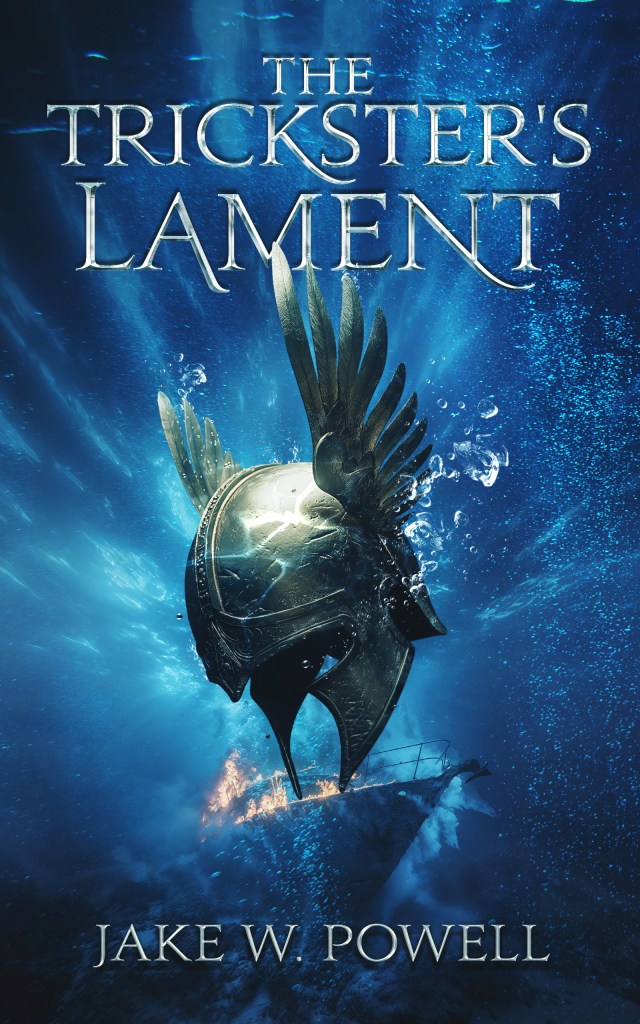
My latest book, The Trickster’s Lament, is currently available on Amazon in both Kindle and paperback format.

“Hermes is not having the best time. He walks a fine line, and his duty as messenger of Olympus weighs heavily on him. Being a god in the modern age means living in a world that no longer believes in gods. How much can one deity accomplish when no one respects him anymore? And why do his instincts tell him that he, the son of Zeus, is losing favor with his own family?

Tensions abound. The upstart Young Gods play dangerous games using entire cities as their boards. Formless monsters strike from the nighttime shadows, terrorizing hapless mortals. Agents of rival pantheons scheme to thwart Olympus’ designs. In the thick of it all, Hermes does what he does best: trick, lie, and cheat his way to victory.

Many thanks for visiting my blog. I post updates on my writing career, I muse over storytelling and fiction, and I reflect on the curious and wonderful things in life.