Success Takes Time

What’s something you believe that everyone should know?

Success takes time.

However you measure success – whether through contentment, accomplishing certain tasks, reaching certain milestones, or even just getting through the week – it takes time. Nothing comes instantly, especially nothing worthwhile.

When I say “time,” I don’t mean, “A few minutes” or even “A couple hours.” Days. Weeks. Sometimes, even years.

Cooking a good meal takes time. Reading (or writing!) a book takes time. Building your dream house takes time. Working up to your dream job takes time. Becoming a billionaire takes time. Building an intergalactic empire takes time.

Well, maybe don’t hold high expectations for that last one …

Anyway, if you have a goal and want to achieve it, expect to put in the hours. Nothing comes instantly or for free. Whatever you do, know that you will be putting in the hours and the sweat and maybe a few tears, as well.

***

Many thanks for visiting my blog. I post updates on my writing career, I muse over storytelling and fiction, and I reflect on the curious and wonderful things in life.
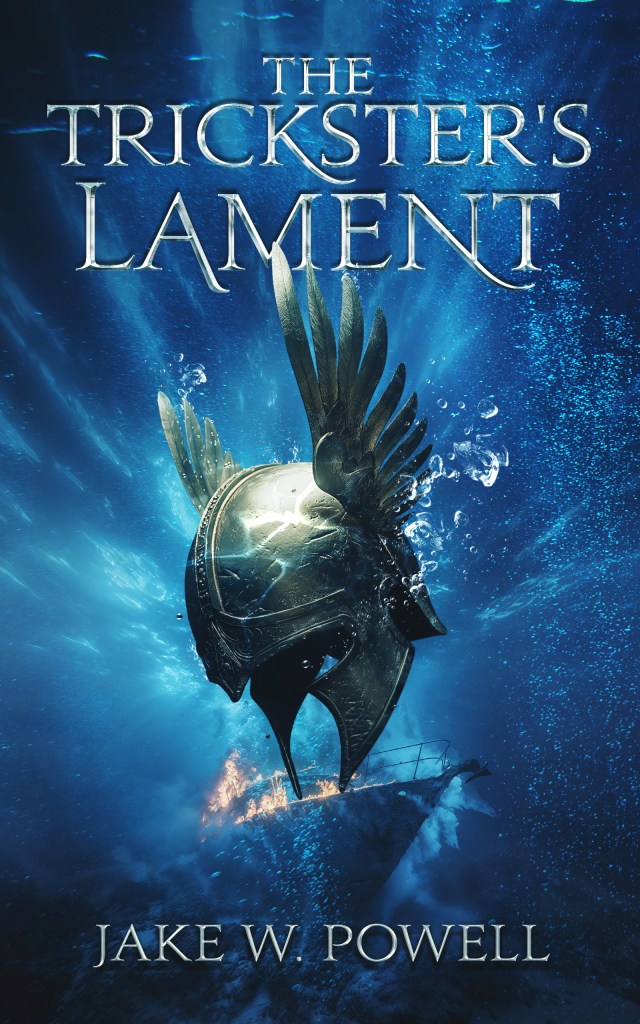
“Hermes is not having the best time. He walks a fine line, and his duty as messenger of Olympus weighs heavily on him. Being a god in the modern age means living in a world that no longer believes in gods. How much can one deity accomplish when no one respects him anymore? And why do his instincts tell him that he, the son of Zeus, is losing favor with his own family?

Tensions abound. The upstart Young Gods play dangerous games using entire cities as their boards. Formless monsters strike from the nighttime shadows, terrorizing hapless mortals. Agents of rival pantheons scheme to thwart Olympus’ designs. In the thick of it all, Hermes does what he does best: trick, lie, and cheat his way to victory.

One Smile at a Time

Did you give someone a smile today? A small hello, a gentle smirk?

Did you bid someone “Good morning” and “How do you do?” Did you let a stranger know that you noticed them and cared?

It is a precious thing in today’s age. A little hello can lead to big changes. A drop of kindness can spread through the heart. A word has power, even if that word is “Hi.”

Give someone a smile. A real smile, a polite smile, a warm smile, a pleasant smile. And back up that smile with a word. A scant few seconds of your life given over to another. Nothing lost, but maybe something gained.

***

Many thanks for visiting my blog. I post updates on my writing career, I muse over storytelling and fiction, and I reflect on the curious and wonderful things in life.

“Hermes is not having the best time. He walks a fine line, and his duty as messenger of Olympus weighs heavily on him. Being a god in the modern age means living in a world that no longer believes in gods. How much can one deity accomplish when no one respects him anymore? And why do his instincts tell him that he, the son of Zeus, is losing favor with his own family?

Tensions abound. The upstart Young Gods play dangerous games using entire cities as their boards. Formless monsters strike from the nighttime shadows, terrorizing hapless mortals. Agents of rival pantheons scheme to thwart Olympus’ designs. In the thick of it all, Hermes does what he does best: trick, lie, and cheat his way to victory.

A Little Room for Failure

Heeded my words not, did you? Pass on what you have learned. Strength, mastery. But weakness, folly, failure also. Yes, failure most of all. The greatest teacher, failure is.

Master Yoda, The Last Jedi

Leave it to the most controversial Star Wars movie to present one of the best lessons in the series. While people debate and rage over The Last Jedi’s merits as a film, an extremely valuable and important real life lesson slips by unnoticed. Somehow appropriate, in a poetic sort of way.


Failure is a fact of life, and it sticks with you more than success. It has a knack for engraving itself in your memory, whereas success is more like a sticker that peels off easily.


But what wise Master Yoda says (and many, many others beforehand – the quote didn’t originate with him) is true: Failure is a teacher. Do we learn from success? We are supposed to succeed, says society at large, and thus we tend to take it for granted. The shock of failing is a slap in the face. The wise person takes time to evaluate this shock and think over what went wrong.


When you fail and learn how you failed, you understand how to avoid making the same mistakes. You also learn generally uncomfortable truths, such as the limits of your abilities, your blind spots, skills that you need to practice or simply don’t have. So, you can either fail and learn and move on with life, or fail again and again in the exact same way, refusing to learn at all. Which is worse?


Failure is good and, dare I say, healthy. Kids should be allowed to fail at school. We shouldn’t be scared to let our children flunk exams. They’re in school to learn, so let them learn. And we adults aren’t so infallible, either. We mess up and trip over problems and don’t always make the right choices. We’re always learning, from our own mistakes and from others’.


So, don’t be afraid of failure. It will happen. When you goof up, it’s better to learn and move on than brood over a missed victory. Life has plenty of victories, but they tend to stay mum over their secret. Failure is always eager to teach.

***

Many thanks for visiting my blog. I post updates on my writing career, I muse over storytelling and fiction, and I reflect on the curious and wonderful things in life.

“Hermes is not having the best time. He walks a fine line, and his duty as messenger of Olympus weighs heavily on him. Being a god in the modern age means living in a world that no longer believes in gods. How much can one deity accomplish when no one respects him anymore? And why do his instincts tell him that he, the son of Zeus, is losing favor with his own family?

Tensions abound. The upstart Young Gods play dangerous games using entire cities as their boards. Formless monsters strike from the nighttime shadows, terrorizing hapless mortals. Agents of rival pantheons scheme to thwart Olympus’ designs. In the thick of it all, Hermes does what he does best: trick, lie, and cheat his way to victory.

If I Won the Lottery

What would you do if you won the lottery?

I’m assuming we’re talking large numbers here. I won four bucks once. It’s still in my wallet.

In all seriousness, if I won a million dollars, I’d invest it. I know, not fancy or decadently extravagant, but what’s the point of having a Lamborghini now when retirement comes and you have no money for food or rent? I’d rather live comfortably in my golden years than stare at my extremely expensive purchases and realize I can’t eat them.

That being said, I doubt I would invest all of it. I think I would put half in savings and keep half for spending on accoutrements more important than fast cars and humongous yachts. Like, say, sturdy clothing, a good, reliable commuter car, maybe a new computer or TV if I felt like splurging. Basics first, then luxuries.

Funny thing about money, the more I imagine having, the more I realize I would want more. Right now, if I were given $20,000, then that would be a lot and I would be satisfied, but if I ever received $1,000,000, all I would think about is why couldn’t it have been $2,000,000? The bigger the number is, the bigger I want the number to be.

Maybe I’m better off not winning the lottery at all … Or just sticking with a million and leaving it at that.

***

My new book, The Trickster’s Lament, is currently available on Amazon in both Kindle and paperback format.

“Hermes is not having the best time. He walks a fine line, and his duty as messenger of Olympus weighs heavily on him. Being a god in the modern age means living in a world that no longer believes in gods. How much can one deity accomplish when no one respects him anymore? And why do his instincts tell him that he, the son of Zeus, is losing favor with his own family?

Tensions abound. The upstart Young Gods play dangerous games using entire cities as their boards. Formless monsters strike from the nighttime shadows, terrorizing hapless mortals. Agents of rival pantheons scheme to thwart Olympus’ designs. In the thick of it all, Hermes does what he does best: trick, lie, and cheat his way to victory.

He may be disrespected. He may be kicked about. He may even be falling out with his pantheon. But Hermes is a trickster. He knows how to play dirty in a world that doesn’t play fair. But though he can best man, beast, and god, he isn’t prepared for his wiliest opponent yet: his own conscience.”

Many thanks for visiting my blog. I post updates on my writing career, I muse over storytelling and fiction, and I reflect on the curious and wonderful things in life.

Persist

Persist. Persistence is needed in life. Get out of bed, go to work, clean the house. Balance your checkbook, cook dinner, take your kids to sports practice. Every day, there is the routine. Keep at it. Always keep at it, even when you’re screaming inside.

Because you know what? Today you feel rotten, tomorrow you feel amazing. Today is hard. Working is hard, writing is hard and even picking up your socks is too much. Tomorrow, the misery clears away and you can take on the world. Persist.

Sometimes, you need to be stubborn. Your job sucks, you want to go home. Endure it. Stubbornly do the work expected of you. It won’t last forever, you know.

Persistence is refusal. Refusal to give up hope, refusal to give in to discouragement. Persistence doesn’t care about feelings or being in the zone. Persistence does, whether it wants to or not. Whether you want to or not.

So persist. Persist in achieving your goals, persist in improving your life, persist in getting through another day.

Many thanks for visiting my blog. I post updates on my writing career, I muse over storytelling and fiction, and I reflect on the curious and wonderful things in life.

Setting Your Own Pace: The Importance of Not Comparing Your Productivity to Others

It’s so easy to look at the writing community and be amazed at the writers who churn out novels like nobody’s business. A novel per year, two novels, even three! How can anyone hope to compete with that kind of productivity? For those of us just starting out, we may feel a burden being placed on our shoulders. We may feel that we have to “keep up” to be considered good writers.

Well, I say “Phooey” to that. Every writer is different, and we all have different paces at which we write. Some write slow, some fast. And not everyone has a dozen stories to share, or even two. Some people only have one good book in them for their entire lives. My respect to those who publish that one book.

Comparing yourself to other writers, using the accomplishments of others as the measure of your own worth and talent, is a flawed notion. What do you know about the life of those writers? How long have they been writing, and how much time do they have with which to write? And even more importantly, what sacrifices have they made to achieve their output?

I have a day job and other responsibilities. I have friends and a social calendar. As much as a part of me would love to write 8 hours a day every day, the simple truth is that I can’t. I make deadlines, I make an effort to write something every day, but I’m no book-making machine. But I can still be content with my work.

So, if you feel that your worth as a writer is measured by how prolific you are, take a breath and relax. Don’t rush your writing, and don’t seek quantity over quality. A rushed product is messy and rarely 100% of your potential. There is no race, except maybe against the deadlines you set for yourself. Don’t rob yourself of the enjoyment of what you do.

We’re all different. Our writing journeys are different. Figure out what works for you.

Many thanks for visiting my blog. I post updates on my writing career, I muse over storytelling and fiction, and I reflect on the curious and wonderful things in life.

What Do You Do With Your Time?

When I was a kid, the thing I wanted to be when I grew up was an “everyologist.” I wanted to do everything: science, literature, travel, architecture, painting, history. A five-year-old can easily imagine doing all those things. After all, he has all the time in the world. When a single year is one-fifth your total lifespan, the future stretches out to infinity.

Of course, our lives aren’t infinite, and as we grow up we learn that we don’t have all the time we want. I’m not an “everyologist,” though I do maintain a variety of interests and love to learn new things. I focus on my writing, my job, being with friends, reading, and living quietly. The more I learn I can’t do everything, the more I learn to focus on what I actually find worth doing.

I’d probably be a lousy architect, for one. And I’ve toyed with the visual arts, but it doesn’t hold my attention like writing does. And hey, I can always cheat: the Internet has lots of ways to learn and explore without actually, well, doing anything. It’s something, right?

But the Internet itself takes up our time (yes, I am aware of the irony of that statement on a blog). Too much? Well, that’s up to you. What else do you hope to do today?

All that being said, something else I’ve learned in life is that I have a lot more time than I sometimes suspect. It’s the things I feel I have to do – little things, like finish this book by such-and-such a date, or catch up on that TV series everyone is talking about – that eat away at our “free” time. It’s not really free if we treat our hobbies as a strange set of obligations. A career is one thing, but entertainment quite another. Anyway, the point I’m trying to make is that viewing our lives from new angles reveals that we don’t need much to fill up our time in a satisfying way.

I’m not a master of everything, and I’m okay with that. I have time enough for what I enjoy.

Many thanks for visiting my blog. I post updates on my writing career, I muse over storytelling and fiction, and I reflect on the curious and wonderful things in life.

Hard Times: Facing Down Discouragement

Feeling down in the dumps? Feeling like nothing you do is right or ever will be? If not, don’t worry, you will.

I’ve detected a pattern to discouragement in my life. It likes to come at certain times. I wonder if that’s true for everyone.

I find that nighttime is the worst for me. A couple of hours before bedtime, when I start to tire and my mind starts shutting down, fear and worry slither into my brain.

I need to start thinking about this. I haven’t done that yet. Do I have enough time to complete my book? Do I have enough money to pay for editing and publishing and marketing? Is it even any good?

It’s inevitable. For the writer, it can be debilitating. We work hard to finish our projects. We march on with stubborn determination to see our dreams through to the end. And we dread … not failure exactly. Inadequacy. Anyone can write, but can we write well? Or is it all just crap that would be better off hidden away in our computer’s hard drive, or better yet, in our own minds?

Even worse, what if it’s a good story, but nobody knows it exists? The unnoticed, inconsequential curiosity of the online store.

The night is a quiet and still time. My brain has time to process all these fears. When the excitement of the actual writing process stops, these nagging thoughts are heard most clearly.

But we don’t have to listen to such fears. They come, they stay a while, and then they leave. Yes, they do leave, if we press on regardless. Discouragement isn’t something we always have control over, but we can control how we act in response to it. Feelings of worry are not eternal. They only have real power to influence our life and work if we give them permission. Emotions run up and down. I look at my work today and feel it’s my best yet, and look at it tomorrow and cringe in disgust.

To continue writing in spite of that hollow feeling, to trudge along, to persevere through grim thoughts, this is is what we must do. Night isn’t forever.

Fear debilitates. Depression paralyzes. Writing is a joy for me, but I don’t feel excited about it all the time. Not 24/7. I have rough spots. I have times where I wonder if I should just leave it all behind. And I wait. I don’t act on those impulses of giving up, because I realize that they don’t last.

Writing is a marathon. Like athletes, we tire. We can feel inadequate and unable to rise up to the challenge. Write anyway. If you feel like crap, write. If you feel like nothing is coming to you, write something. A paragraph, a single sentence, anything so that you can say that you wrote for the day. Persevere. Be stubborn.

After night comes morning.

If you just so happen to be enjoying my blog, feel free to subscribe. I post updates on my writing career, I muse over storytelling and fiction, and I reflect on the curious and wonderful things in life.

My first book, A God Walks up to the Bar, is available on Amazon.com. Witness the modern day adventures of the Greek god Hermes in a world much like our own – and with demigods, vampires, nymphs, ogres, and magic. The myths never went away, they just learned to move on with the times. It’s a tough job, being a god!

Image Source: “Dead Joshua tree (Yucca brevifolia); Covington Flats” by Joshua Tree National ParkPublic Domain Mark 1.0.

Legacy: What We Are Remembered For

As we get older, we start having deep thoughts. Questions run through our minds, questions like, “What will I leave behind when I’m gone?” and “How will people remember me?” With age comes an acute awareness that our time on Earth is finite, and with that come musings on what our legacy will be. What mark will our lives leave on the world? Will we, to get to the heart of things, have done anything that mattered?

Legacy is a loaded word. It’s a word associated with empires and rulers. It invokes monuments that endure for centuries. Legacies are connected to greatness. The greatest men and women of history, whether good or bad, are remembered by all.

And look at what society says to us. We must work hard to leave our own mark. We must strive to improve the world, to improve society, to make positive changes, to “be the change you want to see.” Or even, just to leave the world a little better than when we found it. A burden, one might say. It is something imposed on people from a young age to aspire to greatness.

I say it’s a distraction from what’s truly important. Today’s great accomplishments are tomorrow’s misguided attempts. We simply don’t know how we will be remembered, or by whom, or for what. That guy you accidentally cut off on the freeway is going to remember you very differently than your favorite uncle who loves the sweater you bought him for Christmas. And that piece of litter you picked up in the park without a second thought might inspire some passing child to pursue a career in conservation. The door you held open for an old lady might have given her new hope in life.

Farfetched, you say? What do we truly know about what will affect others the most? Media tells us that big causes and organizations are what change the world. But not everyone is going to make a mark on that scale. What does that tell us? That those who don’t measure up to vaguely defined goals are failures?

Right, right, this is all very deep and philosophical, but maybe you’re wondering what this means for you. Or you’re wondering who this pretentious nit with a blog is, anyhow. Well, the long and short of it is: Your legacy is everything you do, big and small. And the small things, in my experience, tend to matter more than the big.

We’re not all going to be famous when we die. We’re not all going to found a world-spanning charity or find the cure to a terrible disease or invent a new technology. But we are all capable of acts of kindness. Compassion and sympathy go a long, long way. There might not be any prizes or awards, and nobody’s going to erect a monument for a gentle word, so maybe it doesn’t appeal to everyone. At least, until you need a kind word yourself on a bad day.

We can’t control our own legacies. We can maybe dictate what’s written on our tombstone, and will our possessions to others, but how we truly affected the world – for better or ill – is a far more complex thing that can’t be summed up in a few brief achievements.

Legacies shift and change and what we consider our magnum opus might be forgotten within a few years. So, if you ever find yourself getting worried over how people remember you, just relax. Just do your best and be kind. I suspect we’d all be surprised if we were aware of the things we did that truly mattered most to others.

If you just so happen to be enjoying my blog, feel free to subscribe. I post updates on my writing career, I muse over storytelling and fiction, and I reflect on the curious and wonderful things in life.

Image: “The mountains are calling and I must go. John Muir” by blmiers2; Licensed under CC BY-NC-SA 2.0.

Putting Your Best Foot Forward: Thoughts on Confidence

You ever see someone walking down the street with an easy stride, good posture, and a sure expression on their face? You think to yourself, “Man, they’ve got it together. They know they’re going places in life.” You ever question if they actually did know what they were doing and where they’d end up? After all, if they look like they know what they’re doing, they probably do, right?

Well, maybe not.

How often did you ask mom and dad questions about the world when you were a kid? And you took their answers as gospel truth. Parents always know why the sky is blue, and why the moon disappears during the day, and how car engines work, and when Santa is coming down the chimney on Christmas Eve. They were the all-knowing arbiters of wisdom.

Then we grew up and figured out that our parents were barely keeping it together. Blazes if they knew the right answers to a young child’s innocent curiosity. We become parents ourselves and end up playing the same part, only to discover that we can barely manage a coherent sentence in response to our children’s relentless torrent of questions.

But our parents always LOOKED like they knew what they were talking about. And because of that, we never thought to question anything they said. They could have told us the world really was black and white with no color in the 1950s, and our young selves would have believed them.

What about the inverse? An expert – in mathematics, let’s say – lectures in front of an audience. He’s giving one of those TED talks or what have you. He knows exactly what he’s talking about. He’s foremost in his field. But he stutters. He’s nervous being out in public like this. Consequently, he can’t explain the concepts very well. He has a nervous laugh and shuffles his feet. An expert? Sure. But we aren’t inclined to take him seriously. Not like Dad, who has no idea how photosynthesis works, but is able to bluff his three-year-old with a bold smile and a ready answer.

Confidence is a funny thing. It’s no guarantee of truth or accuracy, but it is such a vital component of how others perceive us. We trust confident people. They at least have the decency to look like they know what they’re about. And hey, if they trust their own skill, why shouldn’t we? Well, that way lies potential catastrophe, but that’s the point. We follow those who look like they know where they’re going. Confidence is no substitute for competence, but it is an important ingredient in leadership and successful undertakings.

Writing your book is one thing. Selling it is another. The Internet is full of ways to advertise, but if you don’t believe in the product yourself, why should others? If you don’t have the self-assurance that your story is worth reading, how are you going answer the question, “Why should I care?” If you don’t have any confidence, any trust in your book’s quality, people notice. And who wants to read a book that even the author doesn’t think is very good? Have a little faith in your work!

We live in a superficial world. Sad, but true. People look at our appearance and how we carry ourselves. Before they get to know us, they spot little details –shirt stains, unkempt hair, untied shoelaces. And thus, our self-presentation impresses itself on people’s memories for far longer than a good conversation or a well-informed lecture. Likewise, if any aspiring writers are trying to convince someone to read their book and looks nervous and withdrawn when discussing the thing, that’s what our would-be readers will remember, not that we actually wrote a good story that they’ll enjoy.

Is that fair? Not really. But it’s real. Writing requires skill and practice and patience. But to get people to read that story? That requires the belief that the story you told is worth sharing with others. It requires confidence to say that your story is worth the effort.

If you just so happen to be enjoying my blog, feel free to subscribe. I post updates on my writing career, I muse over storytelling and fiction, and I reflect on the curious and wonderful things in life.

Image: “BASE jump” by santimolina; Licensed under CC BY-NC-ND 2.0.