The Moment I Knew I Had Grown Up Whether I Wanted to or Not

When was the first time you really felt like a grown-up?

Growing up is a tough thing. We don’t leave childhood behind. It simply skips away, leaving us behind. And we find ourselves in the world of grown-ups. We certainly do gain quite a few things as adults, though: Responsibilities, duties, jobs, bills …

But at what point does it hit home that we’ve grown up? Is it a slow, dawning realization, or a thunderbolt to the head?

I first felt the pangs of adulthood when I moved to college. I had never lived apart from my parents before. Well, there was that one week in summer school, but that didn’t really count. Now, I was in the car with my parents going to a campus miles away from home and with the full knowledge that I wouldn’t be coming back with them.

The moment I made that realization was the moment that I knew things were Different™. There was no going back to childhood ways. I was an adult. I would be living as an adult. That made me a little excited, a lot nervous, and very, very giddy.

You ever have that dream where you’re in freefall? And your whole body tingles with such severe giddiness that you feel like it will overwhelm you? That’s how I felt when I arrived at my college. I was falling, falling, falling, all the way down. The only thing keeping me from curling up into a ball of panic was the certainty that the fall would end with me hitting the ground standing upright. Everything was in order, my room was rented, my classes were scheduled, and my parents were still just a phone call away. I wasn’t going to fall forever.

And so I grew up. No more childhood games, just the memories of them. Big adult games, like Studying for the Test, Learning to Budget and Managing My Own Bedtime. Adulthood was upon me.

Of course, once I graduated and entered the Real World, I realized that college wasn’t a very grown-up place after all, but that’s a story for another time.

***

Many thanks for visiting my blog. I post updates on my writing career, I muse over storytelling and fiction, and I reflect on the curious and wonderful things in life.
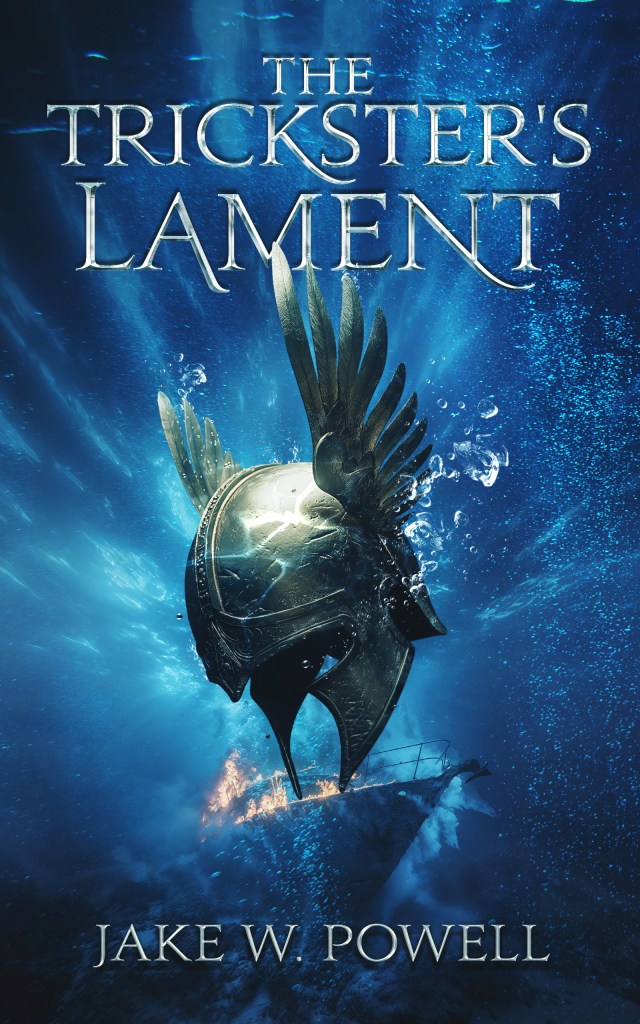
“Hermes is not having the best time. He walks a fine line, and his duty as messenger of Olympus weighs heavily on him. Being a god in the modern age means living in a world that no longer believes in gods. How much can one deity accomplish when no one respects him anymore? And why do his instincts tell him that he, the son of Zeus, is losing favor with his own family?

Tensions abound. The upstart Young Gods play dangerous games using entire cities as their boards. Formless monsters strike from the nighttime shadows, terrorizing hapless mortals. Agents of rival pantheons scheme to thwart Olympus’ designs. In the thick of it all, Hermes does what he does best: trick, lie, and cheat his way to victory.

A Law for Learning Language

If you had the power to change one law, what would it be and why?

There’s a joke that I’m far too fond of reciting to friends and family. It goes like this:

“If you speak three languages, you’re trilingual. If you speak two languages, you’re bilingual. If you speak only one language, you’re American.”

Sad but true.

If I had the power to change one law in my country, it would be to make mandatory that every American elementary and high school student be taught at least one non-English language. It’s an important skill, especially in a world that is growing more interconnected with every passing year.

English may be the lingua franca of today’s society, and your average English-speaker may be able to travel to nearly any country expecting someone to cater to his limited lingual skills, but that won’t last forever, will it? And besides, just because someone can speak English doesn’t mean they’ll humor you. And they can say mean things about you that you can’t understand.

Alright, cynicism and paranoia aside, besides the practical uses of speaking multiple language is the joy of learning and fluency. It opens doors, it draws people together and, quite frankly, it makes life a little easier if you’re not hobbled by ignorance of what others are saying.

America is a very cosmopolitan place. Lots of ethnicities and cultures exist here. And learning to speak Spanish or Mandarin or Arabic or French when you’re a kid is a lot easier than when you’re an adult.

Someday, I imagine, English won’t be a language that other countries’ students are required to learn. There ought to be a law that thinks that far ahead, and that’s the law I’d like to make: Students must become fluent in another language.

***

My latest book, The Trickster’s Lament, is currently available on Amazon in both Kindle and paperback format.

“Hermes is not having the best time. He walks a fine line, and his duty as messenger of Olympus weighs heavily on him. Being a god in the modern age means living in a world that no longer believes in gods. How much can one deity accomplish when no one respects him anymore? And why do his instincts tell him that he, the son of Zeus, is losing favor with his own family?

Tensions abound. The upstart Young Gods play dangerous games using entire cities as their boards. Formless monsters strike from the nighttime shadows, terrorizing hapless mortals. Agents of rival pantheons scheme to thwart Olympus’ designs. In the thick of it all, Hermes does what he does best: trick, lie, and cheat his way to victory.

Many thanks for visiting my blog. I post updates on my writing career, I muse over storytelling and fiction, and I reflect on the curious and wonderful things in life.

Deep Questions about Deep Literature

Do you remember literature classes in high school? How you would spend hours every day discussing the symbolic value of the billboard in The Great Gatsby and analyzing what each character represented in The Lord of the Flies? A spade is never just a spade in lit class. There is always a deeper meaning.

So can anyone explain to me why all the books students have to read are so dang depressing?

Looking back, this is what I feel that we were doing: Taking a beautiful flower and plucking its petals and cutting the stem and digging up the roots to see why it was a beautiful flower. And we very scientifically removed everything beautiful about it.

But darn it, we got educated about great literature. We knew what metaphor was. And allegory. And the subtle social critiques and genre deconstructions that mark all literary classics. We obtained knowledge! We justified our tuition!

There are people who make their living by reading stories and telling other people whether they are good or not. And their word is law, because there is no such thing as an opinion they understand the rules that govern quality writing. Where they obtain this arcane knowledge is unknown. Presumably, they dissected enough flowers.

Good stories seem to be a case of majority rules. If enough people say it’s good, it must be good. Maybe. But I didn’t like The Great Gatsby, so does that mean it’s not a good book or I’m not a good writer? Or perhaps if I had read it on my own time instead of being forced to analyze that darn stupid billboard I would have liked it.

What does it matter what color the curtains are or what suit the one character is wearing in each scene? It matters because somebody important says it matters, but what if it’s not the author saying it? Are we seeing what the writer put there, or what we think is there? Are we seeing meaning where there is none, or is the meaning not what we think it means? Does it mean what people say it means, or does it mean something else, which means that what I want it to mean means that it means the wrong thing from what everyone else thinks it means? Because that’s just mean.

Or maybe we’re just really good at gaslighting ourselves into thinking a book somebody wrote to pay their bills is a magnum opus. The writer wings it, hears what critics say, nods sagely and says, “Yes, that’s exactly what it means.”

Many thanks for visiting my blog. I post updates on my writing career, I muse over storytelling and fiction, and I reflect on the curious and wonderful things in life.