Writing is a Whitewater Rapid, Writing is a Block of Marble

What do you enjoy most about writing?

Writing is an act of creation. It is the free exercise of imagination and the production of things unseen, undreamt, uncertain until that very moment. It is as dynamic as a mountain river and just as unpredictable. It ebbs and flows. Currents crisscross one another and pull me in this direction, and now in the other. I love it. I plunge into the unknown when I sit down to write. For all the preparations and outlines and forethought, which are important, I still don’t truly know what will happen.

I love the surprise. I love the way that my imagination detaches from my logical mind and soars on its own. And then, after I return to Earth and the giddiness fades, comes the really fun part: editing.

Editing is taking the uncouth block of marble that is my first draft and refining it into something I can show in public. I am an editor at heart. The initial draft, that whitewater rafting down the river of raw imagination, must be balanced against the delicate chiseling of the editing process. Careful carving, doing away with what isn’t needed, making my work into something better. I love the careful precision and attention to detail.

Truth be told, I just love making up stories. Good stories, bad stories, stories that teach, stories that entertain. Like rivers and stone, riding the rapids and nicking away at the marble, are stories made.

***

Many thanks for visiting my blog. I post updates on my writing career, I muse over storytelling and fiction, and I reflect on the curious and wonderful things in life.
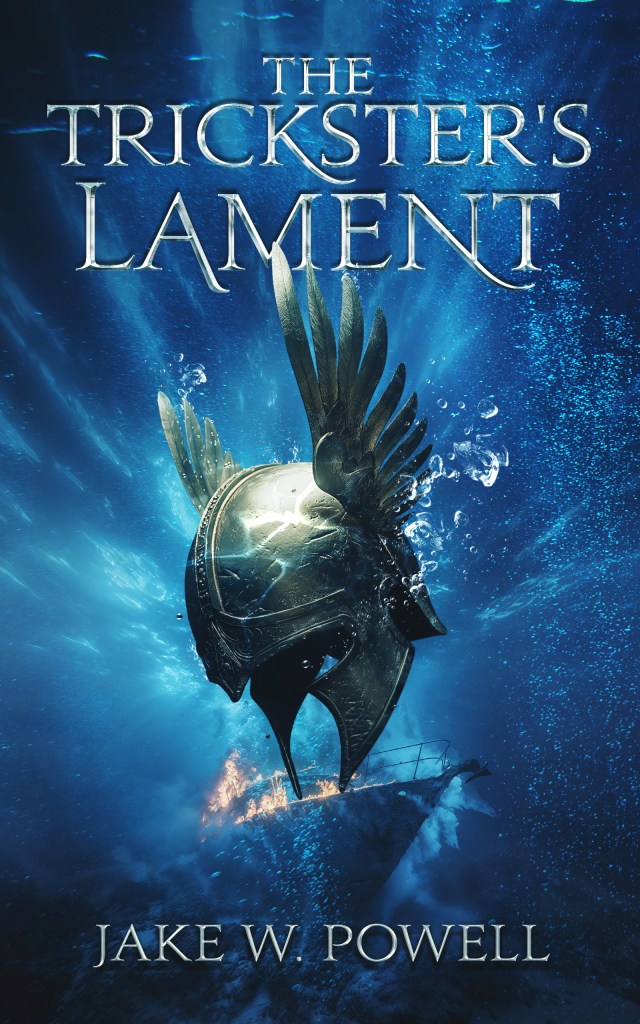
“Hermes is not having the best time. He walks a fine line, and his duty as messenger of Olympus weighs heavily on him. Being a god in the modern age means living in a world that no longer believes in gods. How much can one deity accomplish when no one respects him anymore? And why do his instincts tell him that he, the son of Zeus, is losing favor with his own family?

Tensions abound. The upstart Young Gods play dangerous games using entire cities as their boards. Formless monsters strike from the nighttime shadows, terrorizing hapless mortals. Agents of rival pantheons scheme to thwart Olympus’ designs. In the thick of it all, Hermes does what he does best: trick, lie, and cheat his way to victory.

What Writing My Second Book Has Taught Me

I’ve heard that writing your second book is harder than writing the first. Your first book may be a hit, but it may also be a fluke, a one and done deal. But moving on to the second? Ah, that’s when you find out if you really have the chops to be a writer.

Well, crafting my second book has gone mostly smoothly. The story came together much more easily, I’ve gained a better understanding of the characters and their motivations and personalities, and it’s been a fun ride. Heck, I got it finished in much less time than the first: about a year and a half from beginning to final draft. But I also made mistakes that I didn’t with my first project.

Now, why is that? Why did I order a paperback cover when I didn’t have my final page count ready? Why did I make silly oversights in editing that I only noticed after sending the book in for formatting?

The only answer I have thus far is that I was rushing. I jumped the gun, I got a little too lax, I was so fixed on the end goal that I didn’t pay attention to all the hurdles. I was impatient, and I didn’t even realize it.

Fortunately, I spotted these errors in time and fixed them. Lesson learned.

I thought I’d share my insights here for any other budding authors to read. Impatience is a bane of writers. Maybe you have just the one novel to write in your lifetime. You’ve spent years on it and are eager to finally see it published. Or maybe you have a series in mind, a long-running story told over several books, and you’re ready to move on to the next leg in the journey.

Either way, the temptation to push through and stop paying attention to details is strong. Resist it! A good novel takes time. You have plenty of it to perfect your story, and the copyright page, and the title, and the word count, and so forth. Don’t publish until you know that your book is exactly the way you want it.

Sweat the details. It saves so much trouble in the long run if you do.

Many thanks for visiting my blog. I post updates on my writing career, I muse over storytelling and fiction, and I reflect on the curious and wonderful things in life.

Tips on Draft Writing

Drafts are a vital part of any writing project. Very, very, very rarely is any book released on its first draft. You need to pour over your work many times to make sure it’s ready for publication. But, the question often arises: How many drafts should you write? Three? Four? Eleven? How many is enough?

There’s no hard and fast answer. It depends on the author. Different strokes for different writers.

Even so, I’ve come across a few general tips that can help you decide how long to spend in the drafting stage.

  1. Set yourself goals for each draft. Pick one specific thing to improve for each draft you write. Your first draft -the vomit draft, as I like to call it – is just getting your story onto paper. Your second draft, perhaps, can center around developing story and characterization. For the next one, pay attention to grammar and sentence structure. Whatever you choose, each draft sees definite and specific improvement, and you may find yourself not needing to go through as many as you expected.
  2. Don’t expect perfection. You’ll never get there. Drafting is about improvement, not reaching an ideal but unattainable state of “perfection.” Even the greatest writers make mistakes. Focus on refining and polishing. Every time you go through your story, you’re making it better. Each draft builds on the previous one.
  3. Pace yourself. Sometimes, wrapping up one draft and jumping straight into the next isn’t a good idea. Give yourself a few days to let your subconscious mull over things. A little break can be great for your writing as you begin anew rested and with a fresh perspective. You find yourself more easily spotting errors and opportunities.
  4. You have to publish eventually. If you want to release your book to the public, you will have to stop drafting at some point. You have to tell yourself that your story is ready. Remember: Refining and editing is all well and good, but if you never stop, then you will reach a point where you’re doing more harm than good. You lose sight of the whole and get buried in nitpicks that add nothing. A sculptor who never stops chiseling the marble ends up with nothing but gravel in the end.

Some people love the drafting stage, other people don’t. I find it a useful and interesting process. I not only clean up the chaos of my first draft, but also discover new things about my characters, new storytelling techniques, and just plain mature as a writer. However many you find necessary, remember the most important tip of all: Have fun with it!

Many thanks for visiting my blog. I post updates on my writing career, I muse over storytelling and fiction, and I reflect on the curious and wonderful things in life.

A Writer’s Lament

My friends and family know I’m a writer. They know that I’ve published one book and am currently working on a second. That arouses interest, and it invites a question. It’s a question I never feel I can adequately answer:

“How’s your book coming along?”

What do I say? Do I delve into the complexities of plotting and characterization or explain exactly how the story has evolved in the writing of it? Do I describe the process of drafting? Maybe we could have a chat about beta readers or commissioning cover art? Or perhaps I just jump into a lengthy spiel about how writing is so darn fun, the thrill you get when your ideas come together and your vision is realized?

It’s … hard to talk about my work with non-writers, not because of some elitist viewpoint that only writers can understand other writers, but, because I don’t have anything to show for my work until it’s done. That’s the weird thing about writing in the modern era. There’s no physical measure of progress.

I’m no artist or sculptor, whose progress is apparent from glimpsing the picture being painted or the block of stone being carved. I’m not an architect whose building people can watch being built day by day. I don’t even live in the era of the typewriter, when authors ground out their pages and stacked them into a pile. That’s progress you can see. But in this time of computers, all of my work is invisible. It’s in the hard drive, unseen and untouchable, and what isn’t there is in my head.

So, when people ask how my book is progressing, all I can really say, “It’s going good,” or “I’m on track.” Unless they want to be a reader reviewing my work, there’s nothing I can show them. The answer to their simple question – the full, glorious answer of what is going on inside a writer’s colorful mind – takes more than a quick word to fully portray. Microsoft Word documents aren’t glamorous. The writing process itself isn’t glamorous. You don’t see people lining up for tours to see authors at their desks. It isn’t fancy or visibly interesting. All the fun goes on in the writer’s imagination, unseen and unheard. It’s the result that grabs people’s attentions, and only the result.

Cal it a writer’s lament.

How’s my book coming along? Just fine, thank you for asking. But I can’t truly show you until it’s done.

Many thanks for visiting my blog. I post updates on my writing career, I muse over storytelling and fiction, and I reflect on the curious and wonderful things in life.

Planning Ahead vs. Winging It: A Reflection on Writing Styles

Ever heard the phrase “writing by the seat of your pants?” Some writers have a knack for making up the whole story as they go. They start with no outline and no treatment. They just start writing and end up wherever they may. Improvisation is a special skill and can lead to some truly inspired work when the author goes with his gut and lets the story flow out of his mind. Like a spring bubbling out of the rock, making things up as you go can produce the most unexpected and wonderful stories.

It’s also a skill that not everyone has the good fortune to possess. I, for one, need to know where my story is going before I begin. The outline is the foundation of every story I write. Every scene, every step, every action must be planned out in advance. Like an architect designing a building, I have the blueprints spread out before me so I have an inkling of where my plot will ultimately end up.

Otherwise, I’m adrift at sea and tossed about by a series of random events on a meandering journey with no point or overarching theme. Ok, some stories do work well with random-events plots, but these aren’t the type I’m trying to write. I try to stick to my strengths.

That being said, writing is a truly organic process, and I mean that in more ways than one. Stories come alive on the keyboard (or under the pen if you’re so inclined). Like living creatures, they have urges and inclinations of their own, and a writer develops the intuition to detect those urges and know when to follow them and when to restrain. “Story whisperer” isn’t a term you’re likely to ever hear, but like animal trainers, writers end up gaining a deeper understanding of how their story “thinks” and where it wants to go. Exploring new potentialities can lead to new plot threads that improve the overall end result. Writing is full of pleasant surprises like that.

As someone who loves to plan ahead, I’m not always interested in developing every new thread of a story that is revealed as I write it. But I do find that I tend towards winging it in certain circumstances. Dialogue, especially, lends itself to improvisation, if only because no matter how much I develop a story’s framework, the dialogue between characters never really falls into place until I sit down and write it in detail.

This is the fun of writing: Watching your characters come alive and gaining a deeper knowledge of how they think and relate to each other. I’ve surprised myself plenty of times with how my own creations grow beyond my expectations.

Action scenes can also end up going in completely unpredicted directions. Writing a fight scene or a chase can deviate from the “script” as it becomes apparent your original plan simply won’t work. So, I adapt and change course. Action scenes are hard enough to write as it is. Learning to wing it when necessary adds a whole new layer of challenge that can, nevertheless, improve your story if it lines up with the logic of the scene and the characters’ natures.

What does this all mean for you as a writer (assuming you are one, of course)? Well, maybe you’re a little freaked out by my talk of stories as living creatures and think I should get some therapy. Or maybe you’re nodding in agreement. How I write is certainly not how others write, and the ideas that friends and teachers tell you may not line up with your own. Everyone has a different style: Some love to go in without a clue and find out where they end up, others definitely need a solid framework before they can begin the first sentence.

Writing styles are unique to the writer. Everyone has their own process. Whether winging it or planning ahead, all writers find their sweet spot and use it to create something awesome.

The gods and beings of ancient myth never went away. They just moved on with the times.

My book, A God Walks up to the Bar, is currently available on Amazon.com. Venture into the world of the Greek god Hermes, a world filled with demigods, vampires, nymphs, ogres, magic, and trickery. It’s a tough job, being a god!

Enjoying my blog? Don’t want to miss a single post? Subscribe for updates on when I post and follow my writing career, musings on fiction and storytelling, and reflections about life in general!