Myths have been around a long time. They’re old. Really, really old. Like, carved-onto-stone-walls-inside-pharaohs’-tombs old. Or even, predates-written-language-altogether old. But if they are so old, why do we still study them? Heck, why can any movie aficionado and bookworm recognize characters like Heracles, Apollo, Thor, Osiris, Gilgamesh, and Amaterasu? And why do we still enjoy them even if we know how the story ends?
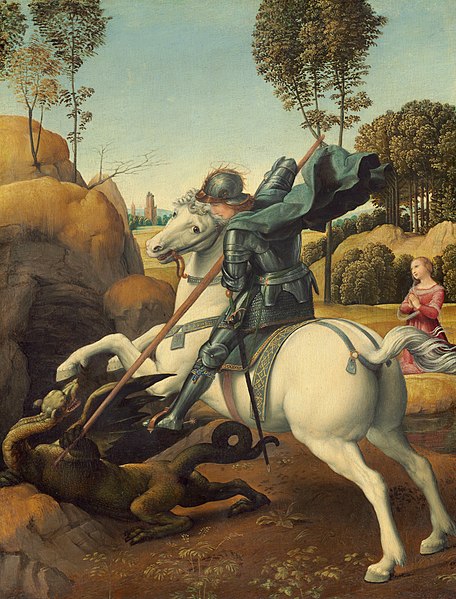
After all, we know Heracles will slay the Hydra. And we know for a fact that most of the Norse gods will die in the world-ending event known as Ragnarök. Osiris is killed and cut to pieces by his traitorous brother Set, but no worries, because Isis will put him back together and bring him back from the dead. And here’s one you may have heard before: Saint George slays the dragon and rescues the fair princess. Sound familiar?
Every culture, every nation, every people share something in common, and that is the archetype. Every nation throughout history has a Hero, the valiant warrior who slays the monster, saves the city, rescues the princess, defeats evil, etc. Often with enchanted weapons and other gifts from the gods and/or other supernatural forces. That Hero almost always has a Mentor who guides them along the way. The Mentor’s death is an optional bonus (the world “mentor” is an interesting case of word evolution. It originated from Homer’s Odyssey, where Odysseus’ son Telemachus receives advice as he grows into a young man from a trusted old friend whose name is – Mentor).
And there’s the Trickster, the Lover, the War God, the Love Goddess, the Hunter, the Dragon, the King, the Queen, the Rival, the Fool, the Prophet … Yup, they’ve all been around since roughly the same time that dirt was invented. Stories are repeating patterns being retold over and over and over.
Doesn’t mean they aren’t fun, though. After all, we wouldn’t tell the same story if it didn’t entertain us. Or affect us in some special way that breaks through language and culture. We identify with archetypes. We’re brought up to recognize the patterns and know what sort of story we’re being told. We know who to root for, who to boo at, and how the story is supposed to end. We know that Perseus will slay the monstrous Medusa, whose gaze can kill, and that Susanoo will slay the great eight-headed serpent Yamata no Orochi, but we’re still on the edge of our seats with anticipation. We know that the Trickster will, through bumbling and cunning, give humankind something that will benefit it: Maui fishes the islands of Hawaii out of the sea, Hermes invents the lyre and gifts it to his brother Apollo, Robin Hood always steals from the rich to give to the poor.
These stories are universal. They speak to basic needs and wants. The dragons of our lives can be defeated. Justice can be obtained. There is a reason why things are the way they are. Mythology is universal, and therefore, it withstands the tests of time. We are still enamored with the ancient tales of the Greeks, the Norse, the Japanese, the Egyptians, the Native Americans, and many more.
That’s not to say that stories are static. They don’t freeze and refuse to change. Sensibilities and cultural mores are constantly shifting, and archetypes are reinvented to suit the times. Heracles was a buffoon and hedonist in the old stories, did you know that? A bit of an idiot, and a hotheaded one, too. He killed his music instructor in a fit of rage. Not very heroic, eh? But take a look at Disney’s animated film, and see a hero who is much more ideal for our modern times. Here is a Heracles (or Hercules, his Roman name) who is gentlemanly, selfless, and clear-cut good. A far cry from his original incarnation, but it’s still recognizably the same character.
But let’s go a bit further. Heracles the super-strong, who slays monsters and thus protects civilization from their predations. Give him a desire for justice and peace, evolve him a bit. He’s a demigod, right? He’s otherworldly, part of something beyond normal human experience. Maybe he’s from another world altogether? An alien, but one who is on humanity’s side. Unstoppable, invincible, and one who represents the values of the culture that tells his stories. Give him a new name. Let’s call him – Superman!
I may be reaching with that last paragraph, but you can see where I’m coming from, right? Superheroes are modern myths. Or, perhaps, just the old myths with a new coat of paint. The Flash wears a winged helmet and is a swift runner – not unlike Hermes. Green Arrow is an expert archer – Robin Hood? Or perhaps a male Artemis. Batman is flat-out called the Dark Knight, and the black knight motif is very old, indeed. And what better villain for a noble knight who upholds social order than a maddened jester who calls himself the Joker? And the Mighty Thor is, well, Thor.
The old formula gets tweaked constantly. The myths endure, the basic structure is always the same, and on some level, from years of exposure to the stories in one shape or another, we recognize the underlying patterns. But that doesn’t stop storytellers from playing with the formula. In point of fact, taking apart an archetype to see what really makes it tick, or just disassembling them to bare all the flaws, is as much a part of modern storytelling as the straightforward “hero slays the dragon” gimmick. Maybe we like to question the status quo. Maybe the Hero isn’t so heroic. Maybe the Trickster is just an idiot who got lucky. Or maybe the world has just gotten cynical and doesn’t believe in heroes anymore.
But that’s okay, because eventually we’ll get tired of cynicism. We’ll get tired of heroes who aren’t heroic and evil triumphing over good. It doesn’t sit well, does it? People want someone they can trust to destroy the big bad evil. So, we get tired of having our favorite characters deconstructed and start crying out for the old stories to be played straight again. Played by the book, just like the stories we learned as kids. And eventually, after a couple generations, we’ll get tired of the same old, same old, and want to see someone mess with the pattern again. And so on and so forth.
Archetypes are resilient. They withstand all this reinvention and deconstruction. Take a god like Hermes and put him in the modern world, and he’ll thrive. Oh, sure, his fashion sense will be different, and he’ll be a little more savvy with modern tech, and he’ll be carrying a lot more experience and maybe a tad more maturity (maaaaybe…), but he’s still Hermes the Olympian god, the Trickster. He knows who he is. And we do, too. We know him down to a tee. His face is plastered on pottery, and his biography is thousands of years old. We know the pattern of his story. If there’s one thing humanity has become an expert in, it’s understanding the patterns of archetypes. Their stories aren’t going away anytime soon.
Enjoy what you’re reading? Subscribe by email for updates on new posts and follow my writing career, musings on fiction and storytelling, and reflections about life in general.
 Jake W. Powell