Stories for All Time: Universal Themes in Writing

Image: “Lonely Galaxy Lost in Space” by NASA Goddard Photo and Video, Licensed under CC BY 2.0.

Really, this topic is so vast that I could devote an entire week to it. When you consider that stories have been told for as long as humanity has existed, it’s small wonder that certain themes and morals endure the rise and fall of civilizations, and that common threads wind through the evolution of communication technologies.

Quite simply, certain themes in storytelling are universal. I’m sure you’ve thought of some just now. Good versus evil. The hero’s journey. Coming of age. Revenge. Forgiveness. Hope. War and peace. Etc., etc. Why? Because they’re broad. They appeal to everyone, because everyone has, at some point or another, dealt with these issues. They resonate with us, to use a common turn of phrase. Another way of putting it is that they are inherently familiar topics. And it doesn’t matter who you are or where you’re from, everybody has a concept of the hero or wants a story about hope. Everyone is familiar with war, and also with villainy. You don’t need cultural translation to understand that there are good things in the world and also very bad things.

So, some stories have that universal appeal. How do we know which ones? Well, it takes a bit of patience to find out, doesn’t it? When Charles Dickens wrote A Christmas Carol, he didn’t know his novella would be a staple of literature over 150 years later. Neither did the Greek poet Homer know that The Odyssey and The Iliad would still be studied to this very day.

Wait fifty years. Is the story still popular? More importantly, is it still relevant? Do people still care?

For every masterpiece, there must be ten thousand forgotten works. So many stories fade away with time. Sometimes, it’s due to bad luck or happenstance, and some never get a chance to be recognized. And some were a flash in the pan: Their plots were ripped from the headlines, centered around current events. What was hot and fresh that year gave them a brief celebrity. Then the world moved on, and these stories became anachronisms. Their identities were fixed in current events, and without that context they remain curiosities at best.

I won’t give any examples. Maybe you can think of a few yourself.

Universality and timelessness go hand-in-hand. The greatest stories don’t need to be shackled to any one era. They can be retold, again and again, in any age, at any time, because the core of their identity and popularity isn’t the bells and whistles of the current year. It is their basic, broad, foundational themes that reverberate throughout the ages. Sherlock Holmes is Sherlock Holmes, whether he’s in the 19th century or the 21st. Journey to the West has been retold as a post-apocalyptic video game. You can’t count the number of adaptations of Little Red Riding Hood on your hands and feet – you’ll run out of digits.

The very best stories can be told over and over again, and they have something to say to us every time.

Enjoying my blog? Don’t want to miss a single post? Subscribe for updates on when I post and follow my writing career, musings on fiction and storytelling, and reflections about life in general!

Why Writers Must Learn to Kill Their Babies (Less Morbid than It Sounds)

Okay, let me explain…

When I was taking film classes in college, my professor explained a key lesson that every writer must learn. They must learn when it is necessary to kill their babies.

You have an idea. It’s a brilliant, shining idea that came to you in an incandescent flash of inspiration. A magnificent idea that is the beating heart of your story. It is your motivation and driving force. The story would not exist except for this one concept.

It could be anything. A single scene. A character. A set piece. Even a single line of dialogue. Whatever it is, it was amazing enough to make you sit down and write.

It is your precious baby.

You finish the first draft of your story. You’re very pleased with it, especially how you incorporated your idea into the overall work. You send it out to readers for feedback. And the unexpected happens. They’re dubious about your baby. They don’t like it. They say that it doesn’t mesh with the rest of the story. In fact, it’s holding your story back from its full potential. It’s a liability.

Without realizing it, as you wrote and developed your setting, characters, and plot, they outgrew the original idea. That concept you love so much is no longer the plot’s beating heart. It is a tumor that threatens the quality of your narrative. The scene is out of place and unneeded. The character is completely detached from the rest of the cast. The set piece is just a waste of words. The line of dialogue is silly.

For the sake of the story, you must kill your baby.

If that sounds grotesque, it’s only to communicate how strongly writers can feel about their stories, and how painful it can be to remove something that can feel so personal to you. It’s a necessary culling that must be performed for the good of your writing. It is a sacrifice, one that almost every author must make at some point or another. And for those who aren’t willing to make the sacrifice, well, their story suffers for it. The readers might, too.

The lesson here is that something that seems like its working at the beginning of your project can become an utterly awful proposition by the end. A chef likes garlic, so he adds a ton of garlic to his casserole. Then he tastes the final product and gags. It was a good idea at the time, but …

Enjoying my blog? Don’t want to miss a single post? Subscribe for updates on when I post and follow my writing career, musings on fiction and storytelling, and reflections about life in general!

Paperback Version of My Book is Available on Amazon!

Do you like eBooks? I like eBooks. Convenient and affordable. But sometimes I want that tactile sensation of a paperback in my hands and to hear the soft flutter of turning pages. If you like that, too, then I have great news.

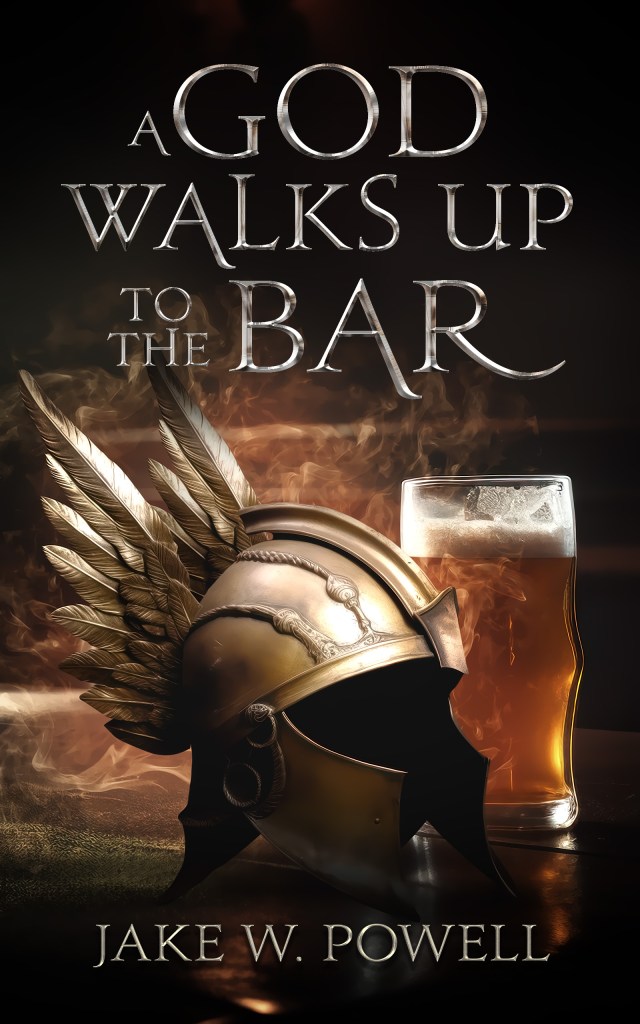
A God Walks Up to the Bar is available in paperback form on Amazon.com! Do you want to add a fun novella to your collection? Do you enjoy fantasy and classical mythology? Thrills? Chills? Humor? Gods beating up monsters? Then hop online and order yourself a copy! Or at the very least, do yourself the favor of admiring the lovely cover art.

And while you’re at it, don’t forget to like and subscribe to this blog. I’m just getting started!

When You Feel Like You Don’t Have Enough Time…

Old Clock” by Davmi Pics is licensed under CC BY 2.0.

Do you ever feel the crunch of time? Like your to-do list is too long to fit into the hours in the day? You feel those minutes sliding by and try to cram in as much as you can. But it just isn’t enough, and you concede defeat to the march of time.

So much to do, and so little time. If only we could do it all in one go. If only we could freeze the clock in place and do everything we ever wanted to do for as long as we wanted. What a dream, huh? But what does that say about the things we do manage to accomplish when time is short?

Maybe it’s not comfortable to think about the fact that we accomplish, first and foremost, the things that matter most to us. Maybe we don’t want to think about what that says about us if we go first to the couch to watch TV, put together a jigsaw puzzle, play video games, or eat junk food. What do we prioritize? What matters most to us? Do we want to peer into that corner of ourselves?

Most of the items on our checklists are personal indulgences. A lot of the things we feel we must do are really just trifles that we enjoy more than taking out the trash or cleaning the house. Hey, entertainment is more fun than chores. That’s why it’s called entertainment. We like to have fun, and in a world where most of our time is consumed by business and work, we try to sneak it into the 16 or 18 hours we spend awake.

I find that there is a difference between what we want to do and what we actually do. The first is our conscious preference. The second is what we subconsciously place real value on. I suspect we don’t even realize it unless we’re paying close attention. We don’t recognize what we hold dear until forced to choose between this or that to wrap up in the last hour. Time crunch can lead to interesting revelations.

But how much do we really have to do in 16 hours? We tell ourselves that “this and that” must be finished, and “this and that” turns into “anything and everything.” A bit of a self-imposed burden, isn’t it? I’m not preaching procrastination, but rather that most of the troubles we face in task management is self-imposed. Cramming means we don’t want to compromise. It’s all or nothing! I want to do everything I want to do and I’m not going to cross anything off today’s to-do list! And we wear ourselves out, not from hard work, but from the exhaustion of trying to satisfy the expectations we’ve built up in our heads.

There’s more time in the day than we may think, because so many of the things we convince ourselves are absolutely vital are really just busy work and trifles. If we were to strip away everything except what is truly important in our lives, we’d end up with a much shorter list. Because those are the things we will dedicate time to. Those are the things we truly value and will not sacrifice.

Take a step back and look not at what you plan to do, but at what you actually do during the day. You may be surprised at what you see.

The gods and beings of ancient myth never went away. They just moved on with the times.

My book, A God Walks up to the Bar, is currently available on Amazon.com. Venture into the world of the Greek god Hermes, a world filled with demigods, vampires, nymphs, ogres, magic, and trickery. It’s a tough job, being a god!

Enjoying my blog? Don’t want to miss a single post? Subscribe for updates on when I post and follow my writing career, musings on fiction and storytelling, and reflections about life in general!
Measure Your Writing: Fewer Words are More than Enough

Image: “Stack of Copy Paper” by Jonathan Joseph Bondhus; licensed under CC BY-SA 3.0.

So, you’re writing your book. You feel pretty good about it. You got your first draft done, you send it to your beta readers, and the feedback starts trickling in. You take in the criticism and start your second draft. And you notice something odd. Many of your changes entail removing words, cutting out extra sentences, and shortening descriptions. Your word count is growing smaller. What gives?

Writing involves a lot of things. One thing I’ve discovered it needs is measurement. I don’t mean whipping out the tape measure to guess how thick your paperback will be. I mean making sure that every word matters. If your sentences go on and on and on then you’re going to bore your audience to tears, if you don’t just outright confuse them. On the other hand, using too few words can lead to your readers scratching their heads if you leave out important information. A writer is like a sculptor. He carves out the unnecessary material and leaves behind exactly what is needed to make the piece complete.

My first draft is the phase that I like to call “vomiting words.” Because that’s what I do. I get all my words out, regardless of whether they are good or not. First drafts are always garbage. There’s no helping that. But too many is better than not enough. There’s always plenty of time to parse things down later.

So, how do you make the most of fewer words? Here is what I’ve learned.

  1. Be simple. Don’t try to write fancy. Purple prose is like nitroglycerin. It blows up in your face at the slightest mistake. Don’t write “his face stretched into a wide, dour grimace.” Just write, “he grimaced.”
  2. Synonyms are your friend. There are single words out there that mean the same as three put together. Why waste space? Rather than “ran very fast,” you can use “sprinted” instead.
  3. Details matter to the plot. Readers expect the descriptions and conversations you include to have significance. So make sure everything you include in your final draft has a point! Don’t waste time on things that are irrelevant.
  4. Last, and certainly not least, don’t underestimate your readers’ intelligence. Unless you’re writing for three-year-old’s (and even then…), don’t treat your readers like idiots. They can fill in blanks for themselves, especially regarding mundane things. You don’t need to explain how someone puts on a shirt, or go into gross detail over the interior of an office building. Chances are, people already know. Let them exercise their imagination a little!

Of course, there are exceptions to these. There are always exceptions. And some stories are going to be longer than others, regardless. The point is not to trim everything out until only barebones, dry description remains. The point is to make your writing readable and coherent. Sometimes, you will have a very long and colorful description of a character or scene. If it’s appropriate for the story’s tone, or describes something that isn’t common knowledge, or the details will become important later on, have at it. But don’t overdo it. The point isn’t writing a lot of words. It’s writing just enough words.

The gods and beings of ancient myth never went away. They just moved on with the times.

My book, A God Walks up to the Bar, is currently available on Amazon.com. Venture into the world of the Greek god Hermes, a world filled with demigods, vampires, nymphs, ogres, magic, and trickery. It’s a tough job, being a god!

Enjoying my blog? Don’t want to miss a single post? Subscribe for updates on when I post and follow my writing career, musings on fiction and storytelling, and reflections about life in general!

The Rule of Three: A Strange Ingredient for Storytellers

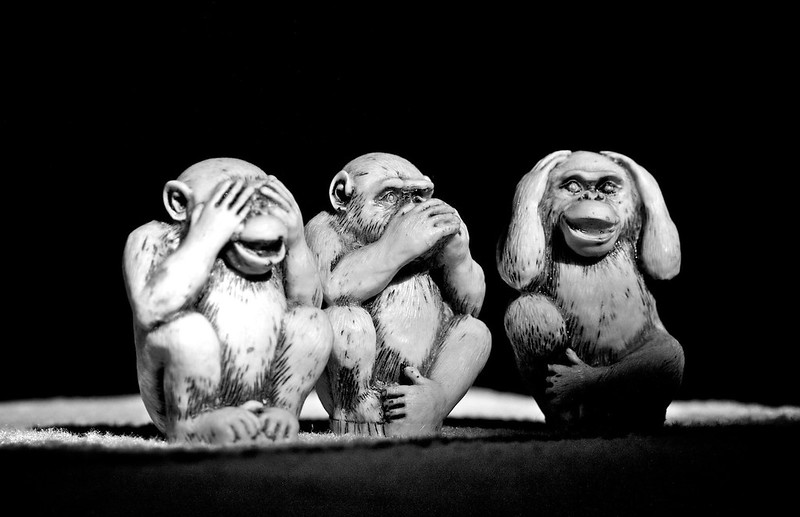
Image: “Three wise monkeys” by Anderson Mancini, licensed under CC BY 2.0.

What’s the most important number in the world? Let’s count.

One … two … three?

It’s an odd number to be fixated on. But we are. Look around you. Listen. Read. Everything comes in threes. We love things to be presented in trios.

Land, sea, sky. Birth, life, death. Child, adult, elder. Beginning, middle, end. Ready, set, go. Lights, camera, action. I came, I saw, I conquered. See no evil, hear no evil, speak no evil.

It’s a habit of humanity to divvy things up into threes. Maybe because it’s a nice prime number, like 5 or 7. There’s a pleasant sense of completeness in three, a satisfaction that you can’t quite get with two, and going up to four is a step too far. Three is everywhere, and it’s found a home in our collective psyche. Things always feel right when they’re grouped into threes. Stories feel right.

The number three is storytelling’s superstar. Stories rely on patterns, and the number three is the smallest number you can use to set up a pattern and then deviate from it. Take a glance at fairy tales and note how many times the third brother gets the prize, or how many trials the hero must overcome to succeed, or how many times the evil witch tries to stop him. Set up the expectation and then throw in a twist the third time around.

Good stories tend to be efficient with their time and words. Why go through the same pattern four times to set up the fifth’s deviation, when you can cut out two repetitions and get the same result? Maybe early oral storytellers were just lazy and hit on a good tactic to keep listeners engaged without wearing out their throats.

Either way, if you’re going to be a writer, consider the usefulness of the rule of three. Most stories are divided into three acts: The setup, the middle action, and the climax. Want to reinforce that a plot element is important? Mention it three times: Once to introduce it, a second time to remind your audience of its existence, and a third time for the payoff (alternatively, a third time to reinforce it in audience’s minds, and then give them the payoff).

Remember the oath that witnesses make in court? “Tell the truth, the whole truth, and nothing but the truth, so help me, God.” Here we see the principle in action: “Tell the truth” (introducing the concept to speak truthfully), “the whole truth” (reinforce the concept that you will be honest), “and nothing but the truth, so help me, God” (grinding it into your head that you will tell the truth, doggonit!)

As weird as the rule of three is if you think about it too hard, we’ve been raised on it for so long that it’s been hardwired into most societies. We tend to think in terms of threes when writing, when talking with friends, or even when giving a speech. It’s just such a common, reliable, and trustworthy trope. It’s in schools, it’s in media, it’s even in the academic community.

Ha, ha, yes, I’m so very clever. But you get the point. Don’t you? Need me to repeat it again?

In all seriousness, we humans do like patterns, and the rule of three is such a basic pattern that it fits pretty much anywhere. We recognize it, at least on a subconscious level, because we’ve been exposed to it since childhood. I can make that statement with confidence because it’s just. That. Widespread. And yes, I did just use the rule again to prove my point. Really, this whole article could drown in its own metatext.

Being so common, the rule of three is a reliable standby for writers both beginner and veteran. I use. You use it. And – Well, you get the idea.

The gods and beings of ancient myth never went away. They just moved on with the times.

My book, A God Walks up to the Bar, is currently available on Amazon.com. Venture into the world of the Greek god Hermes, a world filled with demigods, vampires, nymphs, ogres, magic, and trickery. It’s a tough job, being a god!

Enjoying my blog? Don’t want to miss a single post? Subscribe for updates on when I post and follow my writing career, musings on fiction and storytelling, and reflections about life in general!