In every story, there are stakes. Something may be lost, something may be gained. The story’s conflict means something. Without stakes, without the risk of failure, a story isn’t very interesting. Who cares if the One Ring is destroyed in the fires of Mount Doom if Sauron isn’t a threat? Who cares about the Galactic Empire if they’re a paper tiger who can’t even threaten one planet?
You need to establish the stakes early on. That is to say, you need to establish what will happen if the heroes lose: Sauron conquers Middle Earth and reduces everyone to slavery. The Galactic Empire uses the Death Star to destroy any planet that opposes it. The heroes’ actions must matter.
Of course, not all stories have such a grand scope. To Kill a Mockingbird doesn’t deal with world-rattling threats, but Atticus Finch is struggling to prove an innocent man didn’t commit the crime he is accused of. The Grapes of Wrath centers around a family trying to establish a new life in California and not fall apart in the process. These are more personal stakes, but no less important.
That’s another thing about establishing stakes. They must be appropriate to the story. Personally, I think that, first and foremost, the stakes must be appropriate to the protagonist. We are reading about a character, and what matters to them must matter to us. If the stake is nothing more than Jim trying to get his kite into the air, then, by golly, that’s what the reader should care about, too.
Sometimes the stakes in a story increase. Maybe Jim gets drafted into World War II. Well, that’s a major shift. What’s at stake now? Survival? Capturing the enemy base? Maybe. But what is most appropriate is what directly affects Jim’s personal journey. It’s not just about fighting the enemy, any more than it was about flying the kite. It’s about Jim’s character growth.
It was never about getting the kite into the air. It’s not about fighting the war, not really. Those are the circumstances, but the story is about Jim learning to persevere and attain self-confidence. He never really felt that he was capable of getting that kite in the air. He feels that he can’t contribute to the war. The kite and the war represent the same thing: obstacles to Jim’s goal of becoming a confident, mature adult.
Okay, I’ll leave it up to one of you out there to write that story.
Writers don’t play hopscotch with the stakes. Even when they are raised to something more serious, they still form a core that drives the narrative. Every new stake is connected to the protagonist’s central conflict, each one a facet of his or her inner struggle.
It’s not about building up the biggest, most dire conflict imaginable: “The world will end! The evil empire will rule! The plague will kill us all!” It’s about character. It’s about what matters most to the protagonist.
***
Many thanks for visiting my blog. I post updates on my writing career, I muse over storytelling and fiction, and I reflect on the curious and wonderful things in life.
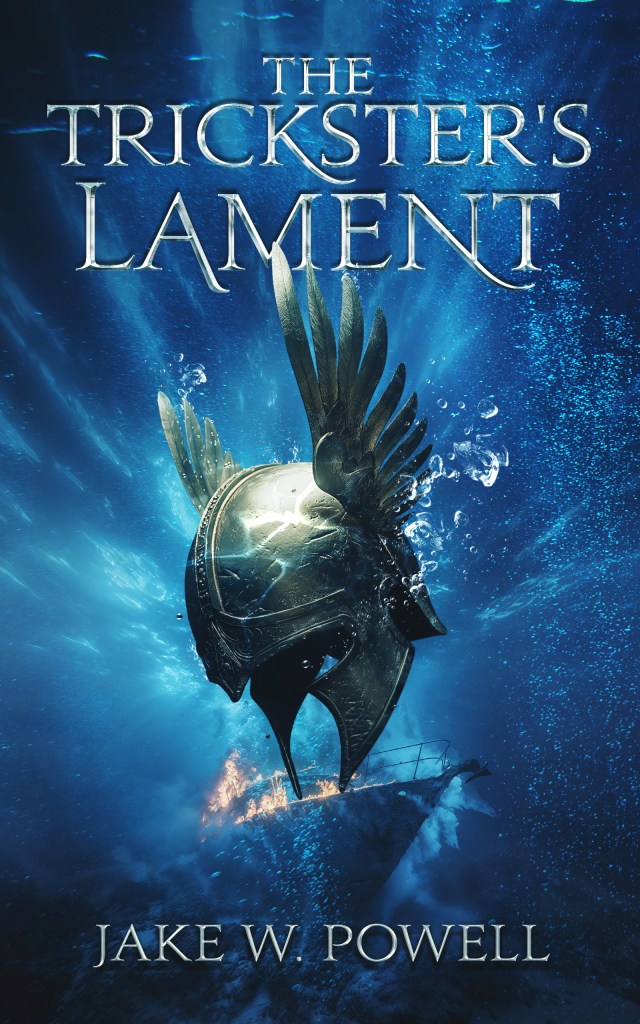
“Hermes is not having the best time. He walks a fine line, and his duty as messenger of Olympus weighs heavily on him. Being a god in the modern age means living in a world that no longer believes in gods. How much can one deity accomplish when no one respects him anymore? And why do his instincts tell him that he, the son of Zeus, is losing favor with his own family?
Tensions abound. The upstart Young Gods play dangerous games using entire cities as their boards. Formless monsters strike from the nighttime shadows, terrorizing hapless mortals. Agents of rival pantheons scheme to thwart Olympus’ designs. In the thick of it all, Hermes does what he does best: trick, lie, and cheat his way to victory.“
 Jake W. Powell