Work on my third book is proceeding apace. Slow but steady wins the race, as they say. I’m currently in the third draft and hope to have something ready for editors by the end of summer. Book #3 about the modern day adventures of the Olympian god Hermes is on its way.
I am reminded that it’s been quite some time since I actually talked about my own writing. And as I think over it, especially thinking of those of you who have read my previous work, I ponder over the character of Hermes himself.
He is, I hope, a likeable protagonist. Certainly, I strive to make him interesting. But he is not, I think, a pleasant one.
Why is that? Well, that’s all part of character development. I don’t like to read or write about perfect saints. They have no room to grow. They’re stagnant. But even so, a protagonist who starts out arrogant, presumptuous and selfish can grate on the nerves. We know plenty of people like that in real life, so why read about one?
Thus, I have to make him a little sympathetic. It’s my responsibility to make readers want to read about a fellow with a big ego.
There are plenty of ways to do this. I prefer the method of making my protagonist suffer. Oh, yes, if he is possessed of insufferable character, then make him suffer! We all understand pain and trials. Even if the guy is a jerk, seeing him go through the wringer can squeeze out a few drops of sympathy. Not everyone deserves to go through this and that.
Also, I make his adversaries worse than him. Sure, Hermes can be haughty, but at least he isn’t a bully, a slaver, a callous killer. He still has a conscience deep, deep down. Even if he doesn’t want to acknowledge it.
Speaking of which, my stories are told from a first-person perspective, which offers tons of insight into his thinking process and views. He is a conflicted individual. He feels isolated and uncertain, at times. That’s a human trait. We have all struggled with ourselves, with what to believe, what is right or wrong, our identity, our place in the world, even what to say or not say at any given time. That humanizes him.
It makes an Olympian god a little more bearable if he has flaws. Readers like flaws. It makes for an interesting character to read about. After all, the absolutely worst thing I could do as a writer, far from even writing an unlikeable character, is to write a boring one.
I hope you enjoy reading more about Hermes’ adventures, even if you do want to wring his neck at times.
***
Many thanks for visiting my blog. I post updates on my writing career, I muse over storytelling and fiction, and I reflect on the curious and wonderful things in life.
“Hermes is not having the best time. He walks a fine line, and his duty as messenger of Olympus weighs heavily on him. Being a god in the modern age means living in a world that no longer believes in gods. How much can one deity accomplish when no one respects him anymore? And why do his instincts tell him that he, the son of Zeus, is losing favor with his own family?
Tensions abound. The upstart Young Gods play dangerous games using entire cities as their boards. Formless monsters strike from the nighttime shadows, terrorizing hapless mortals. Agents of rival pantheons scheme to thwart Olympus’ designs. In the thick of it all, Hermes does what he does best: trick, lie, and cheat his way to victory.“
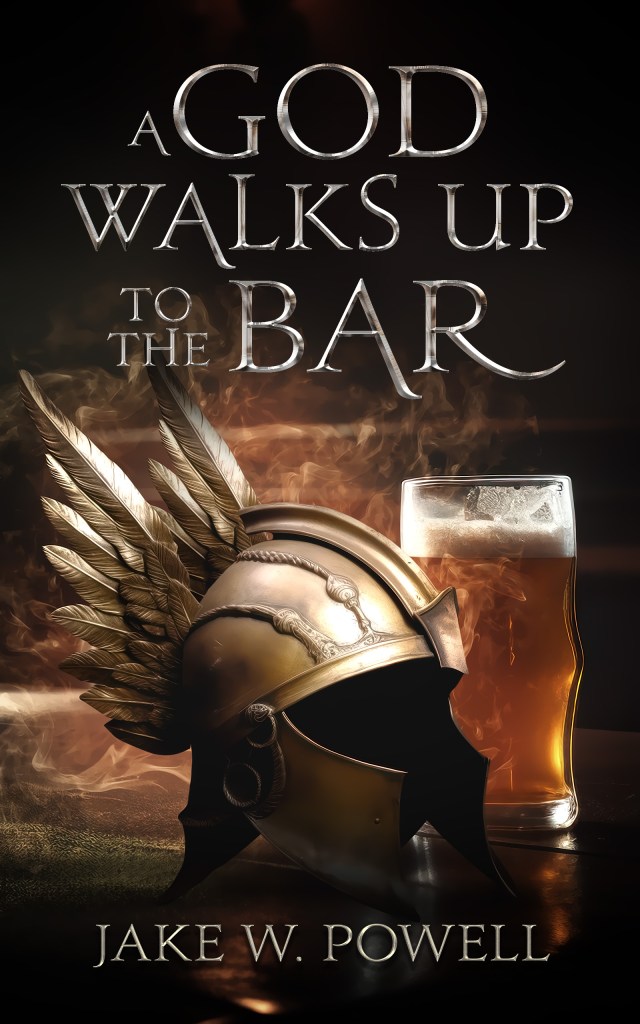
I am very excited to announce that my new book, The Trickster’s Lament, is now available on Amazon for both Kindle and paperback. This is my second ever published book and a sequel to my first, A God Walks Up to the Bar. I hope that my readers enjoy the further modern day adventures of the Greek god Hermes.
Synopsis:
“Hermes is not having the best time. He walks a fine line, and his duty as messenger of Olympus weighs heavily on him. Being a god in the modern age means living in a world that no longer believes in gods. How much can one deity accomplish when no one respects him anymore? And why do his instincts tell him that he, the son of Zeus, is losing favor with his own family?
Tensions abound. The upstart Young Gods play dangerous games using entire cities as their boards. Formless monsters strike from the nighttime shadows, terrorizing hapless mortals. Agents of rival pantheons scheme to thwart Olympus’ designs. In the thick of it all, Hermes does what he does best: trick, lie, and cheat his way to victory.
He may be disrespected. He may be kicked about. He may even be falling out with his pantheon. But Hermes is a trickster. He knows how to play dirty in a world that doesn’t play fair. But though he can best man, beast, and god, he isn’t prepared for his wiliest opponent yet: his own conscience.”
And for those who missed it the first time …
A God Walks Up to the Bar, my first foray into publishing, is also on Amazon.com. Interested in Hermes’s first recorded adventures battling half giants, skinwalkers, vampires, and other foes? Check it out!
As always, thanks for simply visiting my blog and sharing in my writing career and my various musings on life, the universe, and everything. Whether you click that subscribe button or not, I truly appreciate your taking the time to read my ramblings. Cheers.
Tricksters are fascinating to read about and to write about. They’re the weirdos who exist on the fringes of polite society. They’re the ones who can get away with what other people can’t. They’re stick their tongues out at the world and make the rules work for them, rather than working according to the rules.
Tricksters are fun. They’re fun because, deep down, don’t we all enjoy seeing someone willing to say what we’re all thinking and doing what we wish we could? Tricksters are escapist characters. They pay back the jerks and the bullies, outwit the corrupt authority figures, and flout senseless and silly rules. We all enjoy our Robin Hoods and B’rer Rabbits.
Writing tricksters is fun, too. Writing the character of Hermes for my books has let me see the world from a different point of view. I suppose writing any character gives you such insights, but seeing the world through a trickster’s eyes …
They’re a surprisingly philosophical bunch. As characters whose primary role is to push boundaries and alter the status quo, they are naturally prone to questioning the point of things. Why are things the way they are? Why should (or shouldn’t) they change? Tricksters are the ones who can call out others for their actions and make the rest of the cast pause and think. And that makes for interesting writing. The archetype can fill all sorts of niches, whether the villainous anarchist, the secret mentor, the voice of reason, or the snarky smart aleck who gets all the best lines.
And then, of course, there’s the trickster as protagonist. Tricksters can carry a story all by themselves. By their very nature, they’re proactive. They get things done. The can save the day (or ruin it – protagonist doesn’t mean hero). Since the archetype is almost always transgressive in some way, he or she gets to give society a kick in the pants, usually by acting so outrageously or cunningly that nobody knows what to expect next.
Speaking of cunning, writing tricksters has also taught me a bit about plotting out, well, plots. I sometimes feel like we live in an age of fiction where schemes and trickery must be excessively complex. Writers like to create grand conspiracies, when a trickster is just as likely to tap you on one shoulder while standing on the opposite side. Committing a trickster like Hermes to the page has shown me that deception can be much simpler. Tricking people doesn’t really seem to be that hard. Often, it’s just a matter of reading people and playing up to expectations. Or remembering that most people just want today to be the same as yesterday and aren’t expecting to be hoodwinked. Then again, written characters also behave according to how the author has plotted them to behave, so maybe I’m just blowing smoke.
So, tricksters upend the social order. They slip into different roles with ease. They’re many things to many people. What they aren’t is moral, upstanding role models.
But …
What if a trickster tries to be moral? Is such a thing possible? Trickery is lying, and lying is immoral. Can you reconcile the trickster archetype with the hero archetype? Transgressing social values and upholding them? Can the two be melded? A liar with a moral compass? Can a trickster follow right and reject wrong? Can anything truly good come from trickery?
Very interesting philosophical musings, indeed. I’m still messing about with such notions in my writing. My version of Hermes is developing as I go, revealing new facets of his personality as my works progress. Tricksters aren’t simple characters, after all.
If you just so happen to be enjoying my blog, feel free to subscribe. I post updates on my writing career, I muse over storytelling and fiction, and I reflect on the curious and wonderful things in life.
My first book, A God Walks up to the Bar, is available on Amazon.com. Witness the modern day adventures of the Greek god Hermes in a world much like our own – and with demigods, vampires, nymphs, ogres, and magic. The myths never went away, they just learned to move on with the times. It’s a tough job, being a god!
Don’t let the title scare you away. I’m not talking about specific politics or social issues. Rather, this is about how fantasy can be a tool for analyzing society undercover. That is to say, the fantasy genre gives authors a knack for talking about real life without actually talking about real life.
Now, the fantasy genre isn’t real, obviously. That’s kind of the point. However, fantasy’s detachment from reality can give it a very unique perspective on the world we do live in.
This comes, I think, from the fact that the fantasy genre can be used to observe elements of our world by substituting real groups, issues, events, or locations with fictional analogues. These same analogues allow readers to perceive them more objectively than if they were the real thing. Real-life issues tend to get our defenses up, consciously or not, and we let our own biases color our lenses. Fantasy equivalents are, well, fantasy, so we don’t view them in the same way, even if they are equivalent to the same social issues that otherwise get our hackles up. It’s a bit of a literary trick, really.
Whether or not a writer gets their message across to the audience depends on two things: One, whether the readers recognize the subtext, and two, whether they connect the subtext with the correct issue. Yes, we must trust our readers to infer what we want them to infer. And sometimes, alas, they don’t. All writers reach a point where their authority dies, and their readership draws its own conclusions independent of the author’s intent. So, you might very well have been writing a hard-hitting social critique using elves and pixies, but the audience comes away thinking it was about the virtues of natural conservation rather than the consequences of war.
On the other hand, maybe your story has no message. You just wanted to write something fun and light. Yet, for some reason, readers are convinced there’s a hidden meaning buried in your writing. Tell me, dear reader, what is the message of Little Red Riding Hood? Is it just a story about a girl and her grandma who are eaten by a wolf, then saved by a woodsman, end of story? Or is it about:
The dangers of nature
Man’s triumph over nature
Listen to your parents
Pay attention to the task at hand
Don’t trust strangers
Rebirth from death into a better person
A metaphor for puberty
A metaphor for sexual predators
A metaphor for rape
A metaphor for how people read sex into everything
Axes are useful for killing animals
If you think a wolf looks like your grandmother, you really should buy glasses
And so forth.
Maybe we don’t really know for sure? Maybe there is no analogy, but there is applicability. Applicability is a very different animal. It is the reader’s independence of the writer and ability to view the story through their own lives and beliefs. In short, they see the story as matching their own notions.
Or maybe, we’re just thinking too hard about it all.
If you just so happen to be enjoying my blog, feel free to subscribe. I post updates on my writing career, I muse over storytelling and fiction, and I reflect on the curious and wonderful things in life.
My first book, A God Walks up to the Bar, is available on Amazon.com. Witness the modern day adventures of the Greek god Hermes in a world much like our own – and with demigods, vampires, nymphs, ogres, and magic. The myths never went away, they just learned to move on with the times. It’s a tough job, being a god!
Real life is hard. Can we all agree on that? Real life is really hard to deal with. If it’s not the troubles and calamities of real life intruding on our status quo, it’s the dreary monotony of everyday activities. Going to work, washing the dishes, walking the dog. Sometimes, we just hit a rut. What to do?
People are imaginative, and there’s nothing better at firing up the creative juices then boredom.
There are people out there prone to daydreaming. They come up with whole worlds in their heads. The really ambitious ones commit those worlds to paper. Voila! A new fantasy story is created.
Fantasy helps us cope with the real world. It is a form of escapism that gives us a few precious moments away from humdrum reality, a chance to catch our breath and maybe let out a couple screams, then return to the grind. A little fantasizing is good for our mental health. Relaxation and rest is a good thing, and fantasy is a form of that. A jaunt into a made-up world where heroes always win, good triumphs over evil, magic can make food and water out of nothing, and we can fly on winged horses is just … fun. That’s the point of fantasy. Just like some people like car racing or hiking or painting or math (such people do exist), so do some enjoy fantasy because it’s just plain fun.
To deny ourselves recreation is to trap ourselves inside a metal box at the bottom of the ocean. We can’t move, can’t escape, can’t even see the light. We suffocate under the inability to exert ourselves. Our minds along with our bodies atrophy from the lack of exercise. And from the lack of challenge. Fantasy is a challenge. Fairy tales and epics challenge us to see the world in a new way and ponder how these stories match up against our own experiences. And they let us see something new, period. Don’t we humans crave novelty? Why go on vacation, if not to “get away from it all?” And what are we getting away from? The ordinary and the familiar.
Fantasy is all that writ large. It is the unfamiliar and the extraordinary. A chance to wonder: What if?
And at an even more fundamental level, fantasy taps into that all-consuming human urge to create. We all want to create something. We tinker, we write, we draw, we brainstorm, we organize, we build, we muck about. We like to make things, whether things concrete or things abstract. Fantasy is creation. It’s a powerful impulse, the urge to create, and making fantastical worlds is the perfect outlet for what, I believe, is a basic human need.
Does fantasy matter? Absolutely. We can’t resist it’s siren call. To get away from mundanity, to satisfy our basic natures, to keep ourselves sane. Fantasy is very, very important.
If you just so happen to be enjoying my blog, feel free to subscribe. I post updates on my writing career, I muse over storytelling and fiction, and I reflect on the curious and wonderful things in life.
My first book, A God Walks up to the Bar, is available on Amazon.com. Witness the modern day adventures of the Greek god Hermes in a world much like our own – and with demigods, vampires, nymphs, ogres, and magic. The myths never went away, they just learned to move on with the times. It’s a tough job, being a god!
Let’s be honest. With a question like that, and the fact that my blog is subtitled “Writer of Modern Day Fantasy,” you can pretty easily guess that the answer is, “Yes.” But, hey, did I catch your attention? I did? Good. Let’s dive into it, then.
Fantasy is an important genre. Myths and legends have existed for almost as long as humankind has. There is an almost natural urge in people to invent and make up lands, species, events, and other such things that don’t exist in nature. The urge to create things that defy natural law: flying carpets, giants, dragons, dryads, genies, wishing stars, talking puppets, elves, hobbits, fairies, people the size of your thumb, people as tall as a mountain, alien worlds, life on the moon, and so on and so on. The earliest myths probably were meant to explain phenomena that man couldn’t yet fully understand, like the weather or earthquakes. But even after science has offered its explanations, the fantasies endure. Do old habits die hard? Or maybe we need fantasy in our lives.
Consequently, fantasy is a versatile thing. At its heart, it is the telling of things that not only don’t exist, but can’t exist. There are no elves in the forest. There are no genies trapped in bottles. There is no Fountain of Youth or cities at the bottom of the ocean. But the stories are still told.
For a long time, though, there was a problem.
For the last century or so, fantasy got a bad rap. It was viewed as this sort of nerdish subject that is impractical and of no relevance to “real life.” Dungeons & Dragons was the epitome of loser geek culture for decades. It was a “loser” subject because, in part, it was something that wasn’t real – but people took it so seriously! Why make such a big fuss over the unreal? Why obsess over the rules for a game about fighting made-up creatures? If you’re going to obsess over statistics, at least apply that obsession to football and baseball, not orcs and hobgoblins!
For many people, deriving so much enjoyment from something made-up is just plain childish. Oh, when we are children, it’s fine to enjoy stories of knights versus dragons. Fairy tales are quaint little things that amuse us when we’re young. Then we grow up and enter the serious real world where we need to be interested in grown-up things. Like cars and sports and art and the latest celebrity gossip. You know, important stuff.
That association with the immature has been a stain on fantasy’s reputation for a long time, as well as its sister genre, science fiction. The dominions of nerds and other people who can’t handle reality. There were exceptions, of course. Star Wars, for example, was a major blockbuster in 1977. But by and large, fantasy movies and books and games were strictly niche. There was an audience, but a highly specific one.
Then things changed.
I think the Lord of the Rings film trilogy in the early 2000s was the big turning point. Here was a fantasy series with major, respected stars that took itself seriously. It had a big budget, it was being produced by a major studio, it had marketing and advertising out the wazoo. The critics liked it. It was art.
Suddenly, fantasy lost its stigma. It wasn’t so bad to admit you liked the genre.
Others followed. Game of Thrones was a biggie. And there was Stranger Things, which proudly wore its 1980s nostalgia on its sleeve. And what was big in the 1980s? Yup, Dungeons & Dragons. Speaking of which, a Dungeons and Dragons movie released last year was warmly received. Oh, how the tables had turned!
The fact is, there are lots of people who like the unreal. They like to step away from reality for a few hours. It is called escapism. Personally, I think part of fantasy’s bad reputation is that escapism is confused with retreat. One is the willingness to step away from your problems or worries for a little while to refresh yourself. The other is an ultimately selfish choice to ignore one’s real-life obligations in favor of never leaving the fantasy. But many non-fantasy fans view the genre strictly through the latter lens. A bunch of guys and gals without jobs living in their parents’ basements reading silly books about silly people in silly lands. Fantasy is for the weak, for people can’t handle their own responsibilities.
It’s not fair, really. J. R. R. Tolkien wrote fantasy, after all. You know, the highly respected scholar and linguist? A man with a very productive and well-balanced life? And it gets more unfair.
So, fantasy has hit it big, as I just mentioned. And why did it hit it big? Well, a few successful movies certainly helped. But also, you know, the average person finds out that people like Henry Cavill and Joe Manganiello play stuff like D&D and Warhammer 40,000. Hey, they’re not nerds! Fantasy must be cool!
Sometimes, the best way to get people to take something seriously is to find the right spokesperson. All this time, fantasy just needed better PR.
It worked. Fantasy is widely accepted now. People aren’t ashamed to say that they like it. Nerds aren’t social pariahs. Heck, most of them are running major corporations. And the people writing those hit fantasy movies? They’re nerds, too. That’s the other big shift in the fantasy genre in mainstream culture. Four, five decades ago, fantasy films and TV shows were mainly being written by people who saw it as harmless, inconsequential fun. But the people who grew up with those shows and films, the people who fell in love with them, are the ones calling the shots now. And their beloved childhood is anything but inconsequential. Fans tend to pour their hearts into their work, and the quality of the product (hopefully) goes up. The bigger budgets certainly help.
By and large, fantasy has found public acceptance. Fairy tales aren’t just for kids anymore.
But the question posed at the beginning of this article is only half-answered. Does fantasy matter? Yes, yes it does. Financially, socially, culturally, it matters very much. But why does it matter? And in what other ways does it affect us besides providing something to do on a Saturday night?
Stay tuned …
If you just so happen to be enjoying my blog, feel free to subscribe. I post updates on my writing career, I muse over storytelling and fiction, and I reflect on the curious and wonderful things in life.
My first book, A God Walks up to the Bar, is available on Amazon.com. Witness the modern day adventures of the Greek god Hermes in a world much like our own – and with demigods, vampires, nymphs, ogres, and magic. The myths never went away, they just learned to move on with the times. It’s a tough job, being a god!
The Trickster is an ancient archetype in storytelling. You’re probably very familiar with it. The Trickster is the cunning mischief maker who can be a force for good or for evil. Whether he follows a moral code or just does whatever depending on his mood, he can be heroic, villainous, chaotic, comforting, terrifying, and anything in between. He has many names: Loki, Hermes, Coyote, Bes, Maui, Robin Hood, Bugs Bunny, and Jack Sparrow, just to name a few.
What is a trickster all about, though? What is their purpose in storytelling?
Well, here’s the pattern that I see in trickster stories. Tricksters are all about testing social boundaries. They push against social norms and challenge taboos. Sometimes this a bad thing, and the trickster learns the hard way why things are the way they are. Seemingly oppressive restrictions actually keep us safe and orderly. On the other hand, sometimes their rebellious nature is a good thing. Tyranny is overturned when the trickster sets his wits against the tyrant.
Tricksters also make us think. What is right and wrong? Why do social mores exist? Do the things I do in life actually make sense? Tricksters are constantly challenging the status quo. Their deceptions and antics expose the logic and assumptions that make up our culture. They also challenge pride and haughtiness. Tricksters are great for bringing a proud character down a couple pegs.
And at their most extreme, tricksters can overturn their own culture to usher in something entirely new. Tricksters are a force of change. Loki kickstarted Ragnarök and the end of the Norse gods with his cruel deceits. Maui fished up the islands of Polynesia and created much of the world as his storytellers knew it. Tricksters aren’t creators or destroyers, strictly speaking. They’re changers.
They’re also very fun to write. One of the reasons why I’m writing A God Walks Up to the Bar is because I enjoy the trickster archetype. Hermes is a rascal and a scoundrel, but a surprisingly complex one. There’s quite a bit of tension in a character whose divine portfolio contains contradictions. He’s the god of merchants and the god of thieves. He is a god of boundaries and borders, and he crosses those borders effortlessly as the god of travelers and roads. He’s the messenger of the gods despite being an authority figure himself. It’s fun stuff to play with. And I confess that I enjoy a bit of vicarious living through his stories. I can write about things that I would never get away with in real life.
Tricksters are fun characters. And scary. And interesting. And revealing. Like any archetype, they are a building block of storytelling, because they’re everywhere. In fiction and real life.
Enjoy what you’re reading? Subscribe by email for updates on new posts and follow my writing career, musings on fiction and storytelling, and reflections about life in general.
Achilles was a paragon of ancient Greek heroes. He was nigh-unkillable, an unstoppable juggernaut on the battlefield, bloodthirsty, battle-hungry, feared and respected in equal measure. So, what did this warrior do when he ended up on the losing side of a quarrel with the Mycenaean king Agamemnon during the Trojan War?
He ran to his mommy to cry on her shoulder.
Yes, really.
For all its larger-than-life characters and some truly surreal stories, there is a basic spark of humanity in Greek myth. That’s why people love it, I think. Heroes fight and conquer, sure, but they also cry, get frustrated, get tired, and pine for their loved ones. They feel anger, joy, regret, fear, love, pride, and just about everything else. At their core they are, in fact, people. Just people. Like you and me.
Why do old myths endure? I believe it is because they share universal human themes that we empathize with, even when we’re looking at them from atop our perch in the 21st century. Who hasn’t wanted to find a shoulder to cry on after losing a bitter argument, like Achilles did? How can we not feel a twinge of sorrow for Orpheus, who, after journeying into the underworld to retrieve his beloved Eurydice, felt just that slightest bit of doubt on whether she would follow him back and risked a glance over his shoulder, dooming himself to lose her forever?
Beneath the layers of the fantastic are stories that are very much human. People experiencing the hard knocks of life. And like in real life, sometimes they triumph over adversity … and sometimes they don’t.
The funny thing is, the Greek gods have as much humanity in them as the humans they rule. Perhaps a bit too much, even. It make sense, because to the ancient Greeks, the gods were just people with special powers and their foibles and strengths cranked up till the knob broke off. When they get angry, they get VERY angry. When they are generous, they are VERY generous. They flit between emotions with ping-pong frenzy, changing moods in an eyeblink. Unpredictable? Yes. Cruel? Absolutely? Relatable? Well, just maybe.
Are you familiar with the smith god Hephaestus? He’s famous for being lame and crippled. Do you know how he was crippled? When his mother Hera and Zeus got into a fierce argument, he tried to intervene on her behalf. Zeus angrily tossed him out a window and off Mount Olympos. He fell a whole day before hitting the ground.
Well, that’s one version anyway.
A single story filled with things we can all relate to: parental love, anger, good intentions gone awry, even the specter of domestic abuse.
Maybe the Olympians really are too much like humanity.
They certainly are subject to quite a bit of criticism by today’s standards, and for good reason . The gods of Olympos are a bunch of arrogant, vindictive, oversexed, brutal, vengeful jerks. Get on their good side, and they’re your best friend. Get on their bad side – and there are oh-so-many ways to do that – and they’ll make you suffer.
And yet, don’t we see shades of ourselves in them? Maybe our dubious opinions of the Olympians come from seeing all-too human qualities in them. Maybe we get nervous at the thought of what we would do if we had absolute power and few restraints. Were the ancient Greeks projecting their own worst and best traits onto Zeus and company? Were they trying to craft an ideal, one that was blurred by shifting moral mores and the clashing of many different city-states with their own opinions on what constituted a “correct” society. Or did they witness a thunderstorm, imagine Zeus throwing his lightning bolts, and imagine that a god must be like them but just a bit MORE in every way?
On a sidenote, did you know that the human brain is trained to recognize the basic features of the human face? Look at a cloud or a rock or a splash of spilled soda on the sidewalk. Look hard, and your mind will find some way to see eyes, a nose, and a mouth.
How is that relevant? It’s what the Greeks did to nature. They gave it a face. They gave it humanity. Zeus is the storm and the sky. Hephaestus is the fire of the forge. Poseidon is the ocean and the earthquake. And that is barely scratching the surface. Every natural element and abstract concept you can imagine had a personified figure. It made them easier to understand and relate to. It probably made them easier to worship, too, when you knew that the object of your devotion was more than a vague, amorphous divine glob. And what we relate to, we empathize with.
Empathy is a natural building block of storytelling. We don’t tell stories about things we don’t care about. This mythology that endured from the Bronze Age all the way into the 21st century is one that resonates with us. It carries the spark of universal appeal.
Greek myths speak to us. They stir up emotions in ourselves because those are the emotions the characters feel. Their experiences are our experiences. Heroes and gods overcoming monsters. The triumph of overcoming great challenges. Going to war. Family drama. Romance. Tragedy. Comedy. Life.
Enjoy what you’re reading? Subscribe by email for updates on new posts and follow my writing career, musings on fiction and storytelling, and reflections about life in general.
Myths have been around a long time. They’re old. Really, really old. Like, carved-onto-stone-walls-inside-pharaohs’-tombs old. Or even, predates-written-language-altogether old. But if they are so old, why do we still study them? Heck, why can any movie aficionado and bookworm recognize characters like Heracles, Apollo, Thor, Osiris, Gilgamesh, and Amaterasu? And why do we still enjoy them even if we know how the story ends?
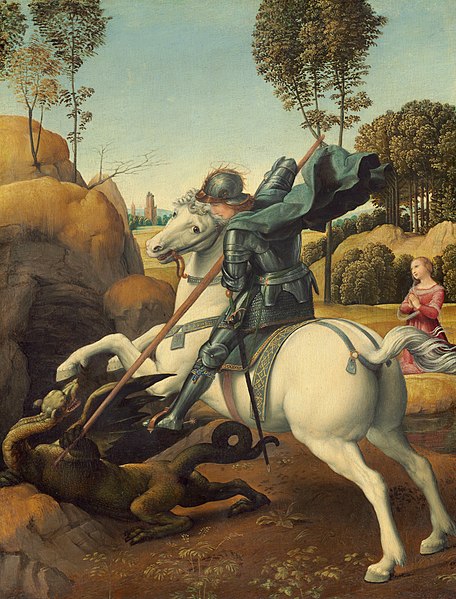
After all, we know Heracles will slay the Hydra. And we know for a fact that most of the Norse gods will die in the world-ending event known as Ragnarök. Osiris is killed and cut to pieces by his traitorous brother Set, but no worries, because Isis will put him back together and bring him back from the dead. And here’s one you may have heard before: Saint George slays the dragon and rescues the fair princess. Sound familiar?
Every culture, every nation, every people share something in common, and that is the archetype. Every nation throughout history has a Hero, the valiant warrior who slays the monster, saves the city, rescues the princess, defeats evil, etc. Often with enchanted weapons and other gifts from the gods and/or other supernatural forces. That Hero almost always has a Mentor who guides them along the way. The Mentor’s death is an optional bonus (the world “mentor” is an interesting case of word evolution. It originated from Homer’s Odyssey, where Odysseus’ son Telemachus receives advice as he grows into a young man from a trusted old friend whose name is – Mentor).
And there’s the Trickster, the Lover, the War God, the Love Goddess, the Hunter, the Dragon, the King, the Queen, the Rival, the Fool, the Prophet … Yup, they’ve all been around since roughly the same time that dirt was invented. Stories are repeating patterns being retold over and over and over.
Doesn’t mean they aren’t fun, though. After all, we wouldn’t tell the same story if it didn’t entertain us. Or affect us in some special way that breaks through language and culture. We identify with archetypes. We’re brought up to recognize the patterns and know what sort of story we’re being told. We know who to root for, who to boo at, and how the story is supposed to end. We know that Perseus will slay the monstrous Medusa, whose gaze can kill, and that Susanoo will slay the great eight-headed serpent Yamata no Orochi, but we’re still on the edge of our seats with anticipation. We know that the Trickster will, through bumbling and cunning, give humankind something that will benefit it: Maui fishes the islands of Hawaii out of the sea, Hermes invents the lyre and gifts it to his brother Apollo, Robin Hood always steals from the rich to give to the poor.
These stories are universal. They speak to basic needs and wants. The dragons of our lives can be defeated. Justice can be obtained. There is a reason why things are the way they are. Mythology is universal, and therefore, it withstands the tests of time. We are still enamored with the ancient tales of the Greeks, the Norse, the Japanese, the Egyptians, the Native Americans, and many more.
That’s not to say that stories are static. They don’t freeze and refuse to change. Sensibilities and cultural mores are constantly shifting, and archetypes are reinvented to suit the times. Heracles was a buffoon and hedonist in the old stories, did you know that? A bit of an idiot, and a hotheaded one, too. He killed his music instructor in a fit of rage. Not very heroic, eh? But take a look at Disney’s animated film, and see a hero who is much more ideal for our modern times. Here is a Heracles (or Hercules, his Roman name) who is gentlemanly, selfless, and clear-cut good. A far cry from his original incarnation, but it’s still recognizably the same character.
But let’s go a bit further. Heracles the super-strong, who slays monsters and thus protects civilization from their predations. Give him a desire for justice and peace, evolve him a bit. He’s a demigod, right? He’s otherworldly, part of something beyond normal human experience. Maybe he’s from another world altogether? An alien, but one who is on humanity’s side. Unstoppable, invincible, and one who represents the values of the culture that tells his stories. Give him a new name. Let’s call him – Superman!
I may be reaching with that last paragraph, but you can see where I’m coming from, right? Superheroes are modern myths. Or, perhaps, just the old myths with a new coat of paint. The Flash wears a winged helmet and is a swift runner – not unlike Hermes. Green Arrow is an expert archer – Robin Hood? Or perhaps a male Artemis. Batman is flat-out called the Dark Knight, and the black knight motif is very old, indeed. And what better villain for a noble knight who upholds social order than a maddened jester who calls himself the Joker? And the Mighty Thor is, well, Thor.
The old formula gets tweaked constantly. The myths endure, the basic structure is always the same, and on some level, from years of exposure to the stories in one shape or another, we recognize the underlying patterns. But that doesn’t stop storytellers from playing with the formula. In point of fact, taking apart an archetype to see what really makes it tick, or just disassembling them to bare all the flaws, is as much a part of modern storytelling as the straightforward “hero slays the dragon” gimmick. Maybe we like to question the status quo. Maybe the Hero isn’t so heroic. Maybe the Trickster is just an idiot who got lucky. Or maybe the world has just gotten cynical and doesn’t believe in heroes anymore.
But that’s okay, because eventually we’ll get tired of cynicism. We’ll get tired of heroes who aren’t heroic and evil triumphing over good. It doesn’t sit well, does it? People want someone they can trust to destroy the big bad evil. So, we get tired of having our favorite characters deconstructed and start crying out for the old stories to be played straight again. Played by the book, just like the stories we learned as kids. And eventually, after a couple generations, we’ll get tired of the same old, same old, and want to see someone mess with the pattern again. And so on and so forth.
Archetypes are resilient. They withstand all this reinvention and deconstruction. Take a god like Hermes and put him in the modern world, and he’ll thrive. Oh, sure, his fashion sense will be different, and he’ll be a little more savvy with modern tech, and he’ll be carrying a lot more experience and maybe a tad more maturity (maaaaybe…), but he’s still Hermes the Olympian god, the Trickster. He knows who he is. And we do, too. We know him down to a tee. His face is plastered on pottery, and his biography is thousands of years old. We know the pattern of his story. If there’s one thing humanity has become an expert in, it’s understanding the patterns of archetypes. Their stories aren’t going away anytime soon.
Enjoy what you’re reading? Subscribe by email for updates on new posts and follow my writing career, musings on fiction and storytelling, and reflections about life in general.


 Jake W. Powell