Crossover, crossovers. People from different worlds smashing into each other. Different genres, different styles, different stories. Throw them in a mixer and see what happens.
What’s the appeal? I’d say it comes down to simple curiosity. What would happen if Superman met Captain America? How would Greek myths get on with Chinese myths? Can a pirate really defeat a ninja?
It’s a popular trend these days. Maybe not so much in novel writing, but movies love them, video games really love them, and comics are practically built on them. And they’re fun. But there’s something about these companies’ strategy that is missing the point of a crossover. Every time one occurs (multiple times a year), it’s built up as the MOST INCREDIBLE THING EVER. And people get excited sure. But not like they used to.
Way back in 2008, when Nick Fury stepped out of the shadows at the end of the first Iron Man film to talk about “the Avenger Initiative,” fans squealed with joy and anticipation. Nowadays, the next big Marvel crossover film elicits a non-committal “Eh,” at best.
As a writer, my professional opinion is that crossovers are not easy to pull off anymore, largely because they’ve been done to death.
And that, I think, is the strength and weakness of the concept. Crossovers are big events. They’re something special, something noteworthy. Two completely different worlds colliding is interesting, and fans are curious to see if it can be pulled off. Batman and Elmer Fudd? Yeah, it’s been done, and it won’t be done again because you can’t capture that kind of lightning in a bottle twice. Crossovers are like a fine wine, best in small sips. Overuse just makes you feel overwhelmed. Try imagining a world where the Super Bowl happens every month.
Another example: Back in the 1980s, Mario and Sonic the Hedgehog were the pinnacle of dueling video game mascots. Who was better? Who was cooler? Then, one fateful day, they appeared together in the same game. Awesome! But they’ve done so again and again, and what was something that nobody ever saw coming is now ho-hum, another day in the neighborhood. Video game characters appear in each other’s franchises all the time, now. It’s practically an industry standard.
As it turns out, such “events” are best when served rare. Very rare. Otherwise, they aren’t events. They’re business as usual.
Many thanks for visiting my blog. I post updates on my writing career, I muse over storytelling and fiction, and I reflect on the curious and wonderful things in life.
Do you remember your favorite book from your childhood?
In truth, there are so many books I loved as a child that I can’t remember them all. I just remember the hours spent in my room, lost in words and pictures. But there is one that does stick out in my memory.
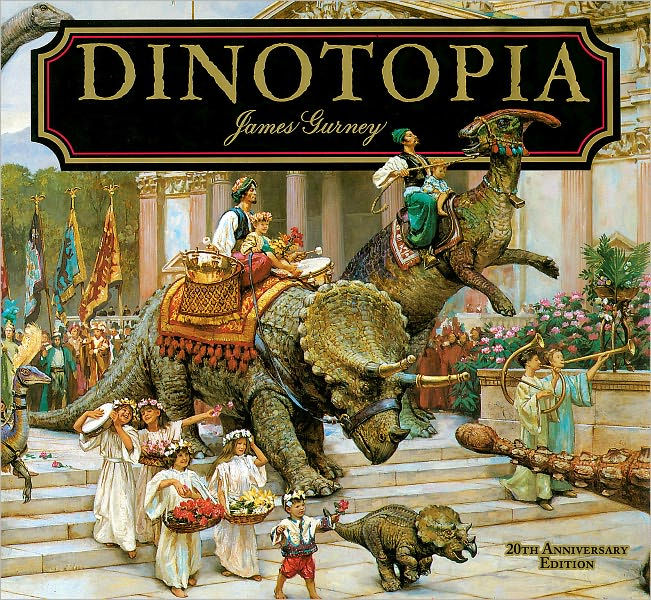
I have very fond memories of an illustrated book called Dinotopia: A Land Apart from Time. It has beautiful imagery, wonderful worldbuilding, and is a tour de force of creating a fully-realized fictional world, courtesy of National Geographic artist James Gurney.
Dinotopia is about an island hidden from the rest of the world where dinosaurs and humans live in peace and harmony. It is presented through the eyes of a 19th-century explorer and his son who are shipwrecked on the island and gradually become a part of its strange, beautiful, and intricate society. Gurney put a lot of thought into how such a world would function, not just the cities and the clothing and the festivals and the government, but such mundane things as bedding, waste disposal, and timekeeping.
And it’s gorgeous.
Remember what it was like to be a kid? When there were no strange grown-up responsibilities and nagging worries? Remember when nobody could take away your joy because you clung to it so fiercely? Dinotopia reminds me of those days, and it reminds me that we are still able to keep that joy throughout our lives.
Most of all, it reminds me how fun it is to curl up with a good book.
Many thanks for visiting my blog. I post updates on my writing career, I muse over storytelling and fiction, and I reflect on the curious and wonderful things in life.
There’s a fine line between being likeable and being charismatic. A likeable character – affable, friendly, trustworthy – is someone you want to be around for a chat and a drink. A charismatic character – inspiring, motivating, commanding – is someone you want to watch from a distance . There can be overlap, of course, but when writing a charismatic character, keep in mind that they don’t have to be nice. And a likeable character can be as dull as dirt, oddly enough. It depends on the reaction you’re trying to get out of your readers.
Understanding the type of character you’re writing and the feelings you’re trying to draw out of your readers is important. Likeability and charisma are just two of the facets found in any character, but they are important ones. Consider your protagonist. Does he draw others to himself? Does he make friends (and allies) easily? Why? Do you intend for him to be just plain affable and good-natured? Or maybe he is forceful and commanding, the type of person who gets what he wants through panache and strength of personality?
Knowing which you want determines which of the two traits you’re shooting for.
Likeable characters are, well, easy to like. And we like people who are like us. Most importantly, such characters possess empathy. They have hearts, and they not only understand how their actions affect others, they care about the consequences of those actions. And we generally like that in the people we’re in close contact with on a regular basis.
Charisma is awe. We don’t necessarily want to be around them constantly. We are amazed by them, but they are best enjoyed from a distance. They’re natural showmen, they get others pumped up and ready to see something spectacular. They represent what we want to be. A charismatic character can become a symbol or ideal to aspire towards.
Is there overlap? Absolutely. Many, many characters in fiction possess both traits. But even then, there tends to be a weight toward one or the other. Whether hero or villain – yes, villains can be easy to like, too – the two traits must be separated from one another to recognize them for what they are, and ultimately, to understand the impact you want the character to have on your reader.
Many thanks for visiting my blog. I post updates on my writing career, I muse over storytelling and fiction, and I reflect on the curious and wonderful things in life.
I like dark stories. I like stories that are grim and violent and seemingly hopeless. I like stories where the heroes are battered, bruised, beaten, foiled, and know great loss. I like stories filled with injustice and overwhelming evil trying to smother out the good.
I don’t like the darkness for its own sake. It’s true that I enjoy battle scenes and war stories and am not averse to violence. But I don’t enjoy the blood for its own sake, either. And I’m no masochist who watches bitter stories simply to sit alone later on and feel bad about the state of the world.
I like dark stories because the lights in them shine all the brighter. The sun is easily ignored on a sunny day, but it makes itself known when it breaks through the storm clouds. Moments of compassion and hope are all the more meaningful in a story filled with sorrow and cruelty.
We know what good is when it is juxtaposed against evil. We know what heroes are when they stand in the face of the impossible. We know what hope is when it defies despair.
When a writer understands that a dark story can still be uplifting and not merely a means to rage impotently against the wrongs they have known in life, then that story can be something great. We learn that life can be cruel, but we don’t have to be.
Did you like what you just read? Are you a writer, or just looking for fun content? Do you want more, but are worried about missing new posts? Please subscribe! I post updates on my writing career, I muse over storytelling and fiction, and I reflect on the curious and wonderful things in life.
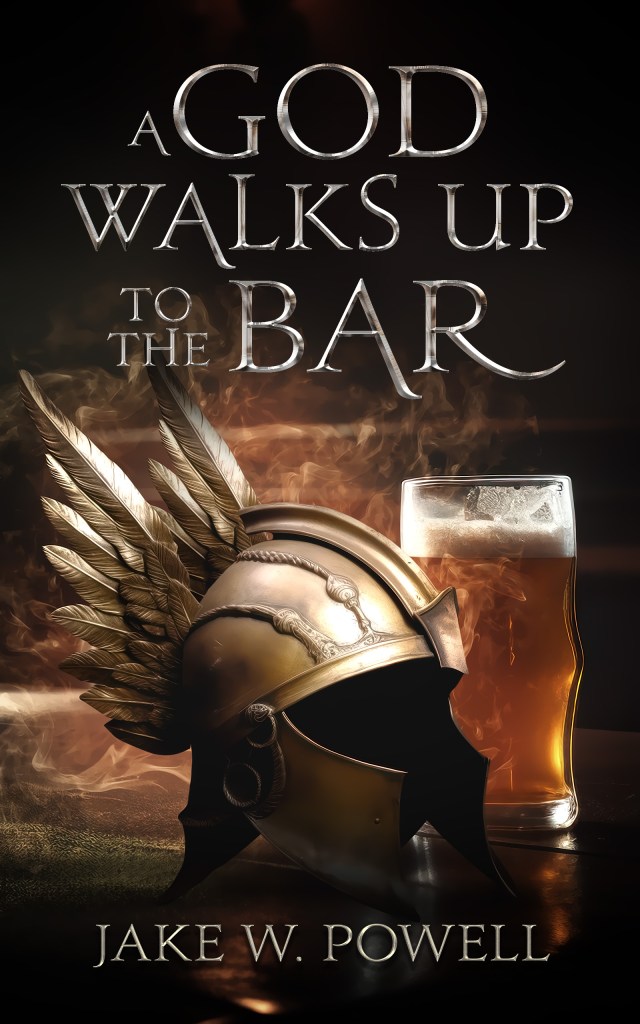
It hasn’t gone anywhere, and it won’t anytime soon! My first book, A God Walks Up to the Bar, is available on Amazon.com. Witness the modern day adventures of the Greek god Hermes in a world much like our own – plus with demigods, vampires, nymphs, ogres, and magic. The myths of old never went away, they just moved on with the times. It’s a tough job, being a god!
The story of the redeemed villain is a common and provocative trope in storytelling. It’s always fascinating to witness how a thoroughly evil and vile figure can turn around and repent of their ways. We like to see these tales play out and watch what happens next. It appeals to us.
Maybe the villain is likeable enough that we don’t want to see them die, or maybe we even see a little bit of ourselves in there, and hope that their redemption means there’s hope for us, too. Whatever the reason, a villain’s redemption is a major story beat, and should be treated as such. Which, in turn, means that writers should seriously consider it before going through with it. Is it the right move for the story? Is the villain truly redeemable, that is to say, is it a logical and fitting step in their growth as a character? Are they willing to seek redemption? Most importantly, can they be redeemed in a way that the audience finds natural and believable?
It’s easy to fall in love with a good villain and not want them to die. So, some writers just … give them an out. The villain evades consequences, sobs a few tears, gives a dramatic monologue, and skips on over to the side of good. And are welcomed with open arms. But is that how it would actually play out in the context of the world you’ve written? How bad is your bad guy? Did they blow up a planet, or just steal a few pies? If it’s the former, do you really expect them to be immediately welcomed and trusted by the heroes?
Don’t get me wrong, I’m not talking about a villain-hero team-up. Sometimes, good guy and bad guy have to work together, usually against a worse bad guy, but the villain remains clearly villainous, just currently motivated by shared interest. To be redeemed, a villain must be penitent. And to be penitent, a villain must truly feel remorse. And in feeling remorse, a villain must show a change in action and motivation.
A redemption arc is character development. The character will not be the same person at the end of it. Indeed, we writers should seriously consider this fact. If the villain was likeable because of their villainy, then redeeming them may in fact hurt them as a character. They’re no longer a villain. Will that take away what made them interesting and engaging?
On the other hand, you could have the villain redeemed through the classic act of self-sacrifice. It worked for Darth Vader, didn’t it? But, and hear me out, I think this is a bit of a cheat. Imagine how different things would have been for this classic movie villain if he had survived and had to stand trial before the people whose friends and family he had slaughtered. He would have to face his daughter Leia over the destruction of Alderaan. He would deliver himself into the hands of the Rebel Alliance he had hunted down for the whole trilogy. He’d have to live with the memories of his crimes. He’d have to do more than gasp a few words to his son as he lay dying to convince us he was truly changed. He would have to make his redemption stick. An interesting thought, no?
Redemption arcs are fascinating. They offer an incredible opportunity to explore facets of a character that usually aren’t. How and why does the villain do what they do? What would make them stop doing it? Can they stop? Do they have doubts? Do they value something greater than their current goals that they would give up their desires for? These are the sorts of questions that can help you figure out if your villain is a candidate for a moral turnaround.
The most important question to ask is: Does it serve the story? We are talking about fictional characters, after all. They’re not real people, they’re figures in a narrative that we as writers have the responsibility and privilege to manage and direct. Redemption and repentance in real life is quite another thing entirely, even if they do inspire our work. Real life is fuzzy. We can’t truly know other people’s motivations. But we can know exactly what motivates the characters we write, and so we can answer this question with confidence: Can my villain stop being bad?
If you just so happen to be enjoying my blog, feel free to subscribe. I post updates on my writing career, I muse over storytelling and fiction, and I reflect on the curious and wonderful things in life.
My first book, A God Walks up to the Bar, is available on Amazon.com. Witness the modern day adventures of the Greek god Hermes in a world much like our own – and with demigods, vampires, nymphs, ogres, and magic. The myths never went away, they just learned to move on with the times. It’s a tough job, being a god!
We all have big dreams, and big dreams involve big projects, lots of planning, blood, sweat and tears. Writers want to be known, and they want to put out their best possible work into the world. That takes time. And as we are all acutely aware, we don’t have all the time in the world.
So, is it possible to embark on a writing project that is too ambitious? Can we overreach ourselves and fall short?
In the end, it depends on each one of us.
Ambition is not in and of itself a bad thing, mind you. The desire to improve and grow is a natural and good thing for a writer. But writing and publishing also require a fair dose of humility. We are not all going to become the next Hugh Howie or Brandon Sanderson. And they only reached the heights they did because they worked really hard for a really long time to get there. So, how hard are you willing to work? Just as important, how hard are you able to work? Time isn’t infinite, and you might genuinely be limited by work schedule, family, and other things that pop up in life. If you try to expend time and focus you don’t actually have to spare, yes, you are being overambitious.
What about experience? How many books have you written before? Planning to write an epic trilogy that will sell a thousand copies when it’s your very first published work? Maybe you want to back off on that plan for a while. Write some smaller books first, find your voice, build up your skill. The story of the one-off novel that becomes a literary masterpiece is very alluring, but let’s not assume it’s going to happen to us.
Yes, you have talent. I have talent. We all have talent, and we can sharpen that talent into something great and memorable. But desire is no substitute for talent. What we want and what we have to work with are very different things. If you don’t have the experience, get it. Then write your magnum opus.
Overambition is overreach. It is to push yourself beyond your capabilities. Writing is like exercise. You flex your storytelling muscles every time you do it. That helps you build bigger muscles that can handle a bigger workload and more complex stories. It’s discipline. Weightlifters don’t start off with 400 pound weights when they begin their training. They work their way up to it.
Is it possible to be too ambitious? Yes. But the measure of that ambition changes over time. What is too ambitious now may be achievable ten years later, because in ten years you’ll be a better author. Keep writing. Keep stretching your limits. Shoot for the moon, but don’t assume you’ll get there on your first shot.
If you just so happen to be enjoying my blog, feel free to subscribe. I post updates on my writing career, I muse over storytelling and fiction, and I reflect on the curious and wonderful things in life.
My first book, A God Walks up to the Bar, is available on Amazon.com. Witness the modern day adventures of the Greek god Hermes in a world much like our own – and with demigods, vampires, nymphs, ogres, and magic. The myths never went away, they just learned to move on with the times. It’s a tough job, being a god!
We engage in dialogue every day. We talk with people face-to-face. We type emails, send letters, conduct Zoom meetings, send messages via social media. We even talk with ourselves. Any conversation we hold is a dialogue, and wherever there are two or more people (or you and the voice in your head) there is conversation.
Since dialogue is such a vital part of real life, it is reasonable to assume that it is also important to writing. And this is true. Characters talk to each other, and the manner in which they speak and communicate is important. Everyone has their own voice, their own mannerisms, accents, affectations, slang, tone, rhythm, and personality. Most stories are going to have dialogue of some sort. They tell the reader who the characters are, how the world works, provide information about the plot, and so forth.
But unlike the real world, where two people can keep a conversation about absolutely nothing going for four hours, writers need to be choosier about what their characters say. Every piece of dialogue carries weight. And it can serve several purposes that can improve and flesh out your story.
So, what does dialogue do for a story? What point does it have? Well, I respectfully submit three here for your consideration.
Characterization
We know what people are like through the way they speak. The things they talk about, how they talk about them, and what they don’t talk about all tell us who they are. People reveal their personalities and values through their words. Actions may speak louder than words, but words still count for something.
Is a character brooding and moody? Witty and optimistic? Intelligent and thoughtful? Brash and shortsighted? The narrative can describe a character as such, but their dialogue should carry through on that description. Different people talk differently. Just consider all the people you know. Do they all talk the same? Do they all respond identically to any given situation or topic? How do their background and experiences influence their words?
Furthermore, characters change over the course of a story. Consequently, their dialogue changes. Perhaps a rude character becomes kinder, and his words are sprinkled with more empathy and compassion. Someone may become obsessed, and her dialogue slowly becomes fixated on a single focus.
Or a character surprises. The stoic deadpan warrior cracks a joke at a key moment, demonstrating he’s not as humorless as he appears. The comic relief offers heartfelt insight that inspires others to action.
Worldbuilding
“You’ve never heard of the Millennium Falcon?” “Should I have?” “It made the Kessel Run in less than twelve parsecs.” – Star Wars: Episode IV
“The Dauntless is the power in these waters, true enough, but there’s no ship as can match the Interceptor for speed.” “I’ve heard of one. Supposed to be very fast, nigh uncatchable. The Black Pearl.” “There’s no real ship as can match the Interceptor.” Pirates of the Caribbean: The Curse of the Black Pearl
What is the Kessel Run, anyway? If you’ve only seen the movie, you’ll never know. But it’s a challenge for space pilots to navigate, apparently. And there’s the subtle implication that the speaker is a no-name making empty boasts.
The Black Pearl apparently is a fairy tale among sailors, setting up the supernatural overtones of the Pirates of the Caribbean film franchise. Also, the British Navy has some really nice ships and isn’t to be taken lightly in this setting.
Do people explain everything when they talk to each other? Do they launch into a five-minute expositional speech whenever they mention something the reader or viewer doesn’t know about? No, they generally don’t, unless it’s in an appropriate context. People in real life make offhand references to stuff all the time with the assumption that their conversation partner understands. Sometimes they do, sometimes not. But that kind of dialogue in a fictional world makes the setting feel more real. There are things that characters take for granted, for instance, and there are legends and folklore that have seeped into the culture.
Explanations aren’t always necessary. Characters talking about this or that thing that’s never followed up on is more like a real conversation than prefacing every explanatory statement with, “As you know…”
We may not know, but the characters do. And as long as it isn’t vital for us to understand, it makes for a fun bit of worldbuilding.
Story Progression
Amazingly enough, characters tend to take action when someone tells them something. Shocking, isn’t it? The king commanding his loyal knight, the messenger arriving with bad news, the lovers making plans to escape to a new life, the villain announcing his diabolical scheme to his archnemesis … Dialogue moves the story along.
Character motivations shift and change as people learn more about each other. Alliances are made and broken. Riddles are solved and treasure maps deciphered. The plan to take down the evil empire is concocted. Plot revelations are, well, revealed.
A story can’t move along without communication. Dialogue is a bit like a meandering river. Each interaction is a journey downstream from one point to another. It can take a while, and there are plenty of sharp turns, and the destination can be radically different from the start.
Sometimes, all a story needs to get going is a quick and innocuous chat. Things have a tendency to snowball from there.
And these are just three ways in which dialogue is vital to telling a good story. There’s plenty more out there. Feel free to share any that come to mind in the comments. After all, what is the comments section, if not another way to have a conversation?
If you just so happen to be enjoying my blog, feel free to subscribe. I post updates on my writing career, I muse over storytelling and fiction, and I reflect on the curious and wonderful things in life.
My first book, A God Walks up to the Bar, is available on Amazon.com. Witness the modern day adventures of the Greek god Hermes in a world much like our own – and with demigods, vampires, nymphs, ogres, and magic. The myths never went away, they just learned to move on with the times. It’s a tough job, being a god!
Tricksters are fascinating to read about and to write about. They’re the weirdos who exist on the fringes of polite society. They’re the ones who can get away with what other people can’t. They’re stick their tongues out at the world and make the rules work for them, rather than working according to the rules.
Tricksters are fun. They’re fun because, deep down, don’t we all enjoy seeing someone willing to say what we’re all thinking and doing what we wish we could? Tricksters are escapist characters. They pay back the jerks and the bullies, outwit the corrupt authority figures, and flout senseless and silly rules. We all enjoy our Robin Hoods and B’rer Rabbits.
Writing tricksters is fun, too. Writing the character of Hermes for my books has let me see the world from a different point of view. I suppose writing any character gives you such insights, but seeing the world through a trickster’s eyes …
They’re a surprisingly philosophical bunch. As characters whose primary role is to push boundaries and alter the status quo, they are naturally prone to questioning the point of things. Why are things the way they are? Why should (or shouldn’t) they change? Tricksters are the ones who can call out others for their actions and make the rest of the cast pause and think. And that makes for interesting writing. The archetype can fill all sorts of niches, whether the villainous anarchist, the secret mentor, the voice of reason, or the snarky smart aleck who gets all the best lines.
And then, of course, there’s the trickster as protagonist. Tricksters can carry a story all by themselves. By their very nature, they’re proactive. They get things done. The can save the day (or ruin it – protagonist doesn’t mean hero). Since the archetype is almost always transgressive in some way, he or she gets to give society a kick in the pants, usually by acting so outrageously or cunningly that nobody knows what to expect next.
Speaking of cunning, writing tricksters has also taught me a bit about plotting out, well, plots. I sometimes feel like we live in an age of fiction where schemes and trickery must be excessively complex. Writers like to create grand conspiracies, when a trickster is just as likely to tap you on one shoulder while standing on the opposite side. Committing a trickster like Hermes to the page has shown me that deception can be much simpler. Tricking people doesn’t really seem to be that hard. Often, it’s just a matter of reading people and playing up to expectations. Or remembering that most people just want today to be the same as yesterday and aren’t expecting to be hoodwinked. Then again, written characters also behave according to how the author has plotted them to behave, so maybe I’m just blowing smoke.
So, tricksters upend the social order. They slip into different roles with ease. They’re many things to many people. What they aren’t is moral, upstanding role models.
But …
What if a trickster tries to be moral? Is such a thing possible? Trickery is lying, and lying is immoral. Can you reconcile the trickster archetype with the hero archetype? Transgressing social values and upholding them? Can the two be melded? A liar with a moral compass? Can a trickster follow right and reject wrong? Can anything truly good come from trickery?
Very interesting philosophical musings, indeed. I’m still messing about with such notions in my writing. My version of Hermes is developing as I go, revealing new facets of his personality as my works progress. Tricksters aren’t simple characters, after all.
If you just so happen to be enjoying my blog, feel free to subscribe. I post updates on my writing career, I muse over storytelling and fiction, and I reflect on the curious and wonderful things in life.
My first book, A God Walks up to the Bar, is available on Amazon.com. Witness the modern day adventures of the Greek god Hermes in a world much like our own – and with demigods, vampires, nymphs, ogres, and magic. The myths never went away, they just learned to move on with the times. It’s a tough job, being a god!
What makes a story a story? What’s the fundamental element that every story has in common, regardless of genre, author, era, or medium? What is something that every, absolutely every, story must have in order to be a complete and whole narrative?
The answer: It ends.
“Oh, well done, Jake,” you might be thinking. “Congratulations, you jumped online to state the mind-numbingly obvious.” Well, yes, it is obvious. So obvious, in fact, that it curves back around to becoming easy to forget just how important it is that stories have conclusions. And, in fact, a lot of people nowadays seem to have forgotten that it’s important for the quality of any story, whether a book, a comic, a movie, a video game, or whatever, that it eventually comes to a stop.
Every narrative has a beginning, a middle, and an end. This is the basic structure. So, unless you’re going for something avant-garde, this is the way that every story is written. You start at the beginning, work your way to the end, then stop. Obvious.
Why is this so important? Because a story that never ends ceases to be a story.
Endings are important. Maybe they’re even more important than beginnings. Endings wrap up the plot. They give closure to the characters’ arcs. They tell the audience that that’s all, folks. Whether or not they satisfy us, endings close the loop. They give a story its shape, like how our backbones keeping us humans from being floppy, wiggly things squirming on the ground. A writer works her way toward the ending. And when she gets to the ending, she knows that there’s no more. There’s a boundary there, a limit that gives focus to what she writes, because she knows that she shouldn’t go beyond the finish line. Writers need their stories to end.
One of my favorite pieces of fiction is the newspaper comic Calvin and Hobbes by Bill Watterson. It’s just fun, brilliant writing and art. It was also very successful. So successful, that Watterson could have kept it going for a long time. But you know what he did? He didn’t. When he felt that he had told every story he needed to, he chose to end the comic. Isn’t that something crazy? To end an ongoing serial at the height of its popularity? Not many people have the courage to do something like that. But the final Calvin and Hobbes comic is something special. It sums up the spirit of the work and ends on a high note. Waterson knew that his story needed its conclusion.
He was tapping into something ancient and mythical, believe it or not. All the great sagas of the ancient world have endings. The epic of Gilgamesh ends with the hero’s profound growth as a person. The tales of the Norse gods end with a world-ending bang in the form of Ragnarök. The Trojan War didn’t go on forever – it reached its climax in one final, bloody battle. In more recent times, J. R. R. Tolkien tapped into that same epic tradition with The Lord of the Rings. It’s a doorstopper, but it does have its finale. He understood what the ancients did – a saga isn’t truly a saga until it’s all over. The fates of the heroes and villains are fulfilled, and an era is finished. The world moves on.
If a story goes on forever, eventually it ceases to be a story. It’s just a never-ending spewing of words and scenes that melt into each other and lose all meaning and purpose. The story falls apart. The narrative goes astray, and the characters lose their very nature simply due to existing for too long. There is no tale to tell, just a desire to keep a dying horse trotting forward for as long as possible, and it becomes painful to experience.
Well, now, aren’t I getting melodramatic? Maybe it’s time to end this post. Before I do, here’s one last thought: Consider a franchise or story arc or series that went on too long. I’m sure you can all think of at least one. It had an end … but then it kept going. It’s still going, perhaps, and shows no sign of stopping. But you wonder why. Why doesn’t it just stop? It’s past its glory days, and you recall its height with bittersweet nostalgia. You may not even enjoy it anymore. It’s not the same. It’s lost the spirit and tone that made it fun in the first place. It’s clearly a walking corpse kept going by sheer inertia – and maybe by the creator’s desire to milk as much money out of it as possible. It should end. It needs to. But it didn’t and suffered for it.
The best stories are the ones that know when they’ve reached their stopping point.
What do you think? What are your thoughts on stories and endings? Feel free to share!
If you just so happen to be enjoying my blog, feel free to subscribe. I post updates on my writing career, I muse over storytelling and fiction, and I reflect on the curious and wonderful things in life.
My first book, A God Walks up to the Bar, is available on Amazon.com. Witness the modern day adventures of the Greek god Hermes in a world much like our own – and with demigods, vampires, nymphs, ogres, and magic. The myths never went away, they just learned to move on with the times. It’s a tough job, being a god!
So, in my last post I went on a bit of a rant about how I dislike how much quip humor is overused in today’s media. So, maybe you’re wondering what kind of comedic writing I do like. Well, lucky you! That’s what I’m here to talk about today.
In all seriousness, comedy is a great way to develop and humanize characters. We use humor in all situations, including dangerous ones. It relieves stress, it helps us relate to each other, and it can lighten a grim situation. Most everyone has a sense of humor. And you know what? Nobody’s is exactly the same. So what happens when two people pit their humor against each other? Well, sometimes a black eye, but in most situations you get the normal, casual banter that marks so many conversations in real life. And as in real life, writing banter can reveal a lot about what people are really like.
Banter is defined by Dictionary.com as “an exchange of light, playful, teasing remarks; good-natured raillery.” While I doubt anyone uses the word “raillery” in casual conversation anymore, this definition gets the point across: Banter is a two-way (or more) street. It is dialogue, and it is reliant on character interaction. Where two characters interact, you get development and characterization. You also get exposition explained in a palatable way. You can get plot progression, foreshadowing, romance, conflict, and all sorts of other things. Why? Because it is dialogue. Because it is character interaction. Because, unlike quipping, banter relies on sharing the spotlight with someone else.
Good-natured ribbing is a form of camaraderie the world over. Inside jokes and bad puns and the playful critique thereof illustrate the history of a relationship more succinctly and beautifully than a full paragraph detailing the backstory. Verbal sparring is fun to read or watch and can be laden with subtext that delivers multiple messages in a single conversation. Just check out movies and books with great dialogue. Well-written banter makes characters feel like real people.
And quips … well, people do quip in real life, but it’s a lonely game to play. It’s a one-trick pony. What happens when people get tired of one-liners? Banter is more flexible. People throw different types of funny at each other. To quip is to play golf: You hit the ball and off it goes. One and done. Banter is tennis. You hit the ball back and forth, leaping and twisting around to catch it and keep up the rhythm.
I promise my blog won’t turn into a campaign against types of writing I don’t like. I don’t despise quipping. But I do prefer variety and versatility in writing. Banter simply offers more options and has more applicability. Not everyone talks in one-liners. But everyone enjoys a spot of teasing and ribbing. Want to flesh out your cast? Add some banter.
If you just so happen to be enjoying my blog, feel free to subscribe. I post updates on my writing career, I muse over storytelling and fiction, and I reflect on the curious and wonderful things in life.
My first book, A God Walks up to the Bar, is available on Amazon.com. Witness the modern day adventures of the Greek god Hermes in a world much like our own – and with demigods, vampires, nymphs, ogres, and magic. The myths never went away, they just learned to move on with the times. It’s a tough job, being a god!


 Jake W. Powell