You Think This is Funny? Reflecting on Film Writing and Humor

Image: “Comedy and Tragedy Masks” by Booyabazooka; Licensed under CC 3.0

Today I’m going to talk about something specifically related to film writing, and a trend that I’ve seen in movies for a while now.

See the picture above? You’ve seen them around. The twin masks of Comedy and Tragedy. The two always go together. Where there’s laughter, there’s sorrow. Where there’s mourning, there’s merriment. They need each other. Every great work has both working hand-in-hand in the jolly spirit of cooperation.

We need to laugh. But, and this is a big but, we also need to cry. And if you have too much of one and none of the other…

What happens if a story is all jokes and funny business? Well, you might call it a comedy, sure, but do you know what a lot of really good comedies have? Moments of seriousness interspersed with the hilarity. And do you know what the best dramas have? Sprinklings of humor to lift the audience’s spirits.

But writing comedy is tricky. Heck, writing in general is tricky, but writing appealing humor is really tricky because you’re trying to appeal to a broad audience. Why do you think broad humor is synonymous with toilet humor? It’s easy to get a quick laugh out of something dirty. It’s the easy way out and requires little skill. Sorry to all of you out there who enjoy such, but it really is the junk food of comedy. And like junk food, you like it at first, but it leaves you sick in the end.

As a wise man once said: “Dying is easy. Comedy is hard.”

Humor is more than just jokes. Humor humanizes. People crack jokes under pressure. Their sense of humor makes the audience able to empathize with them. And yet, humor can also de-humanize, funnily enough. What do I mean by that?

Okay, let’s talk about the current state of Hollywood. Yes, I’m going there.

Blockbusters nowadays – not all of them, but a whole lot – rely on quips and wisecracks to carry their characters through the action. A dramatic scene is undercut by a sudden swerve into corny jokes. Everyone is a kidder. Too much humor spoils the plot. If nobody is taking this seriously, why should I? What are the stakes? When you joke about everything, everything becomes a joke. The characters are just walking punchlines, waltzing from gag to gag. They’re defined by how much funny they can deliver per minute. And they cease to be characters: They’re walking satires, exaggerated stereotypes of human behavior.

Well, Arnold Schwarzenegger could pull it off. True, but 1980’s action movies rarely pretended to be anything more than fluff. Watch bad guys get beat up by a hero delivering one-liners after each kill. What happens when modern blockbusters try to pose as something much more meaningful – and then undercut that meaning with a one-liner perfectly timed to be delivered at the most poignant and emotional moment?

Humor is a very powerful tool. It tells us what to take seriously and what to devalue. We laugh at things we don’t treat as important or respectable. Which can backfire if you set up a story where a situation or character is meant to be treated with dignity, respect, confidence, and even fear, and then undermine that intent with a barrage of cheap quips. Humor is like a gun: You don’t wave it around carelessly.

What’s worse, the audience very quickly becomes desensitized to it. A couple of movies with this type of writing, the audience is whooping and hollering. But by the tenth film, it becomes old-hat. Yeah, yeah, this is about the right place for – yup, he did it. He made a corny joke right when I expected him to. Hey, here’s a quiet drama scene. I bet they’re gonna – yup, another cheap joke to ruin the mood.

Predictable, formulaic, and worst of all, boring. Same old, same old.

So, what to do about it?

Well, learn from it, for one. Why doesn’t it work anymore? Analysis of others’ writing, both good and bad, can be useful for improving one’s own skills. Learning from the mistakes and missteps of others is invaluable. Comedy is a rich and complex genre in and of itself, with so many branches. It serves many purposes, and can truly bring light into hopeless situations, and alleviate tension right when the audience needs it. Just don’t overdo it. No need to beat someone over the head to make sure they “get the joke.”

And the joke itself isn’t the point. Everything, even a witty quip, should be in service of the story. The story should never serve the joke.

Enjoying my blog? Don’t want to miss a single post? Subscribe for updates on when I post and follow my writing career, musings on fiction and storytelling, and reflections about life in general!

Stories for All Time: Universal Themes in Writing

Image: “Lonely Galaxy Lost in Space” by NASA Goddard Photo and Video, Licensed under CC BY 2.0.

Really, this topic is so vast that I could devote an entire week to it. When you consider that stories have been told for as long as humanity has existed, it’s small wonder that certain themes and morals endure the rise and fall of civilizations, and that common threads wind through the evolution of communication technologies.

Quite simply, certain themes in storytelling are universal. I’m sure you’ve thought of some just now. Good versus evil. The hero’s journey. Coming of age. Revenge. Forgiveness. Hope. War and peace. Etc., etc. Why? Because they’re broad. They appeal to everyone, because everyone has, at some point or another, dealt with these issues. They resonate with us, to use a common turn of phrase. Another way of putting it is that they are inherently familiar topics. And it doesn’t matter who you are or where you’re from, everybody has a concept of the hero or wants a story about hope. Everyone is familiar with war, and also with villainy. You don’t need cultural translation to understand that there are good things in the world and also very bad things.

So, some stories have that universal appeal. How do we know which ones? Well, it takes a bit of patience to find out, doesn’t it? When Charles Dickens wrote A Christmas Carol, he didn’t know his novella would be a staple of literature over 150 years later. Neither did the Greek poet Homer know that The Odyssey and The Iliad would still be studied to this very day.

Wait fifty years. Is the story still popular? More importantly, is it still relevant? Do people still care?

For every masterpiece, there must be ten thousand forgotten works. So many stories fade away with time. Sometimes, it’s due to bad luck or happenstance, and some never get a chance to be recognized. And some were a flash in the pan: Their plots were ripped from the headlines, centered around current events. What was hot and fresh that year gave them a brief celebrity. Then the world moved on, and these stories became anachronisms. Their identities were fixed in current events, and without that context they remain curiosities at best.

I won’t give any examples. Maybe you can think of a few yourself.

Universality and timelessness go hand-in-hand. The greatest stories don’t need to be shackled to any one era. They can be retold, again and again, in any age, at any time, because the core of their identity and popularity isn’t the bells and whistles of the current year. It is their basic, broad, foundational themes that reverberate throughout the ages. Sherlock Holmes is Sherlock Holmes, whether he’s in the 19th century or the 21st. Journey to the West has been retold as a post-apocalyptic video game. You can’t count the number of adaptations of Little Red Riding Hood on your hands and feet – you’ll run out of digits.

The very best stories can be told over and over again, and they have something to say to us every time.

Enjoying my blog? Don’t want to miss a single post? Subscribe for updates on when I post and follow my writing career, musings on fiction and storytelling, and reflections about life in general!

Why Writers Must Learn to Kill Their Babies (Less Morbid than It Sounds)

Okay, let me explain…

When I was taking film classes in college, my professor explained a key lesson that every writer must learn. They must learn when it is necessary to kill their babies.

You have an idea. It’s a brilliant, shining idea that came to you in an incandescent flash of inspiration. A magnificent idea that is the beating heart of your story. It is your motivation and driving force. The story would not exist except for this one concept.

It could be anything. A single scene. A character. A set piece. Even a single line of dialogue. Whatever it is, it was amazing enough to make you sit down and write.

It is your precious baby.

You finish the first draft of your story. You’re very pleased with it, especially how you incorporated your idea into the overall work. You send it out to readers for feedback. And the unexpected happens. They’re dubious about your baby. They don’t like it. They say that it doesn’t mesh with the rest of the story. In fact, it’s holding your story back from its full potential. It’s a liability.

Without realizing it, as you wrote and developed your setting, characters, and plot, they outgrew the original idea. That concept you love so much is no longer the plot’s beating heart. It is a tumor that threatens the quality of your narrative. The scene is out of place and unneeded. The character is completely detached from the rest of the cast. The set piece is just a waste of words. The line of dialogue is silly.

For the sake of the story, you must kill your baby.

If that sounds grotesque, it’s only to communicate how strongly writers can feel about their stories, and how painful it can be to remove something that can feel so personal to you. It’s a necessary culling that must be performed for the good of your writing. It is a sacrifice, one that almost every author must make at some point or another. And for those who aren’t willing to make the sacrifice, well, their story suffers for it. The readers might, too.

The lesson here is that something that seems like its working at the beginning of your project can become an utterly awful proposition by the end. A chef likes garlic, so he adds a ton of garlic to his casserole. Then he tastes the final product and gags. It was a good idea at the time, but …

Enjoying my blog? Don’t want to miss a single post? Subscribe for updates on when I post and follow my writing career, musings on fiction and storytelling, and reflections about life in general!

Measure Your Writing: Fewer Words are More than Enough

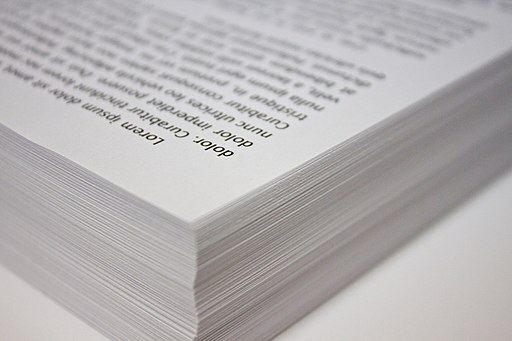
Image: “Stack of Copy Paper” by Jonathan Joseph Bondhus; licensed under CC BY-SA 3.0.

So, you’re writing your book. You feel pretty good about it. You got your first draft done, you send it to your beta readers, and the feedback starts trickling in. You take in the criticism and start your second draft. And you notice something odd. Many of your changes entail removing words, cutting out extra sentences, and shortening descriptions. Your word count is growing smaller. What gives?

Writing involves a lot of things. One thing I’ve discovered it needs is measurement. I don’t mean whipping out the tape measure to guess how thick your paperback will be. I mean making sure that every word matters. If your sentences go on and on and on then you’re going to bore your audience to tears, if you don’t just outright confuse them. On the other hand, using too few words can lead to your readers scratching their heads if you leave out important information. A writer is like a sculptor. He carves out the unnecessary material and leaves behind exactly what is needed to make the piece complete.

My first draft is the phase that I like to call “vomiting words.” Because that’s what I do. I get all my words out, regardless of whether they are good or not. First drafts are always garbage. There’s no helping that. But too many is better than not enough. There’s always plenty of time to parse things down later.

So, how do you make the most of fewer words? Here is what I’ve learned.

  1. Be simple. Don’t try to write fancy. Purple prose is like nitroglycerin. It blows up in your face at the slightest mistake. Don’t write “his face stretched into a wide, dour grimace.” Just write, “he grimaced.”
  2. Synonyms are your friend. There are single words out there that mean the same as three put together. Why waste space? Rather than “ran very fast,” you can use “sprinted” instead.
  3. Details matter to the plot. Readers expect the descriptions and conversations you include to have significance. So make sure everything you include in your final draft has a point! Don’t waste time on things that are irrelevant.
  4. Last, and certainly not least, don’t underestimate your readers’ intelligence. Unless you’re writing for three-year-old’s (and even then…), don’t treat your readers like idiots. They can fill in blanks for themselves, especially regarding mundane things. You don’t need to explain how someone puts on a shirt, or go into gross detail over the interior of an office building. Chances are, people already know. Let them exercise their imagination a little!

Of course, there are exceptions to these. There are always exceptions. And some stories are going to be longer than others, regardless. The point is not to trim everything out until only barebones, dry description remains. The point is to make your writing readable and coherent. Sometimes, you will have a very long and colorful description of a character or scene. If it’s appropriate for the story’s tone, or describes something that isn’t common knowledge, or the details will become important later on, have at it. But don’t overdo it. The point isn’t writing a lot of words. It’s writing just enough words.

The gods and beings of ancient myth never went away. They just moved on with the times.

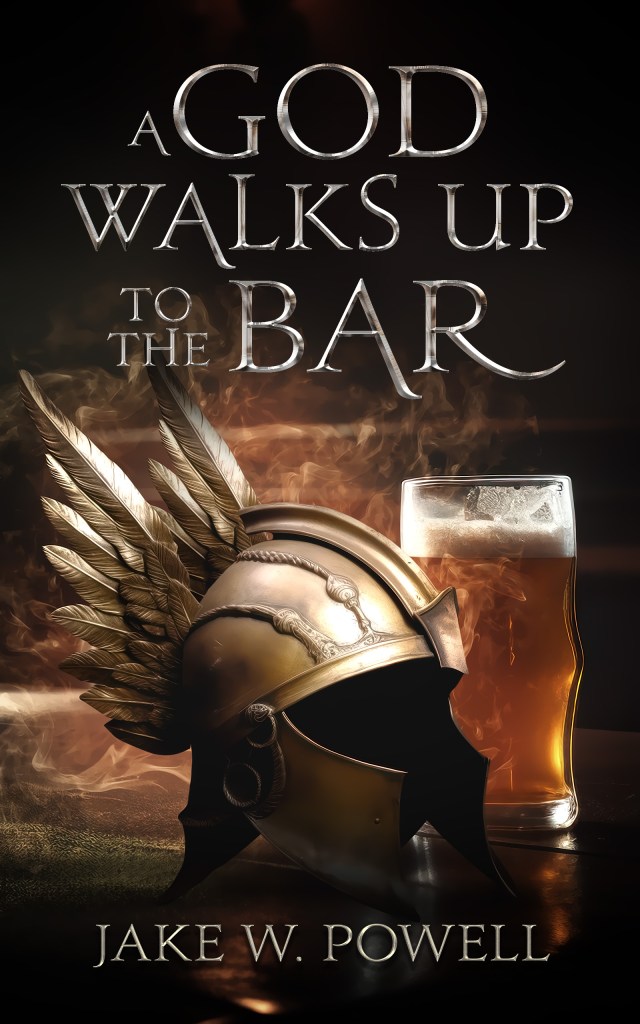
My book, A God Walks up to the Bar, is currently available on Amazon.com. Venture into the world of the Greek god Hermes, a world filled with demigods, vampires, nymphs, ogres, magic, and trickery. It’s a tough job, being a god!

Enjoying my blog? Don’t want to miss a single post? Subscribe for updates on when I post and follow my writing career, musings on fiction and storytelling, and reflections about life in general!

The Rule of Three: A Strange Ingredient for Storytellers

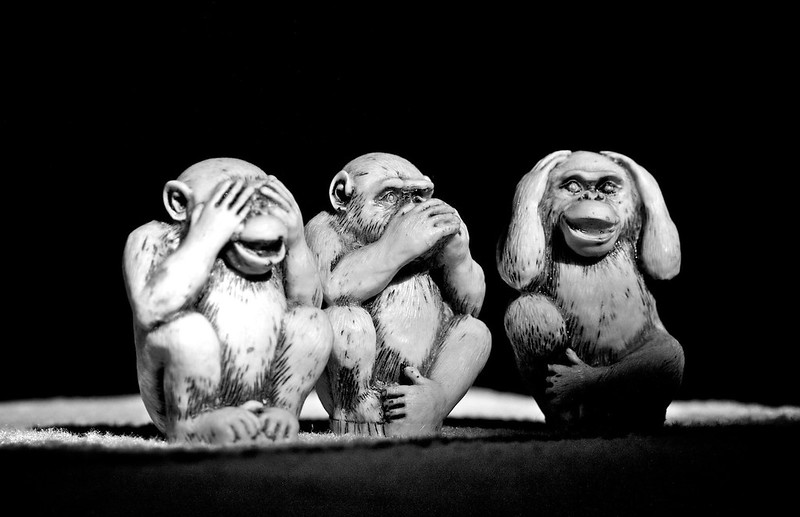
Image: “Three wise monkeys” by Anderson Mancini, licensed under CC BY 2.0.

What’s the most important number in the world? Let’s count.

One … two … three?

It’s an odd number to be fixated on. But we are. Look around you. Listen. Read. Everything comes in threes. We love things to be presented in trios.

Land, sea, sky. Birth, life, death. Child, adult, elder. Beginning, middle, end. Ready, set, go. Lights, camera, action. I came, I saw, I conquered. See no evil, hear no evil, speak no evil.

It’s a habit of humanity to divvy things up into threes. Maybe because it’s a nice prime number, like 5 or 7. There’s a pleasant sense of completeness in three, a satisfaction that you can’t quite get with two, and going up to four is a step too far. Three is everywhere, and it’s found a home in our collective psyche. Things always feel right when they’re grouped into threes. Stories feel right.

The number three is storytelling’s superstar. Stories rely on patterns, and the number three is the smallest number you can use to set up a pattern and then deviate from it. Take a glance at fairy tales and note how many times the third brother gets the prize, or how many trials the hero must overcome to succeed, or how many times the evil witch tries to stop him. Set up the expectation and then throw in a twist the third time around.

Good stories tend to be efficient with their time and words. Why go through the same pattern four times to set up the fifth’s deviation, when you can cut out two repetitions and get the same result? Maybe early oral storytellers were just lazy and hit on a good tactic to keep listeners engaged without wearing out their throats.

Either way, if you’re going to be a writer, consider the usefulness of the rule of three. Most stories are divided into three acts: The setup, the middle action, and the climax. Want to reinforce that a plot element is important? Mention it three times: Once to introduce it, a second time to remind your audience of its existence, and a third time for the payoff (alternatively, a third time to reinforce it in audience’s minds, and then give them the payoff).

Remember the oath that witnesses make in court? “Tell the truth, the whole truth, and nothing but the truth, so help me, God.” Here we see the principle in action: “Tell the truth” (introducing the concept to speak truthfully), “the whole truth” (reinforce the concept that you will be honest), “and nothing but the truth, so help me, God” (grinding it into your head that you will tell the truth, doggonit!)

As weird as the rule of three is if you think about it too hard, we’ve been raised on it for so long that it’s been hardwired into most societies. We tend to think in terms of threes when writing, when talking with friends, or even when giving a speech. It’s just such a common, reliable, and trustworthy trope. It’s in schools, it’s in media, it’s even in the academic community.

Ha, ha, yes, I’m so very clever. But you get the point. Don’t you? Need me to repeat it again?

In all seriousness, we humans do like patterns, and the rule of three is such a basic pattern that it fits pretty much anywhere. We recognize it, at least on a subconscious level, because we’ve been exposed to it since childhood. I can make that statement with confidence because it’s just. That. Widespread. And yes, I did just use the rule again to prove my point. Really, this whole article could drown in its own metatext.

Being so common, the rule of three is a reliable standby for writers both beginner and veteran. I use. You use it. And – Well, you get the idea.

The gods and beings of ancient myth never went away. They just moved on with the times.

My book, A God Walks up to the Bar, is currently available on Amazon.com. Venture into the world of the Greek god Hermes, a world filled with demigods, vampires, nymphs, ogres, magic, and trickery. It’s a tough job, being a god!

Enjoying my blog? Don’t want to miss a single post? Subscribe for updates on when I post and follow my writing career, musings on fiction and storytelling, and reflections about life in general!

A Voice of Their Own: Crafting Your Characters

Stories need characters to be stories. Stories are about people. Whether they be human or otherwise isn’t the point: They are defined personalities with concrete goals that drive the plot. Even a place can become a character in the hands of an imaginative writer. Whatever shape they take, every tale needs characters to be a tale. Otherwise, you might be dabbling in some form of avant-garde, and I can’t help you there.

Since characters are so vitally important, from the protagonist to the antagonist to the mentor to the love interest to the bit part, it is important as a writer to learn how to create an interesting and layered cast to inhabit the worlds we put down on paper. People have quirks and habits. They have desires. They have likes and dislikes. They have relationships. As authors, it is our job to make the cast come to life. We create the illusion that they are real people.

It’s impossible to create a fully fleshed-out person as you would meet in real life, simply because the sheer complexity and depth of a real person could never fit into any number of books. Pick a historical figure, say, Napoleon Bonaparte. How may books have been written about his life? And they all have something different to say. One man, and everyone sees something slightly different. A writer would have to dedicate his life and then some to even approach that degree of complexity. No, I believe that it is the author’s job to create enough of the character as is needed to serve the story.

That’s what I mean when I say writers create the illusion of real people (or dogs, cats, antelope, aliens, mythical monsters, etc. You get the idea). It’s a bit of literary sleight of hand. Each character is just a slice of reality, a digestible piece that is enough for the plot and reader. By giving layers and dimension to those slices, we approximate reality. The closer we create someone who acts mostly like a real person, the more our readers are convinced they truly are. Suspension of disbelief. Very rarely will you ever read or watch a character behave exactly like a person in real life behaves.

The victim in the slasher flick always heads into danger. The James Bond villain always monologues about his scheme before inexplicably letting the hero live. The cowboy cop always goes rogue and comes out a hero. Characters reflect reality, but they shouldn’t adhere to reality perfectly. They adhere to the plot. The story is everything, and characters serve to move the story forward. A little tinkering with common sense is a necessary evil.

So, how do you craft your characters? How do you make them their own unique person? Well, some people like to make complete backstories before they start. Some have bibles dictating their characters’ natures, quirks, and traits. Some, like me, start with a basic outline and then let their characters reveal themselves during the course of writing. When I wrote A God Walks Up to the Bar, I knew Hermes’ basic nature. But during the course of the project, I discovered new things about him. There were layers to him I did not anticipate, reactions to events that I did not expect. He’s a fictional character, and I have final say in what is on the published page, but even so, he feels alive.

And that’s good! When the character feels like a real person, I am better able to write them. It’s less like putting words into a dummy and more like having a conversation. I get to know Hermes, know what he’s like, glimpse into the parts of himself that he keeps hidden from all others. He reveals his history as I write him, and I am able to better write him because he has a history.

With that comes a knowledge of what is in-character and out-of-character. How does he react to this situation? And what does he not do? If every character acts the same, then they are interchangeable and the story is boring. Boring is the writer’s death knell. Even an awful story can be entertaining. Heck, I’d rather write an awful story than a boring one. If the reader’s bored, he stops reading. But a “so bad it’s good” kind of story at least keeps their attention.

Mind you, these are all my personal thoughts. Different authors have different styles. If you are a writer who finds it easier to write out a complete and detailed backstory for your characters before starting the first page of your book, then do so. I don’t think any writer should force themselves to do something that runs against their creative instinct. But be open to surprise. Inspiration is always active and strikes at any time, even mid-sentence.

The gods and beings of ancient myth never went away. They just moved on with the times.

My book, A God Walks up to the Bar, is currently available on Amazon.com. Venture into the world of the Greek god Hermes, a world filled with demigods, vampires, nymphs, ogres, magic, and trickery. It’s a tough job, being a god!

Enjoying my blog? Don’t want to miss a single post? Subscribe for updates on when I post and follow my writing career, musings on fiction and storytelling, and reflections about life in general!

Why Writers Should Make Their Character Suffer

It is my duty as an author to make my characters suffer. I must put them through the wringer, submit them to the lash, and force them to endure severe physical and psychological torment. Nothing must come easy to them. My characters must endure doubts, confrontations, and existential crises. They must be tested to their utmost, then pushed even further.

Why? Because authors are sadistic monsters Because the testing of a character forces them to grow, and the pleasure of reading a story is to see its heroes overcome the challenges they face. The greater the challenge and the greater the suffering they endure in conquering that challenge, the greater the catharsis of victory for both hero and reader. And there’s also no small amount of pleasure in giving my characters that final victory. I personally like happy endings.

Suffering can bring out the best and worst in people, whether they be real or they be fictional. It’s an interesting experiment to put a written character to the test and see how they react. What happens if I put the protagonist into THIS terrible situation? Or make them confront THAT unpleasant truth? Struggles let us see what makes people tick. Test your mettle and see how strong you are … and grow stronger.

All that being said, it boils down to this: a story is only as interesting as its characters and the situations they find themselves in. If the characters are flawed and have to work through their problems, then great! The readers share in their triumphs and failures, empathize with their foibles, and root for their success. Characters who never struggle and always succeed perfectly in everything they do can have a place in a story, but you might want to think twice about making them the protagonist. In a word: Boring. Invincibility is fine against bullets and blades, but even Superman is weak against kryptonite.

Authors should toss their characters into the furnace every now and again. Let them work for what they want. It’s what readers are paying for after all, and we got to fill those pages somehow.

The gods and beings of ancient myth never went away. They just moved on with the times.

My book, A God Walks up to the Bar, is currently available on Amazon.com. Venture into the world of the Greek god Hermes, a world filled with demigods, vampires, nymphs, ogres, magic, and trickery. It’s a tough job, being a god!

Enjoying my blog? Don’t want to miss a single post? Subscribe for updates on when I post and follow my writing career, musings on fiction and storytelling, and reflections about life in general!

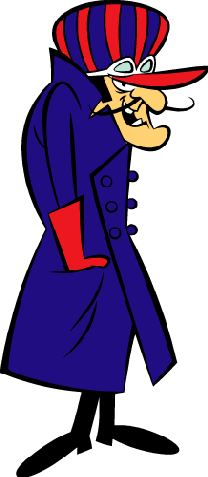
Villains: Why We Love Such Hateful Scoundrels

Image: Dick Dastardly, doomed to villainy from the day he was named. Wacky Races promotional material, courtesy of Wikipedia, fair use

Last week, I talked about antagonists and their importance to a good story. If you read it, you may have noted that I said antagonists are not necessarily villains. Antagonists are just a roadblock to the hero’s goal.

Today we are going to talk about villains.

What’s the difference? Simple. Villains are EEEEVVVIIILLL. They’re monstrous, greedy, murderous, and rude. They slaughter villages, rob innocents of all their possessions, conquer nations, and say really mean things. We love to hate them. We love villains. Why do we love villains? Why like something so vile?

That question gave me some food for thought, and here’s what I’ve come up with.

1: Villains are charismatic.

Darth Vader knows how to make an entrance. He strides down a hallway littered with corpses, black cape flourishing behind him. His breath is a low mechanical wheeze, and his face is concealed behind a skull-like mask. He casually strangles a rebel while interrogating him, takes charge of every situation, strangles fellow Imperials from a distance while cracking morbidly dry jokes, and in general is a terrifying threat to everyone he meets.

He’s a monster. But he’s a cool monster. He gets the cool armor, the cool lines, every appearance is accompanied by John Williams’s Imperial March, and if he’s not the mascot of the Star Wars franchise, he’s pretty dang close. Why? Because Vader has charisma. He’s memorable, he has stage presence, he has the physical acting of David Prowse and the rumbling baritone of James Earl Jones. Who doesn’t know who Darth Vader is? And how many little kids dress up as this cold-blooded mass murderer every Halloween? Oh, bitter irony! But such is the effect of a charismatic villain.

2. Villains are interesting.

We like to watch or read about interesting people. Ergo, we like to watch or read about interesting villains. Villains with unusual motives, or memorable quirks, or empathetic traits. We like villains who stick out from the mass of mundanity. We like villains who can keep us invested in the plot.

Take old Norman Bates, for example. He’s a psychotic serial killer. Well, nothing new there, fiction loves its depraved killers. But he’s a hotel owner with a split personality, that of his deceased domineering mother, who takes control and kills any woman that Norman expresses an interest in. Well, that’s certainly one form of interesting. What’s more, half the plot of Alfred Hitchcock’s Psycho follows him as the main character. And we learn that, sick as he is, he is a tad pitiable as well. That makes him, dare I say, quite interesting to watch.

We generally consume fiction for the purpose of being entertained. And a key part of entertainment consists of simply holding our attention. The best villains grab our attention and never let go. We look forward to seeing them onscreen, especially if they end up more endearing than the cardboard heroes.

3. Villains drive the plot.

Maybe, on some unconscious level, we like villains because we recognize how necessary they are. Villains, like all antagonists, drive the story. If they don’t start it, they at the very least keep it going. Conflict is key, and villains by their nature stir up conflict.

Take the Evil Queen from Disney’s Snow White and the Seven Dwarfs, for instance. There would be no story if she hadn’t gone up to her magic mirror and asked “Who is the fairest of them all?” And then tried to kill Snow White when she learned the girl was fairer than her. Then Snow White wouldn’t have ended up in the dwarfs’ cabin, and the Evil Queen wouldn’t have pursued her disguised as an old hag, and we wouldn’t have had the dwarfs’ climactic scene chasing her up the cliff during a thunderstorm.

There would be no movie. And we would not be entertained.

The gods and beings of ancient myth never went away. They just moved on with the times.

My book, A God Walks up to the Bar, is currently available on Amazon.com. Venture into the world of the Greek god Hermes, a world filled with demigods, vampires, nymphs, ogres, magic, and trickery. It’s a tough job, being a god!

Enjoying my blog? Don’t want to miss a single post? Subscribe for updates on when I post and follow my writing career, musings on fiction and storytelling, and reflections about life in general!

Antagonism: The Types of Conflict that Shape a Story

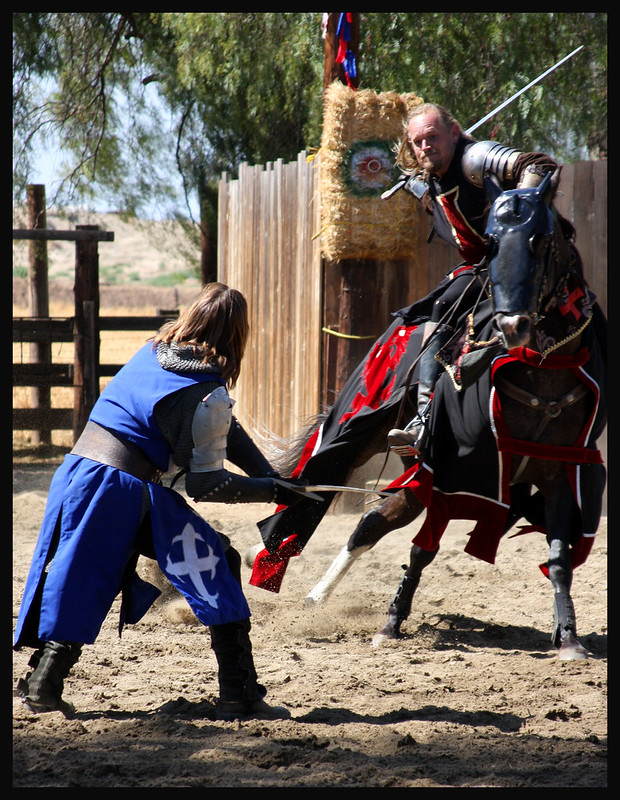
Featured Image: “Black Knight vs Blue Knight” by tinyfroglet is licensed under CC BY 2.0.

Funny thing about conflict: We don’t like it in real life, but we pay money to see people who aren’t real suffer. I mean, what good movie or book doesn’t have some sort of conflict at the heart of the story? The rebel leader fighting the evil empire, or the monster hunter confronting the vampire, or heck, the two lovers trying to overcome the forces keeping them apart. Conflict drives a story. Without it, there’s just nothing worth telling. No opposition, no struggle, no character arc, no story, no nothing.

With that in mind, it’s apparent that the source of conflict is pretty darn important. The protagonist wants something, and something else stands in their way. That “something else” is the antagonist, the source of the conflict. It’s not necessarily a villain. It’s not always another person. It may not even be a living thing. But it is opposed to the protagonist.

We humans are busy little storytellers. We’ve generated a wide variety of tales over the course of the millennia, and that means a variety of antagonistic forces have been invented. Let’s take a look at the basic types, shall we?

Firstly, we have the classic form of the antagonist: Man versus Man. It may not be an actual man against another man, but “Person versus Person” just lacks that dramatic je ne sais pas. Anyway, this is what most people think of when they think of the word “antagonist.” Darth Vader, Michael Myers, Dracula, the enemy army, werewolves, the high school principal, you name it. If it’s a unique, discrete entity, it falls under this category … usually. Mind you, however, that an antagonist is not necessarily a villain. They don’t have to be evil. Sure, Darth Vader is a classic antagonist and a legend of pop culture, but if the protagonist is an underdog football player trying to win the big game, the antagonist could be the arrogant captain of the opposing team: a jerk, but he doesn’t have to be a mustache-twirling, baby-kicking villain.

If it’s not Man versus Man, it just might be Man versus Nature. Think Robinson Crusoe. There is no one identifiable entity threatening the protagonist. Nature itself is the enemy. Maybe it’s a storm threatening a fishing community, a plague that scientists are racing to cure, or an asteroid on a collision course with Earth. Whatever it is, it’s generally a faceless threat that you can’t just beat up yourself.

Although, sometimes writers cheat and will throw in some form of threat that makes things more personal. Say, a pack of wolves that chase the protagonist throughout the story. Or maybe a really angry bear. Or a monstrous, man-eating shark (Hello, Jaws!). If there’s something to pinpoint as the source of the protagonist’s woes, it makes it easier for the audience to cheer for them when they beat it.

Man versus Society: Society is to blame! Here, we have a protagonist who is in some shape or form going up against their own culture. It could be going against expectations, fighting against injustice, or maybe just trying to flee an oppressive situation. Or maybe they’re rebels who want to defy norms and expectations as a means of proving their own individuality. Or maybe the protagonist’s actions aren’t justified at all, and the story shows why those norms exist. These sorts of conflicts can swing widely between the idealistic and the cynical. The protagonist wins, proving that society can’t keep you down. Or the protagonist wins, triggering a dystopian collapse. Or society wins, and the selfish protagonist learns an important lesson about sacrifice and duty. Or society wins, and the protagonist is reduced to just another cog in a life-sucking machine. Yeah, these stories can go all over the place, can’t they?

And finally, we have Man versus Self. The protagonist is their own worst enemy. Nobody is able to hinder their goals more than themself. Personally, I don’t see this particular form of conflict very often, but it’s there. I think it works best when combined with one of the three other antagonists above. The protagonist could succeed if only he would give himself a break or free himself from whatever chains are holding him back. Pretty good for a character study or more cerebral story rather than an action-focused piece. If you want to get really loopy, you could have the character’s inner demons manifest externally as something in the real world, usually in a symbolic way as something associated with their vices, or you could have a literal split-personality for them to talk to. All sorts of loopy possibilities.

And there you have it: A bare-bones breakdown of conflict and antagonists in a story. As basic as can be, but a solid foundation for any writer to use.

What other forms of conflict do you see in stories? Are there other types of antagonists you’ve found in media that you’d like to share?

The gods and beings of ancient myth never went away. They just moved on with the times.

My book, A God Walks up to the Bar, is currently available on Amazon.com. Venture into the world of the Greek god Hermes, a world filled with demigods, vampires, nymphs, ogres, magic, and trickery. It’s a tough job, being a god!

Enjoying my blog? Don’t want to miss a single post? Subscribe for updates on when I post and follow my writing career, musings on fiction and storytelling, and reflections about life in general!

Revision Vs. Obliteration: When to STOP Revising Your Book

Editing is an addictive process for me. I love editing. I love digging into the guts of my story and tinkering with things, fixing typos and grammar, revising dialogue, picking better words to describe action and thought. It’s a huge amount of fun for me. Alas, like most things in life, too much of a good thing can be very bad indeed.

I go through many drafts, and in each draft I find something new that can be improved. And improved again. And again! As soon as I finish, I see something else that needs fixing. Eventually, the quotation marks of irony rear their ugly heads and improve becomes “improve.” Yes, I’m making my story “better” by constantly carving it and nitpicking it until there’s nothing left. I need to remind myself: You must set yourself a stopping point.

But the perfectionist in me screams out: What if you missed something? What if there’s a misspelled word somewhere in there? What if you misplaced a comma? What if there’s an extra space between words? What if, what if, what if!

I’ve gone through my drafts, I’ve had my book edited, and I’m going through my final proofreading. It’s almost done. And I must remind myself that it’s almost done. No last-minute check-ups that turn into another round of revisions. Done is done. Finis. Ready for publication. But am I ready to publish? Is anyone ever truly ready?

What if I missed something? Ah! There it is again! The dreaded “what if!”

In theory, authors could revise their books forever. The process can go on and on until, quite literally, nothing is left. You don’t have a book anymore. You’ve “revised” the living daylights out of it, cutting and cutting, until what made the book great has been destroyed by picky perfectionism.

Maybe that’s part of growing as an author, accepting that you, at any given point in your career, are NOT perfect. That your work is flawed, try as you might, and you must recognize those flaws, learn from them, and apply your lessons to the next project.

But I can’t perfect my craft by obsessing over one work forever. I must set myself a deadline and mark it as DONE, like it or not. Maybe that’s just my quirk. Maybe my fellow authors have struggles that are quite the opposite, or maybe you can relate. Feel free to share in the comments.