“Now” is Not “Forever”

What is the best piece of advice you’ve ever received?

“This too shall pass.”

Whenever you are feeling down, whenever you feel discouraged, whenever you’re stuck taking out the trash or behind a desk at work, or otherwise feel that time has shrunk to a single point that is infinite and eternal and will never, ever get better …

“This too shall pass.”

This is no call to passivity or apathy. This is a call to endure and push forward. Now is not forever. The current situation is not the whole of the future. Persevere. Get the dishes done. Finish your homework. Drive through after-work traffic. There is an endpoint. There is not merely a light at the end of the tunnel – the tunnel itself does indeed have an end.

“This too shall pass.”

There is hope in life. Even the most dire, the most awful, the most horrific and seemingly apocalyptic of times will eventually pass and become a distant memory. You need not fear that what you’re suffering through now will always be there. And most of all, this means that we do need to live in despair. Work through the hard times, build perseverance, and from that perseverance comes character, and from that character comes hope. Because this – yes, THIS, right now – will pass soon enough.

***

Many thanks for visiting my blog. I post updates on my writing career, I muse over storytelling and fiction, and I reflect on the curious and wonderful things in life.

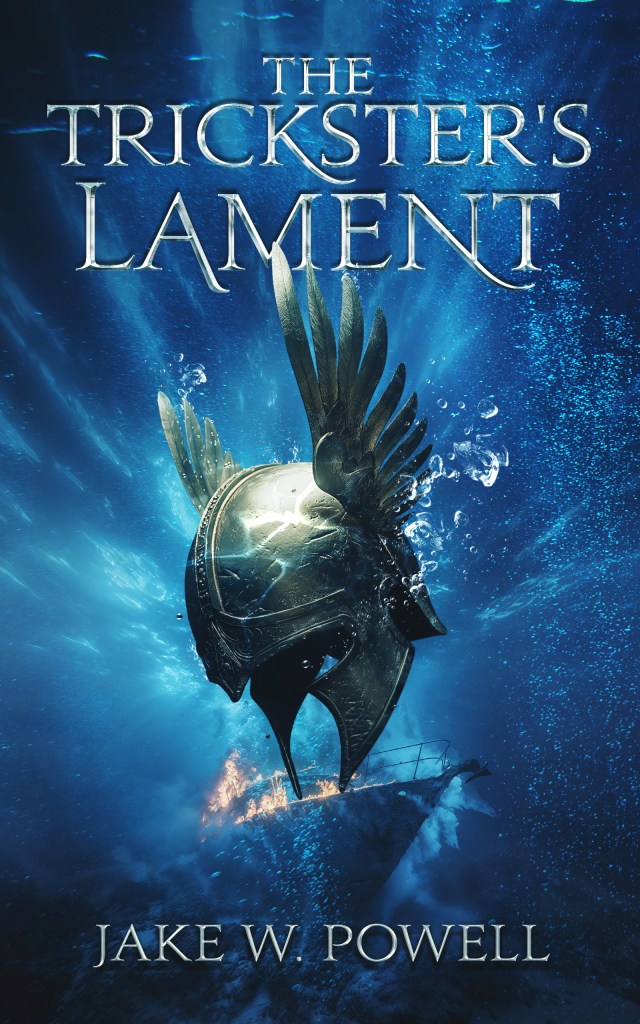
“Hermes is not having the best time. He walks a fine line, and his duty as messenger of Olympus weighs heavily on him. Being a god in the modern age means living in a world that no longer believes in gods. How much can one deity accomplish when no one respects him anymore? And why do his instincts tell him that he, the son of Zeus, is losing favor with his own family?

Tensions abound. The upstart Young Gods play dangerous games using entire cities as their boards. Formless monsters strike from the nighttime shadows, terrorizing hapless mortals. Agents of rival pantheons scheme to thwart Olympus’ designs. In the thick of it all, Hermes does what he does best: trick, lie, and cheat his way to victory.

Why Do I Blog?

Today’s daily prompt is fairly simple: Why do I blog?

That’s an important question for a blogger. It’s like asking any writer: Why do you write? Knowing why can help shape the future of your craft. A little introspection is good for professional and personal growth. And truth be told, the answer changes over time.

When I started my blog, it was primarily for two reasons: To promote my published work and to keep my writing skills sharp. Those two reasons haven’t changed. However, over time I find blogging in and of itself to be a fun hobby, not merely a side project to go along with writing books.

That being said, blogging is a different animal from short stories and novels. It is taking ideas and presenting them as bite sized chunks. It’s also a way for me to get a feel for what sorts of topics and writings appeal to my audience. It’s also a way to reach out to other writers, to learn from them, and to broaden my understanding of the craft.

Blogging also helps keep my mind occupied. I don’t know about the rest of you, but I go nuts if I don’t have something to occupy the creative half of my brain. My mind stagnates, and my thoughts wither and … Well, maybe it’s not quite that dramatic, but managing a blog is an excellent way to keep my time occupied with something constructive and fun. It’s a good hobby, and I’m glad I started.

***

Many thanks for visiting my blog. I post updates on my writing career, I muse over storytelling and fiction, and I reflect on the curious and wonderful things in life.

“Hermes is not having the best time. He walks a fine line, and his duty as messenger of Olympus weighs heavily on him. Being a god in the modern age means living in a world that no longer believes in gods. How much can one deity accomplish when no one respects him anymore? And why do his instincts tell him that he, the son of Zeus, is losing favor with his own family?

Tensions abound. The upstart Young Gods play dangerous games using entire cities as their boards. Formless monsters strike from the nighttime shadows, terrorizing hapless mortals. Agents of rival pantheons scheme to thwart Olympus’ designs. In the thick of it all, Hermes does what he does best: trick, lie, and cheat his way to victory.

Stephen King on Writing

I came across this quote today by Stephen King. It struck a chord with me.

“Description begins in the writer’s imagination, but should finish in the reader’s.”

This is a trap I am still learning how to avoid. The temptation to describe absolutely everything in meticulous and inane detail is something that, while appealing to the writer, can do extensive damage to the story. We as writers should not be tyrants over our reader’s minds. Describe enough to convey the point, but leave some left over for the readers to fill in the blanks.

After all, we all had our fill of obsession with details in high school literature class.

***

Many thanks for visiting my blog. I post updates on my writing career, I muse over storytelling and fiction, and I reflect on the curious and wonderful things in life.

“Hermes is not having the best time. He walks a fine line, and his duty as messenger of Olympus weighs heavily on him. Being a god in the modern age means living in a world that no longer believes in gods. How much can one deity accomplish when no one respects him anymore? And why do his instincts tell him that he, the son of Zeus, is losing favor with his own family?

Tensions abound. The upstart Young Gods play dangerous games using entire cities as their boards. Formless monsters strike from the nighttime shadows, terrorizing hapless mortals. Agents of rival pantheons scheme to thwart Olympus’ designs. In the thick of it all, Hermes does what he does best: trick, lie, and cheat his way to victory.

What We Feel

How are you feeling right now?

When I saw this daily prompt, it turned me thoughtful. How am I feeling at this very moment? I considered that I could write about how I feel excited for today, hopeful for the future, disappointed, discouraged, content, happy, restless.

But I have been all these things in the span of a single day, and it makes me wonder if the question isn’t a flawed one. How I am feeling right now can change in a moment’s time.

And now I wonder if perhaps we all put too much stock in feelings. Emotions are flittery things, like butterflies twirling in a windstorm. Sometimes up, sometimes down, diving and soaring in all directions, rarely in one place for too long.

Emotions are … changeable. Their impact on our lives cannot be ignored, but I try not to direct my life by how I am feeling at the moment. If I only wrote when I feel good, I would still be on my first book. Action is a yardstick we can measure our lives by, not feelings.

And this makes me realize something else: Our feelings do not have to dictate our lives. They are not the measure of our worth or our successes or even our failures. They are important, for words of encouragement from a friend can gladden our hearts, and the thrill of a good story can inspire us, but they are not the sum total of our lives. We are more complex creatures than how we feel at any given moment.

We feel what we feel. We can rarely help it. But we are not puppets strung along by emotion. Emotion is a part of me, but it is not meant to be my master and commander.

And no, that really isn’t what the daily prompt was asking, was it? But there you have it. My daily thoughts, for better or worse.

***

Many thanks for visiting my blog. I post updates on my writing career, I muse over storytelling and fiction, and I reflect on the curious and wonderful things in life.

“Hermes is not having the best time. He walks a fine line, and his duty as messenger of Olympus weighs heavily on him. Being a god in the modern age means living in a world that no longer believes in gods. How much can one deity accomplish when no one respects him anymore? And why do his instincts tell him that he, the son of Zeus, is losing favor with his own family?

Tensions abound. The upstart Young Gods play dangerous games using entire cities as their boards. Formless monsters strike from the nighttime shadows, terrorizing hapless mortals. Agents of rival pantheons scheme to thwart Olympus’ designs. In the thick of it all, Hermes does what he does best: trick, lie, and cheat his way to victory.

Writing is a Whitewater Rapid, Writing is a Block of Marble

What do you enjoy most about writing?

Writing is an act of creation. It is the free exercise of imagination and the production of things unseen, undreamt, uncertain until that very moment. It is as dynamic as a mountain river and just as unpredictable. It ebbs and flows. Currents crisscross one another and pull me in this direction, and now in the other. I love it. I plunge into the unknown when I sit down to write. For all the preparations and outlines and forethought, which are important, I still don’t truly know what will happen.

I love the surprise. I love the way that my imagination detaches from my logical mind and soars on its own. And then, after I return to Earth and the giddiness fades, comes the really fun part: editing.

Editing is taking the uncouth block of marble that is my first draft and refining it into something I can show in public. I am an editor at heart. The initial draft, that whitewater rafting down the river of raw imagination, must be balanced against the delicate chiseling of the editing process. Careful carving, doing away with what isn’t needed, making my work into something better. I love the careful precision and attention to detail.

Truth be told, I just love making up stories. Good stories, bad stories, stories that teach, stories that entertain. Like rivers and stone, riding the rapids and nicking away at the marble, are stories made.

***

Many thanks for visiting my blog. I post updates on my writing career, I muse over storytelling and fiction, and I reflect on the curious and wonderful things in life.

“Hermes is not having the best time. He walks a fine line, and his duty as messenger of Olympus weighs heavily on him. Being a god in the modern age means living in a world that no longer believes in gods. How much can one deity accomplish when no one respects him anymore? And why do his instincts tell him that he, the son of Zeus, is losing favor with his own family?

Tensions abound. The upstart Young Gods play dangerous games using entire cities as their boards. Formless monsters strike from the nighttime shadows, terrorizing hapless mortals. Agents of rival pantheons scheme to thwart Olympus’ designs. In the thick of it all, Hermes does what he does best: trick, lie, and cheat his way to victory.

Finding Your Time to Write

Everyone has a time when they are at their best for writing. Everyone has that time of day when they can “get in the groove.” Whether morning or evening, when the sun is rising or when it is setting, or anytime in between, we all have sweet spots when we find it easiest to settle down and write.

But we can’t always write during that sweet time. Life comes calling. Work. Chores. Errands. Family emergencies. Social obligations. Life doesn’t always allow us to write when we want to. What to do?

Here are some of my own thoughts:

  1. Make the most of the time you have – Be diligent when you are able to sit down and work on your projects. Set goals for yourself: hitting a certain word count per day, completing a chapter, and so forth. This is especially useful if you know ahead of time that your free time is constrained.
  2. Be flexible – We all have a time of the day when we are at our literary best, but we ought not feel that that’s the only time we are allowed to write. Experiment with other times and see what else works for you. You might be surprised at how adaptive you can be.
  3. Analyze your priorities – Work is one thing, playtime is another. You might have more time to write than you think, but you devote it to something else, whether a hobby, entertainment or even napping. Ask yourself how important your writing truly is to you. Are you willing to give up a little more time to devote to it?
  4. Persevere – And sometimes, no matter what, you just can’t get into the groove because you’re a night owl who can only squeeze in a paragraph or two at the crack of dawn. Soldier on. Don’t give up, and keep writing anyway. Perseverance is vital. If you truly want to make the craft a part of your life, there will be tough days along with the good. Soldier on.

***

“Hermes is not having the best time. He walks a fine line, and his duty as messenger of Olympus weighs heavily on him. Being a god in the modern age means living in a world that no longer believes in gods. How much can one deity accomplish when no one respects him anymore? And why do his instincts tell him that he, the son of Zeus, is losing favor with his own family?

Tensions abound. The upstart Young Gods play dangerous games using entire cities as their boards. Formless monsters strike from the nighttime shadows, terrorizing hapless mortals. Agents of rival pantheons scheme to thwart Olympus’ designs. In the thick of it all, Hermes does what he does best: trick, lie, and cheat his way to victory.

One Smile at a Time

Did you give someone a smile today? A small hello, a gentle smirk?

Did you bid someone “Good morning” and “How do you do?” Did you let a stranger know that you noticed them and cared?

It is a precious thing in today’s age. A little hello can lead to big changes. A drop of kindness can spread through the heart. A word has power, even if that word is “Hi.”

Give someone a smile. A real smile, a polite smile, a warm smile, a pleasant smile. And back up that smile with a word. A scant few seconds of your life given over to another. Nothing lost, but maybe something gained.

***

Many thanks for visiting my blog. I post updates on my writing career, I muse over storytelling and fiction, and I reflect on the curious and wonderful things in life.

“Hermes is not having the best time. He walks a fine line, and his duty as messenger of Olympus weighs heavily on him. Being a god in the modern age means living in a world that no longer believes in gods. How much can one deity accomplish when no one respects him anymore? And why do his instincts tell him that he, the son of Zeus, is losing favor with his own family?

Tensions abound. The upstart Young Gods play dangerous games using entire cities as their boards. Formless monsters strike from the nighttime shadows, terrorizing hapless mortals. Agents of rival pantheons scheme to thwart Olympus’ designs. In the thick of it all, Hermes does what he does best: trick, lie, and cheat his way to victory.

Charley Horse

Charley Horse is riding again

Up and down, up and down

Fast enough to make my head spin

Riding hard and fast as the stormy wind

He rides in the night silent as a lamb

I don’t hear him coming

Then bam!

He tramples my leg, turns it outside in

I scowl and I seethe and I hang on tight

Charley Horse ain’t slowing down

I hold on fast and try to rein in his might

But Charley Horse is away. He’ll be back again.

***

Many thanks for visiting my blog. I post updates on my writing career, I muse over storytelling and fiction, and I reflect on the curious and wonderful things in life.

“Hermes is not having the best time. He walks a fine line, and his duty as messenger of Olympus weighs heavily on him. Being a god in the modern age means living in a world that no longer believes in gods. How much can one deity accomplish when no one respects him anymore? And why do his instincts tell him that he, the son of Zeus, is losing favor with his own family?

Tensions abound. The upstart Young Gods play dangerous games using entire cities as their boards. Formless monsters strike from the nighttime shadows, terrorizing hapless mortals. Agents of rival pantheons scheme to thwart Olympus’ designs. In the thick of it all, Hermes does what he does best: trick, lie, and cheat his way to victory.

As I Grow Older, These Grow in Value

What do you think gets better with age?

Aging is not a curse nor a tragedy. It is a fact of life, and like all things in life, brings both good and bad. Indeed, age brings many good things with it. Many things grow in joy and fulfillment as we grow older. Here are just a few:

  1. Friendship. As I grow older, I value my friends all the more. A fresh, new friendship is like an apple that hasn’t quite ripened. It may be a little sweet and hold promise, but it hasn’t yet reached full maturity. A friend who has been at your side for years is more precious than a brother or sister, and you can have full confidence they will stick with you through thick and thin, as they have for so many years already.
  2. Health. As we get older, our health can get a little rickety. I am grateful that I can get out of bed unassisted, that I can walk from one side of town to the other, and that I can take a breath without pain. Does that sound a little morbid? But I value every moment of good health, and strive to make the most of it. A child takes his good health for granted. With age comes an awareness of mortality, and with it, a deeply held joy in a robust life.
  3. Memories. The longer we live, the more memories we are given. Memories can be like old friends – or prodding critics – and reflecting on them helps us discover how full our lives truly are. Even if we think we lived a dull, uneventful life, looking back on our memories reminds us that nobody is uninteresting or boring. We all have memories that span the gamut from comedy to triumph to tragedy to drama to wonder. We all live, and we all remember.
  4. Time. Ah, time. The great equalizer. It bows to no one’s will or demands, no one’s wishful thinking or logical arguments. Time is an unceasing gear, turning with heedless inevitability. In other words, you can’t get more of it. I value time now more than I did as a ten-year-old, because I have less of it. Time is a nonrenewable resource. Make the most of it! I treasure moments that can never come again, for their fleeting nature makes them precious.

What about you? What do you think gets better as you age? What do you value more as you get older?

***

Many thanks for visiting my blog. I post updates on my writing career, I muse over storytelling and fiction, and I reflect on the curious and wonderful things in life.

“Hermes is not having the best time. He walks a fine line, and his duty as messenger of Olympus weighs heavily on him. Being a god in the modern age means living in a world that no longer believes in gods. How much can one deity accomplish when no one respects him anymore? And why do his instincts tell him that he, the son of Zeus, is losing favor with his own family?

Tensions abound. The upstart Young Gods play dangerous games using entire cities as their boards. Formless monsters strike from the nighttime shadows, terrorizing hapless mortals. Agents of rival pantheons scheme to thwart Olympus’ designs. In the thick of it all, Hermes does what he does best: trick, lie, and cheat his way to victory.

Dinner with History’s Nameless

If you could host a dinner and anyone you invite was sure to come, who would you invite?

If I could invite anyone … I wouldn’t let a thing like time get in the way.

I would invite people long dead to learn their stories and the shape of history. Not famous people or those mentioned in the history books. The nameless, the common people, those whose names never made it into a textbook.

  1. A laborer who worked on the Great Pyramid of Giza. I would ask him how the pyramids were built, and what it was like to build one of them. I would ask what life was like for the common man in the ancient times of Egypt.
  2. A Viking from the 10th century. What were the raids like? What was your culture like? How do you see yourself, and how do you want others to see you?
  3. A peasant from 15th century Japan. What was it like to live during the Warring States period? I would ask him about daily life in Japan and how peasants related to samurai and other higher-ranking castes.
  4. Nez Perce, Comanche, Pueblo, Inuit, and Mohawk tribal members from before the first Europeans arrived in North America. I would ask them what their cultures were like, how they got on with their neighbors, and what North America was like before written history.
  5. One of Thomas Edison’s employees. Not the man himself, but someone who worked under him. What was it like? What was he like? And how did you contribute to his company?
  6. One of the first theater-goers to see Walt Disney’s Snow White and the Seven Dwarfs in 1937. I would want to know what the first audience’s impressions of the film was. And I would want to know what they thought Disney would do next.
  7. One of Microsoft’s first ever employees. I would love to know what his or her vision for the company was, what working under Bill Gates was like, and what it was like to build the first home computers.

And that would just be my first dinner party …

***

Many thanks for visiting my blog. I post updates on my writing career, I muse over storytelling and fiction, and I reflect on the curious and wonderful things in life.

“Hermes is not having the best time. He walks a fine line, and his duty as messenger of Olympus weighs heavily on him. Being a god in the modern age means living in a world that no longer believes in gods. How much can one deity accomplish when no one respects him anymore? And why do his instincts tell him that he, the son of Zeus, is losing favor with his own family?

Tensions abound. The upstart Young Gods play dangerous games using entire cities as their boards. Formless monsters strike from the nighttime shadows, terrorizing hapless mortals. Agents of rival pantheons scheme to thwart Olympus’ designs. In the thick of it all, Hermes does what he does best: trick, lie, and cheat his way to victory.