Literature Adds to Reality …

Literature adds to reality, it does not simply describe it. It enriches the necessary competencies that daily life requires and provides; and in this respect, it irrigates the deserts that our lives have already become.

C . S. Lewis

***

Many thanks for visiting my blog. I post updates on my writing career, I muse over storytelling and fiction, and I sometimes post cool quotes by writers.

Thoughts on The Giving Tree

Do you remember your favorite book from childhood?

I can’t say it was my favorite book as a child – I have too many of those to choose just one – but I remember The Giving Tree by Shel Silverstein with fondness. A sweet story of self-sacrifice, though as an adult I realize that it is controversial. But most stories are, especially when we pry them open, dissect them, and boil them down.

Maybe I’m just a sentimentalist who likes stories that are bittersweet. Maybe I’m naive. Or maybe I never perceived the concept that the boy was exploiting the tree because I grew up in a family where I was taught to say “please” and “thank you” and learned about responsibility. Maybe a story’s interpretation depends on the context of the reader’s life and experiences. We all see something different.

Either way, I liked the story. I was young and innocent and hadn’t received a college education yet, so I saw only good in it.

***

Many thanks for visiting my blog. I post updates on my writing career, I muse over storytelling and fiction, and I reflect on the curious and wonderful things in life.

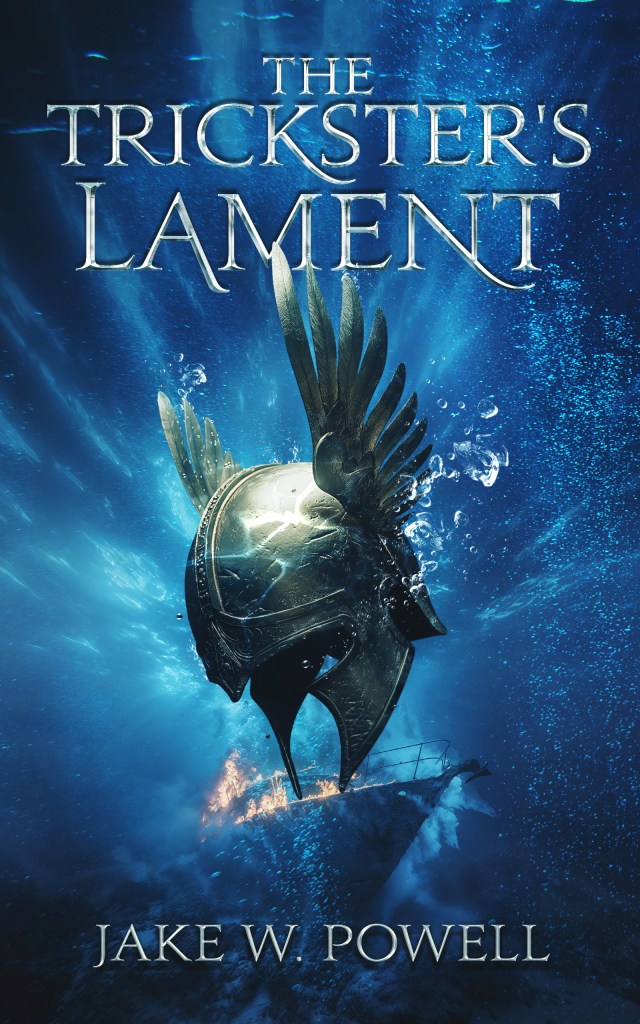
“Hermes is not having the best time. He walks a fine line, and his duty as messenger of Olympus weighs heavily on him. Being a god in the modern age means living in a world that no longer believes in gods. How much can one deity accomplish when no one respects him anymore? And why do his instincts tell him that he, the son of Zeus, is losing favor with his own family?

Tensions abound. The upstart Young Gods play dangerous games using entire cities as their boards. Formless monsters strike from the nighttime shadows, terrorizing hapless mortals. Agents of rival pantheons scheme to thwart Olympus’ designs. In the thick of it all, Hermes does what he does best: trick, lie, and cheat his way to victory.

Charles Dickens on Writing

Charles Dickens knew what it is like to be a writer …

Prowling about the rooms, sitting down, getting up, stirring the fire, looking out the window, teasing my hair, sitting down to write, writing nothing, writing something and tearing it up…

***

Many thanks for visiting my blog. I post updates on my writing career, I muse over storytelling and fiction, and I reflect on the curious and wonderful things in life.

“Hermes is not having the best time. He walks a fine line, and his duty as messenger of Olympus weighs heavily on him. Being a god in the modern age means living in a world that no longer believes in gods. How much can one deity accomplish when no one respects him anymore? And why do his instincts tell him that he, the son of Zeus, is losing favor with his own family?

Tensions abound. The upstart Young Gods play dangerous games using entire cities as their boards. Formless monsters strike from the nighttime shadows, terrorizing hapless mortals. Agents of rival pantheons scheme to thwart Olympus’ designs. In the thick of it all, Hermes does what he does best: trick, lie, and cheat his way to victory.

The Wrist That Would Not Break

Have you ever broken a bone?

As a matter of fact, I broke my leg when I was a kid. Had to wear a cast. Very painful and inconvenient, I can assure you, but this story isn’t about that. This is about the time when my doctor was convinced that I had broken my wrist.

So, I was a kid roughhousing with my friends, and I fell over and hurt my wrist. My mom takes me to the doctor, who looks it over and then sends me to a clinic to have an X-ray taken. The scan shows that there was no break, though I did have to wear a sort of partial-glove thing to keep my wrist straight and rigid. Presumably in case it did decide to break.

My doctor, however, was not a man easily dissuaded. I went in for another appointment, he inspected my wrist, then sent me over for another X-ray. No change.

I come in for a third appointment. My wrist appears to still be intact. But how can one know without an X-ray? Third time’s the charm. Off I go to have my wrist scanned for signs of a might-be-hiding-in-plain-sight crack in my wrist. Three X-ray scans, and my wrist still wasn’t broken.

In fact, the man in charge of the clinic came to speak with me in person to confirm if the X-rays had been deceived and my wrist was in fact broken. It in fact was not.

Looking back, I might have at least done my primary doctor the favor of discreetly breaking my own wrist to justify his vigilance. But that’s the sort of idea that only comes later in life with much wisdom and imagination. The fact is, my wrist truly, sincerely, and stubbornly refused to break, no matter how many X-rays it was subjected to.

***

Many thanks for visiting my blog. I post updates on my writing career, I muse over storytelling and fiction, and I reflect on the curious and wonderful things in life.

“Hermes is not having the best time. He walks a fine line, and his duty as messenger of Olympus weighs heavily on him. Being a god in the modern age means living in a world that no longer believes in gods. How much can one deity accomplish when no one respects him anymore? And why do his instincts tell him that he, the son of Zeus, is losing favor with his own family?

Tensions abound. The upstart Young Gods play dangerous games using entire cities as their boards. Formless monsters strike from the nighttime shadows, terrorizing hapless mortals. Agents of rival pantheons scheme to thwart Olympus’ designs. In the thick of it all, Hermes does what he does best: trick, lie, and cheat his way to victory.

Exposed: More Risks of Being a Writer

In my last post, I talked a bit about the material risks of pursuing a writing career: the money and time involved. Now, I’d like to talk about more abstract risks.

Courage

To write is to put pieces of yourself into all your work. An author writes from the soul, baring his thoughts, beliefs, joys, and hopes to a world that may very well look on it all with indifference or contempt. That is a huge risk, especially if your work is meant to sway hearts and minds. You are, for all intents and purposes, metaphorically standing naked before the world. Making your work public is an act of courage.

Disappointment

How have you responded to tepid reception to your book or short story? How long have you labored to complete it, only for it to not live up to your expectations? It happens. It has happened to the greatest authors of the ages. To write for yourself and then tuck away the results can bring some pleasure, but if you make it available to the world, you may find that the world doesn’t see it with the same fondness. It doesn’t mean that you lack talent or diligence, it is simply the way that life turns sometimes.

Time (again)

Well, well, aren’t I a cheat? Putting up “Time” two posts in a row? But I’m talking about it in a different context here. I’ve already dwelt on how writing means putting in the time. But writers are also fighting against time. Every artist does, I suppose. We have so many ideas. Loads and loads, enough to last more than a lifetime. But we only have a lifetime, so we must face the truth that we won’t be able to complete every project that we want to before the end. So, which projects will you focus on? What are your most precious ideas that must be given form and shape? Choose wisely.

Again, apologies if my latest post was a little grim for your liking. To be an author is a great thing, but it carried its own struggles. Worthwhile things always do. I greatly enjoy writing and publishing, even as I acknowledge that it carries immense frustration sometimes. Even so, for those of us who write, we push forward. Don’t stop, even if it seems as if the risks outweigh the rewards. Keep writing.

***

Many thanks for visiting my blog. I post updates on my writing career, I muse over storytelling and fiction, and I reflect on the curious and wonderful things in life.

“Hermes is not having the best time. He walks a fine line, and his duty as messenger of Olympus weighs heavily on him. Being a god in the modern age means living in a world that no longer believes in gods. How much can one deity accomplish when no one respects him anymore? And why do his instincts tell him that he, the son of Zeus, is losing favor with his own family?

Tensions abound. The upstart Young Gods play dangerous games using entire cities as their boards. Formless monsters strike from the nighttime shadows, terrorizing hapless mortals. Agents of rival pantheons scheme to thwart Olympus’ designs. In the thick of it all, Hermes does what he does best: trick, lie, and cheat his way to victory.

Sacrifices: Thoughts on the Risks of Being A Writer

Nothing ventured, nothing gained.

There’s truth in these words. Our victories in life are almost always the result of placing ourselves in situations where we stand to lose. We take risks. Writing is no different.

Today, I’d like to reflect on two particularly big risks related to writing: money and time.

Money

Writing requires money. If you want to make your book publicly available, you’re going have to fork over the cash. That’s the way of things. I write and publish books as a hobby, not to make a living, which is a good thing because I’m nowhere near to making a profit off of the copies I’ve sold so far. On the other hand, high expenses seem to be the mark of any good hobby … But I digress.

Writing a book doesn’t cost anything, except perhaps the price of a good computer and keyboard (or pen and paper if you are so inclined), but editing does, as does cover art, formatting, and printing or releasing in eBook form. That’s thousands of dollars that may or may not be recouped. If you wish to write to support yourself, remember that there’s no guarantee you will do more than break even for a long time. And you may never. So be certain that you also enjoy writing for its own sake!

Time

Writing is not a quick and easy activity. Don’t expect to be the author who dashes out an award-winning novel after a single furious weekend session. At least, don’t expect to do that and have time for anything else. Like eating and sleeping, for example.

Investing time is a little scary, because unlike money, you can’t get it back in any way, shape or form. We pay our dues of time to that which we value above all else. Ask any writer: you are going to spend many long hours at your desk brainstorming, outlining, drafting, redrafting, formatting, and agonizing over the perfect words to fill out that final paragraph. And your book may or may not be successful. That’s risky. Your writing requires sacrificed time. Are you ready to make that sacrifice?

And now, I have either scared you away from ever publishing your stories or you have considered these factors and are determined to carry on regardless. Good for you! I’m not trying to be a doomsayer, I just wanted to share the realities of being an author. Time and money. Mundane and annoying, but that’s because writing, like every job, is in fact a job. It has its dull moments of drudgery. It is also one of the most incredible, exciting, wondrous, and most fulfilling acts of creativity available to humankind. It is risky business, writing a book. It also brings great rewards.

***

Many thanks for visiting my blog. I post updates on my writing career, I muse over storytelling and fiction, and I reflect on the curious and wonderful things in life.

“Hermes is not having the best time. He walks a fine line, and his duty as messenger of Olympus weighs heavily on him. Being a god in the modern age means living in a world that no longer believes in gods. How much can one deity accomplish when no one respects him anymore? And why do his instincts tell him that he, the son of Zeus, is losing favor with his own family?

Tensions abound. The upstart Young Gods play dangerous games using entire cities as their boards. Formless monsters strike from the nighttime shadows, terrorizing hapless mortals. Agents of rival pantheons scheme to thwart Olympus’ designs. In the thick of it all, Hermes does what he does best: trick, lie, and cheat his way to victory.

Bats Are Cute. Prove Me Wrong.

Sometimes, daily prompts are quite wonderfully bizarre. For example:

Jot down the first thing that comes to your mind.

Okay, you asked for it. The very first thing …

Bats are cute. A lot cuter than people give them credit for.

Maybe I should have waited until Halloween to do this.

Anyway, bats are adorable and get a bad rap for being scary, bloodsucking, grotesque monsters akin to rats on wings. This is untrue and unjust to bats. Even ugly bats wrap around the event horizon and come shooting back out into the realm of cuteness. Bats deserve to be respected.

I mean, look at this. Is this the terror that flaps in the night? No, it’s a cute little baby bundle of fluff. Or this. And this, too. Respect the bat!

And that’s all I have to say about that. The first thing that came to mind for today’s blog post.

***

Many thanks for visiting my blog. I post updates on my writing career, I muse over storytelling and fiction, and I reflect on the curious and wonderful things in life.

“Hermes is not having the best time. He walks a fine line, and his duty as messenger of Olympus weighs heavily on him. Being a god in the modern age means living in a world that no longer believes in gods. How much can one deity accomplish when no one respects him anymore? And why do his instincts tell him that he, the son of Zeus, is losing favor with his own family?

Tensions abound. The upstart Young Gods play dangerous games using entire cities as their boards. Formless monsters strike from the nighttime shadows, terrorizing hapless mortals. Agents of rival pantheons scheme to thwart Olympus’ designs. In the thick of it all, Hermes does what he does best: trick, lie, and cheat his way to victory.

What High School Taught Me About Writing

Describe something you learned in high school.

  1. Topic sentence
    • Supporting sentence one
    • Supporting sentence two
    • Supporting sentence three
  2. Summary sentence
  3. Repeat for four or five paragraphs
  4. Conclusion

That’s how I learned to write essays in high school, and it carried me through college and graduate school.

Writing is hard. Some of you reading this blog or writing your own may have perchance noticed this fact. Writing requires focus, thoughtfulness and the ability to review your work and make changes as needed. What we bloggers post online are things that we want to write about. That’s challenge enough.

But I’m sure you remember what it’s like to write a high school essay (or, perhaps, you are at the age where you are learning firsthand). It’s work. Worse, it’s homework. It’s something to get done before watching TV or playing video games. It’s an obstacle to leisure. And you’re probably writing about something that doesn’t interest you in any way, shape or form whatsoever.

High school taught me how to get through challenging essays by teaching me how to write them. Topic sentences supported by three or four following statements. Reiterating your point regularly. Outlining – oh, yes, the vital importance of outlining and planning ahead.

Organization, organization, organization. That’s what I learned most about writing in high school English class. Keep all your ducks in a row and know what you’re working towards. Making it up as you go isn’t easy. It’s doable, but it’s so much better to have the shape of things already in mind. Writing by the seat of your pants isn’t as romantic or thrilling as you might think. Well, not all the time, anyway. It never hurts to have a plan first.

***

Many thanks for visiting my blog. I post updates on my writing career, I muse over storytelling and fiction, and I reflect on the curious and wonderful things in life.

“Hermes is not having the best time. He walks a fine line, and his duty as messenger of Olympus weighs heavily on him. Being a god in the modern age means living in a world that no longer believes in gods. How much can one deity accomplish when no one respects him anymore? And why do his instincts tell him that he, the son of Zeus, is losing favor with his own family?

Tensions abound. The upstart Young Gods play dangerous games using entire cities as their boards. Formless monsters strike from the nighttime shadows, terrorizing hapless mortals. Agents of rival pantheons scheme to thwart Olympus’ designs. In the thick of it all, Hermes does what he does best: trick, lie, and cheat his way to victory.

Reasons to Laugh

What makes you laugh?

I laugh at irony. I laugh at observations on the absurdities of life. I laugh at wordplay and cleverness. I enjoy sardonic jokes, jokes that push themselves up from the common denominator. I like humor that people put effort into, that has a setup and a punchline that makes you think for a moment, scratch your head, and then break out laughing.

I like being a bit of a gadfly. Nothing taken too far, but I get a giggle out of throwing people for a loop. Maybe I’m a Groucho Marx at heart, with a sharp tongue that I need to keep in check. But then, sometimes I’m laughing inside, watching politely and quietly as the world goes insane and carries itself with the utmost seriousness like a toad in a tuxedo being interviewed on the red carpet. Inside, I’m roaring.

The world isn’t getting madder; it’s always been mad. Lewis Carroll knew, and so did Abbott and Costello. Jonathan Swift was dead certain and let everyone know it. The Three Stooges made it abundantly clear. Donald Duck and Mickey Mouse proclaimed it with pomp and ceremony. Life is weird, and all the more so because we pretend it isn’t. The world goes on in utmost seriousness, and that makes me laugh, because if you ignore the layers of respectability, the jokes write themselves. An innocent child laughs at what adults believe is the most important thing in the world.

Most of all, I laugh at myself. We pretend that we can’t laugh at ourselves, that we are serious people on a serious Earth, but often that is who we should laugh at the most. So, laugh a little.

***

Many thanks for visiting my blog. I post updates on my writing career, I muse over storytelling and fiction, and I reflect on the curious and wonderful things in life.

“Hermes is not having the best time. He walks a fine line, and his duty as messenger of Olympus weighs heavily on him. Being a god in the modern age means living in a world that no longer believes in gods. How much can one deity accomplish when no one respects him anymore? And why do his instincts tell him that he, the son of Zeus, is losing favor with his own family?

Tensions abound. The upstart Young Gods play dangerous games using entire cities as their boards. Formless monsters strike from the nighttime shadows, terrorizing hapless mortals. Agents of rival pantheons scheme to thwart Olympus’ designs. In the thick of it all, Hermes does what he does best: trick, lie, and cheat his way to victory.

A Little Room for Failure

Heeded my words not, did you? Pass on what you have learned. Strength, mastery. But weakness, folly, failure also. Yes, failure most of all. The greatest teacher, failure is.

Master Yoda, The Last Jedi

Leave it to the most controversial Star Wars movie to present one of the best lessons in the series. While people debate and rage over The Last Jedi’s merits as a film, an extremely valuable and important real life lesson slips by unnoticed. Somehow appropriate, in a poetic sort of way.


Failure is a fact of life, and it sticks with you more than success. It has a knack for engraving itself in your memory, whereas success is more like a sticker that peels off easily.


But what wise Master Yoda says (and many, many others beforehand – the quote didn’t originate with him) is true: Failure is a teacher. Do we learn from success? We are supposed to succeed, says society at large, and thus we tend to take it for granted. The shock of failing is a slap in the face. The wise person takes time to evaluate this shock and think over what went wrong.


When you fail and learn how you failed, you understand how to avoid making the same mistakes. You also learn generally uncomfortable truths, such as the limits of your abilities, your blind spots, skills that you need to practice or simply don’t have. So, you can either fail and learn and move on with life, or fail again and again in the exact same way, refusing to learn at all. Which is worse?


Failure is good and, dare I say, healthy. Kids should be allowed to fail at school. We shouldn’t be scared to let our children flunk exams. They’re in school to learn, so let them learn. And we adults aren’t so infallible, either. We mess up and trip over problems and don’t always make the right choices. We’re always learning, from our own mistakes and from others’.


So, don’t be afraid of failure. It will happen. When you goof up, it’s better to learn and move on than brood over a missed victory. Life has plenty of victories, but they tend to stay mum over their secret. Failure is always eager to teach.

***

Many thanks for visiting my blog. I post updates on my writing career, I muse over storytelling and fiction, and I reflect on the curious and wonderful things in life.

“Hermes is not having the best time. He walks a fine line, and his duty as messenger of Olympus weighs heavily on him. Being a god in the modern age means living in a world that no longer believes in gods. How much can one deity accomplish when no one respects him anymore? And why do his instincts tell him that he, the son of Zeus, is losing favor with his own family?

Tensions abound. The upstart Young Gods play dangerous games using entire cities as their boards. Formless monsters strike from the nighttime shadows, terrorizing hapless mortals. Agents of rival pantheons scheme to thwart Olympus’ designs. In the thick of it all, Hermes does what he does best: trick, lie, and cheat his way to victory.