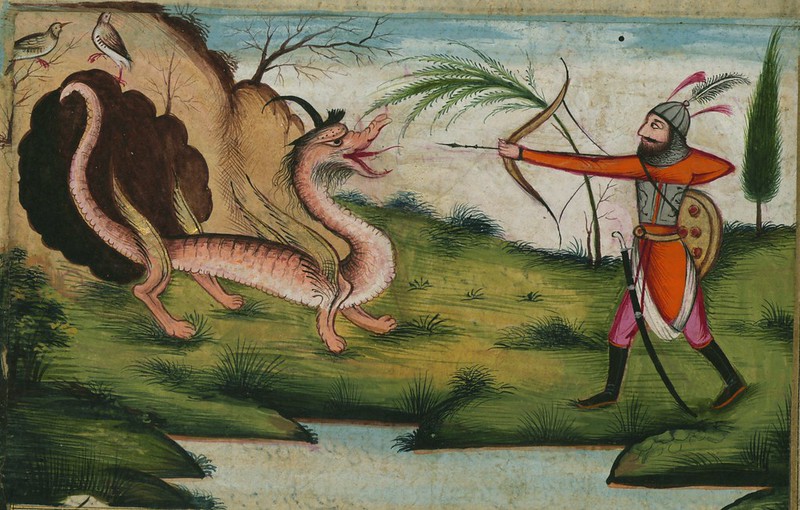
How to Slay a Dragon, Part 1

Fairy tales do not give the child his first idea of bogey. What fairy tales give the child is his first clear idea of the possible defeat of bogey. The baby has known the dragon intimately ever since he had an imagination. What the fairy tale provides for him is a St. George to kill the dragon

G. K. Chesterton

Fairy tales are just for kids. That’s what they say, at any rate. Stories of adolescent fluff, beneath the notice of adults. When you grow up, you leave behind the silliness of youth, after all. Bogeymen and monsters and dragons are the stuff of kids’ nightmares, nothing more. Aren’t they?

Ponder this: Parents don’t teach their children that there is a monster under the bed. Where does the idea come from? Do kids instinctually understand that there are bad things in the world? The monster under the bed, the one hiding in the closet, the ghouls and dragons out to get you … Children fear these things. Indeed, children learn very quickly what it means to be afraid.

Every child knows in their heart that monsters are real.

Oh, dragons and bogeymen aren’t real. Those are just trappings. But evil is very much a real thing in this world. The monsters of youth never go away. Adults just learn to recognize them for what they really are.

What does all this grim talk have to do with fairy tales? Think of fairy tales as road maps. Entertainment combined with important facts about life. Stories are tricky things, wrapping up lessons in playful guises.

They teach us that yes, evil things do exist, and yes, they are scary. They give a shape to that indefinable dread all children feel. And then the child is able to give evil its first names: the Big Bad Wolf, the Bogeyman, and of course, the Dragon.

Children’s stories are a primer’s guide to evil. How’s that for a fractured fairy tale? And no, I’m not trying to ruin your childhood. We shouldn’t rip a fairy tale out of a child’s hand because it’s scary. Children already know what scary is. I certainly did growing up. But fairy tales teach children why monsters are scary.

The Big Bad Wolf will trick you and gobble you up! The Dragon is a greedy beast that breathes fire and burns down villages! Be afraid! Fear isn’t weakness, it’s smart to be afraid of things that are dangerous.

But what else is there to do? Are we to spend our whole lives shivering in terror of what lurks outside?

No, that’s not what fairy tales teach us. The Big Bad Wolf is slain by the brave woodsman. A hundred dragon slayers have slain a hundred dragons.

Evil can be defeated. That is the greatest lesson of fairy tales. That is why they endure. They give us hope. Like Mr. Chesterton said, they provide children with the knowledge that monsters can be beaten.

Fairy tales are primers on the dragons of life. They are also primers on how to slay those dragons.

Enjoy what you’re reading? Subscribe by email for updates on new posts and follow my writing career, musings on fiction and storytelling, and reflections about life in general.

Being Patient in Today’s World

We live in the world of “now.” Want a cup of coffee? Stop by Starbucks and get it now. Want to watch a movie? Stream it online now. Want to talk face-to-face with your third cousin twice-removed who lives on the other side of the planet? Schedule a Zoom meeting on your computer right now. This is the age of the instantaneous. Everything can be gotten at the moment you decide you want it.

I’m not knocking on modern conveniences. Technology has improved life across the board. Medicine and communications and transportation have all benefited from technological progress. But progress has its price. We don’t value patience that much, anymore. And I can only really say that because being a writer has made me much more aware of the importance of patience.

Writing a book isn’t a quick and easy task. I have to invest a great deal of time in crafting my story, outlining it, going through multiple drafts, editing and formatting the final product. It’s easy to feel antsy at times and just want to push it to the side because I’ve been working on it for over a year and still don’t have a published product. Will it ever get done? Is it worth it? Should I just move on to something else that yields immediate results?

Patience isn’t something that comes naturally to everyone. Maybe there are people out there who don’t struggle with staying level-headed and calm in all situations. I’m not one of them. I tend to rush through life and need to remind myself to slow down. It isn’t a virtue I’m inclined towards because, quite frankly, being patient is scary.

Hourglass” by John-Morgan is licensed under CC BY 2.0.

After all, to wait for something implies trust in that thing’s value and worthwhileness. Grabbing an egg sandwich from McDonald’s is different from cooking an omelet. One is quick and easy, the other takes time and effort to prepare. And time is precious, isn’t it? It’s the ultimate currency. We only have a fixed amount in the bank. So, what we are willing to wait for determines what we value the most. And when you spend time on something, that’s time you can’t get back.

Writing has taught me patience, bit by bit. The value of taking time to prepare the story and to make sure that I’ve chosen the right words. The time to submit my work to others for evaluation and feedback. Patience leads to quality, too. A rushed product is often a shoddy product. The best things in life take time to make. And patience takes courage. I invest time in writing because I trust it is worthwhile in the end.

One last thought: Patience entails an assurance and certainty that waiting will bear results. It is a form of faith, if you will, because it requires one to trust that a future we cannot yet grasp will yield something positive for us. Otherwise, why wait for it at all?

Enjoy what you’re reading? Subscribe by email for updates on new posts and follow my writing career, musings on fiction and storytelling, and reflections about life in general.
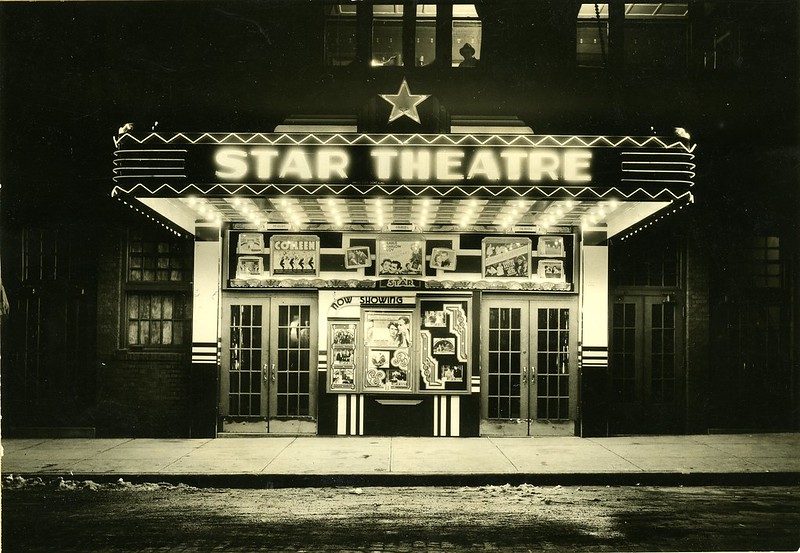
Urban Fantasy is … Where, Exactly?

So, my last couple posts have discussed what urban fantasy is and what it isn’t. Now that your curiosity is piqued, some among you may be wondering: Where can I find works of urban fantasy?

Everywhere, really.

Just to encompass how versatile urban fantasy is as a framework for storytelling, here’s a brief list of films, books, video games and comics that can be defined as urban fantasy.

Percy Jackson & the Olympians

The Tenth Kingdom (the first episode, at least)

Ghostbusters

Gremlins

Kingdom of Landover series (sort of)

Evil Dead

Any Marvel or DC product with magic in it

Any Scooby-Doo movie where the monsters are real

It’s a Wonderful Life

Dog Soldiers

The Secret World

Dracula

Grimm

The Dresden Files

Night at the Museum

The Shaggy Dog

The Shadow Over Innsmouth (most of H.P. Lovecraft’s works, actually)

Alan Wake

The Picture of Dorian Gray

And so many, many more.

Urban fantasy is vast, so expansive in scope that it can serve more as a thematic foundation for different types of stories than a specific genre in and of itself. After all, Dracula and Night at the Museum are very different, but both meet the criteria for urban fantasy. One is horror, and the other is comedy.

Urban fantasy is a genre, but it is also a theme. It is flexible enough to encompass virtually any story you can imagine.

I’ll leave you with a visual representation that I think captures the spirit of urban fantasy very well: https://www.youtube.com/watch?v=MX6vSOAPAF4

Enjoy what you’re reading? Subscribe by email for updates on new posts and follow my writing career, musings on fiction and storytelling, and reflections about life in general.

Urban Fantasy is … When, Exactly?

Last week , I shared my definition of urban fantasy. To reiterate: Urban Fantasy is any work of fiction that features supernatural and magical elements juxtaposed with real life in the modern day.

Now, I have a confession to make: This definition isn’t quite right, either.

But wait, you may ask. Your previous post discussed the issue at length. What else is missing?

Well, this definition is ignoring a very important question:

When exactly is modern day?

Charles Dickens’ A Christmas Carol features a fantastical story of ghosts set in Victorian London. A historical piece, right? From our point of view, maybe, but not from Mr. Dickens’ perspective. He wrote in what HE would recognize as modern day. So, technically, by the definition we’ve arrived at, A Christmas Carol is urban fantasy.

“Modern” is a relative term, isn’t it? The current year as of this writing is 2023. But a hundred years ago, if you asked someone when modern day is, they would reply that it is 1923. And a thousand years from now, the time we currently experience will be ancient history.

It’s all quite relative, isn’t it? But, before you start dreading some sort of lecture on Einsteinian physics, let me reassure you that all I am saying is that phrasing more specific than “modern day” is needed to explain urban fantasy.

Any piece of urban fantasy I or any other author publishes this year won’t be “modern day” in fifty or a hundred years. But while it is not modern, it is contemporary.

Surprise! Urban fantasy isn’t just a genre, it’s a subgenre. It falls under a much larger and broader heading: contemporary fantasy, also known as modern fantasy. It’s exactly what is sounds like. Any fantasy story that takes place in the author’s modern day is contemporary fantasy.

Remember when I said Harry Potter isn’t urban fantasy, but it is fantasy that takes place in modern times? I still hold that urban fantasy as a genre is dependent on the juxtaposition between real life and fantasy, which carries in certain parts of that franchise, but not at all times. But Harry Potter undoubtedly always falls under contemporary fantasy because its story takes place within the time in which it was written (give or take a couple years). Sometimes urban fantasy, but always contemporary fantasy. It’s a mix. Stories do that, because nothing ever falls into simple, cleanly defined categories, do they?

Anyway, let’s revise that definition one last time.

Urban Fantasy: Any contemporary work of fiction that features supernatural and magical elements juxtaposed with real life.

In other words, urban fantasy is fantasy meets real life at the time the author wrote it. Therefore, A Christmas Carol is urban fantasy. So is It’s a Wonderful Life, for that matter.

Genres sure are surprising things, aren’t they?

Enjoy what you’re reading? Subscribe by email for updates on new posts and follow my writing career, musings on fiction and storytelling, and reflections about life in general.

Urban Fantasy is … What, Exactly?

Urban fantasy is a hot genre right now. You see works labeled as such in stores, sold on Amazon, talked about in online forums. But what IS it, anyway? Well, as someone who is writing a book that falls under the urban fantasy genre, I thought maybe I should dedicate some time to explaining my take on things. After all, words are just words until they’re explained, and genre names get bandied about too casually as it is.

You got two words, urban and fantasy. Okay, let’s break that down. “Fantasy” is magic and the supernatural and things that can’t be explained by science. Dragons and wizards and monsters and such. “Urban” is cities and industrialization and modern technology. So, urban fantasy is … fantasy in a city?

Merriam-Webster.com defines urban fantasy as follows: A genre of imaginative fiction featuring supernatural characters or elements in an urban setting.

So, fantasy in a city.

That seems a wee bit limiting, don’t you think?

In my humble opinion, the name is a misnomer. “Urban” is misleading. This is a genre that encompasses far more than just metropolises and towns. What about fantasy stories in a tiny hamlet in midwestern America or rural England? What about a story that takes place on a ship at sea, or in a forest cottage? I propose my own revised definition, because as an aspiring writer who hasn’t even been published yet, I’m TOTALLY qualified to do that, heh, heh.

Urban Fantasy: Any work of imaginative fiction featuring supernatural characters or elements in the modern day.

That’s a good start. It’s broader, but still succinct. But it’s missing something. It’s still not quite right.

There are plenty of fantasy works that take place in modern day that aren’t technically urban fantasy. Take Harry Potter, for example. Sure, the series takes place in the modern era, but its primary setting is so far removed from our mundane existence that it could be mistaken for a straight fantasy. Rarely do the supernatural elements interact with the “real” world. Sometimes, sure, but it’s not the core of the setting. Compare this to, say, The Dresden Files, which features the supernatural interacting with real life on a more consistent basis. In a pure urban fantasy, the magical and mundane collide regularly.

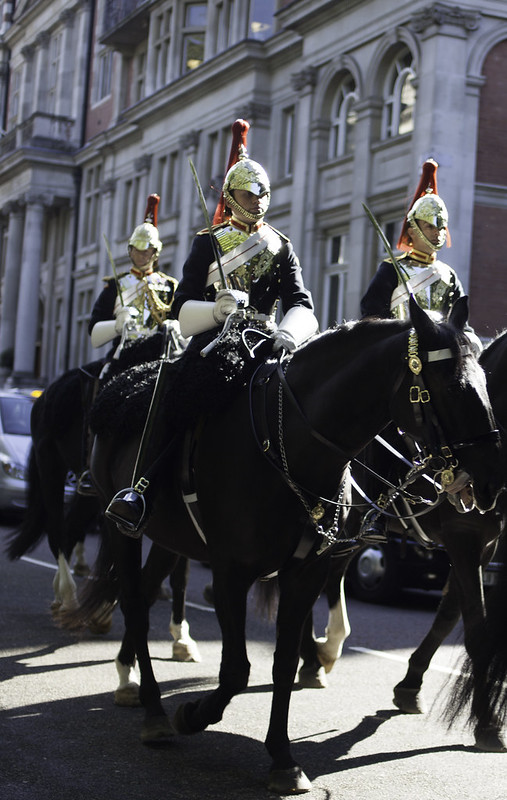
That’s the fun of the genre. Two disparate worlds clashing and coexisting. Goblins and fairies living alongside soccer moms and salarymen. The contrast is the striking and memorable part of urban fantasy. It’s like driving down a busy street and seeing uniformed men on horseback trotting past you.

So, here’s a revised definition. Urban Fantasy: Any work of fiction that features supernatural and magical elements juxtaposed with real life in the modern day.

That sounds a bit better, doesn’t it? We’re getting at the themes of the genre. How does magic exist alongside the real world? Does the fantastical hide itself, or does it live alongside what the readers recognize as normal? How do the two sides interact?

“Urban” fantasy covers a far broader range than its name suggests. My hope is that anyone who decides to pursue this genre, either for consumption or to create their own stories, won’t feel constrained by the label.

Enjoy what you’re reading? Subscribe by email for updates on new posts and follow my writing career, musings on fiction and storytelling, and reflections about life in general.
Cover Art is Here!

The cover art for my upcoming book has arrived! A hearty thanks to Ebook Launch for their great work and professionalism. They were a joy to work with.

A God Walks Up to the Bar, my very first published book, will be available later this year. Stay tuned!

My Characters are Alive and Won’t Listen to What I Tell Them

Me when I start a writing session, ignorant of the defiance I am about to face
Image by mohamed mahmouse hassan licensed under CC0
Me when I start a writing session, cocky and ignorant of the defiance I am about to face …
Image is licensed under CC0

So, I sit down, turn on my computer, pull up my story file, and start writing. All is well. What will I have my characters do today? Dialogue. Action. Characterization. Building a world from words. I’m king of this world. Everyone has to do what I say. Right?

Hang on. Why did Bob say that? I didn’t tell him to say that! Who does Bob think he is? I didn’t write him to be such a jerk!

And why is Tiffany suddenly a lot snarkier than I imagined her? And since when was Arnold so philosophical? I’m writing a thrilling adventure, not an excuse to sit around and contemplate our navels!

It’s happening again. My story is coming alive before my very eyes. And it does not recognize my authority.

It happens to the best of us. We outline our work, we prepare, we research, then we sit down and actually start writing – and it all gets away from us. Scenes don’t play out the way we planned them. Characters put words in our mouths, rather than the other way around. The story shifts and rumbles, it wakes up, and our creation becomes a living thing. IT’S ALIVE!

But how can this be? How can the imaginary have a will of its own?

Don’t look at me. All I know is that I had no idea Hermes liked tequila when I started writing A God Walks Up to the Bar.

They start talking to you, these characters. They start telling you their likes and dislikes, their hopes and fears. And when you acknowledge that they are real people, or as close to real as is possible, you reach an epiphany. Your story is better for it. Like the journalist who sits down for an interview with questions prepared and is sidetracked by the subject’s fascinating anecdotes, the population of your created universe reveals new and tantalizing quirks that flesh it out.

And lo, the author is revealed to not be master of his creations, but a mutt tailing behind their antics
fox writing with a quill pen by 50 Watts is licensed under CC BY 2.0.

Still, it is somewhat bewildering when your story gets away from you. Even when your cast deigns to submit control back to you, you can’t always shake the feeling that you’re just along for the ride. You’re graciously being allowed to witness events as they unfold. A giddy experience, to be sure. I don’t entirely know what to expect when I begin a writing session. But doggone it, these folks need to have some respect! Stop pulling me off-track. We have a story to write! We have deadlines! I can’t be distracted by Alice’s unfolding tragic backstory and face the temptation of adding another 3,000 words! I’m writing genre fiction, not Les Misérables!

And so it goes. The writer lays the foundation, the characters give their input, I tell them what I want them to do, they push back, I push back, and somehow, out of this beautiful mess, a story is born.

I love being a writer.

Enjoy what you’re reading? Subscribe by email for updates on new posts and follow my writing career, musings on fiction and storytelling, and reflections about life in general.

Finding Humanity in Greek Myth

Achilles was a paragon of ancient Greek heroes. He was nigh-unkillable, an unstoppable juggernaut on the battlefield, bloodthirsty, battle-hungry, feared and respected in equal measure. So, what did this warrior do when he ended up on the losing side of a quarrel with the Mycenaean king Agamemnon during the Trojan War?

He ran to his mommy to cry on her shoulder.

Yes, really.

For all its larger-than-life characters and some truly surreal stories, there is a basic spark of humanity in Greek myth. That’s why people love it, I think. Heroes fight and conquer, sure, but they also cry, get frustrated, get tired, and pine for their loved ones. They feel anger, joy, regret, fear, love, pride, and just about everything else. At their core they are, in fact, people. Just people. Like you and me.

Why do old myths endure? I believe it is because they share universal human themes that we empathize with, even when we’re looking at them from atop our perch in the 21st century. Who hasn’t wanted to find a shoulder to cry on after losing a bitter argument, like Achilles did? How can we not feel a twinge of sorrow for Orpheus, who, after journeying into the underworld to retrieve his beloved Eurydice, felt just that slightest bit of doubt on whether she would follow him back and risked a glance over his shoulder, dooming himself to lose her forever?

Beneath the layers of the fantastic are stories that are very much human. People experiencing the hard knocks of life. And like in real life, sometimes they triumph over adversity … and sometimes they don’t.

The funny thing is, the Greek gods have as much humanity in them as the humans they rule. Perhaps a bit too much, even. It make sense, because to the ancient Greeks, the gods were just people with special powers and their foibles and strengths cranked up till the knob broke off. When they get angry, they get VERY angry. When they are generous, they are VERY generous. They flit between emotions with ping-pong frenzy, changing moods in an eyeblink. Unpredictable? Yes. Cruel? Absolutely? Relatable? Well, just maybe.

Are you familiar with the smith god Hephaestus? He’s famous for being lame and crippled. Do you know how he was crippled? When his mother Hera and Zeus got into a fierce argument, he tried to intervene on her behalf. Zeus angrily tossed him out a window and off Mount Olympos. He fell a whole day before hitting the ground.

Well, that’s one version anyway.

A single story filled with things we can all relate to: parental love, anger, good intentions gone awry, even the specter of domestic abuse.

Maybe the Olympians really are too much like humanity.

They certainly are subject to quite a bit of criticism by today’s standards, and for good reason . The gods of Olympos are a bunch of arrogant, vindictive, oversexed, brutal, vengeful jerks. Get on their good side, and they’re your best friend. Get on their bad side – and there are oh-so-many ways to do that – and they’ll make you suffer.

And yet, don’t we see shades of ourselves in them? Maybe our dubious opinions of the Olympians come from seeing all-too human qualities in them. Maybe we get nervous at the thought of what we would do if we had absolute power and few restraints. Were the ancient Greeks projecting their own worst and best traits onto Zeus and company? Were they trying to craft an ideal, one that was blurred by shifting moral mores and the clashing of many different city-states with their own opinions on what constituted a “correct” society. Or did they witness a thunderstorm, imagine Zeus throwing his lightning bolts, and imagine that a god must be like them but just a bit MORE in every way?

On a sidenote, did you know that the human brain is trained to recognize the basic features of the human face? Look at a cloud or a rock or a splash of spilled soda on the sidewalk. Look hard, and your mind will find some way to see eyes, a nose, and a mouth.

How is that relevant? It’s what the Greeks did to nature. They gave it a face. They gave it humanity. Zeus is the storm and the sky. Hephaestus is the fire of the forge. Poseidon is the ocean and the earthquake. And that is barely scratching the surface. Every natural element and abstract concept you can imagine had a personified figure. It made them easier to understand and relate to. It probably made them easier to worship, too, when you knew that the object of your devotion was more than a vague, amorphous divine glob. And what we relate to, we empathize with.

Empathy is a natural building block of storytelling. We don’t tell stories about things we don’t care about. This mythology that endured from the Bronze Age all the way into the 21st century is one that resonates with us. It carries the spark of universal appeal.

Greek myths speak to us. They stir up emotions in ourselves because those are the emotions the characters feel. Their experiences are our experiences. Heroes and gods overcoming monsters. The triumph of overcoming great challenges. Going to war. Family drama. Romance. Tragedy. Comedy. Life.

Enjoy what you’re reading? Subscribe by email for updates on new posts and follow my writing career, musings on fiction and storytelling, and reflections about life in general.

Sit Down, Shut up, and Do the Work

We’ve all been there. The nagging in the back of your mind telling you that you’ve skipped out long enough on finishing that one last chore. Time to write out that shopping list for the big party next weekend. Time to balance your budget. Time to write thank-you letters to everyone who sent you house-warming gifts. Time to do your taxes.

“But I don’t wanna!” you say. “I can do it tomorrow!”

Tomorrow! Tomorrow! There’s always tomorrow!

And tomorrow comes, and you say, “Naw, I don’t feel like it. I need to be in the right mood.”

Sit down, shut up, and do the work.

Knuckle down and buck up. Your taxes aren’t going to do themselves. Letter self-writing technology hasn’t been invented yet. And you must be lucky if you’re rich enough that you can’t balance your budget in one afternoon. Grab a pen, or power up the computer, and get cracking.

Little chores are like gnats. They hover about you, buzzing incessantly, annoying you with the fact of their incomplete existence. Leave too many of them unfinished, and you have a real swarm of tasks waiting for the inevitable. They have to get done.

“I don’t wanna!”

Yeah, but you gotta, don’t you?

Novels don’t write themselves, either. That great story that’s been brewing in your mind since you were twelve – nobody else is going to write it, are they?

But what about my favorite show coming on in ten minutes? What about that cool video game I just bought? What about a walk in the park on this great sunny day? What about …

Life is full of distractions. What you do with your time shows what you really value. Want to write a book? Or just want to pay off your taxes and then go to bed? Then do it. Don’t wait for the perfect moment. Those moments are rare and usually exaggerated by the now-successful author when he pens his autobiography. Hindsight makes everything look easy. There’s a direct correlation between effort put in and results achieved.

So it all comes down to this: Sit down, shut up, and do the work.

Enjoy what you’re reading? Subscribe by email for updates on new posts and follow my writing career, musings on fiction and storytelling, and reflections about life in general.

On Inspiration

Where does inspiration come from? Where do the writers and artists of our time get their ideas? I can’t speak for others, but I get mine from everywhere imaginable. I’ve had weird dreams at 3 AM that stick with me and coalesce into workable material. Or maybe I have a particularly memorable conversation with a coworker that captures my attention. Or maybe I’m just going for a walk and a stray thought drifts into my brain. That happens a lot, actually.

There’s nothing in the world that has a stranglehold on the source of inspiration, and there is no “wrong” place to draw ideas from. In the end, all ideas have already been thought up, every story has already been told, and, as King Solomon says, “There is nothing new under the sun.” What there is, is taking a preexisting idea and molding it into a new shape, dressing it up in different clothes, and presenting it with your own unique flourish. Imitation is the sincerest form of flattery, and we all imitate what we know to some degree. In a sense, artists and writers are scavengers, but ones who learn to refine their tastes. We look through all kinds of sources and draw an element here and a concept there to incorporate into our own works.

I’m not talking about plagiarism, mind you. Plagiarism is lifting somebody else’s hard work wholesale, changing a couple names, and claiming it as your own. That’s just a lie, and it’s lazy to boot. Inspiration is an influence, not a theft. It gives you a core to build your own story around and craft into something that is still very much your creation.

Inspiration is everywhere. What you see depends on who you are and how your mind works. Don’t be afraid to be inspired by something that others look down upon. Inspiration can come from the unlikeliest places. An old video game from the 90’s, a funny webcomic, or an action figure – these are just as valid as classic literature and theater. I’m not ashamed of it. I absorb as much as I can, from as many places as I can, and with these I fill a deep well. When writing a new story, I can dip into that well as I need, and pull up all sorts of surprising ideas.

Enjoy what you’re reading? Subscribe by email for updates on new posts and follow my writing career, musings on fiction and storytelling, and reflections about life in general.