On the Beach

Do you prefer the mountains or the beach?

The sound of the waves rolling in and out. The distant cry of gulls on the wind. The soft, dry sand under my feet. Yes,  I prefer the beach. It is peaceful and relaxing, and I prefer things that way if I can help it.

Mountains offer better views, to be sure, and hikes and adventurous journeys, and I enjoy those, but at the end of a long day, I’d rather listen to the lull of the sea than the breezes rolling through rocky peaks. And I can go for a swim or turn over rocks to look for crabs or just fall asleep on my beach blanket. It’s bright and sunny. There are no bears around.

Maybe it’s just the awe of the vast ocean spread out in front of me, which is a different kind of awe from a mountain. Or maybe I’m just not as averse to sand as other people. I suppose, in the end, it’s just my preference.

***

Many thanks for visiting my blog. I post updates on my writing career, I muse over storytelling and fiction, and I reflect on the curious and wonderful things in life.

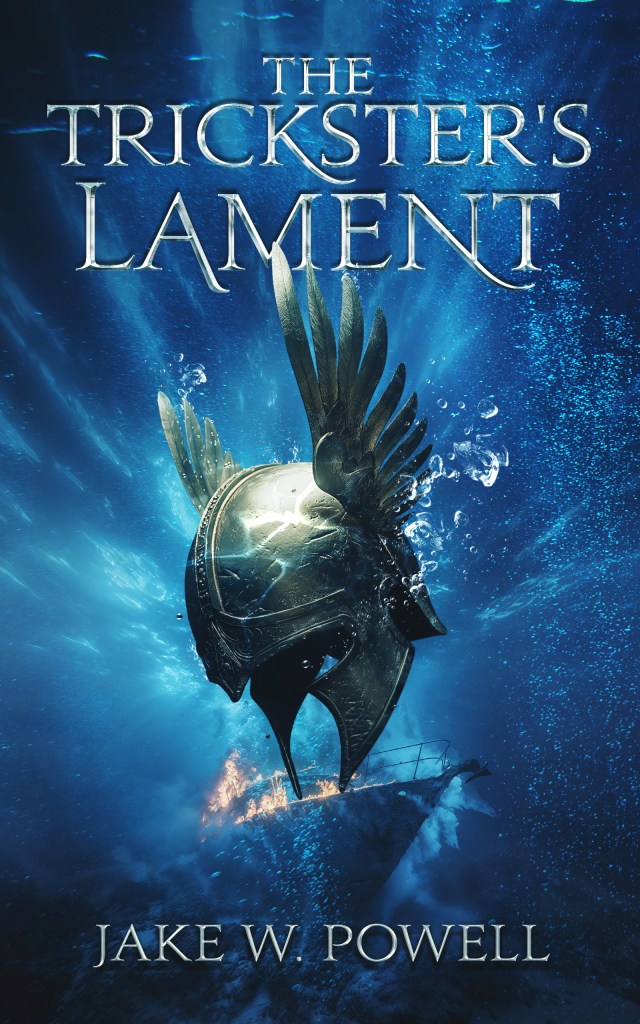
“Hermes is not having the best time. He walks a fine line, and his duty as messenger of Olympus weighs heavily on him. Being a god in the modern age means living in a world that no longer believes in gods. How much can one deity accomplish when no one respects him anymore? And why do his instincts tell him that he, the son of Zeus, is losing favor with his own family?

Tensions abound. The upstart Young Gods play dangerous games using entire cities as their boards. Formless monsters strike from the nighttime shadows, terrorizing hapless mortals. Agents of rival pantheons scheme to thwart Olympus’ designs. In the thick of it all, Hermes does what he does best: trick, lie, and cheat his way to victory.

Working on Book #3: Drafts and Long Slogs

Almost done with the second draft of my latest book. I promised myself that I would finish this draft before the end of the year, and if all goes well and I’m still standing, that looks to be the case.

What a journey it’s been already. This book has been much harder to write than my previous work. For one, it’s my first proper novel. It’s not an anthology of short stories united by a common thread like my first two publications. This is one continuous narrative. Exciting! And challenging. Technically, this isn’t my first novel, but that’s only if I count the one I wrote in college that will never see the light of day. Which I’m not.

The first draft was pretty rough. I thought I knew what I was on about when I started, but quickly – very quickly – I realized that I had little direction or clarity for what I wanted the story to be. I had an outline, and I knew the general gist of the tale I wanted to tell, but I hadn’t reflected enough on the details. I wasn’t prepared. And, oh, boy, did that make draft #1 a slog.

But the great thing about drafting is that rewrites can really clear the air. I have more focus now that I’ve had the chance to go over my mistakes and fix them, not to mention coming up with new and better ideas and trimming the fat that doesn’t need to be there. The ideal is that every draft makes the story a little better. I feel that that’s the case with this one.

That being said, I still have a long way to go. Two drafts isn’t enough for a novel, not for me, anyway. So, I’ll need to keep my sleeves rolled up and motor on.

***

Many thanks for visiting my blog. I post updates on my writing career, I muse over storytelling and fiction, and I reflect on the curious and wonderful things in life.

“Hermes is not having the best time. He walks a fine line, and his duty as messenger of Olympus weighs heavily on him. Being a god in the modern age means living in a world that no longer believes in gods. How much can one deity accomplish when no one respects him anymore? And why do his instincts tell him that he, the son of Zeus, is losing favor with his own family?

Tensions abound. The upstart Young Gods play dangerous games using entire cities as their boards. Formless monsters strike from the nighttime shadows, terrorizing hapless mortals. Agents of rival pantheons scheme to thwart Olympus’ designs. In the thick of it all, Hermes does what he does best: trick, lie, and cheat his way to victory.

Talkin’ About Pets

What is good about having a pet.

I like animals. I especially like dogs and cats. I used to be more of a dog person, but exposure to cats has gradually drawn me into the position of “likes both equally.” Pets are loyal, don’t judge, don’t criticize, and if they’re furry, are good for hugs and cuddles. A well-trained pet is a very good friend.

I used to have a pet of my own when I was a kid, a rabbit named Timmy. But that was a long time ago, and as I got older, I realized something.

I liked having a pet, but I like other people’s pets even more.

It’s a bit selfish. I visit friends and see their dogs or cats, and after hanging out, can go home where I don’t have to worry about feeding a pet, cleaning them, taking them in for medical checkups or otherwise dealing with the responsibilities of actually having to raise an animal. It’s kind of like having grandchildren or nieces and nephews. You visit for the day, have fun with them, then leave.

Well-behaved pets are friendly and loveable. I just happen to love them when they’re someone else’s responsibility. Oh, well.

***

Many thanks for visiting my blog. I post updates on my writing career, I muse over storytelling and fiction, and I reflect on the curious and wonderful things in life.

“Hermes is not having the best time. He walks a fine line, and his duty as messenger of Olympus weighs heavily on him. Being a god in the modern age means living in a world that no longer believes in gods. How much can one deity accomplish when no one respects him anymore? And why do his instincts tell him that he, the son of Zeus, is losing favor with his own family?

Tensions abound. The upstart Young Gods play dangerous games using entire cities as their boards. Formless monsters strike from the nighttime shadows, terrorizing hapless mortals. Agents of rival pantheons scheme to thwart Olympus’ designs. In the thick of it all, Hermes does what he does best: trick, lie, and cheat his way to victory.

Life is Lived Once

Is there an age or year of your life you would re-live?

I’ve often daydreamed about being able to rewind time and go back to college or childhood, when life was simpler and I didn’t have bills to pay. But after giving it some serious thought, I realize that there is no point in my life I truly want to re-live.

We only live life once, so I think I should focus on what I’m doing now and prepare for the future. Going back to the past would be great – it’s easier (or so nostalgia tells me) and I have fond memories of parts of my life. But …

Would those memories be the same if we went back and re-lived them? Or would I be overwriting those memories with new ones, and perhaps even tainting that which made those times so sweet? Every experience is once-in-a-lifetime. I don’t want to cheapen any of them with a do-over.

***
Many thanks for visiting my blog. I post updates on my writing career, I muse over storytelling and fiction, and I reflect on the curious and wonderful things in life.

“Hermes is not having the best time. He walks a fine line, and his duty as messenger of Olympus weighs heavily on him. Being a god in the modern age means living in a world that no longer believes in gods. How much can one deity accomplish when no one respects him anymore? And why do his instincts tell him that he, the son of Zeus, is losing favor with his own family?

Tensions abound. The upstart Young Gods play dangerous games using entire cities as their boards. Formless monsters strike from the nighttime shadows, terrorizing hapless mortals. Agents of rival pantheons scheme to thwart Olympus’ designs. In the thick of it all, Hermes does what he does best: trick, lie, and cheat his way to victory.

To Be Childlike, Not Childish

What does it mean to be a kid at heart?

Have you ever met someone who was not only physically old, but acted old? “Woe is me, I’m so aged. I can’t do anything anymore, and I must spend my days lamenting my remaining existence.” They’re not exactly fun to be around.

They’re kind of like Charlie’s parents from Willy Wonka and the Chocolate Factory, having given up and lying in bed all day.

Of course, then Grandpa Joe actually stands up, and this happens.

Being a kid at heart means never losing the spark of hope, creativity and optimism that permeates childhood. Everything is new, everything is exciting, and everything is worth running towards.

To be childlike, not childish. Anyone of any age can be childish. That’s the dark side of childhood: the whining, the screaming, the self-pity, the selfish delusion that everything exists to serve and coddle you.

To be childlike, though, encompasses the positives of childhood: an enjoyment of life, able to see the good and the fun in it, to charge into any situation and give it your all while laughing and smiling. Honest laughter. Sincere smiles. That strange concept of unironic, sarcasm-free fun that we seem to lose as adults. Adults like to analyze their existence. Kids just are.

In short, to be a kid at heart means to sincerely enjoy life, with all its ups and downs. To live life and embrace its challenges, its triumphs and all the people in it. To not lie in bed all day, but get out and breathe the fresh air.

Even those who have been hampered by age and injury can soak in the sun, if they so choose, rather than grumbling in the dark.

***

Many thanks for visiting my blog. I post updates on my writing career, I muse over storytelling and fiction, and I reflect on the curious and wonderful things in life.

“Hermes is not having the best time. He walks a fine line, and his duty as messenger of Olympus weighs heavily on him. Being a god in the modern age means living in a world that no longer believes in gods. How much can one deity accomplish when no one respects him anymore? And why do his instincts tell him that he, the son of Zeus, is losing favor with his own family?

Tensions abound. The upstart Young Gods play dangerous games using entire cities as their boards. Formless monsters strike from the nighttime shadows, terrorizing hapless mortals. Agents of rival pantheons scheme to thwart Olympus’ designs. In the thick of it all, Hermes does what he does best: trick, lie, and cheat his way to victory.

Success Takes Time

What’s something you believe that everyone should know?

Success takes time.

However you measure success – whether through contentment, accomplishing certain tasks, reaching certain milestones, or even just getting through the week – it takes time. Nothing comes instantly, especially nothing worthwhile.

When I say “time,” I don’t mean, “A few minutes” or even “A couple hours.” Days. Weeks. Sometimes, even years.

Cooking a good meal takes time. Reading (or writing!) a book takes time. Building your dream house takes time. Working up to your dream job takes time. Becoming a billionaire takes time. Building an intergalactic empire takes time.

Well, maybe don’t hold high expectations for that last one …

Anyway, if you have a goal and want to achieve it, expect to put in the hours. Nothing comes instantly or for free. Whatever you do, know that you will be putting in the hours and the sweat and maybe a few tears, as well.

***

Many thanks for visiting my blog. I post updates on my writing career, I muse over storytelling and fiction, and I reflect on the curious and wonderful things in life.

“Hermes is not having the best time. He walks a fine line, and his duty as messenger of Olympus weighs heavily on him. Being a god in the modern age means living in a world that no longer believes in gods. How much can one deity accomplish when no one respects him anymore? And why do his instincts tell him that he, the son of Zeus, is losing favor with his own family?

Tensions abound. The upstart Young Gods play dangerous games using entire cities as their boards. Formless monsters strike from the nighttime shadows, terrorizing hapless mortals. Agents of rival pantheons scheme to thwart Olympus’ designs. In the thick of it all, Hermes does what he does best: trick, lie, and cheat his way to victory.

I Don’t Want to Go to the Moon. There’s Nothing to Do There.

How much would you pay to go to the moon?

Not gonna lie, I don’t want to go to the moon. Which means I would save money, I suppose.

Why go to the moon? Because it’s there? Well, plenty have gone to the moon, and it’s a monumental achievement, make no mistake, but I have no interest in leaving Earth’s atmosphere. There’s still so much to do here, so much to see, so much to explore. Earth is a big place. You might think of it as a tiny speck in the cosmos, but if so, then what a speck! Billions of people, millions of cities, and swathes of forests, plains, mountains, jungles, lakes, oceans, rivers, islands, deserts, glaciers, and tundra.

What’s on the moon? Dust. A lot of dust. Dunes. Craters. A really lovely view of Earth, that’s true enough. But going to the moon simply because it isn’t Earth isn’t the most compelling of reasons. I like Earth. I want to see more of it. There’s more to do here than on the Moon.

What if I did decide to take a moon trip? I would pay an astronomical sum to see some astronomy. I’d take a rocket up to the big grey ball in the sky, fly around it and … What? There’s nothing on the moon! What’s the point of traveling all that way if there’s nothing to do at the end of the trip?

Yeah, I don’t want to go the moon. I couldn’t afford it anyway.

***

Many thanks for visiting my blog. I post updates on my writing career, I muse over storytelling and fiction, and I reflect on the curious and wonderful things in life.

“Hermes is not having the best time. He walks a fine line, and his duty as messenger of Olympus weighs heavily on him. Being a god in the modern age means living in a world that no longer believes in gods. How much can one deity accomplish when no one respects him anymore? And why do his instincts tell him that he, the son of Zeus, is losing favor with his own family?

Tensions abound. The upstart Young Gods play dangerous games using entire cities as their boards. Formless monsters strike from the nighttime shadows, terrorizing hapless mortals. Agents of rival pantheons scheme to thwart Olympus’ designs. In the thick of it all, Hermes does what he does best: trick, lie, and cheat his way to victory.

The Moment I Knew I Had Grown Up Whether I Wanted to or Not

When was the first time you really felt like a grown-up?

Growing up is a tough thing. We don’t leave childhood behind. It simply skips away, leaving us behind. And we find ourselves in the world of grown-ups. We certainly do gain quite a few things as adults, though: Responsibilities, duties, jobs, bills …

But at what point does it hit home that we’ve grown up? Is it a slow, dawning realization, or a thunderbolt to the head?

I first felt the pangs of adulthood when I moved to college. I had never lived apart from my parents before. Well, there was that one week in summer school, but that didn’t really count. Now, I was in the car with my parents going to a campus miles away from home and with the full knowledge that I wouldn’t be coming back with them.

The moment I made that realization was the moment that I knew things were Different™. There was no going back to childhood ways. I was an adult. I would be living as an adult. That made me a little excited, a lot nervous, and very, very giddy.

You ever have that dream where you’re in freefall? And your whole body tingles with such severe giddiness that you feel like it will overwhelm you? That’s how I felt when I arrived at my college. I was falling, falling, falling, all the way down. The only thing keeping me from curling up into a ball of panic was the certainty that the fall would end with me hitting the ground standing upright. Everything was in order, my room was rented, my classes were scheduled, and my parents were still just a phone call away. I wasn’t going to fall forever.

And so I grew up. No more childhood games, just the memories of them. Big adult games, like Studying for the Test, Learning to Budget and Managing My Own Bedtime. Adulthood was upon me.

Of course, once I graduated and entered the Real World, I realized that college wasn’t a very grown-up place after all, but that’s a story for another time.

***

Many thanks for visiting my blog. I post updates on my writing career, I muse over storytelling and fiction, and I reflect on the curious and wonderful things in life.

“Hermes is not having the best time. He walks a fine line, and his duty as messenger of Olympus weighs heavily on him. Being a god in the modern age means living in a world that no longer believes in gods. How much can one deity accomplish when no one respects him anymore? And why do his instincts tell him that he, the son of Zeus, is losing favor with his own family?

Tensions abound. The upstart Young Gods play dangerous games using entire cities as their boards. Formless monsters strike from the nighttime shadows, terrorizing hapless mortals. Agents of rival pantheons scheme to thwart Olympus’ designs. In the thick of it all, Hermes does what he does best: trick, lie, and cheat his way to victory.

What Matters Most: Establishing A Story’s Stakes

In every story, there are stakes. Something may be lost, something may be gained. The story’s conflict means something. Without stakes, without the risk of failure, a story isn’t very interesting. Who cares if the One Ring is destroyed in the fires of Mount Doom if Sauron isn’t a threat? Who cares about the Galactic Empire if they’re a paper tiger who can’t even threaten one planet?

You need to establish the stakes early on. That is to say, you need to establish what will happen if the heroes lose: Sauron conquers Middle Earth and reduces everyone to slavery. The Galactic Empire uses the Death Star to destroy any planet that opposes it. The heroes’ actions must matter.

Of course, not all stories have such a grand scope. To Kill a Mockingbird doesn’t deal with world-rattling threats, but Atticus Finch is struggling to prove an innocent man didn’t commit the crime he is accused of. The Grapes of Wrath centers around a family trying to establish a new life in California and not fall apart in the process. These are more personal stakes, but no less important.

That’s another thing about establishing stakes. They must be appropriate to the story. Personally, I think that, first and foremost, the stakes must be appropriate to the protagonist. We are reading about a character, and what matters to them must matter to us. If the stake is nothing more than Jim trying to get his kite into the air, then, by golly, that’s what the reader should care about, too.

Sometimes the stakes in a story increase. Maybe Jim gets drafted into World War II. Well, that’s a major shift. What’s at stake now? Survival? Capturing the enemy base? Maybe. But what is most appropriate is what directly affects Jim’s personal journey. It’s not just about fighting the enemy, any more than it was about flying the kite. It’s about Jim’s character growth.

It was never about getting the kite into the air. It’s not about fighting the war, not really. Those are the circumstances, but the story is about Jim learning to persevere and attain self-confidence. He never really felt that he was capable of getting that kite in the air. He feels that he can’t contribute to the war. The kite and the war represent the same thing: obstacles to Jim’s goal of becoming a confident, mature adult.

Okay, I’ll leave it up to one of you out there to write that story.

Writers don’t play hopscotch with the stakes. Even when they are raised to something more serious, they still form a core that drives the narrative. Every new stake is connected to the protagonist’s central conflict, each one a facet of his or her inner struggle.

It’s not about building up the biggest, most dire conflict imaginable: “The world will end! The evil empire will rule! The plague will kill us all!” It’s about character. It’s about what matters most to the protagonist.

***

Many thanks for visiting my blog. I post updates on my writing career, I muse over storytelling and fiction, and I reflect on the curious and wonderful things in life.

“Hermes is not having the best time. He walks a fine line, and his duty as messenger of Olympus weighs heavily on him. Being a god in the modern age means living in a world that no longer believes in gods. How much can one deity accomplish when no one respects him anymore? And why do his instincts tell him that he, the son of Zeus, is losing favor with his own family?

Tensions abound. The upstart Young Gods play dangerous games using entire cities as their boards. Formless monsters strike from the nighttime shadows, terrorizing hapless mortals. Agents of rival pantheons scheme to thwart Olympus’ designs. In the thick of it all, Hermes does what he does best: trick, lie, and cheat his way to victory.

Would I Dare Ride a Horse?

What’s something you would attempt if you were guaranteed not to fail.

Horse racing. If I was guaranteed not to fail spectacularly, I would try horse racing.

I’m not worried much about losing. I don’t care if I don’t come in first place. But I would love to try it with the absolute certainty that I wouldn’t fall off, get kicked in the face, have my fingers bitten off or otherwise end up twisting my horse in circles as I fumble with the reins.

I’ve ridden a horse exactly once, as a child, on a school field trip. “Riding” is a generous word, as the horse was simply following a predetermined route, and I had no control or input.

But to actually ride a horse, to race against other jockeys, to feel my mount kick into a full gallop, to jump fences and feel the horse’s legs pounding underneath – that would be a joy. But I don’t think I ever will try it. I think I lack the confidence that I would come away unscathed. But if there was actually some sort way to guarantee that I couldn’t fall off or get kicked or bit, if there was a way to make such wishes come true, then I might just try it.

***

Many thanks for visiting my blog. I post updates on my writing career, I muse over storytelling and fiction, and I reflect on the curious and wonderful things in life.

“Hermes is not having the best time. He walks a fine line, and his duty as messenger of Olympus weighs heavily on him. Being a god in the modern age means living in a world that no longer believes in gods. How much can one deity accomplish when no one respects him anymore? And why do his instincts tell him that he, the son of Zeus, is losing favor with his own family?

Tensions abound. The upstart Young Gods play dangerous games using entire cities as their boards. Formless monsters strike from the nighttime shadows, terrorizing hapless mortals. Agents of rival pantheons scheme to thwart Olympus’ designs. In the thick of it all, Hermes does what he does best: trick, lie, and cheat his way to victory.