A Literary Sleight of Hand: Writing Characters Who Aren’t Good People

Work on my third book is, as they say, “proceeding apace.” Third draft is halfway done, and I’m actually somewhat happy with it.

It’s an interesting subject I’ve chosen. My two published works, A God Walks Up to the Bar and The Trickster’s Lament, are urban fantasy following the Greek god Hermes in our modern world. Writing gods is fun and fascinating. When you’re writing a guy like Hermes, and you look at what him and his ilk get up to in mythology, you realize that you can’t really start out the story with him being too likeable.

Hermes is a funny guy, and he’s smart, perceptive and entertaining to write and read about. But he’s not necessarily a good guy. He’s egotistical, vain, manipulative and more than a little callous. Which begs the question: How do you make readers want to keep reading about such a person?

The first step, I find, is character development. Hermes is not a static character. He grows and changes over time, and hopefully he’ll change for the better. The second is the time-honored strategy of comparing and contrasting. Does your story have an awful person as your protagonist? Make their opponents even worse.

Michael Corleone was godfather of a murderous Mafia family, but at least he wasn’t a drug dealer. Darth Vader killed children and endorsed the destruction of entire planets, but at least he wasn’t as sadistic as his emperor and still held love for his son. Peter Pan is a selfish child who never matures and is a nasty little brat, but his nemesis Captain Hook is a bloodthirsty pirate who, you know, wants to kill children.

Maybe it’s a cheap trick. Make somebody bad look good by standing them up alongside people who do worse things. A part of writing is getting inside people’s heads and figuring them out. When writing any protagonist, whether hero or villain or in-between, you have to figure out how to stoke the desire in audiences to keep reading about them. And if they do things that the audience finds … distasteful … then you may want to consider the good old strategy of compare and contrast. Give them lines they won’t cross. Give them a code. It doesn’t have to measure up to the reader’s own personal morals, but give them standards. And then pit them against antagonists who violate those standards.

It is, in many ways, a literary sleight of hand.

But Hermes, at least, isn’t a villain per se. He’s not nice, but he does have standards, fairly strong ones, and he is aware of some of his own vices. And he may even change for the better if he survives this upcoming book.

***

Many thanks for visiting my blog. I post updates on my writing career, I muse over storytelling and fiction, and I reflect on the curious and wonderful things in life.
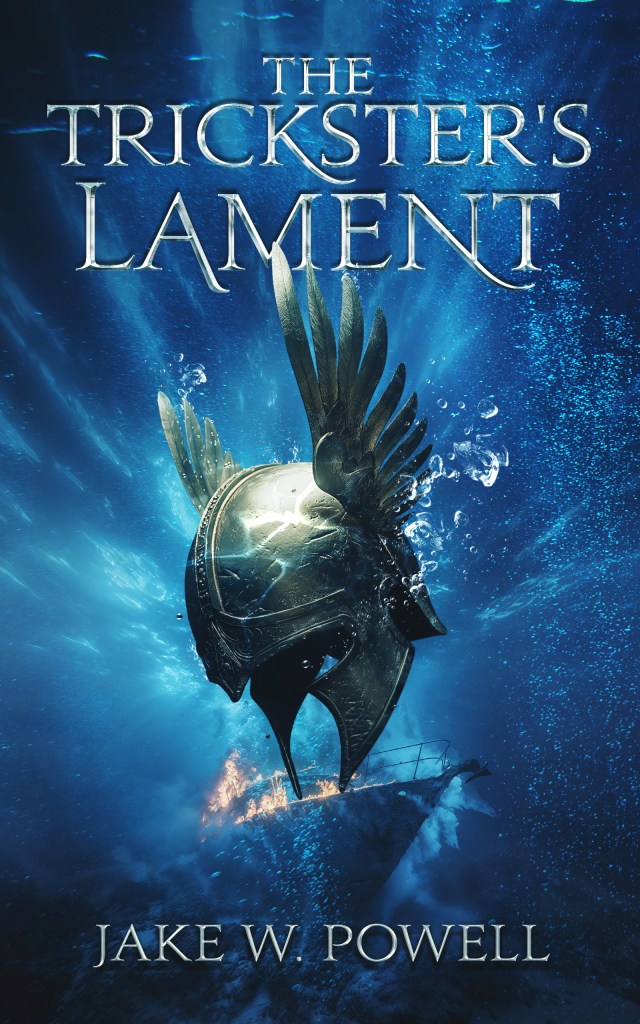
“Hermes is not having the best time. He walks a fine line, and his duty as messenger of Olympus weighs heavily on him. Being a god in the modern age means living in a world that no longer believes in gods. How much can one deity accomplish when no one respects him anymore? And why do his instincts tell him that he, the son of Zeus, is losing favor with his own family?

Tensions abound. The upstart Young Gods play dangerous games using entire cities as their boards. Formless monsters strike from the nighttime shadows, terrorizing hapless mortals. Agents of rival pantheons scheme to thwart Olympus’ designs. In the thick of it all, Hermes does what he does best: trick, lie, and cheat his way to victory.

Antagonism: The Types of Conflict that Shape a Story

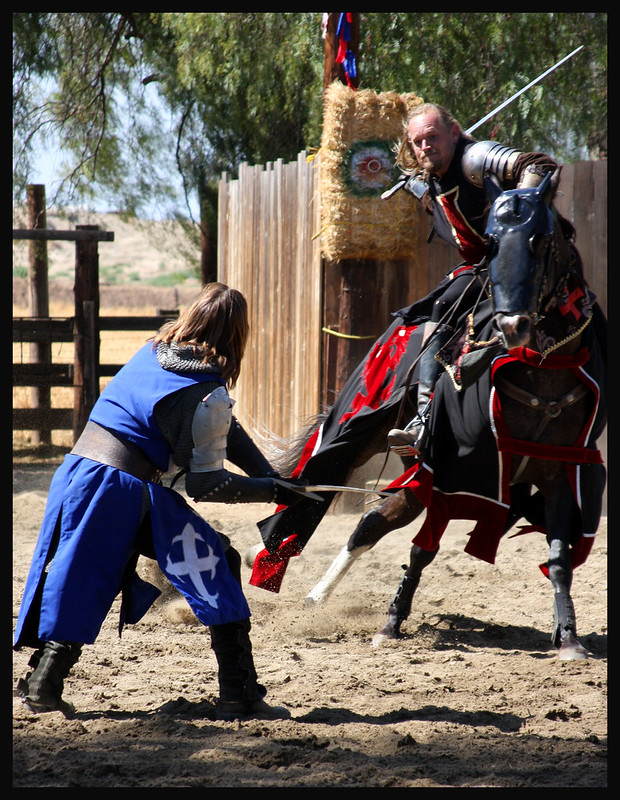
Featured Image: “Black Knight vs Blue Knight” by tinyfroglet is licensed under CC BY 2.0.

Funny thing about conflict: We don’t like it in real life, but we pay money to see people who aren’t real suffer. I mean, what good movie or book doesn’t have some sort of conflict at the heart of the story? The rebel leader fighting the evil empire, or the monster hunter confronting the vampire, or heck, the two lovers trying to overcome the forces keeping them apart. Conflict drives a story. Without it, there’s just nothing worth telling. No opposition, no struggle, no character arc, no story, no nothing.

With that in mind, it’s apparent that the source of conflict is pretty darn important. The protagonist wants something, and something else stands in their way. That “something else” is the antagonist, the source of the conflict. It’s not necessarily a villain. It’s not always another person. It may not even be a living thing. But it is opposed to the protagonist.

We humans are busy little storytellers. We’ve generated a wide variety of tales over the course of the millennia, and that means a variety of antagonistic forces have been invented. Let’s take a look at the basic types, shall we?

Firstly, we have the classic form of the antagonist: Man versus Man. It may not be an actual man against another man, but “Person versus Person” just lacks that dramatic je ne sais pas. Anyway, this is what most people think of when they think of the word “antagonist.” Darth Vader, Michael Myers, Dracula, the enemy army, werewolves, the high school principal, you name it. If it’s a unique, discrete entity, it falls under this category … usually. Mind you, however, that an antagonist is not necessarily a villain. They don’t have to be evil. Sure, Darth Vader is a classic antagonist and a legend of pop culture, but if the protagonist is an underdog football player trying to win the big game, the antagonist could be the arrogant captain of the opposing team: a jerk, but he doesn’t have to be a mustache-twirling, baby-kicking villain.

If it’s not Man versus Man, it just might be Man versus Nature. Think Robinson Crusoe. There is no one identifiable entity threatening the protagonist. Nature itself is the enemy. Maybe it’s a storm threatening a fishing community, a plague that scientists are racing to cure, or an asteroid on a collision course with Earth. Whatever it is, it’s generally a faceless threat that you can’t just beat up yourself.

Although, sometimes writers cheat and will throw in some form of threat that makes things more personal. Say, a pack of wolves that chase the protagonist throughout the story. Or maybe a really angry bear. Or a monstrous, man-eating shark (Hello, Jaws!). If there’s something to pinpoint as the source of the protagonist’s woes, it makes it easier for the audience to cheer for them when they beat it.

Man versus Society: Society is to blame! Here, we have a protagonist who is in some shape or form going up against their own culture. It could be going against expectations, fighting against injustice, or maybe just trying to flee an oppressive situation. Or maybe they’re rebels who want to defy norms and expectations as a means of proving their own individuality. Or maybe the protagonist’s actions aren’t justified at all, and the story shows why those norms exist. These sorts of conflicts can swing widely between the idealistic and the cynical. The protagonist wins, proving that society can’t keep you down. Or the protagonist wins, triggering a dystopian collapse. Or society wins, and the selfish protagonist learns an important lesson about sacrifice and duty. Or society wins, and the protagonist is reduced to just another cog in a life-sucking machine. Yeah, these stories can go all over the place, can’t they?

And finally, we have Man versus Self. The protagonist is their own worst enemy. Nobody is able to hinder their goals more than themself. Personally, I don’t see this particular form of conflict very often, but it’s there. I think it works best when combined with one of the three other antagonists above. The protagonist could succeed if only he would give himself a break or free himself from whatever chains are holding him back. Pretty good for a character study or more cerebral story rather than an action-focused piece. If you want to get really loopy, you could have the character’s inner demons manifest externally as something in the real world, usually in a symbolic way as something associated with their vices, or you could have a literal split-personality for them to talk to. All sorts of loopy possibilities.

And there you have it: A bare-bones breakdown of conflict and antagonists in a story. As basic as can be, but a solid foundation for any writer to use.

What other forms of conflict do you see in stories? Are there other types of antagonists you’ve found in media that you’d like to share?

The gods and beings of ancient myth never went away. They just moved on with the times.

My book, A God Walks up to the Bar, is currently available on Amazon.com. Venture into the world of the Greek god Hermes, a world filled with demigods, vampires, nymphs, ogres, magic, and trickery. It’s a tough job, being a god!

Enjoying my blog? Don’t want to miss a single post? Subscribe for updates on when I post and follow my writing career, musings on fiction and storytelling, and reflections about life in general!