A Writer’s Lament

My friends and family know I’m a writer. They know that I’ve published one book and am currently working on a second. That arouses interest, and it invites a question. It’s a question I never feel I can adequately answer:

“How’s your book coming along?”

What do I say? Do I delve into the complexities of plotting and characterization or explain exactly how the story has evolved in the writing of it? Do I describe the process of drafting? Maybe we could have a chat about beta readers or commissioning cover art? Or perhaps I just jump into a lengthy spiel about how writing is so darn fun, the thrill you get when your ideas come together and your vision is realized?

It’s … hard to talk about my work with non-writers, not because of some elitist viewpoint that only writers can understand other writers, but, because I don’t have anything to show for my work until it’s done. That’s the weird thing about writing in the modern era. There’s no physical measure of progress.

I’m no artist or sculptor, whose progress is apparent from glimpsing the picture being painted or the block of stone being carved. I’m not an architect whose building people can watch being built day by day. I don’t even live in the era of the typewriter, when authors ground out their pages and stacked them into a pile. That’s progress you can see. But in this time of computers, all of my work is invisible. It’s in the hard drive, unseen and untouchable, and what isn’t there is in my head.

So, when people ask how my book is progressing, all I can really say, “It’s going good,” or “I’m on track.” Unless they want to be a reader reviewing my work, there’s nothing I can show them. The answer to their simple question – the full, glorious answer of what is going on inside a writer’s colorful mind – takes more than a quick word to fully portray. Microsoft Word documents aren’t glamorous. The writing process itself isn’t glamorous. You don’t see people lining up for tours to see authors at their desks. It isn’t fancy or visibly interesting. All the fun goes on in the writer’s imagination, unseen and unheard. It’s the result that grabs people’s attentions, and only the result.

Cal it a writer’s lament.

How’s my book coming along? Just fine, thank you for asking. But I can’t truly show you until it’s done.

Many thanks for visiting my blog. I post updates on my writing career, I muse over storytelling and fiction, and I reflect on the curious and wonderful things in life.

Committing to First-Person Narratives

When you think of writing a book, “commitment” is a word you might associate with time discipline, writing a certain number of words per day, or setting aside a chunk of your budget for publishing and marketing. You wouldn’t necessarily think of the writing itself. After all, writing is all about making changes. That’s what drafts are for! But there is at least one piece of the puzzle on which you have to make a choice early on, and from which backing out can be painful. That is choosing your narrative point-of-view.

Now, third-person is common and popular, but what if you go for first-person? Ah, then you really have to commit, because first-person narrative has a whole set of pros and cons to it that change the way you tell the story.

The pros? Writing in first-person lets you get inside the head of your POV character, whether they be the protagonist or someone else, and really dig into their psychology and the world they live in. It’s a very personal method of storytelling. You really get to know who this character is as a person. Plus, you get to shape the story and its twists and surprises in a fairly organic way. The reader can only know what the narrator knows (or thinks they know). And the narrator doesn’t have to be honest or reliable.

On the other hand, first-person limits the scope of your storytelling. You can’t describe a distant scene two countries over, you can’t pull back and dedicate a few paragraphs to an unbiased history of the setting, and most importantly, you are restricted to the one character. You can’t jump between multiple peoples’ perspectives.

Ok, that’s not true. Crazy geniuses can write books that feature multiple POV characters told from multiple first-person perspectives, but I’m not brave enough to try it. But if you have written or read such a book, let me know in the comments. I’d be interested in reading it.

Your narrative is narrow in scope. That’s not to say the story itself has to be . It can be a sprawling epic, but you will only see it through the eyes of one person. That’s why you have to be sure of yourself before you start. You’re gonna have to commit.

Many thanks for visiting my blog. I post updates on my writing career, I muse over storytelling and fiction, and I reflect on the curious and wonderful things in life.
Writers, You Can’t Be Perfect

There is no such thing as a perfect story.

To strive for perfection is something that writers do. We put all our effort into writing stories that are perfectly plotted, that contain no plot holes or leaps of logic, that are devoid of unnecessary fluff, that are devoid of grammar and spelling mistakes. Perhaps even more, we want to write a story that everyone loves and that has no detractors whatsoever, a story that perfectly conveys the message we want to share with the world. We strive to be perfect, but we will never get there.

But this fact should not lead to discouragement. If an author wrote a book that everyone somehow agreed was perfect, what point would there be to continue writing anything else? If you’ve achieved the absolute height of the craft, why keep going?

Perfection is a hypothetical. We may use it as a target to direct our efforts, but we won’t ever “get there.” No, the best writers keep writing to refine their craft and to improve. Always improving, always discovering new ways to tell stories and make them exciting, interesting, impactful. I’m not a particularly good writer, but I look back on past work and see the maturity that’s taken place.

Aim for excellence. Aim for quality. Don’t worry about writing the next great American novel. Don’t despair at the mistakes you see in your work after it’s published. Recognize them sure, and learn from them. And then look forward to writing an even better novel next time.

Many thanks for visiting my blog. I post updates on my writing career, I muse over storytelling and fiction, and I reflect on the curious and wonderful things in life.

A Word of Wisdom from Terry Pratchett

Miss Tick sniffed. “You could say this advice is priceless,” she said. “Are you listening?”

“Yes,” said Tiffany.

“Good. Now … if you trust in yourself …”

“Yes?”

“… and believe in your dreams …”

“Yes?”

“… and follow your star …” Miss Tick went on.

“Yes?”

“… you’ll still get beaten by people who spent their time working hard and learning things and weren’t so lazy. Good-bye.”

Courtesy of The Wee Free Men by Sir Terry Pratchett, 2003

It’s true, you know.

Seizing Opportunity from Reader Feedback

Submitting your book to beta readers can be a daunting prospect. What if they don’t like it? What if their suggestions mean you have to overhaul your entire book? What if the book is no good at all? Writing for the public is always underpinned by a certain amount of nervousness. But we can prosper from reader feedback, both positive and negative. Responding to how other readers view your work, as opposed to what you see through your own eyes, requires a willingness to adapt, but it also offers a broad range of new opportunities.

Every reader is a different person with different experiences. That means that everyone has different ideas about the same thing. The point of hiring beta readers is to gain an understanding of how your book is perceived by others. We as writers tend to get too close to our own work. It’s our baby, and we coddle it. It’s not that we overlook flaws or plot holes, but rather that we don’t even realize they’re there. Having them pointed out to us can be painful, sometimes.

But once we take a day or two to mull over the feedback and start our next draft, a whole new world of possibilities opens up. Weaknesses in the story can be turned into new strengths. Filling in plot holes unlocks new avenues for the story and new directions for character development. Glorious opportunities to make your story even better, to develop themes and plot points that never even occurred to you.

None of us are perfect writers. We’ll never be perfect writers, and we won’t see every shortcoming in our work or the chances to capitalize on half-formed ideas. We need an extra set of eyes to see what we ourselves cannot, both the good and the bad. A little encouragement and a kick in the pants to sharpen those details that don’t sit right with readers.

Every book we publish will be better than the one before. Your first book might be hot garbage. Your second book is a slight improvement. You third is a breakthrough in quality. And so forth and so on. Can’t do it without listening to constructive opinions, though. No writer is an island. If you plan on publishing your work, you’re going to need to listen to your readers. And often, they have a lot of worthwhile things to say.

Many thanks for visiting my blog. I post updates on my writing career, I muse over storytelling and fiction, and I reflect on the curious and wonderful things in life.

Likeable Character and Charismatic Characters

There’s a fine line between being likeable and being charismatic. A likeable character – affable, friendly, trustworthy – is someone you want to be around for a chat and a drink. A charismatic character – inspiring, motivating, commanding – is someone you want to watch from a distance . There can be overlap, of course, but when writing a charismatic character, keep in mind that they don’t have to be nice. And a likeable character can be as dull as dirt, oddly enough. It depends on the reaction you’re trying to get out of your readers.

Understanding the type of character you’re writing and the feelings you’re trying to draw out of your readers is important. Likeability and charisma are just two of the facets found in any character, but they are important ones. Consider your protagonist. Does he draw others to himself? Does he make friends (and allies) easily? Why? Do you intend for him to be just plain affable and good-natured? Or maybe he is forceful and commanding, the type of person who gets what he wants through panache and strength of personality?

Knowing which you want determines which of the two traits you’re shooting for.

Likeable characters are, well, easy to like. And we like people who are like us. Most importantly, such characters possess empathy. They have hearts, and they not only understand how their actions affect others, they care about the consequences of those actions. And we generally like that in the people we’re in close contact with on a regular basis.

Charisma is awe. We don’t necessarily want to be around them constantly. We are amazed by them, but they are best enjoyed from a distance. They’re natural showmen, they get others pumped up and ready to see something spectacular. They represent what we want to be. A charismatic character can become a symbol or ideal to aspire towards.

Is there overlap? Absolutely. Many, many characters in fiction possess both traits. But even then, there tends to be a weight toward one or the other. Whether hero or villain – yes, villains can be easy to like, too – the two traits must be separated from one another to recognize them for what they are, and ultimately, to understand the impact you want the character to have on your reader.

Many thanks for visiting my blog. I post updates on my writing career, I muse over storytelling and fiction, and I reflect on the curious and wonderful things in life.

Stop Being Bad: The Redemption Arc in Storytelling

The story of the redeemed villain is a common and provocative trope in storytelling. It’s always fascinating to witness how a thoroughly evil and vile figure can turn around and repent of their ways. We like to see these tales play out and watch what happens next. It appeals to us.

Maybe the villain is likeable enough that we don’t want to see them die, or maybe we even see a little bit of ourselves in there, and hope that their redemption means there’s hope for us, too. Whatever the reason, a villain’s redemption is a major story beat, and should be treated as such. Which, in turn, means that writers should seriously consider it before going through with it. Is it the right move for the story? Is the villain truly redeemable, that is to say, is it a logical and fitting step in their growth as a character? Are they willing to seek redemption? Most importantly, can they be redeemed in a way that the audience finds natural and believable?

It’s easy to fall in love with a good villain and not want them to die. So, some writers just … give them an out. The villain evades consequences, sobs a few tears, gives a dramatic monologue, and skips on over to the side of good. And are welcomed with open arms. But is that how it would actually play out in the context of the world you’ve written? How bad is your bad guy? Did they blow up a planet, or just steal a few pies? If it’s the former, do you really expect them to be immediately welcomed and trusted by the heroes?

Don’t get me wrong, I’m not talking about a villain-hero team-up. Sometimes, good guy and bad guy have to work together, usually against a worse bad guy, but the villain remains clearly villainous, just currently motivated by shared interest. To be redeemed, a villain must be penitent. And to be penitent, a villain must truly feel remorse. And in feeling remorse, a villain must show a change in action and motivation.

A redemption arc is character development. The character will not be the same person at the end of it. Indeed, we writers should seriously consider this fact. If the villain was likeable because of their villainy, then redeeming them may in fact hurt them as a character. They’re no longer a villain. Will that take away what made them interesting and engaging?

On the other hand, you could have the villain redeemed through the classic act of self-sacrifice. It worked for Darth Vader, didn’t it? But, and hear me out, I think this is a bit of a cheat. Imagine how different things would have been for this classic movie villain if he had survived and had to stand trial before the people whose friends and family he had slaughtered. He would have to face his daughter Leia over the destruction of Alderaan. He would deliver himself into the hands of the Rebel Alliance he had hunted down for the whole trilogy. He’d have to live with the memories of his crimes. He’d have to do more than gasp a few words to his son as he lay dying to convince us he was truly changed. He would have to make his redemption stick. An interesting thought, no?

Redemption arcs are fascinating. They offer an incredible opportunity to explore facets of a character that usually aren’t. How and why does the villain do what they do? What would make them stop doing it? Can they stop? Do they have doubts? Do they value something greater than their current goals that they would give up their desires for? These are the sorts of questions that can help you figure out if your villain is a candidate for a moral turnaround.

The most important question to ask is: Does it serve the story? We are talking about fictional characters, after all. They’re not real people, they’re figures in a narrative that we as writers have the responsibility and privilege to manage and direct. Redemption and repentance in real life is quite another thing entirely, even if they do inspire our work. Real life is fuzzy. We can’t truly know other people’s motivations. But we can know exactly what motivates the characters we write, and so we can answer this question with confidence: Can my villain stop being bad?

If you just so happen to be enjoying my blog, feel free to subscribe. I post updates on my writing career, I muse over storytelling and fiction, and I reflect on the curious and wonderful things in life.

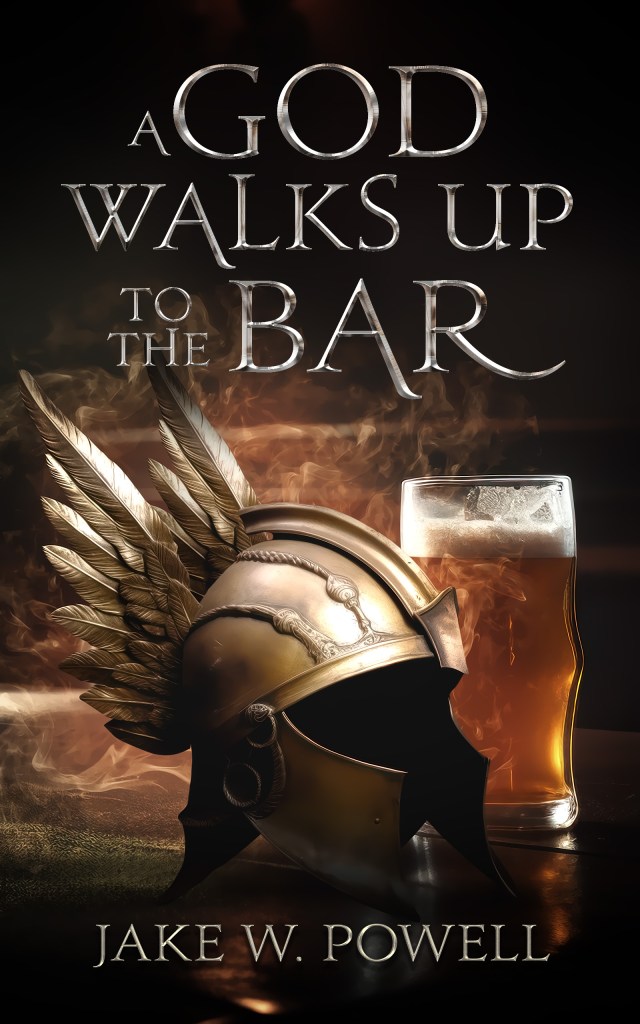
My first book, A God Walks up to the Bar, is available on Amazon.com. Witness the modern day adventures of the Greek god Hermes in a world much like our own – and with demigods, vampires, nymphs, ogres, and magic. The myths never went away, they just learned to move on with the times. It’s a tough job, being a god!

Image Source: “THE Supervillain’s Lair” by nicknormal; Licensed under CC BY-NC-ND 2.0.

Is It Possible to Be Too Ambitious?

It’s a question worth asking if you’re a writer.

We all have big dreams, and big dreams involve big projects, lots of planning, blood, sweat and tears. Writers want to be known, and they want to put out their best possible work into the world. That takes time. And as we are all acutely aware, we don’t have all the time in the world.

So, is it possible to embark on a writing project that is too ambitious? Can we overreach ourselves and fall short?

In the end, it depends on each one of us.

Ambition is not in and of itself a bad thing, mind you. The desire to improve and grow is a natural and good thing for a writer. But writing and publishing also require a fair dose of humility. We are not all going to become the next Hugh Howie or Brandon Sanderson. And they only reached the heights they did because they worked really hard for a really long time to get there. So, how hard are you willing to work? Just as important, how hard are you able to work? Time isn’t infinite, and you might genuinely be limited by work schedule, family, and other things that pop up in life. If you try to expend time and focus you don’t actually have to spare, yes, you are being overambitious.

What about experience? How many books have you written before? Planning to write an epic trilogy that will sell a thousand copies when it’s your very first published work? Maybe you want to back off on that plan for a while. Write some smaller books first, find your voice, build up your skill. The story of the one-off novel that becomes a literary masterpiece is very alluring, but let’s not assume it’s going to happen to us.

Yes, you have talent. I have talent. We all have talent, and we can sharpen that talent into something great and memorable. But desire is no substitute for talent. What we want and what we have to work with are very different things. If you don’t have the experience, get it. Then write your magnum opus.

Overambition is overreach. It is to push yourself beyond your capabilities. Writing is like exercise. You flex your storytelling muscles every time you do it. That helps you build bigger muscles that can handle a bigger workload and more complex stories. It’s discipline. Weightlifters don’t start off with 400 pound weights when they begin their training. They work their way up to it.

Is it possible to be too ambitious? Yes. But the measure of that ambition changes over time. What is too ambitious now may be achievable ten years later, because in ten years you’ll be a better author. Keep writing. Keep stretching your limits. Shoot for the moon, but don’t assume you’ll get there on your first shot.

If you just so happen to be enjoying my blog, feel free to subscribe. I post updates on my writing career, I muse over storytelling and fiction, and I reflect on the curious and wonderful things in life.

My first book, A God Walks up to the Bar, is available on Amazon.com. Witness the modern day adventures of the Greek god Hermes in a world much like our own – and with demigods, vampires, nymphs, ogres, and magic. The myths never went away, they just learned to move on with the times. It’s a tough job, being a god!

Hard Times: Facing Down Discouragement

Feeling down in the dumps? Feeling like nothing you do is right or ever will be? If not, don’t worry, you will.

I’ve detected a pattern to discouragement in my life. It likes to come at certain times. I wonder if that’s true for everyone.

I find that nighttime is the worst for me. A couple of hours before bedtime, when I start to tire and my mind starts shutting down, fear and worry slither into my brain.

I need to start thinking about this. I haven’t done that yet. Do I have enough time to complete my book? Do I have enough money to pay for editing and publishing and marketing? Is it even any good?

It’s inevitable. For the writer, it can be debilitating. We work hard to finish our projects. We march on with stubborn determination to see our dreams through to the end. And we dread … not failure exactly. Inadequacy. Anyone can write, but can we write well? Or is it all just crap that would be better off hidden away in our computer’s hard drive, or better yet, in our own minds?

Even worse, what if it’s a good story, but nobody knows it exists? The unnoticed, inconsequential curiosity of the online store.

The night is a quiet and still time. My brain has time to process all these fears. When the excitement of the actual writing process stops, these nagging thoughts are heard most clearly.

But we don’t have to listen to such fears. They come, they stay a while, and then they leave. Yes, they do leave, if we press on regardless. Discouragement isn’t something we always have control over, but we can control how we act in response to it. Feelings of worry are not eternal. They only have real power to influence our life and work if we give them permission. Emotions run up and down. I look at my work today and feel it’s my best yet, and look at it tomorrow and cringe in disgust.

To continue writing in spite of that hollow feeling, to trudge along, to persevere through grim thoughts, this is is what we must do. Night isn’t forever.

Fear debilitates. Depression paralyzes. Writing is a joy for me, but I don’t feel excited about it all the time. Not 24/7. I have rough spots. I have times where I wonder if I should just leave it all behind. And I wait. I don’t act on those impulses of giving up, because I realize that they don’t last.

Writing is a marathon. Like athletes, we tire. We can feel inadequate and unable to rise up to the challenge. Write anyway. If you feel like crap, write. If you feel like nothing is coming to you, write something. A paragraph, a single sentence, anything so that you can say that you wrote for the day. Persevere. Be stubborn.

After night comes morning.

If you just so happen to be enjoying my blog, feel free to subscribe. I post updates on my writing career, I muse over storytelling and fiction, and I reflect on the curious and wonderful things in life.

My first book, A God Walks up to the Bar, is available on Amazon.com. Witness the modern day adventures of the Greek god Hermes in a world much like our own – and with demigods, vampires, nymphs, ogres, and magic. The myths never went away, they just learned to move on with the times. It’s a tough job, being a god!

Image Source: “Dead Joshua tree (Yucca brevifolia); Covington Flats” by Joshua Tree National ParkPublic Domain Mark 1.0.

When You Get Into Your Groove

It’s the most wonderful feeling in the world. You start writing, and you’re off to a rough start. You struggle, you groan, you’re on the verge of calling it a day. Then the words start to flow, one after the other. Bam. Bam. Bam. The prose is smooth, the dialogue is superb, and your story just falls into place like a well-made jigsaw puzzle. Everything suddenly fits.

You get into your groove. The wheels turn without a hitch. You are rocking your writing session and just loving being along for the ride while your fingers type away and your subconscious pulls surprises out of the depths of your mind.

I’m in my editing phase at the moment, working on the second draft of my second book. It doesn’t have a name, yet. I’m still working on that. Mostly, I’m trying to make what I originally wrote into something coherent and readable. Sometimes, I think to myself, “I’m not much up for writing today, maybe just a paragraph or two.” Once I get started, I then think, “Well, a little bit more,” and again, “Huh, this isn’t so bad. I can work with this.” And an hour slides by without me noticing. Or two hours. It’s such a great sensation to be pulled into your writing, to let everything else fade.

A bit scary, too! I lose track of time. I start in the morning, I wrap up and look at the clock and – What! It’s already the middle of the afternoon!?

If I was a fish, then writing would be bait on a hook. I can’t resist. We all have that, don’t we? Our hook. Our favorite activity. The thing that gets us in the groove.

It really is a feeling that’s hard to beat.

If you just so happen to be enjoying my blog, feel free to subscribe. I post updates on my writing career, I muse over storytelling and fiction, and I reflect on the curious and wonderful things in life.

My first book, A God Walks up to the Bar, is available on Amazon.com. Witness the modern day adventures of the Greek god Hermes in a world much like our own – and with demigods, vampires, nymphs, ogres, and magic. The myths never went away, they just learned to move on with the times. It’s a tough job, being a god!

Image: “Sullivan’s Rock Star Trails, Western Australia” by inefekt69; Licensed under CC BY-NC-ND 2.0.