Confessions of a Skipper

I must confess to a strange reading habit, one that might shock and horrify you. Do not judge me too harshly, for I shall explain myself.

When I start a fiction book, I like to skip to read the last couple of pages first.

“What?” I hear you cry out. “What is this blasphemy? Why ruin the story for yourself?” Calm yourself, please. Let me clear things up.

It’s true that I’m not sensitive to spoilers. I really don’t mind when plot twists are brought up in casual conversation. But this habit is more than just wanting to know how things end. Really, without context, knowledge of a story’s ending doesn’t have a terribly great impact on me as a reader. I have no grasp of the import of the scenes and dialogue. What I’m really interested in is catching a glimpse of the finished jigsaw puzzle, then going back to the beginning to see how the pieces fit together.

Rather than starting a book with no idea of how things end up, I know exactly how it ends. And so, the fun of the read shifts from the “what?” to the “why?” Why is this the ending? And how will my initial impression of it change as I get more pieces of the bigger picture?

I suppose I’m interested in perceiving the author’s mind. How do they assemble the various elements of the narrative into its final shape at story’s end? How are these characters and events inserted into the story? In short, how did we end up here?

Pieces click into place as I read on, and the ending’s significance becomes clearer. Sometimes, I feel like a detective solving a case in reverse. I already know whodunnit, but the howdunnit isn’t so obvious.

And I do it because I’m quirky and it’s kind of a fun exercise to try out. I neither recommend it nor warn against it. Reading style is a matter of personal preference. It’s up to you.

And there you have it. The true confessions of a skipper.

If you just so happen to be enjoying my blog, feel free to subscribe. I post updates on my writing career, I muse over storytelling and fiction, and I reflect on the curious and wonderful things in life.
Quirks and Tics: Characterization through Minor Details

You ever think about how traits and habits can shape a character? Everyone has their own flavor of mannerisms: body posture, repeating gestures, facial expressions, verbal expressions, nervous habits. For the sake of simplicity, let’s call them “quirks.” They’re the little details that don’t play a part in the unfolding plot, but simply help flesh out the world you’re creating. Being visual cues, for the most part, they also aren’t always the easiest thing to describe in writing. Movies love them, though, and they can definitely help liven up a scene and make characters more relatable.

It’s all about humanizing your characters. Real people have habits and tics. They do or say things on a regular basis that are uniquely a part of them. You – yes, you – have habits and gestures of your own that make you, well, you. The devil is in the details, but so is good writing. Experienced authors can make even a bit character memorable by throwing in a couple of notable traits and letting those emblazon themselves in readers’ minds. Movies have it even easier. Being visual by nature, a film or TV show can display those quirks without pausing to describe them, letting such details blend more seamlessly into the narrative.

Mostly, quirks are all about worldbuilding, aren’t they? Not necessary to the plot, not vital to understanding the hero and supporting cast. They’re like sprinkles on ice cream. They’re a little something extra.

Or are they?

Quirks can be used as plot devices and can even deliver good payoffs. Someone recognizes her long-lost lover because of the specific way in which he twirls his hair. A secret agent’s habit of spinning his knife causes him to drop it and nearly trigger a motion-sensor alarm. A villain always unconsciously taps her fingers at the prospect of playing a game. A protagonist with OCD compulsively touches and counts poles on the sidewalk. He misses one and goes back for it – just in time to miss being run down by an oncoming car.

These are all examples taken from real movies and TV shows. Can you figure out where they come from?

Do you want your story to feel real? Do you want your characters to feel like people you might actually meet on the street? Or maybe you just want to challenge yourself with producing something a little more creative than past works? Consider using quirks to ad spice to your story. How? Well, take a look at the people you already know. Watch them carefully (but don’t be weird about it). Look at how they act and talk and move. Real life is good inspiration. Everyone has quirks.

Are there ways in which you have used quirks in your writing? Please feel free to share!

If you just so happen to be enjoying my blog, feel free to subscribe. I post updates on my writing career, I muse over storytelling and fiction, and I reflect on the curious and wonderful things in life.

Writing Your First Draft: The Vomit Draft

Having gotten halfway through the first draft of my second book, I look back on the progress I’ve already made and have mixed feelings about it. On the one hand, I’m fairly confident my skill has improved somewhat since my first book. On the other hand, I see the myriad flaws still there and wish I could write a perfect book straight out of the gate. But writing is a feat where one plays the tortoise more than the hare. Slow and steady wins the race.

Also, the first draft of anything is going to be garbage no matter how hard you try. It’s just the nature of the beast.

In fact, I’ve come up with a nickname for first drafts: the vomit draft.

The first bout of writing isn’t necessarily pretty or neat. In fact, it can be downright ugly as you not only try to type out a coherent story, but also struggle with phrasing, dialogue, vocabulary, writer’s block, and coming to the grim realization that your story’s direction is slowly but surely veering away from your original vision. It’s a beautiful mess.

Knowing this, my goal in the first draft isn’t to write a masterpiece. It’s to just get all the words written. Spewing them out as they come to mind, as it were. Hence, the vomit draft.

We got to start somewhere, right?

Sometimes, I get frustrated and think that the garbage I’m writing is going to stay garbage regardless of rewrites. Sometimes, I go through a brief existential crisis as I wonder if being a writer is even my calling in life and maybe I should just stick to my day job. Sometimes, my mind struggles with even the most basic words. Who will want to read this?

But that’s not what the vomit draft is about. Making your story readable comes later. Right now, just get it all out. No holding back, no second-guessing, no graceful prose. Just write something to fill in the pages. It’s the foundation for what comes later. Every beautiful building is built upon a pool of poured cement. It’s not pretty, and it isn’t supposed to be.

Fortunately, nobody ever has to see our vomit drafts except ourselves. And we get a small consolation in knowing that this sorry state of affairs can and will become something much, much better.

If you just so happen to be enjoying my blog, feel free to subscribe. I post updates on my writing career, I muse over storytelling and fiction, and I reflect on the curious and wonderful things in life.
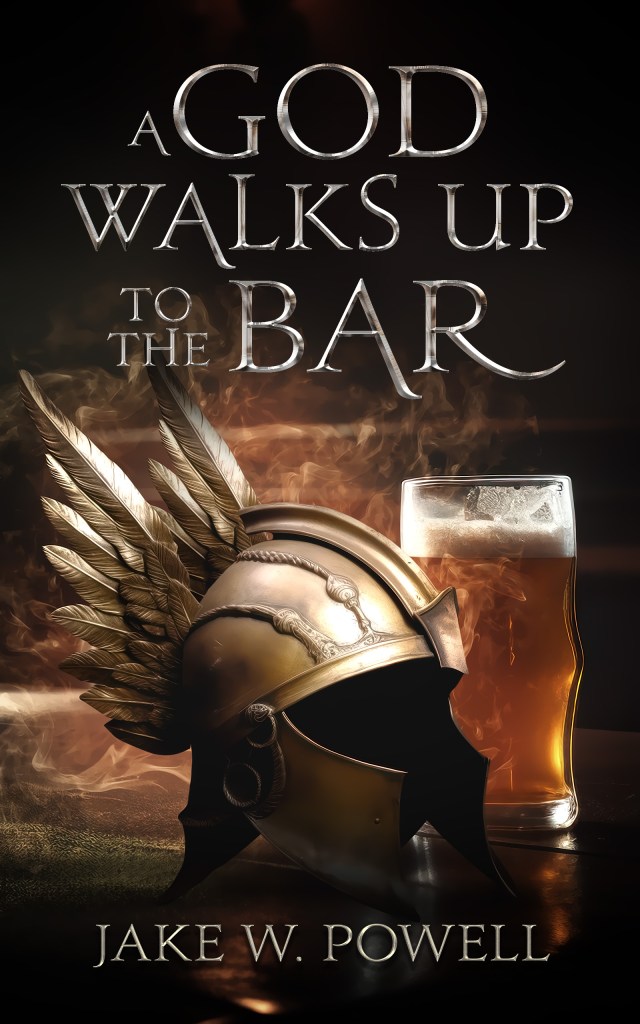
Image: “A sick cat” by wwhyte1968; Licensed under CC BY-SA 2.0.

History: The Greatest Source of Inspiration for Any Writer

Fact is stranger than fiction, they say. And it’s true. But have you ever considered the inverse: Fiction is never stranger than fact.

No matter a writer’s imagination, no matter his ability to craft new worlds out of his own mind and populate it with characters who seem as real and unique as anyone you meet on the street, and no matter how engaging, grandiose, bizarre, or heartfelt the events portrayed in his work, he will never be able to surpass the parade of the unexpected that is world history.

History IS story. It’s right there in the word, isn’t it? And it’s real. Just think about that for a moment. Think about all the things you’ve read in the history books. Adventure. Romance. Mystery. Tragedy. War. Friendship. Triumph. Defeat. Despair. Hope. All of it is there, all of it waiting to be discovered by that one author seeking a mote of inspiration.

Where am I going with this? Just to say this: We writers have so much to draw from just by browsing the history section at our local library or bookstore. Heck, just go online. We live in the age of information. The World Wide Web contains everything. Try a quick surf of your hometown’s newspaper archives. Stories aplenty. Ideas in abundance.

And now I’m starting to think that there are so many tales in history that haven’t been given their due. Forgotten stories that need a time to shine. Eras and events that have been lost in the bustle of modern progress. Martin Scorsese’s Killers of the Flower Moon highlighted a time in Native American history that deserves more recognition. A terrible time, but one that should be known.

What else have we misplaced? What battles and victories waiting for their recognition? Unsung heroes waiting for their song to be written? Tragedies yet to be acknowledged? Villains who thought they got away with it?

Apologies, I’m just waxing poetical now. You get the idea. Writers don’t just write stories. We live at the tail end of the longest story ever written. All we have to do is look back a little ways for new tales from that saga to tell. Isn’t that a teensy bit amazing?

If you just so happen to be enjoying my blog, feel free to subscribe. I post updates on my writing career, I muse over storytelling and fiction, and I reflect on the curious and wonderful things in life.

Image: “Early printed vellum leaf” by Provenance Online Project; Licensed under CC0 1.0.

Lessons I Learned Writing My First Book, Part 5: Humility

What’s the greatest challenge you face as a writer? The hours of hard work spent crafting your story? Pushing back against writer’s block? Trying to research a key piece of your book that you can’t quite get right? Finding a publisher? Finding the money to publish independently?

After all the effort you put into your book, there comes a point where you crave vindication of your efforts. After everything is said and done, you put it out onto the market and …

Where’s the jubilee? Where’s the praise? It’s MY book, it’s MY effort. Don’t I deserve it?

And here comes a hard truth: No, you actually don’t.       

We should all dream big, because big dreams encourage us to strive for excellence. But dreams alone are not the key to any sort of success. Hard work, diligence, and consistency are far greater allies in that regard. It’s easy to look at examples of literary success and think that somehow, through the mere act of wanting, we not only are able to join them, we deserve to join them. To stand up there with Hugh Howey, Brandon Sanderson, Dan Abnett, Jim Butcher, Ursula K. Le Guin, Terry Pratchett, et al.

Or, going even further, to see ourselves as the next William Faulkner or Charles Dickens or F. Scott Fitzgerald. And then we complete our book, we’re proud of it, and we put in on the market and … it’s another book.

A good book, maybe, but there are no laurels or songs or movie deals. It’s a book. One among hundreds of thousands. Roll up your sleeves if you want to get more notice, because it won’t get noticed by itself. You’re an author. Not THE author, not the greatest author. An author.

Harsh? Maybe. But eating humble pie is a bittersweet affair. Reflecting on my journey to where I am now, I’m darn proud of what I’ve done. I enjoyed writing my book, and I’m enjoying starting my second one. If I wanted glory, I’d pursue a different profession.

It still stings a little, though.

Humility comes in many different forms. Sometimes it whirls in and knocks us off our haughty high ground. Sometimes it’s a series of events that remind us we’re not as self-important as we thought. Sometimes, it’s doing something that others look down on as unimportant. It’s not something that’s enjoyable to learn (a running theme with my past few articles, I’m noticing) but, as I’ve already said before, it’s necessary. Pride and egotism can take a good job and hard-earned goodwill built up with your audience and turn it to ash. We’ve all seen it. Maybe you’ve even been there before.

Keeping ourselves in perspective can, I hope, help us to understand our place in the very big and crowded world of publishing and, rather than discourage us with delusions of insignificance, drive us to work harder toward a successful and fulfilling career. Humility helps us see ourselves clearly and to see the things we can do to make ourselves the best people we can be.

The gods and beings of ancient myth never went away. They just moved on with the times.

My book, A God Walks up to the Bar, is currently available on Amazon.com. Venture into the world of the Greek god Hermes, a world filled with demigods, vampires, nymphs, ogres, magic, and trickery. It’s a tough job, being a god!

Enjoying my blog? Don’t want to miss a single post? Subscribe for updates on when I post and follow my writing career, musings on fiction and storytelling, and reflections about life in general!