Working on Book #3: Drafts and Long Slogs

Almost done with the second draft of my latest book. I promised myself that I would finish this draft before the end of the year, and if all goes well and I’m still standing, that looks to be the case.

What a journey it’s been already. This book has been much harder to write than my previous work. For one, it’s my first proper novel. It’s not an anthology of short stories united by a common thread like my first two publications. This is one continuous narrative. Exciting! And challenging. Technically, this isn’t my first novel, but that’s only if I count the one I wrote in college that will never see the light of day. Which I’m not.

The first draft was pretty rough. I thought I knew what I was on about when I started, but quickly – very quickly – I realized that I had little direction or clarity for what I wanted the story to be. I had an outline, and I knew the general gist of the tale I wanted to tell, but I hadn’t reflected enough on the details. I wasn’t prepared. And, oh, boy, did that make draft #1 a slog.

But the great thing about drafting is that rewrites can really clear the air. I have more focus now that I’ve had the chance to go over my mistakes and fix them, not to mention coming up with new and better ideas and trimming the fat that doesn’t need to be there. The ideal is that every draft makes the story a little better. I feel that that’s the case with this one.

That being said, I still have a long way to go. Two drafts isn’t enough for a novel, not for me, anyway. So, I’ll need to keep my sleeves rolled up and motor on.

***

Many thanks for visiting my blog. I post updates on my writing career, I muse over storytelling and fiction, and I reflect on the curious and wonderful things in life.

“Hermes is not having the best time. He walks a fine line, and his duty as messenger of Olympus weighs heavily on him. Being a god in the modern age means living in a world that no longer believes in gods. How much can one deity accomplish when no one respects him anymore? And why do his instincts tell him that he, the son of Zeus, is losing favor with his own family?

Tensions abound. The upstart Young Gods play dangerous games using entire cities as their boards. Formless monsters strike from the nighttime shadows, terrorizing hapless mortals. Agents of rival pantheons scheme to thwart Olympus’ designs. In the thick of it all, Hermes does what he does best: trick, lie, and cheat his way to victory.

Thoughts on The Giving Tree

Do you remember your favorite book from childhood?

I can’t say it was my favorite book as a child – I have too many of those to choose just one – but I remember The Giving Tree by Shel Silverstein with fondness. A sweet story of self-sacrifice, though as an adult I realize that it is controversial. But most stories are, especially when we pry them open, dissect them, and boil them down.

Maybe I’m just a sentimentalist who likes stories that are bittersweet. Maybe I’m naive. Or maybe I never perceived the concept that the boy was exploiting the tree because I grew up in a family where I was taught to say “please” and “thank you” and learned about responsibility. Maybe a story’s interpretation depends on the context of the reader’s life and experiences. We all see something different.

Either way, I liked the story. I was young and innocent and hadn’t received a college education yet, so I saw only good in it.

***

Many thanks for visiting my blog. I post updates on my writing career, I muse over storytelling and fiction, and I reflect on the curious and wonderful things in life.

“Hermes is not having the best time. He walks a fine line, and his duty as messenger of Olympus weighs heavily on him. Being a god in the modern age means living in a world that no longer believes in gods. How much can one deity accomplish when no one respects him anymore? And why do his instincts tell him that he, the son of Zeus, is losing favor with his own family?

Tensions abound. The upstart Young Gods play dangerous games using entire cities as their boards. Formless monsters strike from the nighttime shadows, terrorizing hapless mortals. Agents of rival pantheons scheme to thwart Olympus’ designs. In the thick of it all, Hermes does what he does best: trick, lie, and cheat his way to victory.

Charles Dickens on Writing

Charles Dickens knew what it is like to be a writer …

Prowling about the rooms, sitting down, getting up, stirring the fire, looking out the window, teasing my hair, sitting down to write, writing nothing, writing something and tearing it up…

***

Many thanks for visiting my blog. I post updates on my writing career, I muse over storytelling and fiction, and I reflect on the curious and wonderful things in life.

“Hermes is not having the best time. He walks a fine line, and his duty as messenger of Olympus weighs heavily on him. Being a god in the modern age means living in a world that no longer believes in gods. How much can one deity accomplish when no one respects him anymore? And why do his instincts tell him that he, the son of Zeus, is losing favor with his own family?

Tensions abound. The upstart Young Gods play dangerous games using entire cities as their boards. Formless monsters strike from the nighttime shadows, terrorizing hapless mortals. Agents of rival pantheons scheme to thwart Olympus’ designs. In the thick of it all, Hermes does what he does best: trick, lie, and cheat his way to victory.

Tolkien on Escapism

I was ranging the Internet tonight and came across this quote by J.R.R. Tolkien. Food for thought for writers, poets, and all other storytellers.

Fantasy is escapist, and that is its glory. If a soldier is imprisoned by the enemy, don’t we consider it his duty to escape?. . .If we value the freedom of mind and soul, if we’re partisans of liberty, then it’s our plain duty to escape, and to take as many people with us as we can!

J.R.R. Tolkien

***

Many thanks for visiting my blog. I post updates on my writing career, I muse over storytelling and fiction, and I reflect on the curious and wonderful things in life.

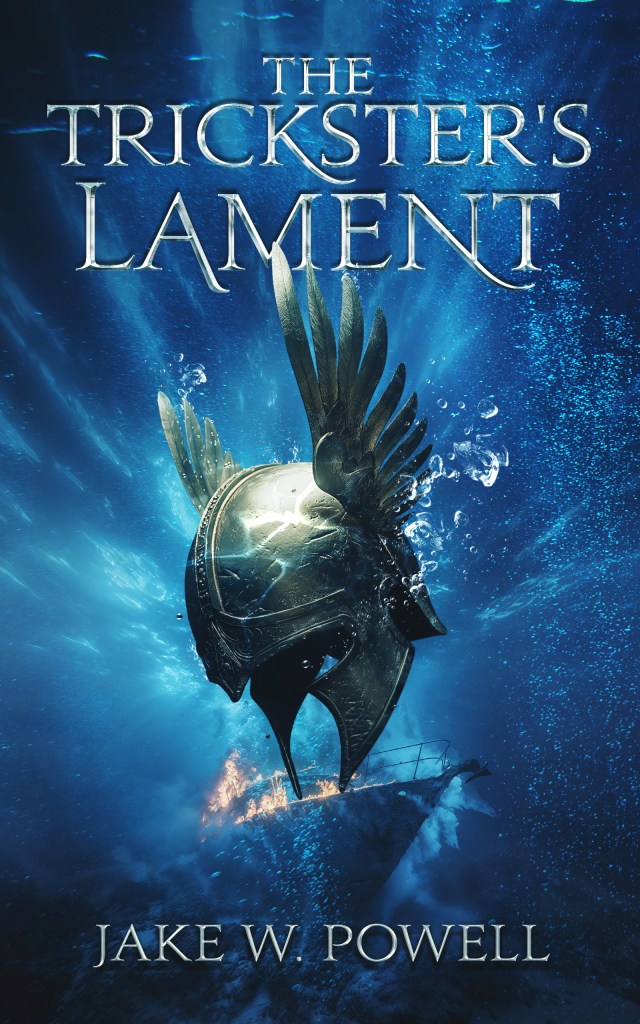
My latest book, The Trickster’s Lament, is currently available on Amazon in both Kindle and paperback format.

“Hermes is not having the best time. He walks a fine line, and his duty as messenger of Olympus weighs heavily on him. Being a god in the modern age means living in a world that no longer believes in gods. How much can one deity accomplish when no one respects him anymore? And why do his instincts tell him that he, the son of Zeus, is losing favor with his own family?

Tensions abound. The upstart Young Gods play dangerous games using entire cities as their boards. Formless monsters strike from the nighttime shadows, terrorizing hapless mortals. Agents of rival pantheons scheme to thwart Olympus’ designs. In the thick of it all, Hermes does what he does best: trick, lie, and cheat his way to victory.

Writers, Mix It Up

I’ve started on the third installment in my urban fantasy series. Everyone writes at different speeds, and I’m somewhere in the middle of the pack, I think. I published my first book in August 2023 and published my second in January of this year. I hope to finish this third installment by the end of next year.

Maybe I am a slow writer, after all, but when you have a job and other commitments, you can’t be a writer 24/7, unfortunately.

Anyway, I’m happy with my work, but after finishing this current project, I think I’ll take a break from Hermes’ adventures. I’m in the mood to try something new. And that’s healthy, I’m finding. Writing about the same thing is kind of like exercising. If you keep exercising the same muscle group over and over, you end up hurting yourself rather than strengthening yourself.

So, I want to mix it up. I want to write different stories after finishing book #3 and stretch my talents. Broaden my horizons and various other cliches. It’ll be fun, and it’s good practice to try something new.

***

My book, The Trickster’s Lament, is currently available on Amazon in both Kindle and paperback format.

“Hermes is not having the best time. He walks a fine line, and his duty as messenger of Olympus weighs heavily on him. Being a god in the modern age means living in a world that no longer believes in gods. How much can one deity accomplish when no one respects him anymore? And why do his instincts tell him that he, the son of Zeus, is losing favor with his own family?

Tensions abound. The upstart Young Gods play dangerous games using entire cities as their boards. Formless monsters strike from the nighttime shadows, terrorizing hapless mortals. Agents of rival pantheons scheme to thwart Olympus’ designs. In the thick of it all, Hermes does what he does best: trick, lie, and cheat his way to victory.

Many thanks for visiting my blog. I post updates on my writing career, I muse over storytelling and fiction, and I reflect on the curious and wonderful things in life.

My New Book is Out on Amazon!

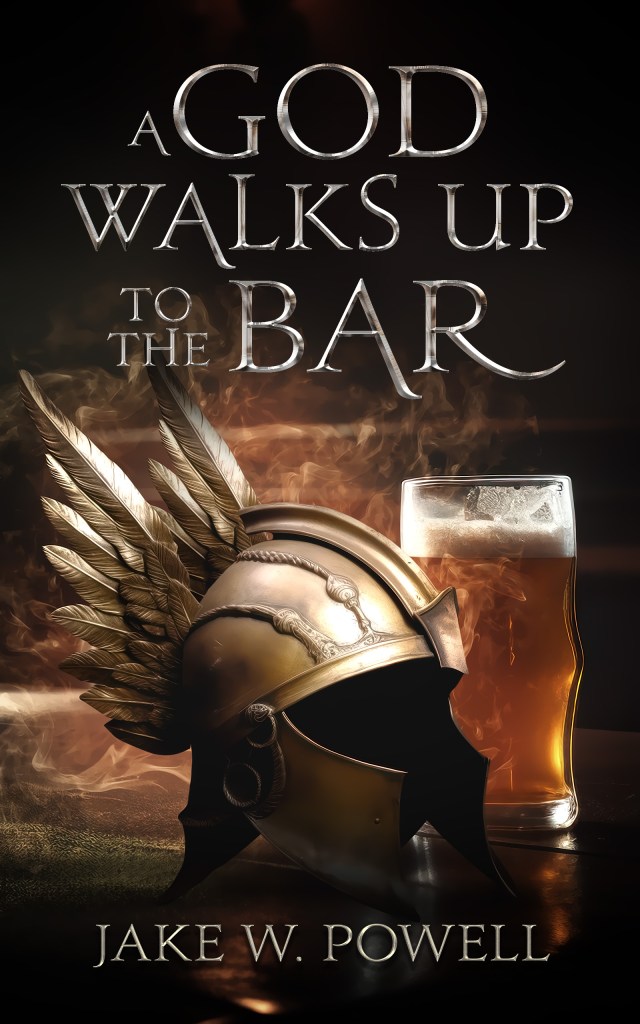
I am very excited to announce that my new book, The Trickster’s Lament, is now available on Amazon for both Kindle and paperback. This is my second ever published book and a sequel to my first, A God Walks Up to the Bar. I hope that my readers enjoy the further modern day adventures of the Greek god Hermes.

Synopsis:

“Hermes is not having the best time. He walks a fine line, and his duty as messenger of Olympus weighs heavily on him. Being a god in the modern age means living in a world that no longer believes in gods. How much can one deity accomplish when no one respects him anymore? And why do his instincts tell him that he, the son of Zeus, is losing favor with his own family?

Tensions abound. The upstart Young Gods play dangerous games using entire cities as their boards. Formless monsters strike from the nighttime shadows, terrorizing hapless mortals. Agents of rival pantheons scheme to thwart Olympus’ designs. In the thick of it all, Hermes does what he does best: trick, lie, and cheat his way to victory.

He may be disrespected. He may be kicked about. He may even be falling out with his pantheon. But Hermes is a trickster. He knows how to play dirty in a world that doesn’t play fair. But though he can best man, beast, and god, he isn’t prepared for his wiliest opponent yet: his own conscience.”

And for those who missed it the first time …

A God Walks Up to the Bar, my first foray into publishing, is also on Amazon.com. Interested in Hermes’s first recorded adventures battling half giants, skinwalkers, vampires, and other foes? Check it out!

As always, thanks for simply visiting my blog and sharing in my writing career and my various musings on life, the universe, and everything. Whether you click that subscribe button or not, I truly appreciate your taking the time to read my ramblings. Cheers.

Open a Book

Open a book, go on an adventure. You don’t leave home, you don’t walk a road. But you go on a journey just the same, to places near and far, betwixt and between.

The past and future, earth and space, ruins and utopias, worlds both alien and familiar. The lives of great kings and scientists and heroes stretch out before you. Hear their words, see inside their minds.

Indeed, you go everywhere, do everything, see everyone. A universe of words is revealed to you. Travel here and there, hither and thither, as much as you can stand.

And at the end of the journey, you come back home, and realize you never left your chair.

Such is the wonder of opening a book.

Many thanks for visiting my blog. I post updates on my writing career, I muse over storytelling and fiction, and I reflect on the curious and wonderful things in life.

Deep Questions about Deep Literature

Do you remember literature classes in high school? How you would spend hours every day discussing the symbolic value of the billboard in The Great Gatsby and analyzing what each character represented in The Lord of the Flies? A spade is never just a spade in lit class. There is always a deeper meaning.

So can anyone explain to me why all the books students have to read are so dang depressing?

Looking back, this is what I feel that we were doing: Taking a beautiful flower and plucking its petals and cutting the stem and digging up the roots to see why it was a beautiful flower. And we very scientifically removed everything beautiful about it.

But darn it, we got educated about great literature. We knew what metaphor was. And allegory. And the subtle social critiques and genre deconstructions that mark all literary classics. We obtained knowledge! We justified our tuition!

There are people who make their living by reading stories and telling other people whether they are good or not. And their word is law, because there is no such thing as an opinion they understand the rules that govern quality writing. Where they obtain this arcane knowledge is unknown. Presumably, they dissected enough flowers.

Good stories seem to be a case of majority rules. If enough people say it’s good, it must be good. Maybe. But I didn’t like The Great Gatsby, so does that mean it’s not a good book or I’m not a good writer? Or perhaps if I had read it on my own time instead of being forced to analyze that darn stupid billboard I would have liked it.

What does it matter what color the curtains are or what suit the one character is wearing in each scene? It matters because somebody important says it matters, but what if it’s not the author saying it? Are we seeing what the writer put there, or what we think is there? Are we seeing meaning where there is none, or is the meaning not what we think it means? Does it mean what people say it means, or does it mean something else, which means that what I want it to mean means that it means the wrong thing from what everyone else thinks it means? Because that’s just mean.

Or maybe we’re just really good at gaslighting ourselves into thinking a book somebody wrote to pay their bills is a magnum opus. The writer wings it, hears what critics say, nods sagely and says, “Yes, that’s exactly what it means.”

Many thanks for visiting my blog. I post updates on my writing career, I muse over storytelling and fiction, and I reflect on the curious and wonderful things in life.

A Word of Wisdom Regarding Books and Dogs

Outside of a dog, a book is man’s best friend. Inside of a dog it’s too dark to read.

Groucho Marx (probably)

If you’re a cat person, then sorry, I really don’t know what to tell you.

Many thanks for visiting my blog. I post updates on my writing career, I muse over storytelling and fiction, and I reflect on the curious and wonderful things in life.

Tips on Draft Writing

Drafts are a vital part of any writing project. Very, very, very rarely is any book released on its first draft. You need to pour over your work many times to make sure it’s ready for publication. But, the question often arises: How many drafts should you write? Three? Four? Eleven? How many is enough?

There’s no hard and fast answer. It depends on the author. Different strokes for different writers.

Even so, I’ve come across a few general tips that can help you decide how long to spend in the drafting stage.

  1. Set yourself goals for each draft. Pick one specific thing to improve for each draft you write. Your first draft -the vomit draft, as I like to call it – is just getting your story onto paper. Your second draft, perhaps, can center around developing story and characterization. For the next one, pay attention to grammar and sentence structure. Whatever you choose, each draft sees definite and specific improvement, and you may find yourself not needing to go through as many as you expected.
  2. Don’t expect perfection. You’ll never get there. Drafting is about improvement, not reaching an ideal but unattainable state of “perfection.” Even the greatest writers make mistakes. Focus on refining and polishing. Every time you go through your story, you’re making it better. Each draft builds on the previous one.
  3. Pace yourself. Sometimes, wrapping up one draft and jumping straight into the next isn’t a good idea. Give yourself a few days to let your subconscious mull over things. A little break can be great for your writing as you begin anew rested and with a fresh perspective. You find yourself more easily spotting errors and opportunities.
  4. You have to publish eventually. If you want to release your book to the public, you will have to stop drafting at some point. You have to tell yourself that your story is ready. Remember: Refining and editing is all well and good, but if you never stop, then you will reach a point where you’re doing more harm than good. You lose sight of the whole and get buried in nitpicks that add nothing. A sculptor who never stops chiseling the marble ends up with nothing but gravel in the end.

Some people love the drafting stage, other people don’t. I find it a useful and interesting process. I not only clean up the chaos of my first draft, but also discover new things about my characters, new storytelling techniques, and just plain mature as a writer. However many you find necessary, remember the most important tip of all: Have fun with it!

Many thanks for visiting my blog. I post updates on my writing career, I muse over storytelling and fiction, and I reflect on the curious and wonderful things in life.