Working on Book #3: Drafts and Long Slogs

Almost done with the second draft of my latest book. I promised myself that I would finish this draft before the end of the year, and if all goes well and I’m still standing, that looks to be the case.

What a journey it’s been already. This book has been much harder to write than my previous work. For one, it’s my first proper novel. It’s not an anthology of short stories united by a common thread like my first two publications. This is one continuous narrative. Exciting! And challenging. Technically, this isn’t my first novel, but that’s only if I count the one I wrote in college that will never see the light of day. Which I’m not.

The first draft was pretty rough. I thought I knew what I was on about when I started, but quickly – very quickly – I realized that I had little direction or clarity for what I wanted the story to be. I had an outline, and I knew the general gist of the tale I wanted to tell, but I hadn’t reflected enough on the details. I wasn’t prepared. And, oh, boy, did that make draft #1 a slog.

But the great thing about drafting is that rewrites can really clear the air. I have more focus now that I’ve had the chance to go over my mistakes and fix them, not to mention coming up with new and better ideas and trimming the fat that doesn’t need to be there. The ideal is that every draft makes the story a little better. I feel that that’s the case with this one.

That being said, I still have a long way to go. Two drafts isn’t enough for a novel, not for me, anyway. So, I’ll need to keep my sleeves rolled up and motor on.

***

Many thanks for visiting my blog. I post updates on my writing career, I muse over storytelling and fiction, and I reflect on the curious and wonderful things in life.
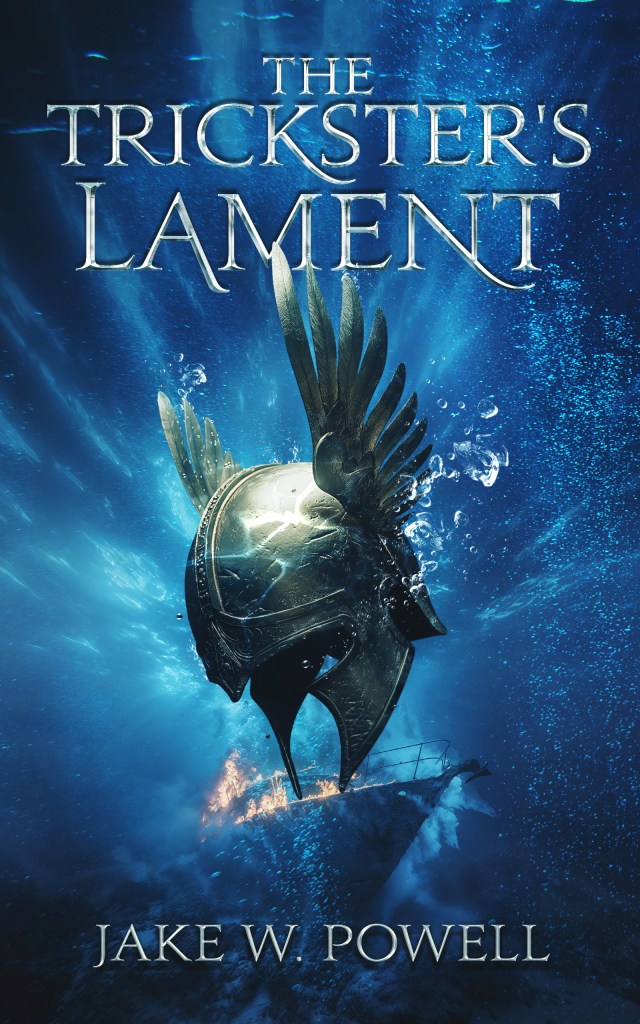
“Hermes is not having the best time. He walks a fine line, and his duty as messenger of Olympus weighs heavily on him. Being a god in the modern age means living in a world that no longer believes in gods. How much can one deity accomplish when no one respects him anymore? And why do his instincts tell him that he, the son of Zeus, is losing favor with his own family?

Tensions abound. The upstart Young Gods play dangerous games using entire cities as their boards. Formless monsters strike from the nighttime shadows, terrorizing hapless mortals. Agents of rival pantheons scheme to thwart Olympus’ designs. In the thick of it all, Hermes does what he does best: trick, lie, and cheat his way to victory.

Why Do I Blog?

Today’s daily prompt is fairly simple: Why do I blog?

That’s an important question for a blogger. It’s like asking any writer: Why do you write? Knowing why can help shape the future of your craft. A little introspection is good for professional and personal growth. And truth be told, the answer changes over time.

When I started my blog, it was primarily for two reasons: To promote my published work and to keep my writing skills sharp. Those two reasons haven’t changed. However, over time I find blogging in and of itself to be a fun hobby, not merely a side project to go along with writing books.

That being said, blogging is a different animal from short stories and novels. It is taking ideas and presenting them as bite sized chunks. It’s also a way for me to get a feel for what sorts of topics and writings appeal to my audience. It’s also a way to reach out to other writers, to learn from them, and to broaden my understanding of the craft.

Blogging also helps keep my mind occupied. I don’t know about the rest of you, but I go nuts if I don’t have something to occupy the creative half of my brain. My mind stagnates, and my thoughts wither and … Well, maybe it’s not quite that dramatic, but managing a blog is an excellent way to keep my time occupied with something constructive and fun. It’s a good hobby, and I’m glad I started.

***

Many thanks for visiting my blog. I post updates on my writing career, I muse over storytelling and fiction, and I reflect on the curious and wonderful things in life.

“Hermes is not having the best time. He walks a fine line, and his duty as messenger of Olympus weighs heavily on him. Being a god in the modern age means living in a world that no longer believes in gods. How much can one deity accomplish when no one respects him anymore? And why do his instincts tell him that he, the son of Zeus, is losing favor with his own family?

Tensions abound. The upstart Young Gods play dangerous games using entire cities as their boards. Formless monsters strike from the nighttime shadows, terrorizing hapless mortals. Agents of rival pantheons scheme to thwart Olympus’ designs. In the thick of it all, Hermes does what he does best: trick, lie, and cheat his way to victory.

Finding Your Time to Write

Everyone has a time when they are at their best for writing. Everyone has that time of day when they can “get in the groove.” Whether morning or evening, when the sun is rising or when it is setting, or anytime in between, we all have sweet spots when we find it easiest to settle down and write.

But we can’t always write during that sweet time. Life comes calling. Work. Chores. Errands. Family emergencies. Social obligations. Life doesn’t always allow us to write when we want to. What to do?

Here are some of my own thoughts:

  1. Make the most of the time you have – Be diligent when you are able to sit down and work on your projects. Set goals for yourself: hitting a certain word count per day, completing a chapter, and so forth. This is especially useful if you know ahead of time that your free time is constrained.
  2. Be flexible – We all have a time of the day when we are at our literary best, but we ought not feel that that’s the only time we are allowed to write. Experiment with other times and see what else works for you. You might be surprised at how adaptive you can be.
  3. Analyze your priorities – Work is one thing, playtime is another. You might have more time to write than you think, but you devote it to something else, whether a hobby, entertainment or even napping. Ask yourself how important your writing truly is to you. Are you willing to give up a little more time to devote to it?
  4. Persevere – And sometimes, no matter what, you just can’t get into the groove because you’re a night owl who can only squeeze in a paragraph or two at the crack of dawn. Soldier on. Don’t give up, and keep writing anyway. Perseverance is vital. If you truly want to make the craft a part of your life, there will be tough days along with the good. Soldier on.

***

“Hermes is not having the best time. He walks a fine line, and his duty as messenger of Olympus weighs heavily on him. Being a god in the modern age means living in a world that no longer believes in gods. How much can one deity accomplish when no one respects him anymore? And why do his instincts tell him that he, the son of Zeus, is losing favor with his own family?

Tensions abound. The upstart Young Gods play dangerous games using entire cities as their boards. Formless monsters strike from the nighttime shadows, terrorizing hapless mortals. Agents of rival pantheons scheme to thwart Olympus’ designs. In the thick of it all, Hermes does what he does best: trick, lie, and cheat his way to victory.

Dealing with Writer’s Burnout

Writing is exciting. It is also exhausting. Crafting a story is an intense and intellectual endeavor that requires concentration, creativity, time, energy and the ability to make hard decisions. Small wonder that artists are called tortured souls. Creating anything means removing pieces of yourself and putting them into your work.

It is enjoyable, though. I don’t write because I have to, but because I want to. I also sometimes want to tear it all down and forget any of it ever happened.

No, this isn’t holding two contradictory thoughts at once. It isn’t doublethink. It’s the reality of dealing with burnout. Working hard on something, anything, that you enjoy will still lead to periods of tiredness, discouragement and an unwillingness to continue. It’s natural, I think. At least, that’s the impression I get.

I am working on my third book, and I was initially surprised that it is much harder to write than the first two. But there’s a reason for this. I’ve been writing about the same characters and setting for a while. Variety helps. After book #3 about the adventures of Hermes, I’ll get away from this series for a while, work on something fresh and different, give my brain a chance to stretch.

Feeling like you can’t put a word to a page isn’t something to dread. Whether it’s burnout, writer’s block, or just exhaustion after a busy day, it happens to all writers. Be kind to yourself. Don’t push yourself to finish if it’s going to result in a sloppy product. And certainly don’t push yourself at the expense of your own health.

Sometimes, we just need to get away from the story for a bit and let the ideas churn in our subconscious. It will still be there when we come back.

***

Many thanks for visiting my blog. I post updates on my writing career, I muse over storytelling and fiction, and I reflect on the curious and wonderful things in life.

“Hermes is not having the best time. He walks a fine line, and his duty as messenger of Olympus weighs heavily on him. Being a god in the modern age means living in a world that no longer believes in gods. How much can one deity accomplish when no one respects him anymore? And why do his instincts tell him that he, the son of Zeus, is losing favor with his own family?

Tensions abound. The upstart Young Gods play dangerous games using entire cities as their boards. Formless monsters strike from the nighttime shadows, terrorizing hapless mortals. Agents of rival pantheons scheme to thwart Olympus’ designs. In the thick of it all, Hermes does what he does best: trick, lie, and cheat his way to victory.

Exposed: More Risks of Being a Writer

In my last post, I talked a bit about the material risks of pursuing a writing career: the money and time involved. Now, I’d like to talk about more abstract risks.

Courage

To write is to put pieces of yourself into all your work. An author writes from the soul, baring his thoughts, beliefs, joys, and hopes to a world that may very well look on it all with indifference or contempt. That is a huge risk, especially if your work is meant to sway hearts and minds. You are, for all intents and purposes, metaphorically standing naked before the world. Making your work public is an act of courage.

Disappointment

How have you responded to tepid reception to your book or short story? How long have you labored to complete it, only for it to not live up to your expectations? It happens. It has happened to the greatest authors of the ages. To write for yourself and then tuck away the results can bring some pleasure, but if you make it available to the world, you may find that the world doesn’t see it with the same fondness. It doesn’t mean that you lack talent or diligence, it is simply the way that life turns sometimes.

Time (again)

Well, well, aren’t I a cheat? Putting up “Time” two posts in a row? But I’m talking about it in a different context here. I’ve already dwelt on how writing means putting in the time. But writers are also fighting against time. Every artist does, I suppose. We have so many ideas. Loads and loads, enough to last more than a lifetime. But we only have a lifetime, so we must face the truth that we won’t be able to complete every project that we want to before the end. So, which projects will you focus on? What are your most precious ideas that must be given form and shape? Choose wisely.

Again, apologies if my latest post was a little grim for your liking. To be an author is a great thing, but it carried its own struggles. Worthwhile things always do. I greatly enjoy writing and publishing, even as I acknowledge that it carries immense frustration sometimes. Even so, for those of us who write, we push forward. Don’t stop, even if it seems as if the risks outweigh the rewards. Keep writing.

***

Many thanks for visiting my blog. I post updates on my writing career, I muse over storytelling and fiction, and I reflect on the curious and wonderful things in life.

“Hermes is not having the best time. He walks a fine line, and his duty as messenger of Olympus weighs heavily on him. Being a god in the modern age means living in a world that no longer believes in gods. How much can one deity accomplish when no one respects him anymore? And why do his instincts tell him that he, the son of Zeus, is losing favor with his own family?

Tensions abound. The upstart Young Gods play dangerous games using entire cities as their boards. Formless monsters strike from the nighttime shadows, terrorizing hapless mortals. Agents of rival pantheons scheme to thwart Olympus’ designs. In the thick of it all, Hermes does what he does best: trick, lie, and cheat his way to victory.

Sacrifices: Thoughts on the Risks of Being A Writer

Nothing ventured, nothing gained.

There’s truth in these words. Our victories in life are almost always the result of placing ourselves in situations where we stand to lose. We take risks. Writing is no different.

Today, I’d like to reflect on two particularly big risks related to writing: money and time.

Money

Writing requires money. If you want to make your book publicly available, you’re going have to fork over the cash. That’s the way of things. I write and publish books as a hobby, not to make a living, which is a good thing because I’m nowhere near to making a profit off of the copies I’ve sold so far. On the other hand, high expenses seem to be the mark of any good hobby … But I digress.

Writing a book doesn’t cost anything, except perhaps the price of a good computer and keyboard (or pen and paper if you are so inclined), but editing does, as does cover art, formatting, and printing or releasing in eBook form. That’s thousands of dollars that may or may not be recouped. If you wish to write to support yourself, remember that there’s no guarantee you will do more than break even for a long time. And you may never. So be certain that you also enjoy writing for its own sake!

Time

Writing is not a quick and easy activity. Don’t expect to be the author who dashes out an award-winning novel after a single furious weekend session. At least, don’t expect to do that and have time for anything else. Like eating and sleeping, for example.

Investing time is a little scary, because unlike money, you can’t get it back in any way, shape or form. We pay our dues of time to that which we value above all else. Ask any writer: you are going to spend many long hours at your desk brainstorming, outlining, drafting, redrafting, formatting, and agonizing over the perfect words to fill out that final paragraph. And your book may or may not be successful. That’s risky. Your writing requires sacrificed time. Are you ready to make that sacrifice?

And now, I have either scared you away from ever publishing your stories or you have considered these factors and are determined to carry on regardless. Good for you! I’m not trying to be a doomsayer, I just wanted to share the realities of being an author. Time and money. Mundane and annoying, but that’s because writing, like every job, is in fact a job. It has its dull moments of drudgery. It is also one of the most incredible, exciting, wondrous, and most fulfilling acts of creativity available to humankind. It is risky business, writing a book. It also brings great rewards.

***

Many thanks for visiting my blog. I post updates on my writing career, I muse over storytelling and fiction, and I reflect on the curious and wonderful things in life.

“Hermes is not having the best time. He walks a fine line, and his duty as messenger of Olympus weighs heavily on him. Being a god in the modern age means living in a world that no longer believes in gods. How much can one deity accomplish when no one respects him anymore? And why do his instincts tell him that he, the son of Zeus, is losing favor with his own family?

Tensions abound. The upstart Young Gods play dangerous games using entire cities as their boards. Formless monsters strike from the nighttime shadows, terrorizing hapless mortals. Agents of rival pantheons scheme to thwart Olympus’ designs. In the thick of it all, Hermes does what he does best: trick, lie, and cheat his way to victory.

What High School Taught Me About Writing

Describe something you learned in high school.

  1. Topic sentence
    • Supporting sentence one
    • Supporting sentence two
    • Supporting sentence three
  2. Summary sentence
  3. Repeat for four or five paragraphs
  4. Conclusion

That’s how I learned to write essays in high school, and it carried me through college and graduate school.

Writing is hard. Some of you reading this blog or writing your own may have perchance noticed this fact. Writing requires focus, thoughtfulness and the ability to review your work and make changes as needed. What we bloggers post online are things that we want to write about. That’s challenge enough.

But I’m sure you remember what it’s like to write a high school essay (or, perhaps, you are at the age where you are learning firsthand). It’s work. Worse, it’s homework. It’s something to get done before watching TV or playing video games. It’s an obstacle to leisure. And you’re probably writing about something that doesn’t interest you in any way, shape or form whatsoever.

High school taught me how to get through challenging essays by teaching me how to write them. Topic sentences supported by three or four following statements. Reiterating your point regularly. Outlining – oh, yes, the vital importance of outlining and planning ahead.

Organization, organization, organization. That’s what I learned most about writing in high school English class. Keep all your ducks in a row and know what you’re working towards. Making it up as you go isn’t easy. It’s doable, but it’s so much better to have the shape of things already in mind. Writing by the seat of your pants isn’t as romantic or thrilling as you might think. Well, not all the time, anyway. It never hurts to have a plan first.

***

Many thanks for visiting my blog. I post updates on my writing career, I muse over storytelling and fiction, and I reflect on the curious and wonderful things in life.

“Hermes is not having the best time. He walks a fine line, and his duty as messenger of Olympus weighs heavily on him. Being a god in the modern age means living in a world that no longer believes in gods. How much can one deity accomplish when no one respects him anymore? And why do his instincts tell him that he, the son of Zeus, is losing favor with his own family?

Tensions abound. The upstart Young Gods play dangerous games using entire cities as their boards. Formless monsters strike from the nighttime shadows, terrorizing hapless mortals. Agents of rival pantheons scheme to thwart Olympus’ designs. In the thick of it all, Hermes does what he does best: trick, lie, and cheat his way to victory.

A Little Room for Failure

Heeded my words not, did you? Pass on what you have learned. Strength, mastery. But weakness, folly, failure also. Yes, failure most of all. The greatest teacher, failure is.

Master Yoda, The Last Jedi

Leave it to the most controversial Star Wars movie to present one of the best lessons in the series. While people debate and rage over The Last Jedi’s merits as a film, an extremely valuable and important real life lesson slips by unnoticed. Somehow appropriate, in a poetic sort of way.


Failure is a fact of life, and it sticks with you more than success. It has a knack for engraving itself in your memory, whereas success is more like a sticker that peels off easily.


But what wise Master Yoda says (and many, many others beforehand – the quote didn’t originate with him) is true: Failure is a teacher. Do we learn from success? We are supposed to succeed, says society at large, and thus we tend to take it for granted. The shock of failing is a slap in the face. The wise person takes time to evaluate this shock and think over what went wrong.


When you fail and learn how you failed, you understand how to avoid making the same mistakes. You also learn generally uncomfortable truths, such as the limits of your abilities, your blind spots, skills that you need to practice or simply don’t have. So, you can either fail and learn and move on with life, or fail again and again in the exact same way, refusing to learn at all. Which is worse?


Failure is good and, dare I say, healthy. Kids should be allowed to fail at school. We shouldn’t be scared to let our children flunk exams. They’re in school to learn, so let them learn. And we adults aren’t so infallible, either. We mess up and trip over problems and don’t always make the right choices. We’re always learning, from our own mistakes and from others’.


So, don’t be afraid of failure. It will happen. When you goof up, it’s better to learn and move on than brood over a missed victory. Life has plenty of victories, but they tend to stay mum over their secret. Failure is always eager to teach.

***

Many thanks for visiting my blog. I post updates on my writing career, I muse over storytelling and fiction, and I reflect on the curious and wonderful things in life.

“Hermes is not having the best time. He walks a fine line, and his duty as messenger of Olympus weighs heavily on him. Being a god in the modern age means living in a world that no longer believes in gods. How much can one deity accomplish when no one respects him anymore? And why do his instincts tell him that he, the son of Zeus, is losing favor with his own family?

Tensions abound. The upstart Young Gods play dangerous games using entire cities as their boards. Formless monsters strike from the nighttime shadows, terrorizing hapless mortals. Agents of rival pantheons scheme to thwart Olympus’ designs. In the thick of it all, Hermes does what he does best: trick, lie, and cheat his way to victory.

The Surprises of Blogging

Blogging is a delightfully unpredictable hobby.

Having blogged for over two years now, I can safely say that what I regularly post today is not what I envisioned for my blog when I started. If you ever check out my earliest posts, it’s obvious that I was in full college essay mode, writing long paragraphs on subject matter that I thought was interesting, and I’m sure someone out there might agree is such, but that was frankly not drawing much attention.

Then I started writing shorter posts on topics not related to analyses of classical mythology and saw the views go up. Then I started writing about life experiences and fun, brief observations and the views climbed even higher.

To be honest, I’m sometimes surprised by which posts prove most popular. I’ve been blogging long enough to pick up on patterns, but I’m still happily surprised when a quick and dirty post I write to keep the site alive becomes a big hit with readers.

Blogging, and writing in general, is hard to predict. People are complex creatures, and the reactions I get sometimes throw me for a loop. But then, it keeps things interesting and encourages me to go in directions I never considered before.

***

Many thanks for visiting my blog. I post updates on my writing career, I muse over storytelling and fiction, and I reflect on the curious and wonderful things in life.

My latest book, The Trickster’s Lament, is currently available on Amazon in both Kindle and paperback format.

“Hermes is not having the best time. He walks a fine line, and his duty as messenger of Olympus weighs heavily on him. Being a god in the modern age means living in a world that no longer believes in gods. How much can one deity accomplish when no one respects him anymore? And why do his instincts tell him that he, the son of Zeus, is losing favor with his own family?

Tensions abound. The upstart Young Gods play dangerous games using entire cities as their boards. Formless monsters strike from the nighttime shadows, terrorizing hapless mortals. Agents of rival pantheons scheme to thwart Olympus’ designs. In the thick of it all, Hermes does what he does best: trick, lie, and cheat his way to victory.

Thoughts on Boredom

What bores you?

Boredom bores me. Okay, that’s a bit of a glib answer. Let me try again.

What bores me? Being unable to exercise my artistic skills. Being unable to imagine and create gets under my skin if I’m not careful. Maybe it’s a curse of the artistic mind, but I often feel like I need to create , to write something down and let my flight of fancy run its course.

However, I’ve learned that there is a distinct difference between being bored and embracing boredom. Boredom doesn’t bar me from productivity in other areas of my life and doesn’t condemn me to sit around twiddling my thumbs, lamenting the ennui of my existence. It just means I need to be a little patient. I have a job and other obligations. They come first. They are a responsibility and a privilege. I’m not in a place right now where I can make a living off my creativity. Writing books is a hobby, so it oftentimes simply cannot be a priority.

Are there times when I wish I was elsewhere doing something I consider more interesting? Well, yes, but that’s part of growing up. Play is the work of children. Work is the work of adults. Boredom is a side effect and a nuisance. I wish I could write 24/7, but I can’t. So, I learn to persevere through the boring times. They don’t last forever. It’s a fact of life, and it makes times of relaxation and artistic indulgence all the more sweet.

***

My latest book, The Trickster’s Lament, is currently available on Amazon in both Kindle and paperback format.

“Hermes is not having the best time. He walks a fine line, and his duty as messenger of Olympus weighs heavily on him. Being a god in the modern age means living in a world that no longer believes in gods. How much can one deity accomplish when no one respects him anymore? And why do his instincts tell him that he, the son of Zeus, is losing favor with his own family?

Tensions abound. The upstart Young Gods play dangerous games using entire cities as their boards. Formless monsters strike from the nighttime shadows, terrorizing hapless mortals. Agents of rival pantheons scheme to thwart Olympus’ designs. In the thick of it all, Hermes does what he does best: trick, lie, and cheat his way to victory.

Many thanks for visiting my blog. I post updates on my writing career, I muse over storytelling and fiction, and I reflect on the curious and wonderful things in life.