To Be Childlike, Not Childish

What does it mean to be a kid at heart?

Have you ever met someone who was not only physically old, but acted old? “Woe is me, I’m so aged. I can’t do anything anymore, and I must spend my days lamenting my remaining existence.” They’re not exactly fun to be around.

They’re kind of like Charlie’s parents from Willy Wonka and the Chocolate Factory, having given up and lying in bed all day.

Of course, then Grandpa Joe actually stands up, and this happens.

Being a kid at heart means never losing the spark of hope, creativity and optimism that permeates childhood. Everything is new, everything is exciting, and everything is worth running towards.

To be childlike, not childish. Anyone of any age can be childish. That’s the dark side of childhood: the whining, the screaming, the self-pity, the selfish delusion that everything exists to serve and coddle you.

To be childlike, though, encompasses the positives of childhood: an enjoyment of life, able to see the good and the fun in it, to charge into any situation and give it your all while laughing and smiling. Honest laughter. Sincere smiles. That strange concept of unironic, sarcasm-free fun that we seem to lose as adults. Adults like to analyze their existence. Kids just are.

In short, to be a kid at heart means to sincerely enjoy life, with all its ups and downs. To live life and embrace its challenges, its triumphs and all the people in it. To not lie in bed all day, but get out and breathe the fresh air.

Even those who have been hampered by age and injury can soak in the sun, if they so choose, rather than grumbling in the dark.

***

Many thanks for visiting my blog. I post updates on my writing career, I muse over storytelling and fiction, and I reflect on the curious and wonderful things in life.

“Hermes is not having the best time. He walks a fine line, and his duty as messenger of Olympus weighs heavily on him. Being a god in the modern age means living in a world that no longer believes in gods. How much can one deity accomplish when no one respects him anymore? And why do his instincts tell him that he, the son of Zeus, is losing favor with his own family?

Tensions abound. The upstart Young Gods play dangerous games using entire cities as their boards. Formless monsters strike from the nighttime shadows, terrorizing hapless mortals. Agents of rival pantheons scheme to thwart Olympus’ designs. In the thick of it all, Hermes does what he does best: trick, lie, and cheat his way to victory.

The Moment I Knew I Had Grown Up Whether I Wanted to or Not

When was the first time you really felt like a grown-up?

Growing up is a tough thing. We don’t leave childhood behind. It simply skips away, leaving us behind. And we find ourselves in the world of grown-ups. We certainly do gain quite a few things as adults, though: Responsibilities, duties, jobs, bills …

But at what point does it hit home that we’ve grown up? Is it a slow, dawning realization, or a thunderbolt to the head?

I first felt the pangs of adulthood when I moved to college. I had never lived apart from my parents before. Well, there was that one week in summer school, but that didn’t really count. Now, I was in the car with my parents going to a campus miles away from home and with the full knowledge that I wouldn’t be coming back with them.

The moment I made that realization was the moment that I knew things were Different™. There was no going back to childhood ways. I was an adult. I would be living as an adult. That made me a little excited, a lot nervous, and very, very giddy.

You ever have that dream where you’re in freefall? And your whole body tingles with such severe giddiness that you feel like it will overwhelm you? That’s how I felt when I arrived at my college. I was falling, falling, falling, all the way down. The only thing keeping me from curling up into a ball of panic was the certainty that the fall would end with me hitting the ground standing upright. Everything was in order, my room was rented, my classes were scheduled, and my parents were still just a phone call away. I wasn’t going to fall forever.

And so I grew up. No more childhood games, just the memories of them. Big adult games, like Studying for the Test, Learning to Budget and Managing My Own Bedtime. Adulthood was upon me.

Of course, once I graduated and entered the Real World, I realized that college wasn’t a very grown-up place after all, but that’s a story for another time.

***

Many thanks for visiting my blog. I post updates on my writing career, I muse over storytelling and fiction, and I reflect on the curious and wonderful things in life.

“Hermes is not having the best time. He walks a fine line, and his duty as messenger of Olympus weighs heavily on him. Being a god in the modern age means living in a world that no longer believes in gods. How much can one deity accomplish when no one respects him anymore? And why do his instincts tell him that he, the son of Zeus, is losing favor with his own family?

Tensions abound. The upstart Young Gods play dangerous games using entire cities as their boards. Formless monsters strike from the nighttime shadows, terrorizing hapless mortals. Agents of rival pantheons scheme to thwart Olympus’ designs. In the thick of it all, Hermes does what he does best: trick, lie, and cheat his way to victory.

TV and Nostalgia

What TV shows did you watch as a kid?

Nostalgia gets a bad rap for being a blindfold that prevents us from perceiving hard truths about our childhoods. That can be true, but let’s not throw the baby out with the bathwater. I have very fond memories of my childhood that nostalgia helps keep alive, and that includes the TV shows I watched. Particularly the animated ones.

I spent many evenings with my dad watching some of our favorite cartoons: Justice League, X-Men Evolution, Samurai Jack, Teen Titans. And also one Transformers show that I can’t remember the name of (and wasn’t really all that good, but it was in the same time block, so we watched it anyway).

It was very cozy, watching TV with my dad. Television is great entertainment, but it’s somehow more meaningful when enjoyed with others. I recall those days with no small amount of wistfulness. Simpler times, for him and for me.

It’s strange how as children we take things for granted that we yearn to have back now. Saturday morning cartoons were just part of the routine. They weren’t a golden age of our lives, a precious memory to hold near and dear to our hearts. They were just … there. Fun, sure, but not precious. Not yet, anyway.

And if that’s the case, nostalgia possesses at least one positive quality: It preserves our best memories.

***

Many thanks for visiting my blog. I post updates on my writing career, I muse over storytelling and fiction, and I reflect on the curious and wonderful things in life.

“Hermes is not having the best time. He walks a fine line, and his duty as messenger of Olympus weighs heavily on him. Being a god in the modern age means living in a world that no longer believes in gods. How much can one deity accomplish when no one respects him anymore? And why do his instincts tell him that he, the son of Zeus, is losing favor with his own family?

Tensions abound. The upstart Young Gods play dangerous games using entire cities as their boards. Formless monsters strike from the nighttime shadows, terrorizing hapless mortals. Agents of rival pantheons scheme to thwart Olympus’ designs. In the thick of it all, Hermes does what he does best: trick, lie, and cheat his way to victory.

The Memories of Childhood

I remember the smell of freshly baked peanut butter cookies in the kitchen wafting like a warm summer breeze. I remember how they crumbled in my hand as I ate them, little bits of delicious debris, and how there were always enough to last a week or more. I plucked them out of the Tupperware container one by one, day by day, a child’s guilty pleasure.

I remember the sound of my father mowing the lawn, a sawing roar yet somehow comforting. I remember the pungent odor of freshly cut grass coming through my open window, and I remember him manhandling the lawnmower up the steep hill in our backyard.

I remember walking through the forest park, the pine needles blanketing the ground like slivers of gold. I remember the tall trees that shaded me, and the baseball diamond at the park’s edge, where my parents and I used to buy hot dogs before returning home.

I remember the day after I had my wisdom teeth removed. My mind was a drowsy blur from anesthetics. I remember how my numb jaw felt like a lump of dead meat that didn’t hurt even when I pinched hard. I held a bag of frozen peas against it when the feeling and the pain started coming back.

I remember when I first became a writer. My parents owned a word processor, and I used it to write stories about my action figures. I printed them out and hung them on my wall, so proud of my work. I started my first novel, and never got past the fifth page. I remember getting my first computer, a great, gray blocky thing, and using it to write new stories. A child’s fancies that watered a ripe imagination.

I remember much, much more. More than could ever be committed to blog or paper. My childhood is over. The memories endure.

***

“Hermes is not having the best time. He walks a fine line, and his duty as messenger of Olympus weighs heavily on him. Being a god in the modern age means living in a world that no longer believes in gods. How much can one deity accomplish when no one respects him anymore? And why do his instincts tell him that he, the son of Zeus, is losing favor with his own family?

Tensions abound. The upstart Young Gods play dangerous games using entire cities as their boards. Formless monsters strike from the nighttime shadows, terrorizing hapless mortals. Agents of rival pantheons scheme to thwart Olympus’ designs. In the thick of it all, Hermes does what he does best: trick, lie, and cheat his way to victory.

Thoughts on The Giving Tree

Do you remember your favorite book from childhood?

I can’t say it was my favorite book as a child – I have too many of those to choose just one – but I remember The Giving Tree by Shel Silverstein with fondness. A sweet story of self-sacrifice, though as an adult I realize that it is controversial. But most stories are, especially when we pry them open, dissect them, and boil them down.

Maybe I’m just a sentimentalist who likes stories that are bittersweet. Maybe I’m naive. Or maybe I never perceived the concept that the boy was exploiting the tree because I grew up in a family where I was taught to say “please” and “thank you” and learned about responsibility. Maybe a story’s interpretation depends on the context of the reader’s life and experiences. We all see something different.

Either way, I liked the story. I was young and innocent and hadn’t received a college education yet, so I saw only good in it.

***

Many thanks for visiting my blog. I post updates on my writing career, I muse over storytelling and fiction, and I reflect on the curious and wonderful things in life.

“Hermes is not having the best time. He walks a fine line, and his duty as messenger of Olympus weighs heavily on him. Being a god in the modern age means living in a world that no longer believes in gods. How much can one deity accomplish when no one respects him anymore? And why do his instincts tell him that he, the son of Zeus, is losing favor with his own family?

Tensions abound. The upstart Young Gods play dangerous games using entire cities as their boards. Formless monsters strike from the nighttime shadows, terrorizing hapless mortals. Agents of rival pantheons scheme to thwart Olympus’ designs. In the thick of it all, Hermes does what he does best: trick, lie, and cheat his way to victory.

Nostalgia Courtesy of a Snickers Bar

What is your favorite candy?

Food is such a nostalgic thing. Memories of my favorites conjure up childhood memories of family outings and fun with friends. I get warm fuzzies thinking of my mother’s old cooking, or a particularly memorable birthday party, or that one time I was allowed to have a pizza when my parents left me home alone one night. And, of course, the memory of favorite candies.

Mine are Snickers. Nuts and caramel covered in chocolate. Not airy fluff like 3 Musketeers and with more texture than a Kit Kat, Snickers bars are the perfect blend of dense, crunchy, tasty and buttery smooth.

I don’t eat them much anymore, but I remember when I was young that every time I went with my parents on our monthly shopping trip to the navy exchange I would get a Snickers from the candy kiosk before check out. I had to finish it before getting back in the car, or I’d get chocolate stains all over the seat.

Snickers isn’t just a favorite candy. It’s a catalyst for fond memories. I can recall nearly every part of that store: the maze of grocery aisles; the home and garden section with kitchen supplies and clothes and magazines and knick knacks; the garden greenhouse, which had a fun corner where they kept the action figures and other toys; the tiny food court where we occasionally grabbed McDonald’s (and where I confirmed that McDonald’s will never be as good as Burger King).

I haven’t thought about any of this in a long time. Food really is a key to nostalgia’s lock. Good days long gone, but readily remembered with a little gastronomic prompting. I miss them.

***

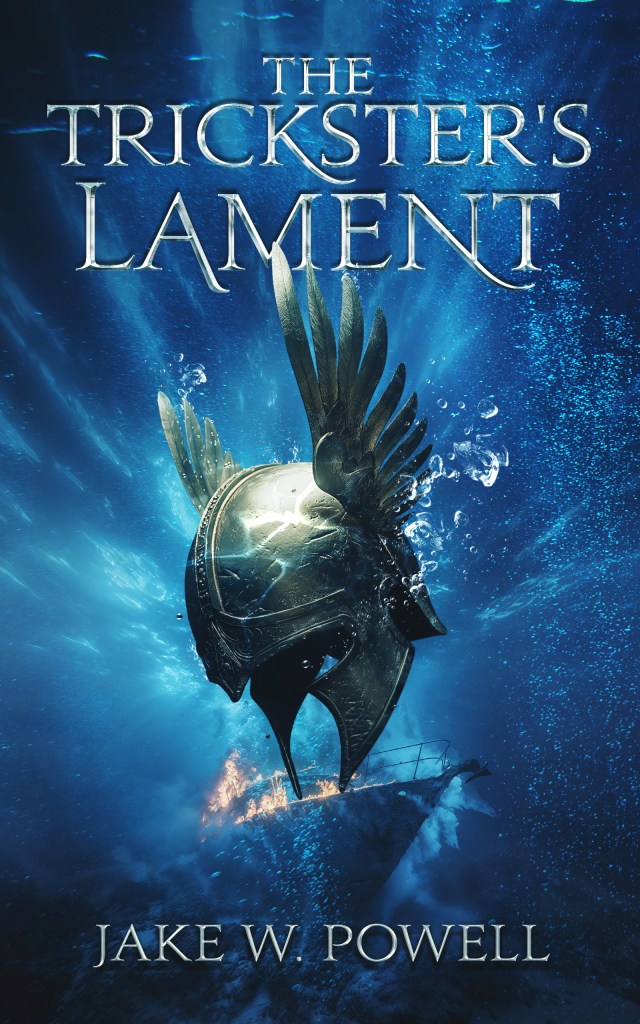
My latest book, The Trickster’s Lament, is currently available on Amazon in both Kindle and paperback format.

“Hermes is not having the best time. He walks a fine line, and his duty as messenger of Olympus weighs heavily on him. Being a god in the modern age means living in a world that no longer believes in gods. How much can one deity accomplish when no one respects him anymore? And why do his instincts tell him that he, the son of Zeus, is losing favor with his own family?

Tensions abound. The upstart Young Gods play dangerous games using entire cities as their boards. Formless monsters strike from the nighttime shadows, terrorizing hapless mortals. Agents of rival pantheons scheme to thwart Olympus’ designs. In the thick of it all, Hermes does what he does best: trick, lie, and cheat his way to victory.

Many thanks for visiting my blog. I post updates on my writing career, I muse over storytelling and fiction, and I reflect on the curious and wonderful things in life.

Kid at Heart

What does it mean to be a kid at heart?

Probably not screaming when you don’t get dessert and walking into the house with mud covering your shoes.

“Kid at heart” is one of those curious expressions we use and don’t give much thought to. There’s a general consensus that everyone knows what it means, but do we really know what it actually means? Kids are selfish, loud, noisy, sometimes smelly, and generally very expensive. They are also seen as innocent, full of potential, and the future of civilization. Which may or may not be true (especially that part about innocence).

So, what does it mean to be a “kid at heart?” Perhaps it simply means to not let go of youthful vigor and enthusiasm. To not be jaded, as kids so rarely are, and to see the world as something fresh and new every day, as kids so often do. Kids are as flawed as adults, so I don’t think we should see childhood as a perfect little utopia long lost, but rather as a time when we were willing to have a little more joy in our lives and a little more willingness to learn.

Many thanks for visiting my blog. I post updates on my writing career, I muse over storytelling and fiction, and I reflect on the curious and wonderful things in life.

What Do You Do With Your Time?

When I was a kid, the thing I wanted to be when I grew up was an “everyologist.” I wanted to do everything: science, literature, travel, architecture, painting, history. A five-year-old can easily imagine doing all those things. After all, he has all the time in the world. When a single year is one-fifth your total lifespan, the future stretches out to infinity.

Of course, our lives aren’t infinite, and as we grow up we learn that we don’t have all the time we want. I’m not an “everyologist,” though I do maintain a variety of interests and love to learn new things. I focus on my writing, my job, being with friends, reading, and living quietly. The more I learn I can’t do everything, the more I learn to focus on what I actually find worth doing.

I’d probably be a lousy architect, for one. And I’ve toyed with the visual arts, but it doesn’t hold my attention like writing does. And hey, I can always cheat: the Internet has lots of ways to learn and explore without actually, well, doing anything. It’s something, right?

But the Internet itself takes up our time (yes, I am aware of the irony of that statement on a blog). Too much? Well, that’s up to you. What else do you hope to do today?

All that being said, something else I’ve learned in life is that I have a lot more time than I sometimes suspect. It’s the things I feel I have to do – little things, like finish this book by such-and-such a date, or catch up on that TV series everyone is talking about – that eat away at our “free” time. It’s not really free if we treat our hobbies as a strange set of obligations. A career is one thing, but entertainment quite another. Anyway, the point I’m trying to make is that viewing our lives from new angles reveals that we don’t need much to fill up our time in a satisfying way.

I’m not a master of everything, and I’m okay with that. I have time enough for what I enjoy.

Many thanks for visiting my blog. I post updates on my writing career, I muse over storytelling and fiction, and I reflect on the curious and wonderful things in life.

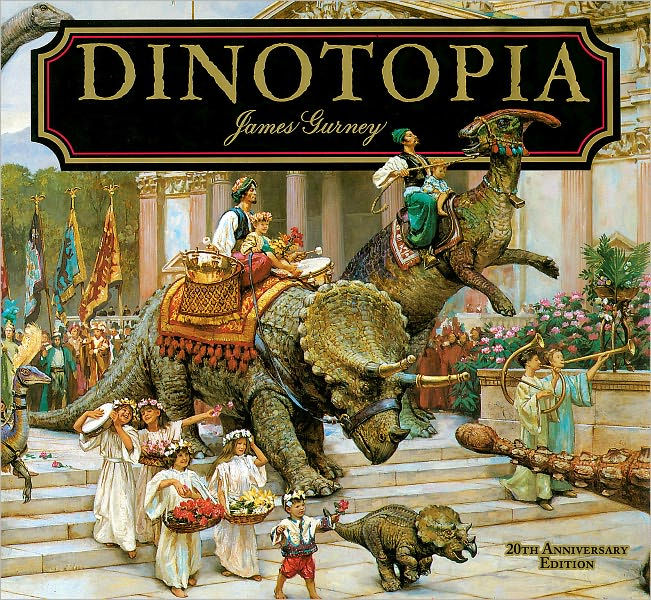
Remembering Dinotopia

Do you remember your favorite book from your childhood?

In truth, there are so many books I loved as a child that I can’t remember them all. I just remember the hours spent in my room, lost in words and pictures. But there is one that does stick out in my memory.

I have very fond memories of an illustrated book called Dinotopia: A Land Apart from Time. It has beautiful imagery, wonderful worldbuilding, and is a tour de force of creating a fully-realized fictional world, courtesy of National Geographic artist James Gurney.

Dinotopia is about an island hidden from the rest of the world where dinosaurs and humans live in peace and harmony. It is presented through the eyes of a 19th-century explorer and his son who are shipwrecked on the island and gradually become a part of its strange, beautiful, and intricate society. Gurney put a lot of thought into how such a world would function, not just the cities and the clothing and the festivals and the government, but such mundane things as bedding, waste disposal, and timekeeping.

And it’s gorgeous.

Remember what it was like to be a kid? When there were no strange grown-up responsibilities and nagging worries? Remember when nobody could take away your joy because you clung to it so fiercely? Dinotopia reminds me of those days, and it reminds me that we are still able to keep that joy throughout our lives.

Most of all, it reminds me how fun it is to curl up with a good book.

Many thanks for visiting my blog. I post updates on my writing career, I muse over storytelling and fiction, and I reflect on the curious and wonderful things in life.

Image: Cover of Dinotopia by James Gurney; Fair use

Snow and Me: A Complicated Relationship

Winter is approaching fast, and that means snow is on the way where I live. And snow means a clean split between those shivering with excitement and those groaning in despair.

Snow is weird. You want to paint a happy picture of winter fun? Throw in some snowmen and snowballs and snow forts. Want to paint a picture of a barren wasteland? Take OUT the snowmen and snowballs and snow forts.

Snow is great until it isn’t. Making snow angels and trekking through knee-deep drifts is all well and good until the melt seeps into your pants and you can’t feel your toes anymore. Or your fingers. Or your nose and ears. Hey, look! My pinkie just froze and snapped off! Isn’t this FUN?

Look at this magical winter world
Image by Bonnie Moreland; Public Domain Mark 1.0.

When I was a kid, I loved snow. Snow meant days off school and winter play and running around trying to come up with new ways to use the stuff. I loved playing in it and rolling huge snowmen. Well, more like snow boulders. We would just roll a bunch of big uber-snowballs and leave them scattered across the field. And I have fond memories of watching snow slipping off the tallest tree branches during the thaw. Snow is fun – when you don’t have responsibilities.

Nowadays, I prefer to stay inside and enjoy it from a safe distance.

You see, kids don’t have to drive in snow. Or walk down to the mailbox in it. They might have to shovel the driveway, but pay them in cash or candy and they’re happy enough. Too bad adults can’t pay themselves for cracking their spines lugging shovelfuls of very heavy frozen water. Growing up is a terrible thing, sometimes.

Ah, yes, snow is water. Which means it melts. And that brings on the SLUSH. Nobody ever mentions SLUSH when discussing winter. It’s a wintry wonderland, happy and clean and pretty! And then it all turns to SLUSH. Dirty, half-melted bogs of detritus covering roads and pooling in every yard and gutter. The aftermath of winter.

There are people who never see snow, for whom the concept is a distant fantasy. These people probably enjoy snow very much because they never have to deal with it. Snow is a pleasant image on TV screens and picture books and never, ever interferes with their lives. They can safely imagine what it would be like to be in the snow without having to actually endure it.

SOMEONE has to clean up this mess …
Image by jpctalbot; CC BY 2.0.

Yeah, you grow up and little fun things become big pains. Alas. But, snow IS pretty, I’ll give it that. And freshly fallen snow is one of the purest, cleanest things you can see in the world. And the morning after a snowfall is so quiet and peaceful and contemplative. Or eerie and spooky if you’re so inclined.

To all the people who live in regions where there is snow most, if not all of, the year, hats off to you. You are tougher and more patient than I am. I would say that snow only belongs in regions uninhabited by all life, but since humanity always seems keen on colonizing the most desolate and inhospitable regions on Earth, I guess that bus has long since passed. At least some people know how to make really pretty art out of it.

Snow is just weird. It’s this twisted dichotomy of life and death. Snow-covered landscapes are either joyful, festive scenes or just pits of death. Maybe a person’s changing attitude toward snow is some sort of reflection of our changing nature from childhood into adulthood.

Or maybe we’re all crazy and should just stay inside where it’s warm.

Enjoying my blog? Don’t want to miss a single post? Subscribe for updates on when I post and follow my writing career, musings on fiction and storytelling, and reflections about life in general!

Title Image: “snowman” by Dan’l Burton; Licensed under CC BY-SA 2.0.