Once Upon a Time, I Broke the Law

Have you ever unintentionally broken the law?

Yes. I cut off a police officer’s vehicle while driving. It was an unfortunate incident, one of those galling moments that ambushes and commandeers an otherwise perfectly fine day.

I was driving home from dinner with some friends. So far, so good. It was after dark, and I was driving back from a part of town I hadn’t been to before, so navigation was a touch difficult. And, since I know some of you are already thinking it, no, I wasn’t drunk. I don’t drink. Anyway, I missed a turn and my sense of direction went topsy-turvy. I pulled into a parking lot to get my bearings, realized I was only a mile from home, and, in my eagerness to reach said home, quickly turned left out into the street.

As these things tend to go, that was the same moment a police officer was driving along. I didn’t see her, and I cut her off. I’ll never know how close it actually was because I didn’t spot her car, but I did spot the flashing lights and pulled over.

The officer also thought I might be drunk. I replied in the negative, she wrote out my ticket, and then, since this was the first (and so far only) driving infraction I had received, she very generously informed me that I could go to the county courthouse and pay to have the ticket removed from my record. And because I am not in the habit of desiring bad things to show on my permanent record, I did so ASAP.

What? Were you expecting explosions and gunfire? I broke the law, I never said it was a scene out of John Wick. I cut off a police officer, got a ticket, paid the ticket off. The end. Always remember to pay attention when you’re driving.

***

Many thanks for visiting my blog. I post updates on my writing career, I muse over storytelling and fiction, and I reflect on the curious and wonderful things in life.

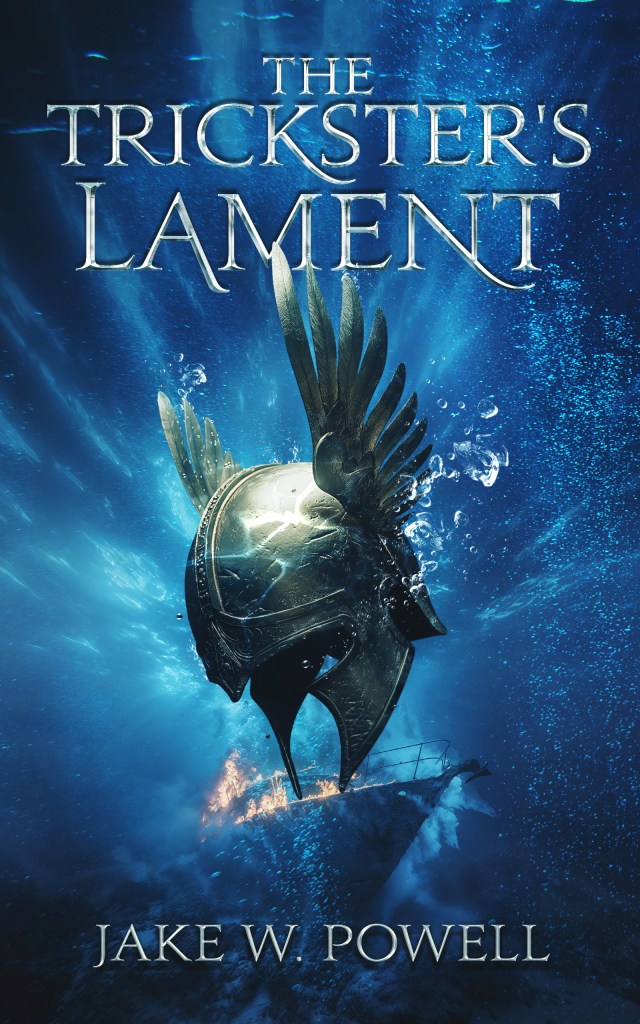
“Hermes is not having the best time. He walks a fine line, and his duty as messenger of Olympus weighs heavily on him. Being a god in the modern age means living in a world that no longer believes in gods. How much can one deity accomplish when no one respects him anymore? And why do his instincts tell him that he, the son of Zeus, is losing favor with his own family?

Tensions abound. The upstart Young Gods play dangerous games using entire cities as their boards. Formless monsters strike from the nighttime shadows, terrorizing hapless mortals. Agents of rival pantheons scheme to thwart Olympus’ designs. In the thick of it all, Hermes does what he does best: trick, lie, and cheat his way to victory.

Smartphones

The most important invention in your lifetime is…

The smartphone. Not the cellular phone in general, but specifically the smartphone with its advanced computing capabilities, online access and instant information retrieval.

Cell phones have been around a long time, before I was born, but the smartphone came into its own during my lifetime. Funny how science fiction seems to predict these things. Star Trek had those little handheld doodads that could scan anything and tell you if somebody was sick or healthy or mindmelded by Vulcans or whatever, and nowadays we have near-identical gadgets that can scan, measure distances, forecast the weather, monitor health, take pictures, and far too many other things.

Smartphones are interesting devices because few of their features are truly new, but they are devices that can do everything at once. That’s their significance – the number of features contained within one item. All that plus instant communication via phone call, text or email. That sort of versatility and the speed with which one can look up info and immediately apply it to the situation at hand make smartphones into what I consider the most important invention developed during my lifetime.

***

Many thanks for visiting my blog. I post updates on my writing career, I muse over storytelling and fiction, and I reflect on the curious and wonderful things in life.

“Hermes is not having the best time. He walks a fine line, and his duty as messenger of Olympus weighs heavily on him. Being a god in the modern age means living in a world that no longer believes in gods. How much can one deity accomplish when no one respects him anymore? And why do his instincts tell him that he, the son of Zeus, is losing favor with his own family?

Tensions abound. The upstart Young Gods play dangerous games using entire cities as their boards. Formless monsters strike from the nighttime shadows, terrorizing hapless mortals. Agents of rival pantheons scheme to thwart Olympus’ designs. In the thick of it all, Hermes does what he does best: trick, lie, and cheat his way to victory.

The Computers of Yesteryear

Write about your first computer.

The first time I ever used a computer was back in the ancient days of dial-up, GeoCities and flip phones. My parents owned a word processor. No, not a computer. A word processor. As in, an electronic box with a blank, black screen on which you could type sentences and do nothing else. No programs, no Internet, no background wallpaper. This was a simpler time.

So, there I was, a kid not even in the double digits who thought he was going to write his first novel. Never got past the second page, of course. Or I was writing backstories for my action figures and posting them on my bedroom corkboard. Either way, those were the days when I first began cutting my teeth as a writer.

My first personal computer, as in the first I actually owned, was a bigtime birthday gift from my parents. I was in sixth grade, I think. It was a ponderous contraption. Computers weren’t flat back then. Like the word processor, it was a large box filled with many arcane electronic secrets. More importantly, it came with a tower, which was the actual device doing all the processing, because these were the days when the average PC couldn’t contain all that delicious data in just one piece. It needed a second box to actually run the data, and mine needed a whole desk cabinet to be kept in.

And then there were floppy discs and compact discs. Old PCs used to have slots into which you slid the CD or floppy in order to access them. Do computers even still have slots anymore? I have no idea. What with streaming and online gaming and the Internet in general, I doubt they’re needed anymore.

Those were the days. I’m not sure what kind of days, exactly, but those were them. Just turning on a computer felt like an amazing feat accomplished. Before digital phones and instant online access, personal computers were lighthouses of knowledge and wonder. Nowadays, computers are rather mundane and even old-fashioned. But I remember.

***

Many thanks for visiting my blog. I post updates on my writing career, I muse over storytelling and fiction, and I reflect on the curious and wonderful things in life.

“Hermes is not having the best time. He walks a fine line, and his duty as messenger of Olympus weighs heavily on him. Being a god in the modern age means living in a world that no longer believes in gods. How much can one deity accomplish when no one respects him anymore? And why do his instincts tell him that he, the son of Zeus, is losing favor with his own family?

Tensions abound. The upstart Young Gods play dangerous games using entire cities as their boards. Formless monsters strike from the nighttime shadows, terrorizing hapless mortals. Agents of rival pantheons scheme to thwart Olympus’ designs. In the thick of it all, Hermes does what he does best: trick, lie, and cheat his way to victory.

Ranting about Planned Obsolescence

If you could un-invent something, what would it be?

I must warn you, today is something of a rant. Take it as you will.

Planned obsolescence. Machines nowadays, especially electronics, are designed to last only a certain number of years before needing to be replaced. If I could go back in time and unmake this form of technological “innovation,” I would.

I mean, having to buy a new computer or mobile phone every few years is a hassle of money and time. I try to keep mine as long as possible, defying their gradual decline. I like things to be permanent. I like technology to be supportive, not a safety net with a big hole cut in the middle.

What happens if the phone factory collapses into rubble or all the schematics needed to make the hottest new model are lost? Then we’re stuck with old phones that will eventually no longer receive updates and stop working properly, and we won’t have a way to replace them with the new, fancy-schmancy versions. Then society collapses, and we’re all back to the Stone Age because our technology is no longer built to last. This is how Mad Max really starts, people!

… All joking aside, I really don’t like planned obsolescence. I believe it to be detrimental to technological progress and a real pain in the neck for ordinary folks. You could say that I hope it one day … becomes obsolete.

***

Many thanks for visiting my blog. I post updates on my writing career, I muse over storytelling and fiction, and I reflect on the curious and wonderful things in life.

“Hermes is not having the best time. He walks a fine line, and his duty as messenger of Olympus weighs heavily on him. Being a god in the modern age means living in a world that no longer believes in gods. How much can one deity accomplish when no one respects him anymore? And why do his instincts tell him that he, the son of Zeus, is losing favor with his own family?

Tensions abound. The upstart Young Gods play dangerous games using entire cities as their boards. Formless monsters strike from the nighttime shadows, terrorizing hapless mortals. Agents of rival pantheons scheme to thwart Olympus’ designs. In the thick of it all, Hermes does what he does best: trick, lie, and cheat his way to victory.

When AI Slop Presents a Cunning Opportunity…

Here’s a business idea for the modern age.

AI looms over us all like a brooding shadow. Fears of AI replacing human-created novels, magazines, photography, illustrations and more have wormed their way into people’s minds.

“Human-created.” That gives me an idea. I bet I could do something with that.

The surge of AI content isn’t new. In fact, it is very similar to the rise of factory-made goods during and immediately after the Industrial Revolution. Mass-produced furniture, mass-produced clothing, mass-produced vehicles, mass-produced toys … The list goes on.

And now, in this present age, we have the advent of mass-produced media. AI-generated books by the hundreds. Essays written by a computer trained on patterns and Internet-scouring. Art produced in seconds by an artificial mind.

Horrific? Maybe. But if history told us something about mass production, it is that the value of bespoke goods subsequently became much, much higher.

AI slop is all the same. It blends together, united by bland, tedious styles that bear little semblance to the elaborate creativity of the human mind. That makes human-made art and writing valuable. And if AI slop becomes the norm, if large businesses make extensive use of it, than a new niche market opens up.

Bespoke entertainment. Non-AI media. The personal touch of a living person. Stories and art pieces created by human minds for human minds.

It’s not a new business. People have been publishing books for centuries. People have been drawing pictures for millennia. They have charged money for both.

But if AI content becomes the norm, then human-made content becomes rarer. Skilled employees are being laid off by big businesses in favor of replacing their skills with cheaper AI. If I was a small to medium-sized business owner, I’d be snapping up as many of those people as possible. The value of their skills is going to increase.

A suit custom-made for an individual, crafted by the hands of skilled labor, demands a higher price than a generic suit made in a factory. A custom car is more expensive than a basic model.

Imagine then, the value of a book, a magazine, a comic, a painting, a textbook that, in an age where AI-generation is the norm, has been created personally by a living, breathing person.

That’s not a fear. That’s an opportunity.

***

Many thanks for visiting my blog. I post updates on my writing career, I muse over storytelling and fiction, and I reflect on the curious and wonderful things in life.

“Hermes is not having the best time. He walks a fine line, and his duty as messenger of Olympus weighs heavily on him. Being a god in the modern age means living in a world that no longer believes in gods. How much can one deity accomplish when no one respects him anymore? And why do his instincts tell him that he, the son of Zeus, is losing favor with his own family?

Tensions abound. The upstart Young Gods play dangerous games using entire cities as their boards. Formless monsters strike from the nighttime shadows, terrorizing hapless mortals. Agents of rival pantheons scheme to thwart Olympus’ designs. In the thick of it all, Hermes does what he does best: trick, lie, and cheat his way to victory.

Lifetime Plans Within My Lifespan

Do you spend more time thinking about the future or the past? Why?

Time speeds up as we get older. As a kid, I could never understand how short our lives truly are. But that’s a kid’s pleasure and privilege – his whole life is spread out before him. Now, as I reach middle age, I find myself thinking more and more about the future, about the things I want to do, the things I can do and the things I might not be able to do.

Life is many things. You can’t sum it up in a sentence, but here’s one that at least defines one of its many facets: Life is something we must try to manage wisely. Time is a pesky resource that defies attempts to buy it back, reinvest or hoard. It scoffs at being treated like gold or oil. You can’t get more of it, ever.

So, when I think about my life, I think about the future. I think about my plans. I work toward accomplishing my goals. And yet …

I’m also learning to hold my plans loosely. Things change for both the better and the worse. Life is dynamic, and if we can’t be flexible, we’ll break under the stress. So, I plan, but I don’t keep those plans set in stone. Sometimes, I have to adjust or make sacrifices. The future is an unknown, and thinking I know what I will do tomorrow is self-deception. I don’t know. I can plan ahead, but I can’t ever be sure that tomorrow will turn out how I think it will.

***

Many thanks for visiting my blog. I post updates on my writing career, I muse over storytelling and fiction, and I reflect on the curious and wonderful things in life.

“Hermes is not having the best time. He walks a fine line, and his duty as messenger of Olympus weighs heavily on him. Being a god in the modern age means living in a world that no longer believes in gods. How much can one deity accomplish when no one respects him anymore? And why do his instincts tell him that he, the son of Zeus, is losing favor with his own family?

Tensions abound. The upstart Young Gods play dangerous games using entire cities as their boards. Formless monsters strike from the nighttime shadows, terrorizing hapless mortals. Agents of rival pantheons scheme to thwart Olympus’ designs. In the thick of it all, Hermes does what he does best: trick, lie, and cheat his way to victory.

My Freeway Billboard

If you had a freeway billboard, what would it say?

“LOOK OUT!”

Gotta keep drivers on their toes, y’ know.

***

If this made you chuckle, consider checking out my other blog posts, which are a tad longer but no less entertaining (probably).

Thoughts on Living a Long Life

I’d be lying if I said I didn’t care if I live a long life so long as it was a “meaningful” or “productive” one. The survival instinct is strong. I want to live as long as I am able to because I value my life, I don’t want to sadden my friends and family, and I enjoy life. And even if life were miserable and burdensome, I would still want to live on, if not for my own sake, then for the sake of others.

And yet, the issue is more complex than that, because I also believe that better a short and healthy life than a long and poor one. To live 90 years and have half those years be spent in perpetual sickness brought on by poor life choices or chronic illness would be a terrible thing. Would I rather I spent my days in and out of the hospital like a revolving door?

It’s easy to be glib with phrases like “I would rather die” when battered by life, but the reality is that the vast majority of humanity wants to keep living regardless of quality of life. Life in and of itself matters.

To the extent upon which it depends on my choices, I want to live a long life. I want to live healthily and happily. And ultimately, I want to live, period. In suffering and in happiness, I want to live.

Life is a chain reaction. Our lives create ripples that touch others and, to perhaps an even greater degree, so do our deaths. Life is lived not only for myself, but for those around me. Even strangers are affected by my life, and mine by theirs. Not something to take lightly.

Ultimately, the concept of a long life is one of ups and downs, struggles and victories, joys and sorrows. Life is meant to be lived, for however long we are on this Earth.

***

Many thanks for visiting my blog. I post updates on my writing career, I muse over storytelling and fiction, and I reflect on the curious and wonderful things in life.

“Hermes is not having the best time. He walks a fine line, and his duty as messenger of Olympus weighs heavily on him. Being a god in the modern age means living in a world that no longer believes in gods. How much can one deity accomplish when no one respects him anymore? And why do his instincts tell him that he, the son of Zeus, is losing favor with his own family?

Tensions abound. The upstart Young Gods play dangerous games using entire cities as their boards. Formless monsters strike from the nighttime shadows, terrorizing hapless mortals. Agents of rival pantheons scheme to thwart Olympus’ designs. In the thick of it all, Hermes does what he does best: trick, lie, and cheat his way to victory.

Echoes of the Past: Cities I Want to Visit

What cities do you want to visit?

I would travel everywhere in the world if I could. I love to travel and see new places and meet new people. Some call it “expanding your horizons,” but for me, it’s not as much a matter of pursuing personal growth as it is the fact I’m just curious. I want to know things. I want to see new things.

What cities do I want to visit?

  1. Kyoto. One of Japan’s most ancient cities. Medieval Japanese architecture is beautiful and fluid, like water frozen in time. I want to visit its oldest sites, the temples and castles, and proudly say that I have visited this gorgeous city.
  2. Vienna. I’ve heard good things about Vienna. I greatly desire to see its palaces and cathedrals and drink in the city’s memories. I’ve never been to Austria, and the chance to visit is one that I wouldn’t pass up.
  3. Paris. Of course, everyone wants to visit Paris. Not the Eiffel Tower, though. I’ve been to plenty of tall places and am not interested in Paris’s biggest cliche. The City of Lights has plenty else to explore. I’d love to see it all.

Looking at this list, I suppose what I’m most interested in when visiting any city is its history. The oldest buildings, the most revered places. Older districts always seem to retain a city’s original identity, what makes it different from the others. Echoes of the past. That’s what I want to see.

***

Many thanks for visiting my blog. I post updates on my writing career, I muse over storytelling and fiction, and I reflect on the curious and wonderful things in life.

“Hermes is not having the best time. He walks a fine line, and his duty as messenger of Olympus weighs heavily on him. Being a god in the modern age means living in a world that no longer believes in gods. How much can one deity accomplish when no one respects him anymore? And why do his instincts tell him that he, the son of Zeus, is losing favor with his own family?

Tensions abound. The upstart Young Gods play dangerous games using entire cities as their boards. Formless monsters strike from the nighttime shadows, terrorizing hapless mortals. Agents of rival pantheons scheme to thwart Olympus’ designs. In the thick of it all, Hermes does what he does best: trick, lie, and cheat his way to victory.

Foxes in the Neighborhood

Do you ever see wild animals?

Animals have a way of sneaking into civilized areas. It’s hard to visit a place where there aren’t any animals at all, and if you do, it’s probably a place you shouldn’t be visiting if you value your health.

Living in a small town, I see my fair share of wildlife. There are, of course, the usual suspects – squirrels, crows, ravens, and various buzzing insects – but I have very rarely had the privilege of spying a deer warily crossing the street at dusk or dawn.

However, my most notable animal encounters were with the same animal: red foxes. Twice, I’ve seen them. Heck, it could have been the same fox. Both times, the bold beast was out in the open in early morning, fearless as could be, trotting across the plaza without a care in the world. Beautiful creatures, with fine, red-orange coats, and clearly well-fed and healthy. I imagine foxes are a lot like coyotes, making use of the garbage that humans throw out.

They were memorable moments. It’s strange to think of animals like foxes and deer as common in the U.S., and yet not see them very often. Unless you going to work early, like I do, you miss out on opportunities to witness them going about their day. But it’s lovely when you get the chance.

***

Many thanks for visiting my blog. I post updates on my writing career, I muse over storytelling and fiction, and I reflect on the curious and wonderful things in life.

“Hermes is not having the best time. He walks a fine line, and his duty as messenger of Olympus weighs heavily on him. Being a god in the modern age means living in a world that no longer believes in gods. How much can one deity accomplish when no one respects him anymore? And why do his instincts tell him that he, the son of Zeus, is losing favor with his own family?

Tensions abound. The upstart Young Gods play dangerous games using entire cities as their boards. Formless monsters strike from the nighttime shadows, terrorizing hapless mortals. Agents of rival pantheons scheme to thwart Olympus’ designs. In the thick of it all, Hermes does what he does best: trick, lie, and cheat his way to victory.