
Delving into the Unreal: Taking Fantasy Seriously

Does the fantasy genre matter?

Let’s be honest. With a question like that, and the fact that my blog is subtitled “Writer of Modern Day Fantasy,” you can pretty easily guess that the answer is, “Yes.” But, hey, did I catch your attention? I did? Good. Let’s dive into it, then.

Fantasy is an important genre. Myths and legends have existed for almost as long as humankind has. There is an almost natural urge in people to invent and make up lands, species, events, and other such things that don’t exist in nature. The urge to create things that defy natural law: flying carpets, giants, dragons, dryads, genies, wishing stars, talking puppets, elves, hobbits, fairies, people the size of your thumb, people as tall as a mountain, alien worlds, life on the moon, and so on and so on. The earliest myths probably were meant to explain phenomena that man couldn’t yet fully understand, like the weather or earthquakes. But even after science has offered its explanations, the fantasies endure. Do old habits die hard? Or maybe we need fantasy in our lives.

Consequently, fantasy is a versatile thing. At its heart, it is the telling of things that not only don’t exist, but can’t exist. There are no elves in the forest. There are no genies trapped in bottles. There is no Fountain of Youth or cities at the bottom of the ocean. But the stories are still told.

For a long time, though, there was a problem.

For the last century or so, fantasy got a bad rap. It was viewed as this sort of nerdish subject that is impractical and of no relevance to “real life.” Dungeons & Dragons was the epitome of loser geek culture for decades. It was a “loser” subject because, in part, it was something that wasn’t real – but people took it so seriously! Why make such a big fuss over the unreal? Why obsess over the rules for a game about fighting made-up creatures? If you’re going to obsess over statistics, at least apply that obsession to football and baseball, not orcs and hobgoblins!

For many people, deriving so much enjoyment from something made-up is just plain childish. Oh, when we are children, it’s fine to enjoy stories of knights versus dragons. Fairy tales are quaint little things that amuse us when we’re young. Then we grow up and enter the serious real world where we need to be interested in grown-up things. Like cars and sports and art and the latest celebrity gossip. You know, important stuff.

That association with the immature has been a stain on fantasy’s reputation for a long time, as well as its sister genre, science fiction. The dominions of nerds and other people who can’t handle reality. There were exceptions, of course. Star Wars, for example, was a major blockbuster in 1977. But by and large, fantasy movies and books and games were strictly niche. There was an audience, but a highly specific one.

Then things changed.

I think the Lord of the Rings film trilogy in the early 2000s was the big turning point. Here was a fantasy series with major, respected stars that took itself seriously. It had a big budget, it was being produced by a major studio, it had marketing and advertising out the wazoo. The critics liked it. It was art.

Suddenly, fantasy lost its stigma. It wasn’t so bad to admit you liked the genre.

Others followed. Game of Thrones was a biggie. And there was Stranger Things, which proudly wore its 1980s nostalgia on its sleeve. And what was big in the 1980s? Yup, Dungeons & Dragons. Speaking of which, a Dungeons and Dragons movie released last year was warmly received. Oh, how the tables had turned!

The fact is, there are lots of people who like the unreal. They like to step away from reality for a few hours. It is called escapism. Personally, I think part of fantasy’s bad reputation is that escapism is confused with retreat. One is the willingness to step away from your problems or worries for a little while to refresh yourself. The other is an ultimately selfish choice to ignore one’s real-life obligations in favor of never leaving the fantasy. But many non-fantasy fans view the genre strictly through the latter lens. A bunch of guys and gals without jobs living in their parents’ basements reading silly books about silly people in silly lands. Fantasy is for the weak, for people can’t handle their own responsibilities.

It’s not fair, really. J. R. R. Tolkien wrote fantasy, after all. You know, the highly respected scholar and linguist? A man with a very productive and well-balanced life? And it gets more unfair.

So, fantasy has hit it big, as I just mentioned. And why did it hit it big? Well, a few successful movies certainly helped. But also, you know, the average person finds out that people like Henry Cavill and Joe Manganiello play stuff like D&D and Warhammer 40,000. Hey, they’re not nerds! Fantasy must be cool!

Sometimes, the best way to get people to take something seriously is to find the right spokesperson. All this time, fantasy just needed better PR.

It worked. Fantasy is widely accepted now. People aren’t ashamed to say that they like it. Nerds aren’t social pariahs. Heck, most of them are running major corporations. And the people writing those hit fantasy movies? They’re nerds, too. That’s the other big shift in the fantasy genre in mainstream culture. Four, five decades ago, fantasy films and TV shows were mainly being written by people who saw it as harmless, inconsequential fun. But the people who grew up with those shows and films, the people who fell in love with them, are the ones calling the shots now. And their beloved childhood is anything but inconsequential. Fans tend to pour their hearts into their work, and the quality of the product (hopefully) goes up. The bigger budgets certainly help.

By and large, fantasy has found public acceptance. Fairy tales aren’t just for kids anymore.

But the question posed at the beginning of this article is only half-answered. Does fantasy matter? Yes, yes it does. Financially, socially, culturally, it matters very much. But why does it matter? And in what other ways does it affect us besides providing something to do on a Saturday night?

Stay tuned …

If you just so happen to be enjoying my blog, feel free to subscribe. I post updates on my writing career, I muse over storytelling and fiction, and I reflect on the curious and wonderful things in life.
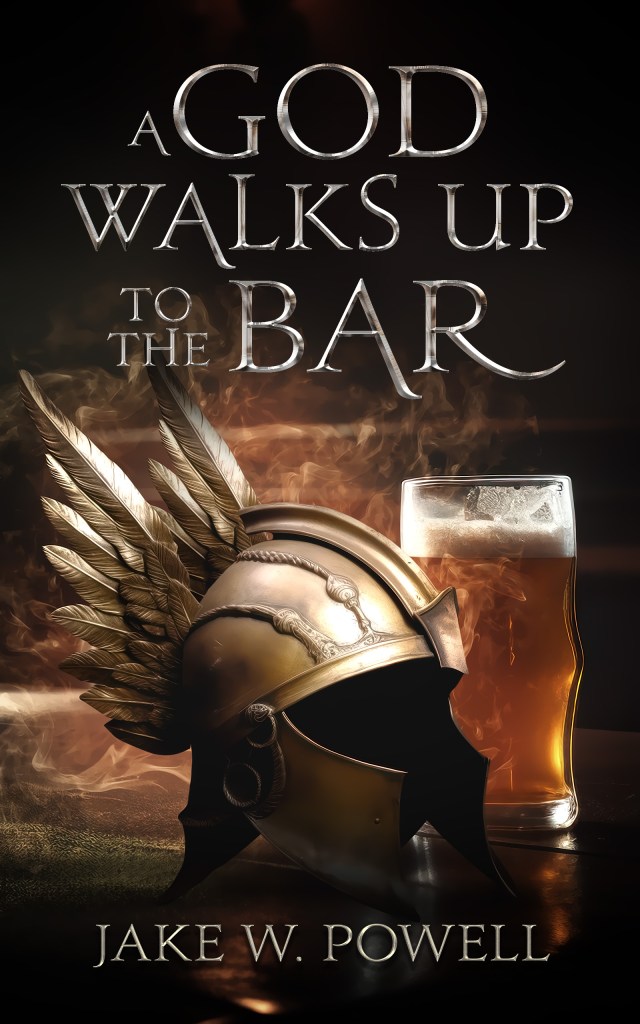
My first book, A God Walks up to the Bar, is available on Amazon.com. Witness the modern day adventures of the Greek god Hermes in a world much like our own – and with demigods, vampires, nymphs, ogres, and magic. The myths never went away, they just learned to move on with the times. It’s a tough job, being a god!

Image: “Dave Checking out the Perseid Meteor Shower at 10,000 feet“; Dave Dugdale; Licensed under CC BY-SA 2.0.

Escapism: A Necessary Respite

Escapist entertainment. What thoughts run through your head when you hear that phrase? Positive? Negative? Joy? Disapproval?

Escapism gets a bit of a bad rap. Life is serious business, and there’s a lot of work to be done. People are suffering. Injustice is rampant. And when are you going to pay those bills? Why are you wasting time on fluff?

But is escapism a bad thing?

Imagine yourself going up against the hard knocks of life every day. Life is a jerk. It hits you hard without letting up. And it doesn’t play fair. It pulls your hair, throws sucker punches, and it cheats you out of a rightful win.

Even when life lets up, work and responsibilities can weigh heavily. Imagine a rock on the coast, battered by the waves every hour of every day of every year. The rock stands tall for a time, but every wave takes a little bit of it into the sea. The stone is smoothed and weathered. Eventually, it wears away completely. That is a person who works and works and works, but never takes time for a moment’s respite. Life just … wears you down to nothing.

We need to escape, sometimes.

Some light reading, a silly movie, an action-filled comic book, a walk in the park, a thrilling sports activity. For someone somewhere in the world, they’re all ways to distance oneself from the daily grind and relax. They are ways to refresh the mind and body and forget about our troubles for a few precious moments. We need escapism for the sake of our sanity.

Escapist fiction allows us to suspend disbelief and accept that there can be stories that don’t have to reflect reality. Superman and James Bond and Indiana Jones aren’t high art, but they are fun. And what’s the point of entertainment that isn’t fun? There is art and literature that dwells on philosophical questions and searches for meaning in the tragedies of life, but here’s another nugget to chew on: Real life never goes away. It’s waiting for you right outside the door. There is plenty of time to dwell on the deep questions. But don’t we just want to – need to – take a break from it once in a while?

Ah, but here comes the counterpoint: Escapism is withdrawing from responsibility to society and ourselves. It’s evading the important things in life, the things that we must do to live healthily and productively. But all things in moderation. A life of nothing but escapist fantasy is as bad as a life of nothing but grim obligation to work.

Still, there’s a reason why people like fluff entertainment. There’s a reason why people want to laugh at silliness and cheer on the hero fighting the evil villain. Such stories are simple and inspiring. Why do you think cartoons and comics were thriving during the Great Depression? Or during the more recent Great Recession, for that matter? People need something good in their lives, and for many, that can only be found in stories. And it is a healthy thing, because people need hope. We all need a counterbalance against the mundane and dreary.

The greatest responsibility, then, of the escapist is to remember that there is a time and place for everything. A time to mourn, and a time to laugh. A time to work, and a time to play. But don’t forget to take a moment’s respite. You might need it more than you think.

Enjoying my blog? Don’t want to miss a single post? Subscribe for updates on when I post and follow my writing career, musings on fiction and storytelling, and reflections about life in general!

Image: “Pittsfield Hot Air Balloon Rally – 2006” by Heartlover1717; Licensed under CC BY-NC-ND 2.0.

The Myth of the Easy Masterpiece

We’ve all heard the glorious stories of the writer who dashed out a masterpiece over the course of a weekend, solicited it, and made big bucks. Or we hear about someone writing a book for kicks, posting in on Amazon, and suddenly getting offers from film studios to turn their sudden runaway success into a show. It’s a tempting motivation to become an author, or scriptwriter, or whatever. These guys made it. How hard can it be?

Pretty hard, actually. After all, we only hear about the successes. What about those stories written over a weekend that never took off? How many books on Amazon do you think there are that nobody’s ever read?

I don’t know where I first heard the story that the screenplay for Good Will Hunting was written by Matt Damon and Ben Affleck over a weekend. Probably one of those motivational stories my teachers told me as an example of how life doesn’t actually work. It’s not true, by the by. Matt Damon wrote the original 40-page script as a drama class project, then worked with Affleck on revising it into a full Hollywood script. So, no, they didn’t conjure a masterpiece out of thin air in just a couple days. The foundation was already there, and they still had to work hard to translate it from written word to big screen.

Hugh Howey wrote Wool as a one-off short story that he put up for sale on Amazon. And yes, it did become so successful that he ended up writing sequels and selling the film rights and getting a good deal out of the whole thing. But as unusual as the success of Wool is, it was still based on years of writing experience and hard work. Howey had already been a diligent writer long before he published Wool. The story may have been a one-off, but Howey’s efforts weren’t. He goes into detail at length about his writing on his own blog.

All of which is to say, if you hear about a runaway success, that success is probably the result of a lot of hard work, blood, sweat, and tears that rarely make their way into the story told in magazines. The humdrum routine of writing, or scripting, or painting, or sculpting, or whatever medium you can think of doesn’t usually make for a good story, after all. Customers want the end product. The tedious hours of chipping away at marble or revising a fourth draft aren’t what they’re buying. And, quite frankly, do they even need to know about all that sweat and work?

If you’re truly devoted to something, you’ll put in the effort necessary to see it through to completion. Writing isn’t a “get rich quick” scheme. In fact, it may be the worst method possible for getting rich quickly. Sure, there are plenty of authors out there who make a living off their books. Many of them are quite wealthy, even. But only because they work to an almost obsessive degree on their projects. They devote extreme amounts of time to writing to the near-exclusion of all else. That’s not the easy path to wealth.

So, no, there aren’t any “easy masterpieces” in the world. Just a lot of grunt work and diligence that is never seen by the public eye.

Do what you love, not what you think will make you rich. That’s one thing that can make life a bit easier.

The gods and beings of ancient myth never went away. They just moved on with the times.

My book, A God Walks up to the Bar, is currently available on Amazon.com. Venture into the world of the Greek god Hermes, a world filled with demigods, vampires, nymphs, ogres, magic, and trickery. It’s a tough job, being a god!

Enjoying my blog? Don’t want to miss a single post? Subscribe for updates on when I post and follow my writing career, musings on fiction and storytelling, and reflections about life in general!