My Top Ten Favorite Movies

WordPress’s daily prompt made me think long and hard today …

These are my top ten favorite movies (in no particular order):

Porco Rosso – One of Studio Ghibli’s lesser known creations, a lowkey, introspective movie set in 1930s Italy. The protagonist is an ace pilot cursed to have the face of a pig. Why? Well, symbolism abounds, as do themes of survivor’s guilt, redemption and freedom. Also beautiful flying scenes, as per Studio Ghibli’s usual standard.

The Count of Monte Cristo (2002) – A great adaptation of Alexandre Dumas’s classic tale of revenge and its consequences. Less character study and more swashbuckling action, but it’s very well-choreographed swashbuckling, and the movie has an overall more optimistic tone than the novel.

Disney’s Beauty and the Beast – I grew up with Disney and will always have a soft spot for its animated films from the 1990s, but this one is my favorite. If you had to tie me to a chair to watch a romance, make it this movie.

Coraline – And if you had to tie me to a chair to watch a spooky animated movie, make it this one. A children’s film that manages to avoid cheap jokes and talking down to its audience, and most importantly, can also be enjoyed by adults. Very bizarre and surreal in a way that still makes a lick of sense.

The Rocketeer – Good old-fashioned pulp fiction adventure, based on a comic book character that surprisingly was less than a decade old at the time. Man with jetpack fights mafia thugs and Nazis. Straightforward, upbeat, and refreshingly earnest compared to the sardonic self-commentary of many of today’s superhero films.

Stargate – Ancient aliens done right – as science fiction. Very good flick that doesn’t try to reinvent the wheel, it just fills itself with likeable characters fighting an eeeeevil villain amidst great special effects. Sparked off an even better television show that ranks among my favorite TV series.

John Wick – A bit of a cheat, since I like the entire series, but I’ll stick with the first one for the purpose of this list. After a decade of jitter cam action antics, filmmakers realized that they could make stylish, creative action sequences and keep the camera steady. The action (and violence) generally takes precedence over the story, but the story that we see is actually quite poignant and painful in its humanity, as many of the best action films tend to be.

Tombstone – A manly Western starring manly men with manly mustaches. Joking aside, it’s a great film for everyone. Based on real-life events surrounding 19th-century lawman Wyatt Earp’s time in the town of Tombstone, Arizona, this film is made and memorialized by its cast. Really, really great acting all around, dialogue that sticks in your brain, and memorably tense confrontations between heroes and villains. Only in this film could the words, “Well, bye,” be made a stupendously amazing line.

The 7th Voyage of Sinbad – We’re going old school now. A 1950s fantasy flick with special effects by Ray Harryhausen, the man, the myth, the legend. Modern visual effects wouldn’t exist without him, nor half the monster designs you and I take for granted these days. The visuals are the real star here; the story is typical “Arabian Nights” fare: Sinbad the sailor fights evil sorcerer to save princess. Features a fire-breathing dragon, perpetually angry cyclops, and most famously, a swordfight with a living skeleton. This is the foundation of modern fantasy visuals as we know it, you young whippersnappers!

Hook – This movie’s premise is very bold: Tell a story about Peter Pan growing up. Sounds like a disaster on paper (and to be fair, this movie is a bit divisive, I understand), but I always enjoyed it. Robin Williams makes the film work with his acting chops, and the film is more grounded in James Barrie’s original story than you might suspect, and indeed more so than many later Peter Pan adaptations. Dustin Hoffman’s Captain Hook is a treat – even if he’s not my favorite version of Hook, he serves as a great foil to Williams. Also probably my favorite realization of Neverland on film – colorful, fantastical and like something out of a storybook.

***

Many thanks for visiting my blog. I post updates on my writing career, I muse over storytelling and fiction, and I reflect on the curious and wonderful things in life.
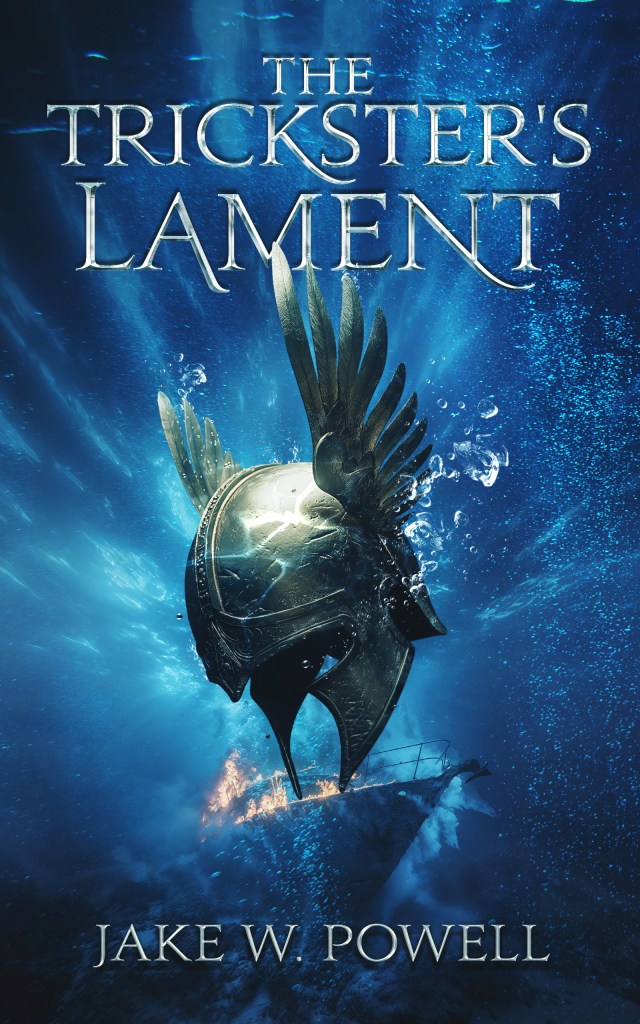
“Hermes is not having the best time. He walks a fine line, and his duty as messenger of Olympus weighs heavily on him. Being a god in the modern age means living in a world that no longer believes in gods. How much can one deity accomplish when no one respects him anymore? And why do his instincts tell him that he, the son of Zeus, is losing favor with his own family?

Tensions abound. The upstart Young Gods play dangerous games using entire cities as their boards. Formless monsters strike from the nighttime shadows, terrorizing hapless mortals. Agents of rival pantheons scheme to thwart Olympus’ designs. In the thick of it all, Hermes does what he does best: trick, lie, and cheat his way to victory.

When I Was Born …

… the world changed forever.

The Berlin Wall came down. I’m fairly certain this was a direct consequence of my birth.

The original Michael Keaton Batman movie opened in theaters. Also a direct consequence of my existence, no doubt.

Disney’s The Little Mermaid also opened in theaters. I claim direct responsibility for the Disney Renaissance, thank you.

The first commercial internet service providers became available. Because of me, of course.

Can you guess what year I was born?

Many thanks for visiting my blog. I post updates on my writing career, I muse over storytelling and fiction, and I reflect on the curious and wonderful things in life. With a dash of dry humor.

It’s Only an Event if It Doesn’t Happen Every Day: My Thoughts on Crossovers

Crossover, crossovers. People from different worlds smashing into each other. Different genres, different styles, different stories. Throw them in a mixer and see what happens.

What’s the appeal? I’d say it comes down to simple curiosity. What would happen if Superman met Captain America? How would Greek myths get on with Chinese myths? Can a pirate really defeat a ninja?

It’s a popular trend these days. Maybe not so much in novel writing, but movies love them, video games really love them, and comics are practically built on them. And they’re fun. But there’s something about these companies’ strategy that is missing the point of a crossover. Every time one occurs (multiple times a year), it’s built up as the MOST INCREDIBLE THING EVER. And people get excited sure. But not like they used to.

Way back in 2008, when Nick Fury stepped out of the shadows at the end of the first Iron Man film to talk about “the Avenger Initiative,” fans squealed with joy and anticipation. Nowadays, the next big Marvel crossover film elicits a non-committal “Eh,” at best.

As a writer, my professional opinion is that crossovers are not easy to pull off anymore, largely because they’ve been done to death.

And that, I think, is the strength and weakness of the concept. Crossovers are big events. They’re something special, something noteworthy. Two completely different worlds colliding is interesting, and fans are curious to see if it can be pulled off. Batman and Elmer Fudd? Yeah, it’s been done, and it won’t be done again because you can’t capture that kind of lightning in a bottle twice. Crossovers are like a fine wine, best in small sips. Overuse just makes you feel overwhelmed. Try imagining a world where the Super Bowl happens every month.

Another example: Back in the 1980s, Mario and Sonic the Hedgehog were the pinnacle of dueling video game mascots. Who was better? Who was cooler? Then, one fateful day, they appeared together in the same game. Awesome! But they’ve done so again and again, and what was something that nobody ever saw coming is now ho-hum, another day in the neighborhood. Video game characters appear in each other’s franchises all the time, now. It’s practically an industry standard.

As it turns out, such “events” are best when served rare. Very rare. Otherwise, they aren’t events. They’re business as usual.

Many thanks for visiting my blog. I post updates on my writing career, I muse over storytelling and fiction, and I reflect on the curious and wonderful things in life.

Delving into the Unreal: Taking Fantasy Seriously

Does the fantasy genre matter?

Let’s be honest. With a question like that, and the fact that my blog is subtitled “Writer of Modern Day Fantasy,” you can pretty easily guess that the answer is, “Yes.” But, hey, did I catch your attention? I did? Good. Let’s dive into it, then.

Fantasy is an important genre. Myths and legends have existed for almost as long as humankind has. There is an almost natural urge in people to invent and make up lands, species, events, and other such things that don’t exist in nature. The urge to create things that defy natural law: flying carpets, giants, dragons, dryads, genies, wishing stars, talking puppets, elves, hobbits, fairies, people the size of your thumb, people as tall as a mountain, alien worlds, life on the moon, and so on and so on. The earliest myths probably were meant to explain phenomena that man couldn’t yet fully understand, like the weather or earthquakes. But even after science has offered its explanations, the fantasies endure. Do old habits die hard? Or maybe we need fantasy in our lives.

Consequently, fantasy is a versatile thing. At its heart, it is the telling of things that not only don’t exist, but can’t exist. There are no elves in the forest. There are no genies trapped in bottles. There is no Fountain of Youth or cities at the bottom of the ocean. But the stories are still told.

For a long time, though, there was a problem.

For the last century or so, fantasy got a bad rap. It was viewed as this sort of nerdish subject that is impractical and of no relevance to “real life.” Dungeons & Dragons was the epitome of loser geek culture for decades. It was a “loser” subject because, in part, it was something that wasn’t real – but people took it so seriously! Why make such a big fuss over the unreal? Why obsess over the rules for a game about fighting made-up creatures? If you’re going to obsess over statistics, at least apply that obsession to football and baseball, not orcs and hobgoblins!

For many people, deriving so much enjoyment from something made-up is just plain childish. Oh, when we are children, it’s fine to enjoy stories of knights versus dragons. Fairy tales are quaint little things that amuse us when we’re young. Then we grow up and enter the serious real world where we need to be interested in grown-up things. Like cars and sports and art and the latest celebrity gossip. You know, important stuff.

That association with the immature has been a stain on fantasy’s reputation for a long time, as well as its sister genre, science fiction. The dominions of nerds and other people who can’t handle reality. There were exceptions, of course. Star Wars, for example, was a major blockbuster in 1977. But by and large, fantasy movies and books and games were strictly niche. There was an audience, but a highly specific one.

Then things changed.

I think the Lord of the Rings film trilogy in the early 2000s was the big turning point. Here was a fantasy series with major, respected stars that took itself seriously. It had a big budget, it was being produced by a major studio, it had marketing and advertising out the wazoo. The critics liked it. It was art.

Suddenly, fantasy lost its stigma. It wasn’t so bad to admit you liked the genre.

Others followed. Game of Thrones was a biggie. And there was Stranger Things, which proudly wore its 1980s nostalgia on its sleeve. And what was big in the 1980s? Yup, Dungeons & Dragons. Speaking of which, a Dungeons and Dragons movie released last year was warmly received. Oh, how the tables had turned!

The fact is, there are lots of people who like the unreal. They like to step away from reality for a few hours. It is called escapism. Personally, I think part of fantasy’s bad reputation is that escapism is confused with retreat. One is the willingness to step away from your problems or worries for a little while to refresh yourself. The other is an ultimately selfish choice to ignore one’s real-life obligations in favor of never leaving the fantasy. But many non-fantasy fans view the genre strictly through the latter lens. A bunch of guys and gals without jobs living in their parents’ basements reading silly books about silly people in silly lands. Fantasy is for the weak, for people can’t handle their own responsibilities.

It’s not fair, really. J. R. R. Tolkien wrote fantasy, after all. You know, the highly respected scholar and linguist? A man with a very productive and well-balanced life? And it gets more unfair.

So, fantasy has hit it big, as I just mentioned. And why did it hit it big? Well, a few successful movies certainly helped. But also, you know, the average person finds out that people like Henry Cavill and Joe Manganiello play stuff like D&D and Warhammer 40,000. Hey, they’re not nerds! Fantasy must be cool!

Sometimes, the best way to get people to take something seriously is to find the right spokesperson. All this time, fantasy just needed better PR.

It worked. Fantasy is widely accepted now. People aren’t ashamed to say that they like it. Nerds aren’t social pariahs. Heck, most of them are running major corporations. And the people writing those hit fantasy movies? They’re nerds, too. That’s the other big shift in the fantasy genre in mainstream culture. Four, five decades ago, fantasy films and TV shows were mainly being written by people who saw it as harmless, inconsequential fun. But the people who grew up with those shows and films, the people who fell in love with them, are the ones calling the shots now. And their beloved childhood is anything but inconsequential. Fans tend to pour their hearts into their work, and the quality of the product (hopefully) goes up. The bigger budgets certainly help.

By and large, fantasy has found public acceptance. Fairy tales aren’t just for kids anymore.

But the question posed at the beginning of this article is only half-answered. Does fantasy matter? Yes, yes it does. Financially, socially, culturally, it matters very much. But why does it matter? And in what other ways does it affect us besides providing something to do on a Saturday night?

Stay tuned …

If you just so happen to be enjoying my blog, feel free to subscribe. I post updates on my writing career, I muse over storytelling and fiction, and I reflect on the curious and wonderful things in life.

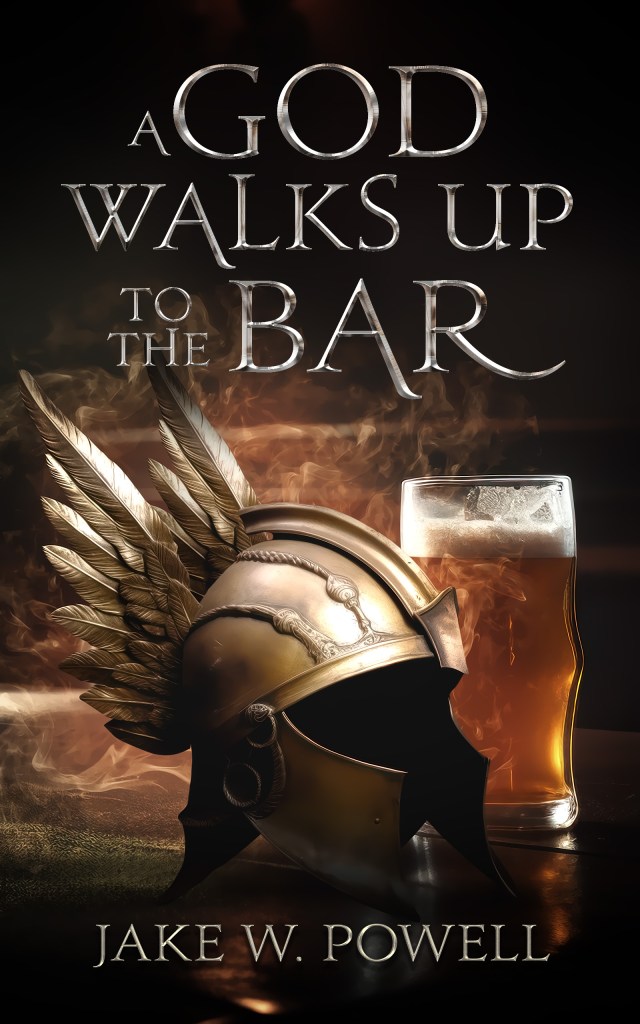
My first book, A God Walks up to the Bar, is available on Amazon.com. Witness the modern day adventures of the Greek god Hermes in a world much like our own – and with demigods, vampires, nymphs, ogres, and magic. The myths never went away, they just learned to move on with the times. It’s a tough job, being a god!

Image: “Dave Checking out the Perseid Meteor Shower at 10,000 feet“; Dave Dugdale; Licensed under CC BY-SA 2.0.

Blank Spaces of the Mind: How Do You Tell A Story Without Having to Tell Everything?

I like movies. I’m a visual person, and I enjoy seeing things portrayed on the screen. Little details are the most fun. Characters’ tics and interesting events happening in the background. Sometimes, I envy filmmakers. Creating their worlds are a little bit easier, because they can convey in a minute what can take a writer four or five paragraphs to communicate. ESPECIALLY when they are able to tell the story without a single word being said.

We writers, of course, don’t have that luxury. Books are nothing but words, which got me thinking: How do you show the reality of a story, that is, communicate character traits and worldbuilding details, when you can’t really show anything at all?

It’s a different game from simply describing a scene or a character. That’s to be expected. But where to stop? Where’s the line between “This is what Joe looks like and how he acts” and “This is Joe’s personality and character, let me tell you without ever referring to it again and thus making this paragraph pointless.”

So, I’ve thought about it, and here’s what I’ve come up with so far.

Stories are best told when the writer doesn’t need to explain everything. A good story unfurls through action, whether visual or written. Actions define a character, a group of characters, even a location. The way a person carries himself, dresses, talks – these all express relevant elements without the need for a mountain of exposition.

And they can be brief. For example: A wizard appears in the story. He dresses in fancy clothes and has clean, well-groomed hair. He talks formally with a condescending tone. He casually refers to esoteric subjects. He sniffs loudly whenever he disapproves of the other characters’ comments. He kills a wolf with a single, well-timed spell. Short, succinct statements that tell us what we need to know – and give us the freedom to paint a picture of the character in our minds. We don’t always have to go into detail about hair color, eye color, body type, or a detailed analysis of clothing. Heck, just the word “wizard” probably had you paint half the picture from a single word, didn’t it?

But then, another character brings in the Artifact of Doom for the wizard to identify. The wizard immediately panics and backs away, demanding that the object not be brought near him. Well, that tells us immediately that the Artifact of Doom is really bad news. If Mr. High-and-Mighty is scared, it just might be a serious problem for everyone.

So, yeah, books aren’t visual, but they can still tell a story without having to tell us everything. In short, leave some space for the reader. Now, I’m not going to say that I’m necessarily good at this as a writer. I’m still learning, but I’ve learned as much from reading as writing. And I get annoyed when books pause everything to describe the POV character’s emotional state or appearance in long, flowery detail. It just seems … excessive.

Maybe it’s just the mark my journalism classes left on me. I like simple and to-the-point. And I like to think that my readers can be trusted to have a little imagination to fill in the blank spaces of the mind that words can’t reach by themselves.

What are your thoughts? How do you think a story can “show, not tell?”

If you just so happen to be enjoying my blog, feel free to subscribe. I post updates on my writing career, I muse over storytelling and fiction, and I reflect on the curious and wonderful things in life.

Image: “New York City Street Scenes – Rainy Night on the Lower East Side” by Steven Pisano; Licensed under CC BY 2.0.