The Trickster’s Lament preview #2

Another glimpse of my novel-in-progress.

Don’t you just hate it when a plan falls apart? A simple museum heist has gone completely off the rails for Hermes. The trickster god better think fast.

I didn’t wait for more gunfire and sprinted out of their line of sight into a nearby gift shop. I vaulted the cashier’s desk and winded through the shelves of merchandise. As I did so, I felt a sudden and intense accumulation of magic behind me, a growing pressure that was followed by a violent rush of wind. The sensation swiftly changed from that of a strong gust to the feeling of barbed-wire digging into me. I dropped to the floor.

The clamor of the spell demolished the shop. Books, toys, mugs, and pens were caught up and eviscerated by a wind storm condensed into a narrow room-wide blade of fast-moving air. Metal shrieked as the spell sliced apart shelving. It traveled to the end of the room before it dissipated, leaving a deep gash in the wall.

Wind magic is hard. Controlling it with any degree of precision, let alone focusing it into a cutting edge, is notorious among mages for its difficulty. Most would-be practitioners either give up or lose limbs. These mercenaries were no amateurs. They also obviously had no interest in witnesses.

After the spell ran its course, I pushed myself to my feet and leapt up and over the pile of shredded debris. My foot caught on a piece of ripped cardboard, and I tripped. Four pops of a gun sounded behind me. One of the bullets caught me in the shin. As I regained my footing, centuries of discipline helped me to force the shock of pain to the fringes of my awareness. Another bullet did the proverbial whistle past my ear and kicked up a bit of plaster a few feet away.

Exiting the shop, I reached the second-floor rotunda overlooking the lobby. Speed was essential, so, without stopping, I rolled forward, defying the pain in my leg. I shapeshifted as I came out of the roll, landing as a tortoise whose inertia and smooth underside skidded me along the tile floor like a misshapen hockey puck. Shots aimed at human head height whizzed over me.

I came to a rest and peeked out of my shell. Three men exited the gift shop and proceeded cautiously, two of them with guns raised. Before they could spot me, I changed into a fly and circled behind them. Strong hands swiftly grabbed the pair of gunmen by the napes of their neck and slammed their heads together.

The mage spun around at the sound of my attack. He was dressed like the others – black body armor and balaclava, night vision goggles – but he carried no gun except a sidearm at his hip. His hands were stretched out with palms forward. He was furiously chanting to focus his magic. Not fast enough.

I swung one of the unconscious mercs into a wide arc. At the apex of the throw, I let go. The merc flew gracelessly into the mage. The man saw it and nimbly hopped aside, dodging entirely.

But I followed through the toss and kept spinning. I gripped the second merc with both hands and hurled him as hard as I could. It was a beautiful hit. Both bodies were lifted off the floor and traveled a perfectly horizontal trajectory into a wall.

With luck and medical attention, they would keep all their ribs intact.

More footsteps echoed in the museum’s open space. This was becoming annoying. I didn’t have the inclination to play soldier, and I was running out of time. I had to find Bast. She was still somewhere in the museum, and she had my prize in her hands. Catching up with her was my one and only priority. These thugs were a distraction, at best.

I gritted my teeth. She had better still be here.

Many thanks for visiting my blog. I post updates on my writing career, I muse over storytelling and fiction, and I reflect on the curious and wonderful things in life.
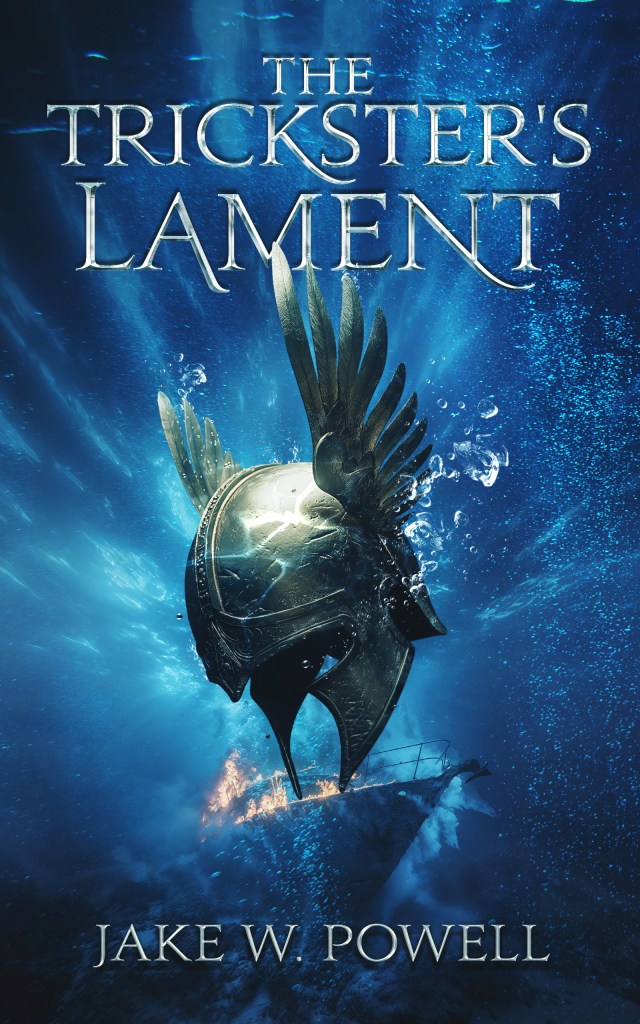
The Trickster’s Lament preview

Yes, indeed, I have been working on my second book all this time! And now that it is nearing completion, I’m happy to share a sneak peak of The Trickster’s Lament, continuation of the Greek god Hermes’ adventures in the modern world and sequel to A God Walks Up to the Bar.

In my long life, I’ve awakened to many unpleasant sensations. The awareness that I was drowning swiftly found its place as among the worst.

Consciousness returned slowly. My muddled mind tried to take stock of my surroundings, but failed to comprehend. And so, I obeyed my body’s first instinct, which was to open my mouth and take a deep breath. For that, I received a mouthful of water straight down my windpipe. I choked. The spasm triggered another reflexive breath and more water filled my lungs.

My eyelids snapped open, and I looked around in pain and mounting panic. I rotated my body down to look at the murky blackness beneath my feet, then upward toward the white sun splintered into fragments by the water’s rippling surface. I made frantically for that light, swinging my arms in wide strokes that strained my half-drowned body. Black dots skewered my vision, and every movement was agony. I was dying.

I couldn’t actually die from drowning, of course. One would think that would be an advantage. But my body wasn’t immune to harm, merely to death. I could feel the water in my lungs cutting off the flow of oxygen to my brain. I could feel my heartbeat slow as vital organs succumbed. I could feel every second of my body’s suffering. No, I wouldn’t die. I’d just be reduced to a limbo state, a piece of litter drifting along the currents.

I retched and vomited. A current pushed the warm mess back into my face. A painful twitch in my throat forced me to take another breath. The same water I’d ejected was sucked back in.

I felt a tinge of envy for mortals. Such a uniquely morbid sensation, dying but not being able to die. Feeling the blood in your veins pool and thicken into sludge, and your clogged respiratory system desperately tried to pump out water faster than it was taking it in. My skull felt like it was cracking apart as my brain functions collapsed. Pure animal instinct was all that kept me moving.

Dying, but unable to die. Lucky me.

Eyes bulging out of my head and white-hot pain searing every cell in my body, I broke the surface. Water and vomit erupted from my mouth in a geyser. For the next few moments, I just floated on the waves. My body needed time to heal itself and return to proper working order. My vision gradually cleared of fluttering black flecks, and my thoughts readjusted into more complex patterns than “Oh, dear Hera, I need to breathe.” While I waited for my strength to return, I looked about and saw only rolling waves and a pale sun winking from a cloud-streaked sky. No land was visible. I was alone in the Atlantic.

Many thanks for visiting my blog. I post updates on my writing career, I muse over storytelling and fiction, and I reflect on the curious and wonderful things in life.

Finding Humanity in Greek Myth

Achilles was a paragon of ancient Greek heroes. He was nigh-unkillable, an unstoppable juggernaut on the battlefield, bloodthirsty, battle-hungry, feared and respected in equal measure. So, what did this warrior do when he ended up on the losing side of a quarrel with the Mycenaean king Agamemnon during the Trojan War?

He ran to his mommy to cry on her shoulder.

Yes, really.

For all its larger-than-life characters and some truly surreal stories, there is a basic spark of humanity in Greek myth. That’s why people love it, I think. Heroes fight and conquer, sure, but they also cry, get frustrated, get tired, and pine for their loved ones. They feel anger, joy, regret, fear, love, pride, and just about everything else. At their core they are, in fact, people. Just people. Like you and me.

Why do old myths endure? I believe it is because they share universal human themes that we empathize with, even when we’re looking at them from atop our perch in the 21st century. Who hasn’t wanted to find a shoulder to cry on after losing a bitter argument, like Achilles did? How can we not feel a twinge of sorrow for Orpheus, who, after journeying into the underworld to retrieve his beloved Eurydice, felt just that slightest bit of doubt on whether she would follow him back and risked a glance over his shoulder, dooming himself to lose her forever?

Beneath the layers of the fantastic are stories that are very much human. People experiencing the hard knocks of life. And like in real life, sometimes they triumph over adversity … and sometimes they don’t.

The funny thing is, the Greek gods have as much humanity in them as the humans they rule. Perhaps a bit too much, even. It make sense, because to the ancient Greeks, the gods were just people with special powers and their foibles and strengths cranked up till the knob broke off. When they get angry, they get VERY angry. When they are generous, they are VERY generous. They flit between emotions with ping-pong frenzy, changing moods in an eyeblink. Unpredictable? Yes. Cruel? Absolutely? Relatable? Well, just maybe.

Are you familiar with the smith god Hephaestus? He’s famous for being lame and crippled. Do you know how he was crippled? When his mother Hera and Zeus got into a fierce argument, he tried to intervene on her behalf. Zeus angrily tossed him out a window and off Mount Olympos. He fell a whole day before hitting the ground.

Well, that’s one version anyway.

A single story filled with things we can all relate to: parental love, anger, good intentions gone awry, even the specter of domestic abuse.

Maybe the Olympians really are too much like humanity.

They certainly are subject to quite a bit of criticism by today’s standards, and for good reason . The gods of Olympos are a bunch of arrogant, vindictive, oversexed, brutal, vengeful jerks. Get on their good side, and they’re your best friend. Get on their bad side – and there are oh-so-many ways to do that – and they’ll make you suffer.

And yet, don’t we see shades of ourselves in them? Maybe our dubious opinions of the Olympians come from seeing all-too human qualities in them. Maybe we get nervous at the thought of what we would do if we had absolute power and few restraints. Were the ancient Greeks projecting their own worst and best traits onto Zeus and company? Were they trying to craft an ideal, one that was blurred by shifting moral mores and the clashing of many different city-states with their own opinions on what constituted a “correct” society. Or did they witness a thunderstorm, imagine Zeus throwing his lightning bolts, and imagine that a god must be like them but just a bit MORE in every way?

On a sidenote, did you know that the human brain is trained to recognize the basic features of the human face? Look at a cloud or a rock or a splash of spilled soda on the sidewalk. Look hard, and your mind will find some way to see eyes, a nose, and a mouth.

How is that relevant? It’s what the Greeks did to nature. They gave it a face. They gave it humanity. Zeus is the storm and the sky. Hephaestus is the fire of the forge. Poseidon is the ocean and the earthquake. And that is barely scratching the surface. Every natural element and abstract concept you can imagine had a personified figure. It made them easier to understand and relate to. It probably made them easier to worship, too, when you knew that the object of your devotion was more than a vague, amorphous divine glob. And what we relate to, we empathize with.

Empathy is a natural building block of storytelling. We don’t tell stories about things we don’t care about. This mythology that endured from the Bronze Age all the way into the 21st century is one that resonates with us. It carries the spark of universal appeal.

Greek myths speak to us. They stir up emotions in ourselves because those are the emotions the characters feel. Their experiences are our experiences. Heroes and gods overcoming monsters. The triumph of overcoming great challenges. Going to war. Family drama. Romance. Tragedy. Comedy. Life.

Enjoy what you’re reading? Subscribe by email for updates on new posts and follow my writing career, musings on fiction and storytelling, and reflections about life in general.