Give and Take: Developing Characters with Banter

So, in my last post I went on a bit of a rant about how I dislike how much quip humor is overused in today’s media. So, maybe you’re wondering what kind of comedic writing I do like. Well, lucky you! That’s what I’m here to talk about today.

In all seriousness, comedy is a great way to develop and humanize characters. We use humor in all situations, including dangerous ones. It relieves stress, it helps us relate to each other, and it can lighten a grim situation. Most everyone has a sense of humor. And you know what? Nobody’s is exactly the same. So what happens when two people pit their humor against each other? Well, sometimes a black eye, but in most situations you get the normal, casual banter that marks so many conversations in real life. And as in real life, writing banter can reveal a lot about what people are really like.

Banter is defined by Dictionary.com as “an exchange of light, playful, teasing remarks; good-natured raillery.” While I doubt anyone uses the word “raillery” in casual conversation anymore, this definition gets the point across: Banter is a two-way (or more) street. It is dialogue, and it is reliant on character interaction. Where two characters interact, you get development and characterization. You also get exposition explained in a palatable way. You can get plot progression, foreshadowing, romance, conflict, and all sorts of other things. Why? Because it is dialogue. Because it is character interaction. Because, unlike quipping, banter relies on sharing the spotlight with someone else.

Good-natured ribbing is a form of camaraderie the world over. Inside jokes and bad puns and the playful critique thereof illustrate the history of a relationship more succinctly and beautifully than a full paragraph detailing the backstory. Verbal sparring is fun to read or watch and can be laden with subtext that delivers multiple messages in a single conversation. Just check out movies and books with great dialogue. Well-written banter makes characters feel like real people.

And quips … well, people do quip in real life, but it’s a lonely game to play. It’s a one-trick pony. What happens when people get tired of one-liners? Banter is more flexible. People throw different types of funny at each other. To quip is to play golf: You hit the ball and off it goes. One and done. Banter is tennis. You hit the ball back and forth, leaping and twisting around to catch it and keep up the rhythm.

I promise my blog won’t turn into a campaign against types of writing I don’t like. I don’t despise quipping. But I do prefer variety and versatility in writing. Banter simply offers more options and has more applicability. Not everyone talks in one-liners. But everyone enjoys a spot of teasing and ribbing. Want to flesh out your cast? Add some banter.

If you just so happen to be enjoying my blog, feel free to subscribe. I post updates on my writing career, I muse over storytelling and fiction, and I reflect on the curious and wonderful things in life.
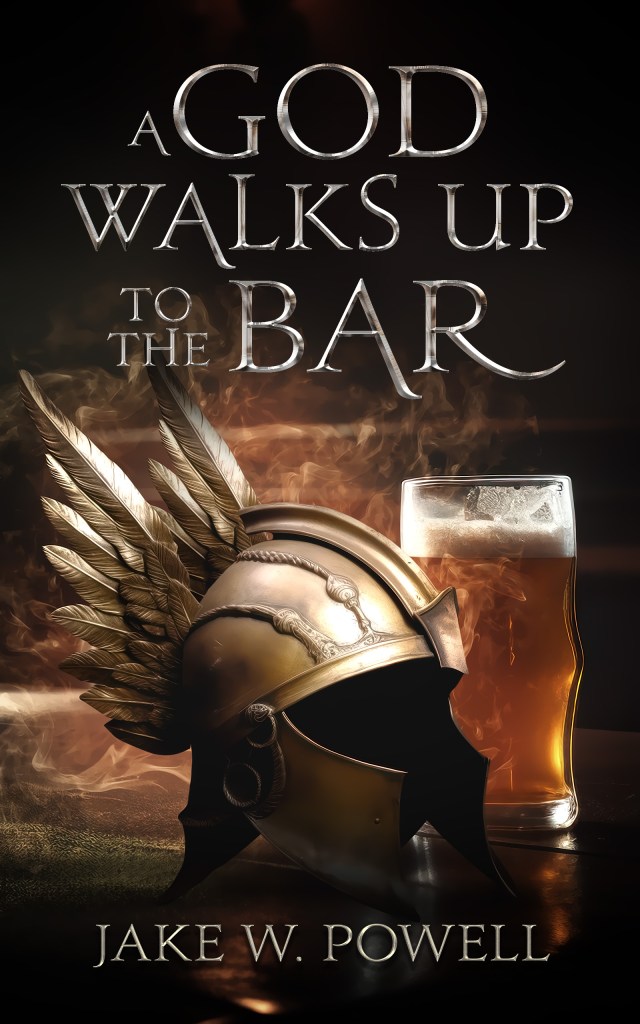
My first book, A God Walks up to the Bar, is available on Amazon.com. Witness the modern day adventures of the Greek god Hermes in a world much like our own – and with demigods, vampires, nymphs, ogres, and magic. The myths never went away, they just learned to move on with the times. It’s a tough job, being a god!


Overused and Old Hat: Why I’m No Longer a Fan of Quipping

We live in an age of quips. Quipping has gripped modern entertainment. Quick, glib, clever one-liners are all the rage nowadays. You see it in blockbuster movies, television, comic books, and general writing. Pithy turns of phrase to sum up a situation, shove humor into it, or just to show off how clever the writer is.

And like anything in excess, people eventually become tired of it. One-liners aren’t bad in and of themselves, but I feel that overexposure to any style of writing can sour people against it. Like eating ice cream and pizza three meals a day for a month, something you originally enjoyed now just leaves you feeling sick and disgusted.

Humor is very important. Without it, a story can feel lifeless and dull. But humor comes in many forms, and we aren’t limited to the simple quip. I’m not saying that quipping is bad in and of itself. James Bond can get away with his cheeky one-liners all day long. But variety is the spice of life. More importantly, not every story needs that type of writing.

Maybe I should start from the beginning. What is quipping?

Dictionary.com defines “quip” as “a clever or witty remark or comment” or “a sharp, sarcastic remark; a cutting jest.” And that pretty much sums it up. Quips are one-liners, punchlines, and statements to show off a character’s biting wit. They can be used to characterize and flesh out the tone of a story, but modern writers, especially in film and television, have become obsessed with this one form of humor. What happens when you’re exposed to one, and only one, type of funny for ten years? It becomes boring.

What’s worse, writers can fall into the temptation to constantly strive to outdo themselves and each other. Stories lose their focus and become quip-a-thons. What wacky thing will the hero say next? And how will it completely disrupt the otherwise somber tone of the scene? Because that’s what a poorly used quip can do: It destroys the mood. Too often, I watch movies that are afraid to end on a quiet note. The tone needs “lightening up” with some funny, silly observation. And suddenly, the characters aren’t taking anything seriously. And if they aren’t, why should the audience? Main hero in mortal danger? He makes a quip, and it’s just a big joke, no reason to be on the edge of your seat. A scene of exposition establishing the stakes? Sum it up with some pithy, self-aware remark that illustrates the characters are more concerned with pointing out cliches and proving how clever they are than getting the job done. Guess the audience shouldn’t care, either.

Can you tell I really don’t like this style of humor?

I used to. I enjoyed Marvel movies. I liked Arnold Schwarzenegger’s cheesy one-liners. But overexposure soured me against quips. No, let me revise that statement. It soured me against every main character in the story using quips. That’s the biggest gripe I have against the style, because it makes every character basically the same. Oh, sure, they might have different motivations, different backstories, different personalities, but they all sound the same. Same remarks, same puns, same tendency toward glibness. They all react the same way to a situation. And that is, I emphasize again, boring.

That being said, there are stories I enjoy where quipping is used. I like The Dresden Files, and the protagonist’s tendency toward wise-guy remarks. And I don’t mind James Bond’s use of hilariously callous puns after killing someone. Heck, I enjoy the Marx Brothers’ old films, and Groucho Marx is a machine at quipping. A bona fide master. And you know why I can tolerate these examples? Because they are the only characters in the story who rely on quipping for humor. They stand out because of it. Other forms of humor are used by other characters. Rather than being the default fallback for extracting humor, their smart-aleck words are used to define their character and place in the story. It’s part of who they are.

What’s that old saying? If everyone is special, nobody is. I don’t know about that, but I do think that if everyone is funny in the same way, than nobody is funny at all. Put some variety into your story’s humor!

If you just so happen to be enjoying my blog, feel free to subscribe. I post updates on my writing career, I muse over storytelling and fiction, and I reflect on the curious and wonderful things in life.

My first book, A God Walks up to the Bar, is available on Amazon.com. Witness the modern day adventures of the Greek god Hermes in a world much like our own – and with demigods, vampires, nymphs, ogres, and magic. The myths never went away, they just learned to move on with the times. It’s a tough job, being a god!

Image: “Dear Old Hat” by Muffet: Licensed under CC BY 2.0.

Confessions of a Skipper

I must confess to a strange reading habit, one that might shock and horrify you. Do not judge me too harshly, for I shall explain myself.

When I start a fiction book, I like to skip to read the last couple of pages first.

“What?” I hear you cry out. “What is this blasphemy? Why ruin the story for yourself?” Calm yourself, please. Let me clear things up.

It’s true that I’m not sensitive to spoilers. I really don’t mind when plot twists are brought up in casual conversation. But this habit is more than just wanting to know how things end. Really, without context, knowledge of a story’s ending doesn’t have a terribly great impact on me as a reader. I have no grasp of the import of the scenes and dialogue. What I’m really interested in is catching a glimpse of the finished jigsaw puzzle, then going back to the beginning to see how the pieces fit together.

Rather than starting a book with no idea of how things end up, I know exactly how it ends. And so, the fun of the read shifts from the “what?” to the “why?” Why is this the ending? And how will my initial impression of it change as I get more pieces of the bigger picture?

I suppose I’m interested in perceiving the author’s mind. How do they assemble the various elements of the narrative into its final shape at story’s end? How are these characters and events inserted into the story? In short, how did we end up here?

Pieces click into place as I read on, and the ending’s significance becomes clearer. Sometimes, I feel like a detective solving a case in reverse. I already know whodunnit, but the howdunnit isn’t so obvious.

And I do it because I’m quirky and it’s kind of a fun exercise to try out. I neither recommend it nor warn against it. Reading style is a matter of personal preference. It’s up to you.

And there you have it. The true confessions of a skipper.

If you just so happen to be enjoying my blog, feel free to subscribe. I post updates on my writing career, I muse over storytelling and fiction, and I reflect on the curious and wonderful things in life.

New Year’s Resolutions? I Resolve Not To!

New Year’s Day is a day famous for resolutions. The day when people work up the courage to swear to permanent change in their lives. To resolve to start doing this, stop doing that, and make some adjustments to these other things. A time for fresh starts.

Now, let’s be honest with ourselves. How many of you have ever kept a resolution all the way through the entire year? If you have, you have my deep and abiding respect. You are a rare breed.

I don’t believe in New Year’s resolutions. I defy this societal concept. No, I’m not being contrary for contrariness’s sake, I just don’t understand the need for it. Why wait until one day out of 365 (or 366) when you can always decide to change TODAY? That is, if you really want to improve yourself. Maybe it’s just more comfortable to say, as little orphan Annie sings, “There’s always tomorrow.” And tomorrow always seems to be such a long time coming.

That being said, it’s all well and good to come up with new goals on New Year’s Day. It’s tempting to look out across the vastness of the new year, all those blank days ripe with promise, and imagine to oneself how this time you’ll do it differently. You’ll be better this year, just wait and see. You make that silent resolution to yourself. On the same day, of course, when everyone parties hard till midnight and carouses and gets drunk and gets into car accidents. A hangover and a car repair bill. An excellent start to the new year.

Some people take resolutions very seriously. And to those people who can keep them throughout the year, I say more power to you. Like I already said, you are a rare breed. Most people make a few half-hearted mentions of a few things in life they want to be different, then forget all about it in a couple weeks (or a couple drinks).

Which isn’t to say that the idea behind New Year’s resolutions is a bad thing. We should always strive to improve ourselves. But maturity and growth is a gradual process, not something that happens in leaps and spurts. It takes a lot of effort to change something about ourselves. We stubbornly cling to bad habits and thoughts because they’ve stuck with us for so long. A single day of swearing off a habit isn’t going to make much difference. You got to work at it every day. You got to practice. Change is slow.

So, I don’t bother with New Year’s resolutions. Why should I, when I can make that resolution any day of the year? Sometimes, I make the same resolution multiple times in a week or a month, because I stumble. We all stumble, especially after making a big show of the big changes in our lives. Life likes to set us up like that. It’s like setting the cute baby seal free into the ocean with cameras rolling and – oh, there’s the shark waiting to spoil the moment.

I will make resolutions as many days as it takes to improve myself for the better and change my bad habits. No one-and-done deals. One day’s quick and easy promises aren’t enough.

If you just so happen to be enjoying my blog, feel free to subscribe. I post updates on my writing career, I muse over storytelling and fiction, and I reflect on the curious and wonderful things in life.

Image: “Fireworks – Adelaide Skyshow 2010” by anthonycramp; Licensed under CC BY 2.0.

You Think This is Funny? Reflecting on Film Writing and Humor

Image: “Comedy and Tragedy Masks” by Booyabazooka; Licensed under CC 3.0

Today I’m going to talk about something specifically related to film writing, and a trend that I’ve seen in movies for a while now.

See the picture above? You’ve seen them around. The twin masks of Comedy and Tragedy. The two always go together. Where there’s laughter, there’s sorrow. Where there’s mourning, there’s merriment. They need each other. Every great work has both working hand-in-hand in the jolly spirit of cooperation.

We need to laugh. But, and this is a big but, we also need to cry. And if you have too much of one and none of the other…

What happens if a story is all jokes and funny business? Well, you might call it a comedy, sure, but do you know what a lot of really good comedies have? Moments of seriousness interspersed with the hilarity. And do you know what the best dramas have? Sprinklings of humor to lift the audience’s spirits.

But writing comedy is tricky. Heck, writing in general is tricky, but writing appealing humor is really tricky because you’re trying to appeal to a broad audience. Why do you think broad humor is synonymous with toilet humor? It’s easy to get a quick laugh out of something dirty. It’s the easy way out and requires little skill. Sorry to all of you out there who enjoy such, but it really is the junk food of comedy. And like junk food, you like it at first, but it leaves you sick in the end.

As a wise man once said: “Dying is easy. Comedy is hard.”

Humor is more than just jokes. Humor humanizes. People crack jokes under pressure. Their sense of humor makes the audience able to empathize with them. And yet, humor can also de-humanize, funnily enough. What do I mean by that?

Okay, let’s talk about the current state of Hollywood. Yes, I’m going there.

Blockbusters nowadays – not all of them, but a whole lot – rely on quips and wisecracks to carry their characters through the action. A dramatic scene is undercut by a sudden swerve into corny jokes. Everyone is a kidder. Too much humor spoils the plot. If nobody is taking this seriously, why should I? What are the stakes? When you joke about everything, everything becomes a joke. The characters are just walking punchlines, waltzing from gag to gag. They’re defined by how much funny they can deliver per minute. And they cease to be characters: They’re walking satires, exaggerated stereotypes of human behavior.

Well, Arnold Schwarzenegger could pull it off. True, but 1980’s action movies rarely pretended to be anything more than fluff. Watch bad guys get beat up by a hero delivering one-liners after each kill. What happens when modern blockbusters try to pose as something much more meaningful – and then undercut that meaning with a one-liner perfectly timed to be delivered at the most poignant and emotional moment?

Humor is a very powerful tool. It tells us what to take seriously and what to devalue. We laugh at things we don’t treat as important or respectable. Which can backfire if you set up a story where a situation or character is meant to be treated with dignity, respect, confidence, and even fear, and then undermine that intent with a barrage of cheap quips. Humor is like a gun: You don’t wave it around carelessly.

What’s worse, the audience very quickly becomes desensitized to it. A couple of movies with this type of writing, the audience is whooping and hollering. But by the tenth film, it becomes old-hat. Yeah, yeah, this is about the right place for – yup, he did it. He made a corny joke right when I expected him to. Hey, here’s a quiet drama scene. I bet they’re gonna – yup, another cheap joke to ruin the mood.

Predictable, formulaic, and worst of all, boring. Same old, same old.

So, what to do about it?

Well, learn from it, for one. Why doesn’t it work anymore? Analysis of others’ writing, both good and bad, can be useful for improving one’s own skills. Learning from the mistakes and missteps of others is invaluable. Comedy is a rich and complex genre in and of itself, with so many branches. It serves many purposes, and can truly bring light into hopeless situations, and alleviate tension right when the audience needs it. Just don’t overdo it. No need to beat someone over the head to make sure they “get the joke.”

And the joke itself isn’t the point. Everything, even a witty quip, should be in service of the story. The story should never serve the joke.

Enjoying my blog? Don’t want to miss a single post? Subscribe for updates on when I post and follow my writing career, musings on fiction and storytelling, and reflections about life in general!

Sometimes, You Just Have to Laugh

There’s something special about laughter. A good laugh can not only brighten your day, it gives you the strength to get through it.

Life is a jerk. If Life is a person, it would be tall and bulky, with a bad haircut, an unbearably smug grin, and an annoying laugh. That’s certainly the impression one can get when you receive unexpected bills in the mail or your brand-new car that you just brought home two hours ago and haven’t had a chance to take out for a spin won’t start. Or when you’re cleaning the dishes and your favorite plate slips out of your hands and shatters on the floor. Life sure can be petty, can’t it?

So, what’s the deal with laughing it off? You can’t laugh off everything, right? True, but sometimes a good chuckle is good medicine. It takes the edge off your tension and helps you gather yourself to persevere through a tough time. Laughter can help you overcome difficulty. It’s like a shot of coffee – it gives you the pep you need.

There’s humor in our lives if you know where to look. Often, I find you just need to let go of your ego.

Laughing at ourselves. Now THERE’S something that takes Life off-guard. If Life, with its obnoxious grin, sees you laughing at your own antics and not taking things too seriously, it really takes away Life’s thunder, doesn’t it? And there it stands, dumbfounded that you’re not squashed by the difficulties and the trials, being content and joyful for a change, and Life realizes it really is just a big buffoon with a bad haircut. It sulks away and lets you go about your business.

It’ll come back –irritating little problems always do – but you have laughter on your side. Good humor is like good armor. It helps you weather Life’s next shove.

Laughter’s contagious, too. There aren’t enough good things that are contagious. You start laughing, your friends start laughing, you break down in giggles and hysterics. And for a few moments, problems and worries are pushed aside. There’s just the bond of guffawing over what is no doubt a very silly joke.

Let’s face it: a body can only take so much moping before all that angst builds up and you want to explode. A good cry can work wonders, too. I suspect crying and laughing are secret twins separated at birth. And there is a time for crying, don’t get me wrong. There’s a time for everything. But laughter is a good friend, always there for you in a tight spot. Let’s try not to forget that.

Enjoy what you’re reading? Subscribe by email for updates on new posts and follow my writing career, musings on fiction and storytelling, and reflections about life in general.