Stephen King on Writing

I came across this quote today by Stephen King. It struck a chord with me.

“Description begins in the writer’s imagination, but should finish in the reader’s.”

This is a trap I am still learning how to avoid. The temptation to describe absolutely everything in meticulous and inane detail is something that, while appealing to the writer, can do extensive damage to the story. We as writers should not be tyrants over our reader’s minds. Describe enough to convey the point, but leave some left over for the readers to fill in the blanks.

After all, we all had our fill of obsession with details in high school literature class.

***

Many thanks for visiting my blog. I post updates on my writing career, I muse over storytelling and fiction, and I reflect on the curious and wonderful things in life.
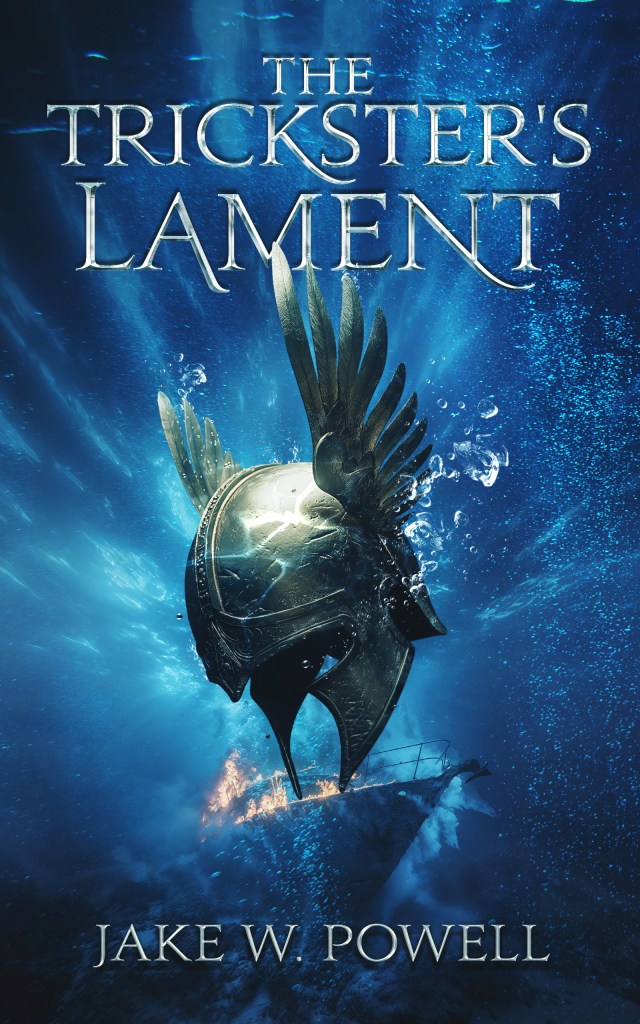
“Hermes is not having the best time. He walks a fine line, and his duty as messenger of Olympus weighs heavily on him. Being a god in the modern age means living in a world that no longer believes in gods. How much can one deity accomplish when no one respects him anymore? And why do his instincts tell him that he, the son of Zeus, is losing favor with his own family?

Tensions abound. The upstart Young Gods play dangerous games using entire cities as their boards. Formless monsters strike from the nighttime shadows, terrorizing hapless mortals. Agents of rival pantheons scheme to thwart Olympus’ designs. In the thick of it all, Hermes does what he does best: trick, lie, and cheat his way to victory.

Literature Adds to Reality …

Literature adds to reality, it does not simply describe it. It enriches the necessary competencies that daily life requires and provides; and in this respect, it irrigates the deserts that our lives have already become.

C . S. Lewis

***

Many thanks for visiting my blog. I post updates on my writing career, I muse over storytelling and fiction, and I sometimes post cool quotes by writers.

Open a Book

Open a book, go on an adventure. You don’t leave home, you don’t walk a road. But you go on a journey just the same, to places near and far, betwixt and between.

The past and future, earth and space, ruins and utopias, worlds both alien and familiar. The lives of great kings and scientists and heroes stretch out before you. Hear their words, see inside their minds.

Indeed, you go everywhere, do everything, see everyone. A universe of words is revealed to you. Travel here and there, hither and thither, as much as you can stand.

And at the end of the journey, you come back home, and realize you never left your chair.

Such is the wonder of opening a book.

Many thanks for visiting my blog. I post updates on my writing career, I muse over storytelling and fiction, and I reflect on the curious and wonderful things in life.

Deep Questions about Deep Literature

Do you remember literature classes in high school? How you would spend hours every day discussing the symbolic value of the billboard in The Great Gatsby and analyzing what each character represented in The Lord of the Flies? A spade is never just a spade in lit class. There is always a deeper meaning.

So can anyone explain to me why all the books students have to read are so dang depressing?

Looking back, this is what I feel that we were doing: Taking a beautiful flower and plucking its petals and cutting the stem and digging up the roots to see why it was a beautiful flower. And we very scientifically removed everything beautiful about it.

But darn it, we got educated about great literature. We knew what metaphor was. And allegory. And the subtle social critiques and genre deconstructions that mark all literary classics. We obtained knowledge! We justified our tuition!

There are people who make their living by reading stories and telling other people whether they are good or not. And their word is law, because there is no such thing as an opinion they understand the rules that govern quality writing. Where they obtain this arcane knowledge is unknown. Presumably, they dissected enough flowers.

Good stories seem to be a case of majority rules. If enough people say it’s good, it must be good. Maybe. But I didn’t like The Great Gatsby, so does that mean it’s not a good book or I’m not a good writer? Or perhaps if I had read it on my own time instead of being forced to analyze that darn stupid billboard I would have liked it.

What does it matter what color the curtains are or what suit the one character is wearing in each scene? It matters because somebody important says it matters, but what if it’s not the author saying it? Are we seeing what the writer put there, or what we think is there? Are we seeing meaning where there is none, or is the meaning not what we think it means? Does it mean what people say it means, or does it mean something else, which means that what I want it to mean means that it means the wrong thing from what everyone else thinks it means? Because that’s just mean.

Or maybe we’re just really good at gaslighting ourselves into thinking a book somebody wrote to pay their bills is a magnum opus. The writer wings it, hears what critics say, nods sagely and says, “Yes, that’s exactly what it means.”

Many thanks for visiting my blog. I post updates on my writing career, I muse over storytelling and fiction, and I reflect on the curious and wonderful things in life.

Quotes Courtesy of Charles Dickens

In honor of of one of the greatest writers of our, and any time, here are some choice quotes from the works of Charles Dickens. Some advice, some funny observations, maybe even a little wisdom.

The most important thing in life is to stop saying, ‘I wish’ and start saying, ‘I will’. Consider nothing impossible, then treat possibilities as probabilities.”

David Copperfield

“There are books of which the backs and covers are by far the best parts.”

Oliver Twist

“Trifles make the sum of life.”

Great Expectations

“There are very few moments in a man’s existence when he experiences so much ludicrous distress, or meets with so little charitable commiseration, as when he is in pursuit of his own hat.”

The Pickwick Papers

 “Love, though said to be afflicted with blindness, is a vigilant watchman.”

Our Mutual Friend

Many thanks for visiting my blog. I post updates on my writing career, I muse over storytelling and fiction, and I reflect on the curious and wonderful things in life.

Delving into the Unreal: Fantasy and Social Commentary … or Lack Thereof

Don’t let the title scare you away. I’m not talking about specific politics or social issues. Rather, this is about how fantasy can be a tool for analyzing society undercover. That is to say, the fantasy genre gives authors a knack for talking about real life without actually talking about real life.

Now, the fantasy genre isn’t real, obviously. That’s kind of the point. However, fantasy’s detachment from reality can give it a very unique perspective on the world we do live in.

This comes, I think, from the fact that the fantasy genre can be used to observe elements of our world by substituting real groups, issues, events, or locations with fictional analogues. These same analogues allow readers to perceive them more objectively than if they were the real thing. Real-life issues tend to get our defenses up, consciously or not, and we let our own biases color our lenses. Fantasy equivalents are, well, fantasy, so we don’t view them in the same way, even if they are equivalent to the same social issues that otherwise get our hackles up. It’s a bit of a literary trick, really.

Whether or not a writer gets their message across to the audience depends on two things: One, whether the readers recognize the subtext, and two, whether they connect the subtext with the correct issue. Yes, we must trust our readers to infer what we want them to infer. And sometimes, alas, they don’t. All writers reach a point where their authority dies, and their readership draws its own conclusions independent of the author’s intent. So, you might very well have been writing a hard-hitting social critique using elves and pixies, but the audience comes away thinking it was about the virtues of natural conservation rather than the consequences of war.

On the other hand, maybe your story has no message. You just wanted to write something fun and light. Yet, for some reason, readers are convinced there’s a hidden meaning buried in your writing. Tell me, dear reader, what is the message of Little Red Riding Hood? Is it just a story about a girl and her grandma who are eaten by a wolf, then saved by a woodsman, end of story? Or is it about:

The dangers of nature

Man’s triumph over nature

Listen to your parents

Pay attention to the task at hand

Don’t trust strangers

Rebirth from death into a better person

A metaphor for puberty

A metaphor for sexual predators

A metaphor for rape

A metaphor for how people read sex into everything

Axes are useful for killing animals

If you think a wolf looks like your grandmother, you really should buy glasses

And so forth.

Maybe we don’t really know for sure? Maybe there is no analogy, but there is applicability. Applicability is a very different animal. It is the reader’s independence of the writer and ability to view the story through their own lives and beliefs. In short, they see the story as matching their own notions.

Or maybe, we’re just thinking too hard about it all.

If you just so happen to be enjoying my blog, feel free to subscribe. I post updates on my writing career, I muse over storytelling and fiction, and I reflect on the curious and wonderful things in life.

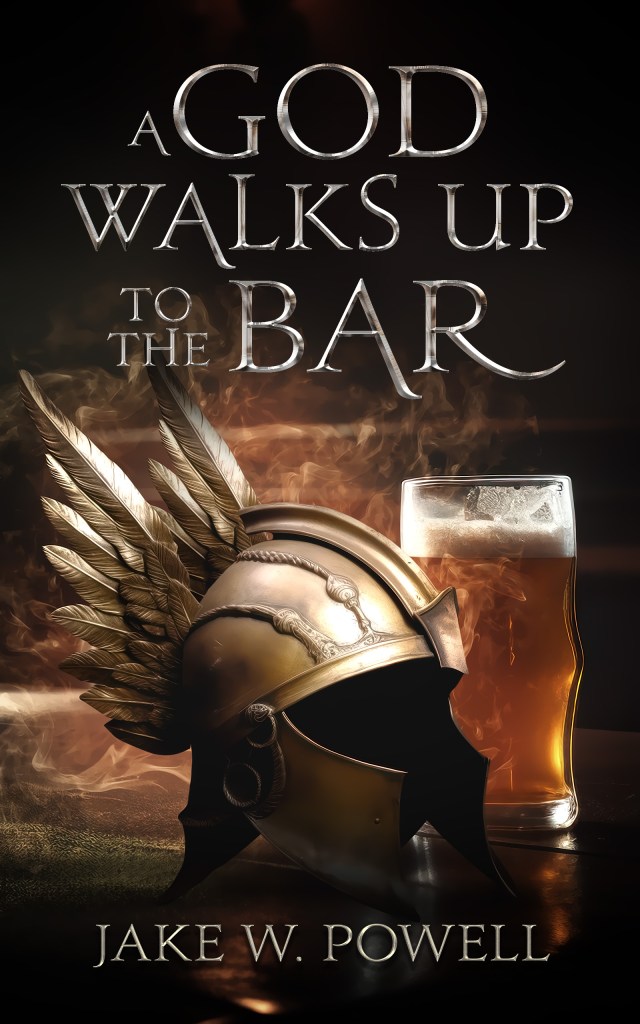
My first book, A God Walks up to the Bar, is available on Amazon.com. Witness the modern day adventures of the Greek god Hermes in a world much like our own – and with demigods, vampires, nymphs, ogres, and magic. The myths never went away, they just learned to move on with the times. It’s a tough job, being a god!

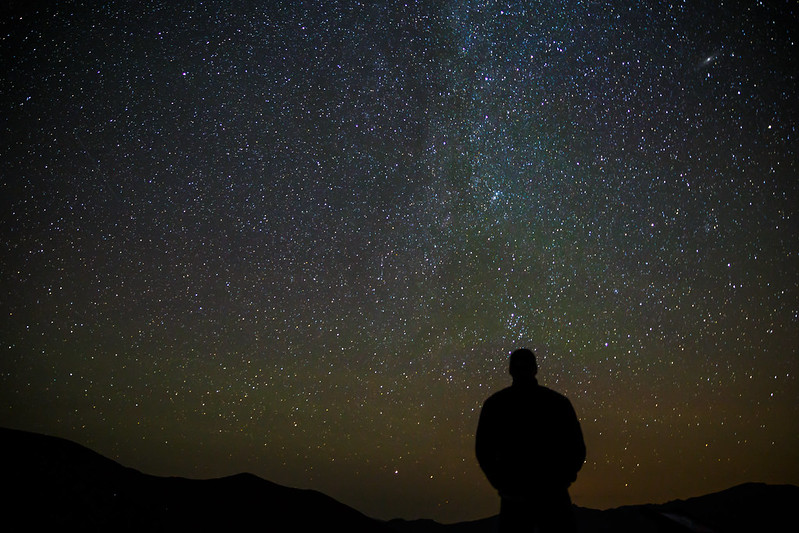
Image: “Dave Checking out the Perseid Meteor Shower at 10,000 feet“; Dave Dugdale; Licensed under CC BY-SA 2.0.

Delving into the Unreal: How Fantasy Helps Us Deal with Real Life

Real life is hard. Can we all agree on that? Real life is really hard to deal with. If it’s not the troubles and calamities of real life intruding on our status quo, it’s the dreary monotony of everyday activities. Going to work, washing the dishes, walking the dog. Sometimes, we just hit a rut. What to do?

People are imaginative, and there’s nothing better at firing up the creative juices then boredom.

There are people out there prone to daydreaming. They come up with whole worlds in their heads. The really ambitious ones commit those worlds to paper. Voila! A new fantasy story is created.

Fantasy helps us cope with the real world. It is a form of escapism that gives us a few precious moments away from humdrum reality, a chance to catch our breath and maybe let out a couple screams, then return to the grind. A little fantasizing is good for our mental health. Relaxation and rest is a good thing, and fantasy is a form of that. A jaunt into a made-up world where heroes always win, good triumphs over evil, magic can make food and water out of nothing, and we can fly on winged horses is just … fun. That’s the point of fantasy. Just like some people like car racing or hiking or painting or math (such people do exist), so do some enjoy fantasy because it’s just plain fun.

To deny ourselves recreation is to trap ourselves inside a metal box at the bottom of the ocean. We can’t move, can’t escape, can’t even see the light. We suffocate under the inability to exert ourselves. Our minds along with our bodies atrophy from the lack of exercise. And from the lack of challenge. Fantasy is a challenge. Fairy tales and epics challenge us to see the world in a new way and ponder how these stories match up against our own experiences. And they let us see something new, period. Don’t we humans crave novelty? Why go on vacation, if not to “get away from it all?” And what are we getting away from? The ordinary and the familiar.

Fantasy is all that writ large. It is the unfamiliar and the extraordinary. A chance to wonder: What if?

And at an even more fundamental level, fantasy taps into that all-consuming human urge to create. We all want to create something. We tinker, we write, we draw, we brainstorm, we organize, we build, we muck about. We like to make things, whether things concrete or things abstract. Fantasy is creation. It’s a powerful impulse, the urge to create, and making fantastical worlds is the perfect outlet for what, I believe, is a basic human need.

Does fantasy matter? Absolutely. We can’t resist it’s siren call. To get away from mundanity, to satisfy our basic natures, to keep ourselves sane. Fantasy is very, very important.

If you just so happen to be enjoying my blog, feel free to subscribe. I post updates on my writing career, I muse over storytelling and fiction, and I reflect on the curious and wonderful things in life.

My first book, A God Walks up to the Bar, is available on Amazon.com. Witness the modern day adventures of the Greek god Hermes in a world much like our own – and with demigods, vampires, nymphs, ogres, and magic. The myths never went away, they just learned to move on with the times. It’s a tough job, being a god!

Image: “Dave Checking out the Perseid Meteor Shower at 10,000 feet“; Dave Dugdale; Licensed under CC BY-SA 2.0.

Delving into the Unreal: Taking Fantasy Seriously

Does the fantasy genre matter?

Let’s be honest. With a question like that, and the fact that my blog is subtitled “Writer of Modern Day Fantasy,” you can pretty easily guess that the answer is, “Yes.” But, hey, did I catch your attention? I did? Good. Let’s dive into it, then.

Fantasy is an important genre. Myths and legends have existed for almost as long as humankind has. There is an almost natural urge in people to invent and make up lands, species, events, and other such things that don’t exist in nature. The urge to create things that defy natural law: flying carpets, giants, dragons, dryads, genies, wishing stars, talking puppets, elves, hobbits, fairies, people the size of your thumb, people as tall as a mountain, alien worlds, life on the moon, and so on and so on. The earliest myths probably were meant to explain phenomena that man couldn’t yet fully understand, like the weather or earthquakes. But even after science has offered its explanations, the fantasies endure. Do old habits die hard? Or maybe we need fantasy in our lives.

Consequently, fantasy is a versatile thing. At its heart, it is the telling of things that not only don’t exist, but can’t exist. There are no elves in the forest. There are no genies trapped in bottles. There is no Fountain of Youth or cities at the bottom of the ocean. But the stories are still told.

For a long time, though, there was a problem.

For the last century or so, fantasy got a bad rap. It was viewed as this sort of nerdish subject that is impractical and of no relevance to “real life.” Dungeons & Dragons was the epitome of loser geek culture for decades. It was a “loser” subject because, in part, it was something that wasn’t real – but people took it so seriously! Why make such a big fuss over the unreal? Why obsess over the rules for a game about fighting made-up creatures? If you’re going to obsess over statistics, at least apply that obsession to football and baseball, not orcs and hobgoblins!

For many people, deriving so much enjoyment from something made-up is just plain childish. Oh, when we are children, it’s fine to enjoy stories of knights versus dragons. Fairy tales are quaint little things that amuse us when we’re young. Then we grow up and enter the serious real world where we need to be interested in grown-up things. Like cars and sports and art and the latest celebrity gossip. You know, important stuff.

That association with the immature has been a stain on fantasy’s reputation for a long time, as well as its sister genre, science fiction. The dominions of nerds and other people who can’t handle reality. There were exceptions, of course. Star Wars, for example, was a major blockbuster in 1977. But by and large, fantasy movies and books and games were strictly niche. There was an audience, but a highly specific one.

Then things changed.

I think the Lord of the Rings film trilogy in the early 2000s was the big turning point. Here was a fantasy series with major, respected stars that took itself seriously. It had a big budget, it was being produced by a major studio, it had marketing and advertising out the wazoo. The critics liked it. It was art.

Suddenly, fantasy lost its stigma. It wasn’t so bad to admit you liked the genre.

Others followed. Game of Thrones was a biggie. And there was Stranger Things, which proudly wore its 1980s nostalgia on its sleeve. And what was big in the 1980s? Yup, Dungeons & Dragons. Speaking of which, a Dungeons and Dragons movie released last year was warmly received. Oh, how the tables had turned!

The fact is, there are lots of people who like the unreal. They like to step away from reality for a few hours. It is called escapism. Personally, I think part of fantasy’s bad reputation is that escapism is confused with retreat. One is the willingness to step away from your problems or worries for a little while to refresh yourself. The other is an ultimately selfish choice to ignore one’s real-life obligations in favor of never leaving the fantasy. But many non-fantasy fans view the genre strictly through the latter lens. A bunch of guys and gals without jobs living in their parents’ basements reading silly books about silly people in silly lands. Fantasy is for the weak, for people can’t handle their own responsibilities.

It’s not fair, really. J. R. R. Tolkien wrote fantasy, after all. You know, the highly respected scholar and linguist? A man with a very productive and well-balanced life? And it gets more unfair.

So, fantasy has hit it big, as I just mentioned. And why did it hit it big? Well, a few successful movies certainly helped. But also, you know, the average person finds out that people like Henry Cavill and Joe Manganiello play stuff like D&D and Warhammer 40,000. Hey, they’re not nerds! Fantasy must be cool!

Sometimes, the best way to get people to take something seriously is to find the right spokesperson. All this time, fantasy just needed better PR.

It worked. Fantasy is widely accepted now. People aren’t ashamed to say that they like it. Nerds aren’t social pariahs. Heck, most of them are running major corporations. And the people writing those hit fantasy movies? They’re nerds, too. That’s the other big shift in the fantasy genre in mainstream culture. Four, five decades ago, fantasy films and TV shows were mainly being written by people who saw it as harmless, inconsequential fun. But the people who grew up with those shows and films, the people who fell in love with them, are the ones calling the shots now. And their beloved childhood is anything but inconsequential. Fans tend to pour their hearts into their work, and the quality of the product (hopefully) goes up. The bigger budgets certainly help.

By and large, fantasy has found public acceptance. Fairy tales aren’t just for kids anymore.

But the question posed at the beginning of this article is only half-answered. Does fantasy matter? Yes, yes it does. Financially, socially, culturally, it matters very much. But why does it matter? And in what other ways does it affect us besides providing something to do on a Saturday night?

Stay tuned …

If you just so happen to be enjoying my blog, feel free to subscribe. I post updates on my writing career, I muse over storytelling and fiction, and I reflect on the curious and wonderful things in life.

My first book, A God Walks up to the Bar, is available on Amazon.com. Witness the modern day adventures of the Greek god Hermes in a world much like our own – and with demigods, vampires, nymphs, ogres, and magic. The myths never went away, they just learned to move on with the times. It’s a tough job, being a god!

Image: “Dave Checking out the Perseid Meteor Shower at 10,000 feet“; Dave Dugdale; Licensed under CC BY-SA 2.0.

Climbing Out of Your Burrow: Read New Things!

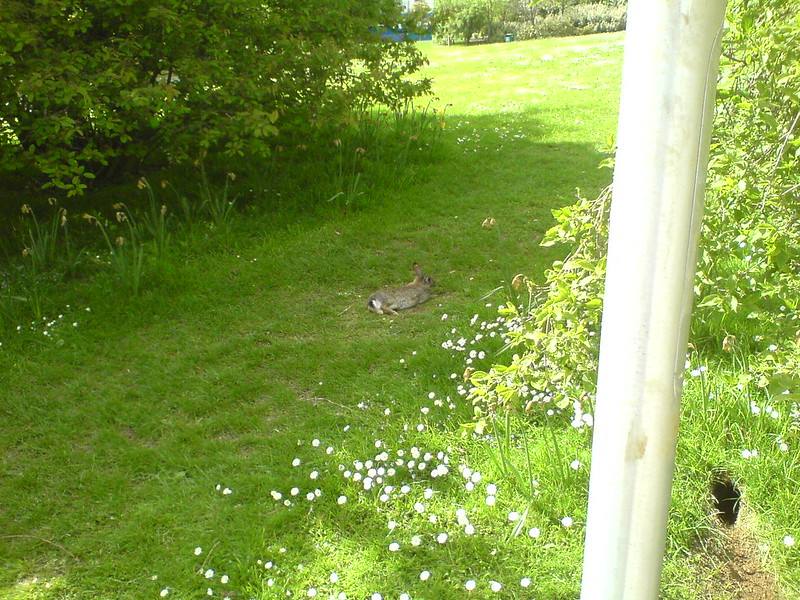
Image: “Rabbit and Burrow” by Stephen.G; Licensed under CC BY-NC 2.0.

“Cuddling up with a good book” is a phrase that invites images of coziness and comfort. It’s like being a rabbit holed up in your burrow, safe and secure. And we do like being comfortable. The same predictable genre or series over and over is a safe choice for when we get the itch to read something. But we are not rabbits. We humans benefit greatly from trying new things. Sometimes, we need to climb out of our burrows and take a close look at the landscape. A new book, a new genre, a new experience.

It’s not easy to do something we’ve never tried before, even with something as seemingly trivial as trying a new book. But it’s not trivial, is it? For some of us (myself included), it can be very daunting indeed. Reading is a time investment. Sinking time into something we might not even enjoy is time forever lost to us. Dare we take the risk?

I say we should. Life is short enough without limiting ourselves to a narrow view of it. Stories grow us and expand our perspective on the world. And who knows? You just might discover something new to love in literature. Trying new things is its own reward, and challenging ourselves to grow is always beneficial.

Rabbits are nervous, wary creatures. But rabbits can’t read and know the joy of encountering a new tale, of being lost in a new world of words. There are so many worlds out there, contained in the pages of a book or imprinted in the code of an eBook, and they’re all there for us to visit whenever we want. Why shouldn’t we try to explore as much as we can?

Alright, I’ll be honest. I’ve read books I didn’t enjoy. I’ve tried things recommended to me that I didn’t get much of a thrill doing. But, as they say, you never know until you try. On the other hand, I discovered some of my favorite franchises thanks to a friend or family member. And sometimes just from idle curiosity.

Whether you’re a writer or not, if you love literature, than never stop exploring its many corners. Leave your burrow and go out and see what there is to see!

Enjoying my blog? Don’t want to miss a single post? Subscribe for updates on when I post and follow my writing career, musings on fiction and storytelling, and reflections about life in general!

No Author is an Island

When I first started writing my book, I labored under a misconception. It was an easy mistake to make. I made an assumption about writing, one that, by all outward appearances, is apparently true. When you pick up a novel in the store, whose name do you see on it? The author’s. Maybe a few more names listed on the dedication page, a word of thanks to friends and family, but not much more. Oh, maybe the publishing company’s name, too, but that’s a business, not people. The writer is the one who gets the credit for the work.

As a self-publisher, I thought that writing was a one-person deal.

I am happy to say that I was very quickly proven wrong. Authors are not islands unto themselves, safely isolated from the hassle and responsibility of working with others, nor are they alone and dependent solely on their own skill and luck. Behind an author’s name are many, many other names, most of them willingly anonymous.

I wrote the book. Then I hired an editor to review my work. And I’ll contact an artist to create the book’s cover art. And then I’ll purchase my ISBN number and my business license so I can legally publish my work. And there is the commercial outlet through which my book is made available to the public. And yes, there are the friends and family who support me.

And let’s not forget the most important ones of all: the people who actually buy the book!

Even you, dear reader, are part of this process. Your very presence on this blog means that you’ve shown an interest in my work, maybe a passing interest, or maybe you’ll stick around for a while. Either way, you’re sharing in this journey alongside me. Interesting thought, isn’t it? No writer can truly say they made it by themselves. I find that oddly comforting. Writing isn’t lonely. It draws in folks who share a common interest and goal. It’s an unexpected side of the literary industry that I never expected, and I’m happy to have discovered it.

Enjoy what you’re reading? Subscribe by email for updates on new posts and follow my writing career, musings on fiction and storytelling, and reflections about life in general.