Life is Lived Once

Is there an age or year of your life you would re-live?

I’ve often daydreamed about being able to rewind time and go back to college or childhood, when life was simpler and I didn’t have bills to pay. But after giving it some serious thought, I realize that there is no point in my life I truly want to re-live.

We only live life once, so I think I should focus on what I’m doing now and prepare for the future. Going back to the past would be great – it’s easier (or so nostalgia tells me) and I have fond memories of parts of my life. But …

Would those memories be the same if we went back and re-lived them? Or would I be overwriting those memories with new ones, and perhaps even tainting that which made those times so sweet? Every experience is once-in-a-lifetime. I don’t want to cheapen any of them with a do-over.

***
Many thanks for visiting my blog. I post updates on my writing career, I muse over storytelling and fiction, and I reflect on the curious and wonderful things in life.
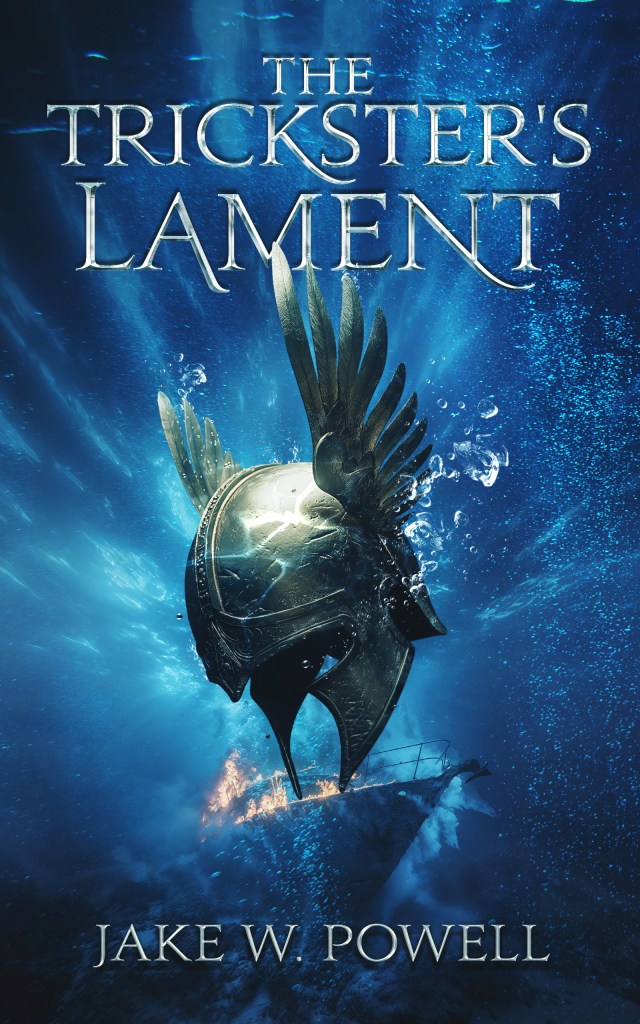
“Hermes is not having the best time. He walks a fine line, and his duty as messenger of Olympus weighs heavily on him. Being a god in the modern age means living in a world that no longer believes in gods. How much can one deity accomplish when no one respects him anymore? And why do his instincts tell him that he, the son of Zeus, is losing favor with his own family?

Tensions abound. The upstart Young Gods play dangerous games using entire cities as their boards. Formless monsters strike from the nighttime shadows, terrorizing hapless mortals. Agents of rival pantheons scheme to thwart Olympus’ designs. In the thick of it all, Hermes does what he does best: trick, lie, and cheat his way to victory.

One Smile at a Time

Did you give someone a smile today? A small hello, a gentle smirk?

Did you bid someone “Good morning” and “How do you do?” Did you let a stranger know that you noticed them and cared?

It is a precious thing in today’s age. A little hello can lead to big changes. A drop of kindness can spread through the heart. A word has power, even if that word is “Hi.”

Give someone a smile. A real smile, a polite smile, a warm smile, a pleasant smile. And back up that smile with a word. A scant few seconds of your life given over to another. Nothing lost, but maybe something gained.

***

Many thanks for visiting my blog. I post updates on my writing career, I muse over storytelling and fiction, and I reflect on the curious and wonderful things in life.

“Hermes is not having the best time. He walks a fine line, and his duty as messenger of Olympus weighs heavily on him. Being a god in the modern age means living in a world that no longer believes in gods. How much can one deity accomplish when no one respects him anymore? And why do his instincts tell him that he, the son of Zeus, is losing favor with his own family?

Tensions abound. The upstart Young Gods play dangerous games using entire cities as their boards. Formless monsters strike from the nighttime shadows, terrorizing hapless mortals. Agents of rival pantheons scheme to thwart Olympus’ designs. In the thick of it all, Hermes does what he does best: trick, lie, and cheat his way to victory.

Have You Thought About Your Toothbrush Today?

Let us consider the toothbrush.

No one does until one needs a toothbrush. Then one calls out for salvation from cavities and bad breath. The toothbrush is an unsung hero. No one goes through the day anticipating that most exciting and thrilling of activities – oh, yes, isn’t it just! – that is brushing their teeth.

Some things are so ordinary, so utterly normal, that they slip beneath notice. But we must be thankful for the toothbrush. Without it, we would all dwell in a mire of poor hygiene. Only when we don’t have something do we understand how important it is.

Toothbrushes, floss, old slippers, fluffy carpets, dishcloths – mundane, lowly, easily forgotten, yet so, so precious in their own odd ways.

***

Many thanks for visiting my blog. I post updates on my writing career, I muse over storytelling and fiction, and I reflect on the curious and wonderful things in life.

“Hermes is not having the best time. He walks a fine line, and his duty as messenger of Olympus weighs heavily on him. Being a god in the modern age means living in a world that no longer believes in gods. How much can one deity accomplish when no one respects him anymore? And why do his instincts tell him that he, the son of Zeus, is losing favor with his own family?

Tensions abound. The upstart Young Gods play dangerous games using entire cities as their boards. Formless monsters strike from the nighttime shadows, terrorizing hapless mortals. Agents of rival pantheons scheme to thwart Olympus’ designs. In the thick of it all, Hermes does what he does best: trick, lie, and cheat his way to victory.

Tolkien on Escapism

I was ranging the Internet tonight and came across this quote by J.R.R. Tolkien. Food for thought for writers, poets, and all other storytellers.

Fantasy is escapist, and that is its glory. If a soldier is imprisoned by the enemy, don’t we consider it his duty to escape?. . .If we value the freedom of mind and soul, if we’re partisans of liberty, then it’s our plain duty to escape, and to take as many people with us as we can!

J.R.R. Tolkien

***

Many thanks for visiting my blog. I post updates on my writing career, I muse over storytelling and fiction, and I reflect on the curious and wonderful things in life.

My latest book, The Trickster’s Lament, is currently available on Amazon in both Kindle and paperback format.

“Hermes is not having the best time. He walks a fine line, and his duty as messenger of Olympus weighs heavily on him. Being a god in the modern age means living in a world that no longer believes in gods. How much can one deity accomplish when no one respects him anymore? And why do his instincts tell him that he, the son of Zeus, is losing favor with his own family?

Tensions abound. The upstart Young Gods play dangerous games using entire cities as their boards. Formless monsters strike from the nighttime shadows, terrorizing hapless mortals. Agents of rival pantheons scheme to thwart Olympus’ designs. In the thick of it all, Hermes does what he does best: trick, lie, and cheat his way to victory.

Dreams in Life

We all have dreams. We have desires and goals we want to achieve. It might be something small or something grand, something that encompasses a single week or a whole lifetime. But we all have something we dream about.

How far do you go to achieve your dream? What are you willing to do? And what are you willing to sacrifice? Do you think about it all day long, but do nothing? Or do you work a little bit towards it every day?

How much do you dedicate to your dream? How much do you sacrifice? And when is the sacrifice too great? When does the dream become a tyrant that destroy your life rather than enrich it?

What place do dreams have in our lives? Do we seek them out at all costs? Or do we know when there are things even more important? Sometimes, we must not sacrifice for the dream, but sacrifice the dream itself. Life goes on. We go on.

But we never stop dreaming.

***

My new book, The Trickster’s Lament, is currently available on Amazon in both Kindle and paperback format.

“Hermes is not having the best time. He walks a fine line, and his duty as messenger of Olympus weighs heavily on him. Being a god in the modern age means living in a world that no longer believes in gods. How much can one deity accomplish when no one respects him anymore? And why do his instincts tell him that he, the son of Zeus, is losing favor with his own family?

Tensions abound. The upstart Young Gods play dangerous games using entire cities as their boards. Formless monsters strike from the nighttime shadows, terrorizing hapless mortals. Agents of rival pantheons scheme to thwart Olympus’ designs. In the thick of it all, Hermes does what he does best: trick, lie, and cheat his way to victory.

He may be disrespected. He may be kicked about. He may even be falling out with his pantheon. But Hermes is a trickster. He knows how to play dirty in a world that doesn’t play fair. But though he can best man, beast, and god, he isn’t prepared for his wiliest opponent yet: his own conscience.”

Many thanks for visiting my blog. I post updates on my writing career, I muse over storytelling and fiction, and I reflect on the curious and wonderful things in life.

Stories and Lies

Interesting thought for the day: All storytellers are liars.

Authors, poets, filmmakers, artists … We make things up. We show things to audiences that aren’t real.

But we’re liars who admit we’re liars. The things we tell in our stories are acknowledged as fiction. That’s why it’s called “fiction” and not “deception.”

There is an unspoken agreement between storyteller and audience: I will tell you something untrue, and you will treat it as something true until the story is ended. Audiences know that they are witnessing a fabrication, and so it is acceptable.

But stories do discuss real things – people, events, feelings, ideas, places – although the story itself isn’t true. Even if it is retelling a piece of history, it’s prefaced by the words “Based on a true story.”

Yet if it presents itself as real history, but isn’t, then it’s an actual lie.

Stories are lies that know they are lies and willingly admit it. And so they aren’t true lies, because they don’t pretend to be anything else.

Many thanks for visiting my blog. I post updates on my writing career, I muse over storytelling and fiction, and I reflect on the curious and wonderful things in life.