Stories Talk: Why Dialogue is Important

We engage in dialogue every day. We talk with people face-to-face. We type emails, send letters, conduct Zoom meetings, send messages via social media. We even talk with ourselves. Any conversation we hold is a dialogue, and wherever there are two or more people (or you and the voice in your head) there is conversation.

Since dialogue is such a vital part of real life, it is reasonable to assume that it is also important to writing. And this is true. Characters talk to each other, and the manner in which they speak and communicate is important. Everyone has their own voice, their own mannerisms, accents, affectations, slang, tone, rhythm, and personality. Most stories are going to have dialogue of some sort. They tell the reader who the characters are, how the world works, provide information about the plot, and so forth.

But unlike the real world, where two people can keep a conversation about absolutely nothing going for four hours, writers need to be choosier about what their characters say. Every piece of dialogue carries weight. And it can serve several purposes that can improve and flesh out your story.

So, what does dialogue do for a story? What point does it have? Well, I respectfully submit three here for your consideration.

Characterization

    We know what people are like through the way they speak. The things they talk about, how they talk about them, and what they don’t talk about all tell us who they are. People reveal their personalities and values through their words. Actions may speak louder than words, but words still count for something.

    Is a character brooding and moody? Witty and optimistic? Intelligent and thoughtful? Brash and shortsighted? The narrative can describe a character as such, but their dialogue should carry through on that description. Different people talk differently. Just consider all the people you know. Do they all talk the same? Do they all respond identically to any given situation or topic? How do their background and experiences influence their words?

    Furthermore, characters change over the course of a story. Consequently, their dialogue changes. Perhaps a rude character becomes kinder, and his words are sprinkled with more empathy and compassion. Someone may become obsessed, and her dialogue slowly becomes fixated on a single focus.

    Or a character surprises. The stoic deadpan warrior cracks a joke at a key moment, demonstrating he’s not as humorless as he appears. The comic relief offers heartfelt insight that inspires others to action.

    Worldbuilding

    “You’ve never heard of the Millennium Falcon?” “Should I have?” “It made the Kessel Run in less than twelve parsecs.” – Star Wars: Episode IV

    “The Dauntless is the power in these waters, true enough, but there’s no ship as can match the Interceptor for speed.” “I’ve heard of one. Supposed to be very fast, nigh uncatchable. The Black Pearl.” “There’s no real ship as can match the Interceptor.” Pirates of the Caribbean: The Curse of the Black Pearl

    What is the Kessel Run, anyway? If you’ve only seen the movie, you’ll never know. But it’s a challenge for space pilots to navigate, apparently. And there’s the subtle implication that the speaker is a no-name making empty boasts.

    The Black Pearl apparently is a fairy tale among sailors, setting up the supernatural overtones of the Pirates of the Caribbean film franchise. Also, the British Navy has some really nice ships and isn’t to be taken lightly in this setting.

    Do people explain everything when they talk to each other? Do they launch into a five-minute expositional speech whenever they mention something the reader or viewer doesn’t know about? No, they generally don’t, unless it’s in an appropriate context. People in real life make offhand references to stuff all the time with the assumption that their conversation partner understands. Sometimes they do, sometimes not. But that kind of dialogue in a fictional world makes the setting feel more real. There are things that characters take for granted, for instance, and there are legends and folklore that have seeped into the culture.

    Explanations aren’t always necessary. Characters talking about this or that thing that’s never followed up on is more like a real conversation than prefacing every explanatory statement with, “As you know…”

    We may not know, but the characters do. And as long as it isn’t vital for us to understand, it makes for a fun bit of worldbuilding.

    Story Progression

    Amazingly enough, characters tend to take action when someone tells them something. Shocking, isn’t it? The king commanding his loyal knight, the messenger arriving with bad news, the lovers making plans to escape to a new life, the villain announcing his diabolical scheme to his archnemesis … Dialogue moves the story along.

    Character motivations shift and change as people learn more about each other. Alliances are made and broken. Riddles are solved and treasure maps deciphered. The plan to take down the evil empire is concocted. Plot revelations are, well, revealed.

    A story can’t move along without communication. Dialogue is a bit like a meandering river. Each interaction is a journey downstream from one point to another. It can take a while, and there are plenty of sharp turns, and the destination can be radically different from the start.

    Sometimes, all a story needs to get going is a quick and innocuous chat. Things have a tendency to snowball from there.

    And these are just three ways in which dialogue is vital to telling a good story. There’s plenty more out there. Feel free to share any that come to mind in the comments. After all, what is the comments section, if not another way to have a conversation?

    If you just so happen to be enjoying my blog, feel free to subscribe. I post updates on my writing career, I muse over storytelling and fiction, and I reflect on the curious and wonderful things in life.
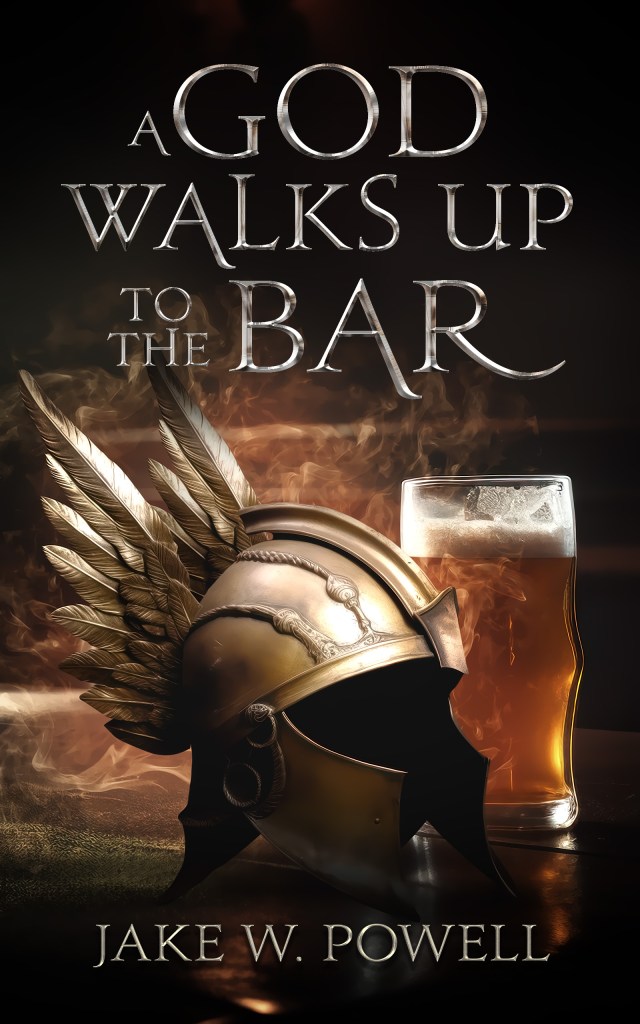
    My first book, A God Walks up to the Bar, is available on Amazon.com. Witness the modern day adventures of the Greek god Hermes in a world much like our own – and with demigods, vampires, nymphs, ogres, and magic. The myths never went away, they just learned to move on with the times. It’s a tough job, being a god!
    A Voice of Their Own: Crafting Your Characters

    Stories need characters to be stories. Stories are about people. Whether they be human or otherwise isn’t the point: They are defined personalities with concrete goals that drive the plot. Even a place can become a character in the hands of an imaginative writer. Whatever shape they take, every tale needs characters to be a tale. Otherwise, you might be dabbling in some form of avant-garde, and I can’t help you there.

    Since characters are so vitally important, from the protagonist to the antagonist to the mentor to the love interest to the bit part, it is important as a writer to learn how to create an interesting and layered cast to inhabit the worlds we put down on paper. People have quirks and habits. They have desires. They have likes and dislikes. They have relationships. As authors, it is our job to make the cast come to life. We create the illusion that they are real people.

    It’s impossible to create a fully fleshed-out person as you would meet in real life, simply because the sheer complexity and depth of a real person could never fit into any number of books. Pick a historical figure, say, Napoleon Bonaparte. How may books have been written about his life? And they all have something different to say. One man, and everyone sees something slightly different. A writer would have to dedicate his life and then some to even approach that degree of complexity. No, I believe that it is the author’s job to create enough of the character as is needed to serve the story.

    That’s what I mean when I say writers create the illusion of real people (or dogs, cats, antelope, aliens, mythical monsters, etc. You get the idea). It’s a bit of literary sleight of hand. Each character is just a slice of reality, a digestible piece that is enough for the plot and reader. By giving layers and dimension to those slices, we approximate reality. The closer we create someone who acts mostly like a real person, the more our readers are convinced they truly are. Suspension of disbelief. Very rarely will you ever read or watch a character behave exactly like a person in real life behaves.

    The victim in the slasher flick always heads into danger. The James Bond villain always monologues about his scheme before inexplicably letting the hero live. The cowboy cop always goes rogue and comes out a hero. Characters reflect reality, but they shouldn’t adhere to reality perfectly. They adhere to the plot. The story is everything, and characters serve to move the story forward. A little tinkering with common sense is a necessary evil.

    So, how do you craft your characters? How do you make them their own unique person? Well, some people like to make complete backstories before they start. Some have bibles dictating their characters’ natures, quirks, and traits. Some, like me, start with a basic outline and then let their characters reveal themselves during the course of writing. When I wrote A God Walks Up to the Bar, I knew Hermes’ basic nature. But during the course of the project, I discovered new things about him. There were layers to him I did not anticipate, reactions to events that I did not expect. He’s a fictional character, and I have final say in what is on the published page, but even so, he feels alive.

    And that’s good! When the character feels like a real person, I am better able to write them. It’s less like putting words into a dummy and more like having a conversation. I get to know Hermes, know what he’s like, glimpse into the parts of himself that he keeps hidden from all others. He reveals his history as I write him, and I am able to better write him because he has a history.

    With that comes a knowledge of what is in-character and out-of-character. How does he react to this situation? And what does he not do? If every character acts the same, then they are interchangeable and the story is boring. Boring is the writer’s death knell. Even an awful story can be entertaining. Heck, I’d rather write an awful story than a boring one. If the reader’s bored, he stops reading. But a “so bad it’s good” kind of story at least keeps their attention.

    Mind you, these are all my personal thoughts. Different authors have different styles. If you are a writer who finds it easier to write out a complete and detailed backstory for your characters before starting the first page of your book, then do so. I don’t think any writer should force themselves to do something that runs against their creative instinct. But be open to surprise. Inspiration is always active and strikes at any time, even mid-sentence.

    The gods and beings of ancient myth never went away. They just moved on with the times.

    My book, A God Walks up to the Bar, is currently available on Amazon.com. Venture into the world of the Greek god Hermes, a world filled with demigods, vampires, nymphs, ogres, magic, and trickery. It’s a tough job, being a god!

    Enjoying my blog? Don’t want to miss a single post? Subscribe for updates on when I post and follow my writing career, musings on fiction and storytelling, and reflections about life in general!

    Planning Ahead vs. Winging It: A Reflection on Writing Styles

    Ever heard the phrase “writing by the seat of your pants?” Some writers have a knack for making up the whole story as they go. They start with no outline and no treatment. They just start writing and end up wherever they may. Improvisation is a special skill and can lead to some truly inspired work when the author goes with his gut and lets the story flow out of his mind. Like a spring bubbling out of the rock, making things up as you go can produce the most unexpected and wonderful stories.

    It’s also a skill that not everyone has the good fortune to possess. I, for one, need to know where my story is going before I begin. The outline is the foundation of every story I write. Every scene, every step, every action must be planned out in advance. Like an architect designing a building, I have the blueprints spread out before me so I have an inkling of where my plot will ultimately end up.

    Otherwise, I’m adrift at sea and tossed about by a series of random events on a meandering journey with no point or overarching theme. Ok, some stories do work well with random-events plots, but these aren’t the type I’m trying to write. I try to stick to my strengths.

    That being said, writing is a truly organic process, and I mean that in more ways than one. Stories come alive on the keyboard (or under the pen if you’re so inclined). Like living creatures, they have urges and inclinations of their own, and a writer develops the intuition to detect those urges and know when to follow them and when to restrain. “Story whisperer” isn’t a term you’re likely to ever hear, but like animal trainers, writers end up gaining a deeper understanding of how their story “thinks” and where it wants to go. Exploring new potentialities can lead to new plot threads that improve the overall end result. Writing is full of pleasant surprises like that.

    As someone who loves to plan ahead, I’m not always interested in developing every new thread of a story that is revealed as I write it. But I do find that I tend towards winging it in certain circumstances. Dialogue, especially, lends itself to improvisation, if only because no matter how much I develop a story’s framework, the dialogue between characters never really falls into place until I sit down and write it in detail.

    This is the fun of writing: Watching your characters come alive and gaining a deeper knowledge of how they think and relate to each other. I’ve surprised myself plenty of times with how my own creations grow beyond my expectations.

    Action scenes can also end up going in completely unpredicted directions. Writing a fight scene or a chase can deviate from the “script” as it becomes apparent your original plan simply won’t work. So, I adapt and change course. Action scenes are hard enough to write as it is. Learning to wing it when necessary adds a whole new layer of challenge that can, nevertheless, improve your story if it lines up with the logic of the scene and the characters’ natures.

    What does this all mean for you as a writer (assuming you are one, of course)? Well, maybe you’re a little freaked out by my talk of stories as living creatures and think I should get some therapy. Or maybe you’re nodding in agreement. How I write is certainly not how others write, and the ideas that friends and teachers tell you may not line up with your own. Everyone has a different style: Some love to go in without a clue and find out where they end up, others definitely need a solid framework before they can begin the first sentence.

    Writing styles are unique to the writer. Everyone has their own process. Whether winging it or planning ahead, all writers find their sweet spot and use it to create something awesome.

    The gods and beings of ancient myth never went away. They just moved on with the times.

    My book, A God Walks up to the Bar, is currently available on Amazon.com. Venture into the world of the Greek god Hermes, a world filled with demigods, vampires, nymphs, ogres, magic, and trickery. It’s a tough job, being a god!

    Enjoying my blog? Don’t want to miss a single post? Subscribe for updates on when I post and follow my writing career, musings on fiction and storytelling, and reflections about life in general!

    Villains: Why We Love Such Hateful Scoundrels

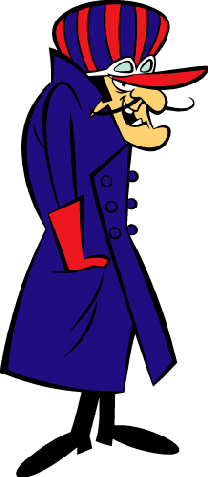
    Image: Dick Dastardly, doomed to villainy from the day he was named. Wacky Races promotional material, courtesy of Wikipedia, fair use

    Last week, I talked about antagonists and their importance to a good story. If you read it, you may have noted that I said antagonists are not necessarily villains. Antagonists are just a roadblock to the hero’s goal.

    Today we are going to talk about villains.

    What’s the difference? Simple. Villains are EEEEVVVIIILLL. They’re monstrous, greedy, murderous, and rude. They slaughter villages, rob innocents of all their possessions, conquer nations, and say really mean things. We love to hate them. We love villains. Why do we love villains? Why like something so vile?

    That question gave me some food for thought, and here’s what I’ve come up with.

    1: Villains are charismatic.

    Darth Vader knows how to make an entrance. He strides down a hallway littered with corpses, black cape flourishing behind him. His breath is a low mechanical wheeze, and his face is concealed behind a skull-like mask. He casually strangles a rebel while interrogating him, takes charge of every situation, strangles fellow Imperials from a distance while cracking morbidly dry jokes, and in general is a terrifying threat to everyone he meets.

    He’s a monster. But he’s a cool monster. He gets the cool armor, the cool lines, every appearance is accompanied by John Williams’s Imperial March, and if he’s not the mascot of the Star Wars franchise, he’s pretty dang close. Why? Because Vader has charisma. He’s memorable, he has stage presence, he has the physical acting of David Prowse and the rumbling baritone of James Earl Jones. Who doesn’t know who Darth Vader is? And how many little kids dress up as this cold-blooded mass murderer every Halloween? Oh, bitter irony! But such is the effect of a charismatic villain.

    2. Villains are interesting.

    We like to watch or read about interesting people. Ergo, we like to watch or read about interesting villains. Villains with unusual motives, or memorable quirks, or empathetic traits. We like villains who stick out from the mass of mundanity. We like villains who can keep us invested in the plot.

    Take old Norman Bates, for example. He’s a psychotic serial killer. Well, nothing new there, fiction loves its depraved killers. But he’s a hotel owner with a split personality, that of his deceased domineering mother, who takes control and kills any woman that Norman expresses an interest in. Well, that’s certainly one form of interesting. What’s more, half the plot of Alfred Hitchcock’s Psycho follows him as the main character. And we learn that, sick as he is, he is a tad pitiable as well. That makes him, dare I say, quite interesting to watch.

    We generally consume fiction for the purpose of being entertained. And a key part of entertainment consists of simply holding our attention. The best villains grab our attention and never let go. We look forward to seeing them onscreen, especially if they end up more endearing than the cardboard heroes.

    3. Villains drive the plot.

    Maybe, on some unconscious level, we like villains because we recognize how necessary they are. Villains, like all antagonists, drive the story. If they don’t start it, they at the very least keep it going. Conflict is key, and villains by their nature stir up conflict.

    Take the Evil Queen from Disney’s Snow White and the Seven Dwarfs, for instance. There would be no story if she hadn’t gone up to her magic mirror and asked “Who is the fairest of them all?” And then tried to kill Snow White when she learned the girl was fairer than her. Then Snow White wouldn’t have ended up in the dwarfs’ cabin, and the Evil Queen wouldn’t have pursued her disguised as an old hag, and we wouldn’t have had the dwarfs’ climactic scene chasing her up the cliff during a thunderstorm.

    There would be no movie. And we would not be entertained.

    The gods and beings of ancient myth never went away. They just moved on with the times.

    My book, A God Walks up to the Bar, is currently available on Amazon.com. Venture into the world of the Greek god Hermes, a world filled with demigods, vampires, nymphs, ogres, magic, and trickery. It’s a tough job, being a god!

    Enjoying my blog? Don’t want to miss a single post? Subscribe for updates on when I post and follow my writing career, musings on fiction and storytelling, and reflections about life in general!