Open a book, go on an adventure. You don’t leave home, you don’t walk a road. But you go on a journey just the same, to places near and far, betwixt and between.
The past and future, earth and space, ruins and utopias, worlds both alien and familiar. The lives of great kings and scientists and heroes stretch out before you. Hear their words, see inside their minds.
Indeed, you go everywhere, do everything, see everyone. A universe of words is revealed to you. Travel here and there, hither and thither, as much as you can stand.
And at the end of the journey, you come back home, and realize you never left your chair.
Such is the wonder of opening a book.
Many thanks for visiting my blog. I post updates on my writing career, I muse over storytelling and fiction, and I reflect on the curious and wonderful things in life.
I’m always thinking about writing and how to describe it to people who don’t write. It’s something that is both simple and complex to describe, because like most kinds of art, writing refuses to be boxed into simple definitions. Putting words on paper is what writing involves, but it is not what writing is.
One thing that writing is is the art of cutting away the unnecessary. Putting in too many or too few words is easy; adding just enough is hard. Authors spend their whole lives perfecting that technique.
And then my brain shifts gears and starts thinking: Can the same be said of stories in general? Everyone has at least one good story in them, but then there are those who have dozens, even hundreds of stories. Which ones do we tell, and which do we leave unsaid? In other words, which are the ones worth telling the world?
There are stories published that perhaps should not have been. On the other hand, there are also books written that will never see the light of day, maybe first attempts that authors are content to let sit in their drawer undisturbed (I’m not one of them. I published my first book, for better or for worse. You be the judge).
Some stories are complete in themselves, but get sequels that no one asked for. And some … This may be a strange thing to say, but I think that some stories can stay cozily confined within our own thoughts or just typed out on our computers and taken no further. Not every story needs to be told. But writers do need to write. It’s a hobby as well as a career.
Shifting through all the possibilities, the tons of tales that we think up, and deciding which we will commit our time to writing and which we must pass up on. That’s an art unto itself.
Many thanks for visiting my blog. I post updates on my writing career, I muse over storytelling and fiction, and I reflect on the curious and wonderful things in life.
Interesting thought for the day: All storytellers are liars.
Authors, poets, filmmakers, artists … We make things up. We show things to audiences that aren’t real.
But we’re liars who admit we’re liars. The things we tell in our stories are acknowledged as fiction. That’s why it’s called “fiction” and not “deception.”
There is an unspoken agreement between storyteller and audience: I will tell you something untrue, and you will treat it as something true until the story is ended. Audiences know that they are witnessing a fabrication, and so it is acceptable.
But stories do discuss real things – people, events, feelings, ideas, places – although the story itself isn’t true. Even if it is retelling a piece of history, it’s prefaced by the words “Based on a true story.”
Yet if it presents itself as real history, but isn’t, then it’s an actual lie.
Stories are lies that know they are lies and willingly admit it. And so they aren’t true lies, because they don’t pretend to be anything else.
Many thanks for visiting my blog. I post updates on my writing career, I muse over storytelling and fiction, and I reflect on the curious and wonderful things in life.
Let’s assume for a moment that we’re talking about a story featuring classic good versus evil. There’s a hero and a villain. They struggle with each other for victory.
What makes the story good? Lots of things, but interest is a biggie. We like interesting stories. Inversely, we avoid boring stories. What makes an interesting story? Conflict. The hero has to struggle to reach her goal. She must overcome obstacles great and small, and in so doing display character growth and maturity. At the heart of that struggle is their nemesis, the story’s villain.
Good villains go through their own struggles. Does that surprise you? The hero isn’t the only one who must overcome. After all, the best villains are the heroes of their own stories.
Like heroes, villains have goals. These goals run directly counter to the hero’s, hence why they clash. Now, a villain may be stronger than the hero, or smarter, or generally more intimidating. Which is great! It makes the hero’s victory all the sweeter. But if the villain always wins and succeeds in all their schemes right up until the last hour when the hero finally, conclusively defeats her opponent, well … It’s not a bad thing, per se, but it’s a tad predictable, and rather repetitive.
But what if the conflict becomes a ping-pong match?
The hero wins one round. The villain wins the next. They trade blows and barbs; they’re evenly matched up until the last. Now that’s a good story! It keeps the audience on their toes. You don’t know what’s going to happen next. You’re dangling in delicious suspense. “What if?” you ask yourself. What if this story doesn’t end happily? What if the bad guy wins? After all, the villain is a match for the hero. It’s just like ping-pong, which can get really intense if both competitors are skilled.
Okay, we know that good overcomes evil 90% of the time, but the illusion of doubt is introduced. Disbelief is suspended. We are caught up in the moment of the story.
Meaningful conflict is driven by a question that any good story should prompt in the audience: What happens next? It doesn’t matter if deep down we know the answer. The question should still be whispered on our lips.
Many thanks for visiting my blog. I post updates on my writing career, I muse over storytelling and fiction, and I reflect on the curious and wonderful things in life.
I like dark stories. I like stories that are grim and violent and seemingly hopeless. I like stories where the heroes are battered, bruised, beaten, foiled, and know great loss. I like stories filled with injustice and overwhelming evil trying to smother out the good.
I don’t like the darkness for its own sake. It’s true that I enjoy battle scenes and war stories and am not averse to violence. But I don’t enjoy the blood for its own sake, either. And I’m no masochist who watches bitter stories simply to sit alone later on and feel bad about the state of the world.
I like dark stories because the lights in them shine all the brighter. The sun is easily ignored on a sunny day, but it makes itself known when it breaks through the storm clouds. Moments of compassion and hope are all the more meaningful in a story filled with sorrow and cruelty.
We know what good is when it is juxtaposed against evil. We know what heroes are when they stand in the face of the impossible. We know what hope is when it defies despair.
When a writer understands that a dark story can still be uplifting and not merely a means to rage impotently against the wrongs they have known in life, then that story can be something great. We learn that life can be cruel, but we don’t have to be.
Did you like what you just read? Are you a writer, or just looking for fun content? Do you want more, but are worried about missing new posts? Please subscribe! I post updates on my writing career, I muse over storytelling and fiction, and I reflect on the curious and wonderful things in life.
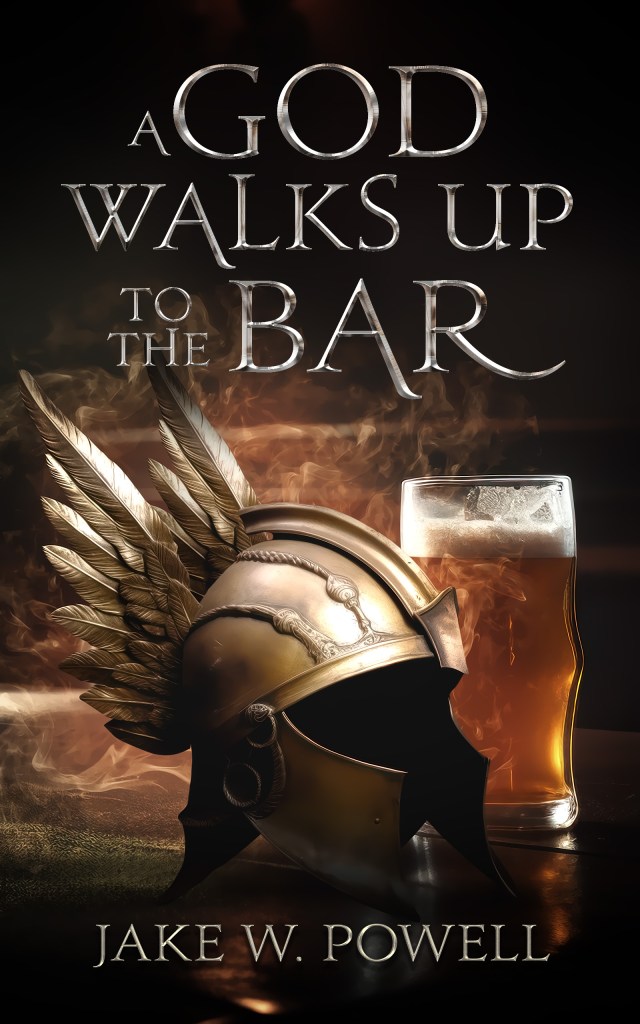
It hasn’t gone anywhere, and it won’t anytime soon! My first book, A God Walks Up to the Bar, is available on Amazon.com. Witness the modern day adventures of the Greek god Hermes in a world much like our own – plus with demigods, vampires, nymphs, ogres, and magic. The myths of old never went away, they just moved on with the times. It’s a tough job, being a god!
It’s the worst insult you can toss at a writer. It’s the deepest cut, the ultimate condemnation.
This reads like bad fan fiction.
Amateurish, incompetent, dubious, self-indulgent, outright moronic – these are the connotations those six words carry. Fan fiction is the respite of those who cannot write, but insist on doing so. Taking what others have already made and twisting it into their personal playground of poorly conceived plots. The refuge of the untalented.
Except it’s not true. Well, mostly.
Stories written by fans about their favorite movies or books or other franchises have garnered a collectively dismal reputation. They’re just a means for disgruntled people to “fix” stories they felt were ruined by the original creators or a way to make up romances between two characters that they happen to like. Now, these types of stories aren’t necessarily poor quality, but they tend to be made purely for the author’s own self-gratification. Consequently, quality isn’t an issue, only that the author gets what they want out of the story without regard for whether others will enjoy it (which beggars the question why it is posted online).
On the other hand, there is fan fiction that is comparable to published works, displaying not only raw talent but an understanding of plot structure, characterization, and reader engagement. Some of them are indeed so-called “fix fics” and romances, but just as many are original ideas, what-if scenarios, unofficial sequels, and other creative content. There’s the bad, the good, and the exceptional.
I wonder how many fan fiction writers could become successful mainstream authors if they so chose.
But what does this matter to you or me? What can aspiring writers who seek to publish, whether independently or through traditional publishers, find of worth in the world of fan fiction?
To put it plainly, writing fan fiction is really good practice for a writer.
I’ve written fan fiction. I wrote fan fiction before I published A God Walks Up to the Bar specifically to cut my teeth on writing for an audience. Fan fiction sites don’t require author names. You can make up any username or web appellation that you want. Anonymity can motivate shy writers, among whom I can be counted. The boldness inspired by a sobriquet can finally push you to take the plunge into getting your work out to the world. Plus, you get your first taste of criticism, good and bad, and develop the thick skin you’ll need and the ability to discern between worthwhile critiques and meaningless heckling.
If you’re a serious writer, fan fiction isn’t an exercise in self-indulgence. You want to tell a good story, and sometimes, building off a preexisting idea can be just the spark you need to flex your storytelling muscles. You can explore freely, experiment with writing styles to see what works for you and what doesn’t, and most importantly, you get to write. Practice, practice, practice. That’s how you improve as a writer.
And just as important, it’s completely free. The barrier of entry is even lower than for an indie publisher. No need for a budget to pay editors, beta readers, and cover artists. No need to maintain an author’s website. No need even for a business license! And the marketing is free, too. Fan fiction, by its nature, is about something already popular and well-known, so your writing can possibly attract more readers than your other, original works. Which is, well, not really fair, I suppose, but let’s try to stay optimistic here. More readers means more criticism means more improvement. Writing fan fiction is a fantastically low-risk method of developing your writing. It’s a great way to discover your own identity as an author without worrying about finances and other aspects of publishing.
All of which is to say, if you’re interested in getting into professional writing and feel you want to practice your skills and test the waters of public reception, fan fiction is a great starting point. And as someone who loves things to come full circle, I’ll just end by saying that someday, you may look back on these early experiments and chuckle … because now people are writing fan fiction about your work.
Did you like what you just read? Are you a writer, or just looking for fun content? Do you want more, but are worried about missing new posts? Please subscribe! I post updates on my writing career, I muse over storytelling and fiction, and I reflect on the curious and wonderful things in life.
It hasn’t gone anywhere, and it won’t anytime soon! My first book, A God Walks Up to the Bar, is available on Amazon.com. Witness the modern day adventures of the Greek god Hermes in a world much like our own – plus with demigods, vampires, nymphs, ogres, and magic. The myths of old never went away, they just moved on with the times. It’s a tough job, being a god!
What makes a story a story? What’s the fundamental element that every story has in common, regardless of genre, author, era, or medium? What is something that every, absolutely every, story must have in order to be a complete and whole narrative?
The answer: It ends.
“Oh, well done, Jake,” you might be thinking. “Congratulations, you jumped online to state the mind-numbingly obvious.” Well, yes, it is obvious. So obvious, in fact, that it curves back around to becoming easy to forget just how important it is that stories have conclusions. And, in fact, a lot of people nowadays seem to have forgotten that it’s important for the quality of any story, whether a book, a comic, a movie, a video game, or whatever, that it eventually comes to a stop.
Every narrative has a beginning, a middle, and an end. This is the basic structure. So, unless you’re going for something avant-garde, this is the way that every story is written. You start at the beginning, work your way to the end, then stop. Obvious.
Why is this so important? Because a story that never ends ceases to be a story.
Endings are important. Maybe they’re even more important than beginnings. Endings wrap up the plot. They give closure to the characters’ arcs. They tell the audience that that’s all, folks. Whether or not they satisfy us, endings close the loop. They give a story its shape, like how our backbones keeping us humans from being floppy, wiggly things squirming on the ground. A writer works her way toward the ending. And when she gets to the ending, she knows that there’s no more. There’s a boundary there, a limit that gives focus to what she writes, because she knows that she shouldn’t go beyond the finish line. Writers need their stories to end.
One of my favorite pieces of fiction is the newspaper comic Calvin and Hobbes by Bill Watterson. It’s just fun, brilliant writing and art. It was also very successful. So successful, that Watterson could have kept it going for a long time. But you know what he did? He didn’t. When he felt that he had told every story he needed to, he chose to end the comic. Isn’t that something crazy? To end an ongoing serial at the height of its popularity? Not many people have the courage to do something like that. But the final Calvin and Hobbes comic is something special. It sums up the spirit of the work and ends on a high note. Waterson knew that his story needed its conclusion.
He was tapping into something ancient and mythical, believe it or not. All the great sagas of the ancient world have endings. The epic of Gilgamesh ends with the hero’s profound growth as a person. The tales of the Norse gods end with a world-ending bang in the form of Ragnarök. The Trojan War didn’t go on forever – it reached its climax in one final, bloody battle. In more recent times, J. R. R. Tolkien tapped into that same epic tradition with The Lord of the Rings. It’s a doorstopper, but it does have its finale. He understood what the ancients did – a saga isn’t truly a saga until it’s all over. The fates of the heroes and villains are fulfilled, and an era is finished. The world moves on.
If a story goes on forever, eventually it ceases to be a story. It’s just a never-ending spewing of words and scenes that melt into each other and lose all meaning and purpose. The story falls apart. The narrative goes astray, and the characters lose their very nature simply due to existing for too long. There is no tale to tell, just a desire to keep a dying horse trotting forward for as long as possible, and it becomes painful to experience.
Well, now, aren’t I getting melodramatic? Maybe it’s time to end this post. Before I do, here’s one last thought: Consider a franchise or story arc or series that went on too long. I’m sure you can all think of at least one. It had an end … but then it kept going. It’s still going, perhaps, and shows no sign of stopping. But you wonder why. Why doesn’t it just stop? It’s past its glory days, and you recall its height with bittersweet nostalgia. You may not even enjoy it anymore. It’s not the same. It’s lost the spirit and tone that made it fun in the first place. It’s clearly a walking corpse kept going by sheer inertia – and maybe by the creator’s desire to milk as much money out of it as possible. It should end. It needs to. But it didn’t and suffered for it.
The best stories are the ones that know when they’ve reached their stopping point.
What do you think? What are your thoughts on stories and endings? Feel free to share!
If you just so happen to be enjoying my blog, feel free to subscribe. I post updates on my writing career, I muse over storytelling and fiction, and I reflect on the curious and wonderful things in life.
My first book, A God Walks up to the Bar, is available on Amazon.com. Witness the modern day adventures of the Greek god Hermes in a world much like our own – and with demigods, vampires, nymphs, ogres, and magic. The myths never went away, they just learned to move on with the times. It’s a tough job, being a god!
Fact is stranger than fiction, they say. And it’s true. But have you ever considered the inverse: Fiction is never stranger than fact.
No matter a writer’s imagination, no matter his ability to craft new worlds out of his own mind and populate it with characters who seem as real and unique as anyone you meet on the street, and no matter how engaging, grandiose, bizarre, or heartfelt the events portrayed in his work, he will never be able to surpass the parade of the unexpected that is world history.
History IS story. It’s right there in the word, isn’t it? And it’s real. Just think about that for a moment. Think about all the things you’ve read in the history books. Adventure. Romance. Mystery. Tragedy. War. Friendship. Triumph. Defeat. Despair. Hope. All of it is there, all of it waiting to be discovered by that one author seeking a mote of inspiration.
Where am I going with this? Just to say this: We writers have so much to draw from just by browsing the history section at our local library or bookstore. Heck, just go online. We live in the age of information. The World Wide Web contains everything. Try a quick surf of your hometown’s newspaper archives. Stories aplenty. Ideas in abundance.
And now I’m starting to think that there are so many tales in history that haven’t been given their due. Forgotten stories that need a time to shine. Eras and events that have been lost in the bustle of modern progress. Martin Scorsese’s Killers of the Flower Moon highlighted a time in Native American history that deserves more recognition. A terrible time, but one that should be known.
What else have we misplaced? What battles and victories waiting for their recognition? Unsung heroes waiting for their song to be written? Tragedies yet to be acknowledged? Villains who thought they got away with it?
Apologies, I’m just waxing poetical now. You get the idea. Writers don’t just write stories. We live at the tail end of the longest story ever written. All we have to do is look back a little ways for new tales from that saga to tell. Isn’t that a teensy bit amazing?
If you just so happen to be enjoying my blog, feel free to subscribe. I post updates on my writing career, I muse over storytelling and fiction, and I reflect on the curious and wonderful things in life.
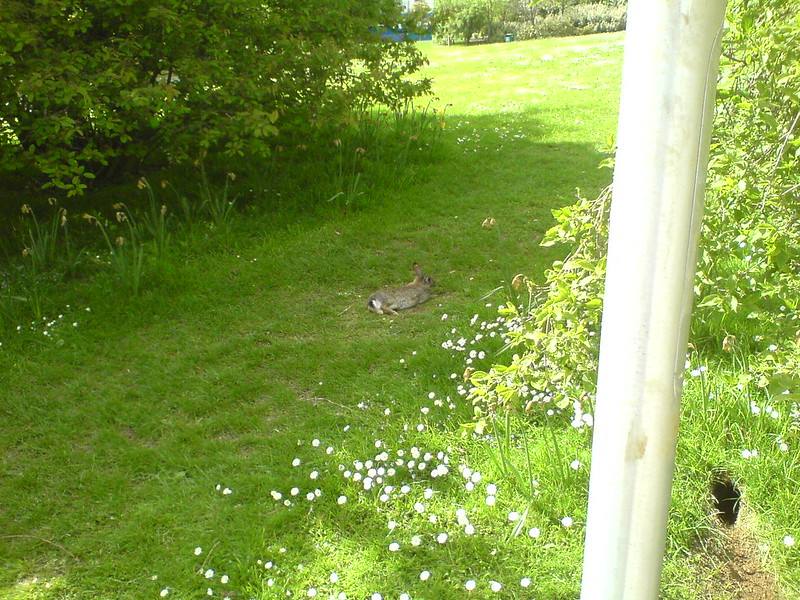
“Cuddling up with a good book” is a phrase that invites images of coziness and comfort. It’s like being a rabbit holed up in your burrow, safe and secure. And we do like being comfortable. The same predictable genre or series over and over is a safe choice for when we get the itch to read something. But we are not rabbits. We humans benefit greatly from trying new things. Sometimes, we need to climb out of our burrows and take a close look at the landscape. A new book, a new genre, a new experience.
It’s not easy to do something we’ve never tried before, even with something as seemingly trivial as trying a new book. But it’s not trivial, is it? For some of us (myself included), it can be very daunting indeed. Reading is a time investment. Sinking time into something we might not even enjoy is time forever lost to us. Dare we take the risk?
I say we should. Life is short enough without limiting ourselves to a narrow view of it. Stories grow us and expand our perspective on the world. And who knows? You just might discover something new to love in literature. Trying new things is its own reward, and challenging ourselves to grow is always beneficial.
Rabbits are nervous, wary creatures. But rabbits can’t read and know the joy of encountering a new tale, of being lost in a new world of words. There are so many worlds out there, contained in the pages of a book or imprinted in the code of an eBook, and they’re all there for us to visit whenever we want. Why shouldn’t we try to explore as much as we can?
Alright, I’ll be honest. I’ve read books I didn’t enjoy. I’ve tried things recommended to me that I didn’t get much of a thrill doing. But, as they say, you never know until you try. On the other hand, I discovered some of my favorite franchises thanks to a friend or family member. And sometimes just from idle curiosity.
Whether you’re a writer or not, if you love literature, than never stop exploring its many corners. Leave your burrow and go out and see what there is to see!
Enjoying my blog? Don’t want to miss a single post? Subscribe for updates on when I post and follow my writing career, musings on fiction and storytelling, and reflections about life in general!
Really, this topic is so vast that I could devote an entire week to it. When you consider that stories have been told for as long as humanity has existed, it’s small wonder that certain themes and morals endure the rise and fall of civilizations, and that common threads wind through the evolution of communication technologies.
Quite simply, certain themes in storytelling are universal. I’m sure you’ve thought of some just now. Good versus evil. The hero’s journey. Coming of age. Revenge. Forgiveness. Hope. War and peace. Etc., etc. Why? Because they’re broad. They appeal to everyone, because everyone has, at some point or another, dealt with these issues. They resonate with us, to use a common turn of phrase. Another way of putting it is that they are inherently familiar topics. And it doesn’t matter who you are or where you’re from, everybody has a concept of the hero or wants a story about hope. Everyone is familiar with war, and also with villainy. You don’t need cultural translation to understand that there are good things in the world and also very bad things.
So, some stories have that universal appeal. How do we know which ones? Well, it takes a bit of patience to find out, doesn’t it? When Charles Dickens wrote A Christmas Carol, he didn’t know his novella would be a staple of literature over 150 years later. Neither did the Greek poet Homer know that The Odyssey and The Iliad would still be studied to this very day.
Wait fifty years. Is the story still popular? More importantly, is it still relevant? Do people still care?
For every masterpiece, there must be ten thousand forgotten works. So many stories fade away with time. Sometimes, it’s due to bad luck or happenstance, and some never get a chance to be recognized. And some were a flash in the pan: Their plots were ripped from the headlines, centered around current events. What was hot and fresh that year gave them a brief celebrity. Then the world moved on, and these stories became anachronisms. Their identities were fixed in current events, and without that context they remain curiosities at best.
I won’t give any examples. Maybe you can think of a few yourself.
Universality and timelessness go hand-in-hand. The greatest stories don’t need to be shackled to any one era. They can be retold, again and again, in any age, at any time, because the core of their identity and popularity isn’t the bells and whistles of the current year. It is their basic, broad, foundational themes that reverberate throughout the ages. Sherlock Holmes is Sherlock Holmes, whether he’s in the 19th century or the 21st. Journey to the West has been retold as a post-apocalyptic video game. You can’t count the number of adaptations of Little Red Riding Hood on your hands and feet – you’ll run out of digits.
The very best stories can be told over and over again, and they have something to say to us every time.
Enjoying my blog? Don’t want to miss a single post? Subscribe for updates on when I post and follow my writing career, musings on fiction and storytelling, and reflections about life in general!



 Jake W. Powell