Writing is a Whitewater Rapid, Writing is a Block of Marble

What do you enjoy most about writing?

Writing is an act of creation. It is the free exercise of imagination and the production of things unseen, undreamt, uncertain until that very moment. It is as dynamic as a mountain river and just as unpredictable. It ebbs and flows. Currents crisscross one another and pull me in this direction, and now in the other. I love it. I plunge into the unknown when I sit down to write. For all the preparations and outlines and forethought, which are important, I still don’t truly know what will happen.

I love the surprise. I love the way that my imagination detaches from my logical mind and soars on its own. And then, after I return to Earth and the giddiness fades, comes the really fun part: editing.

Editing is taking the uncouth block of marble that is my first draft and refining it into something I can show in public. I am an editor at heart. The initial draft, that whitewater rafting down the river of raw imagination, must be balanced against the delicate chiseling of the editing process. Careful carving, doing away with what isn’t needed, making my work into something better. I love the careful precision and attention to detail.

Truth be told, I just love making up stories. Good stories, bad stories, stories that teach, stories that entertain. Like rivers and stone, riding the rapids and nicking away at the marble, are stories made.

***

Many thanks for visiting my blog. I post updates on my writing career, I muse over storytelling and fiction, and I reflect on the curious and wonderful things in life.
“Hermes is not having the best time. He walks a fine line, and his duty as messenger of Olympus weighs heavily on him. Being a god in the modern age means living in a world that no longer believes in gods. How much can one deity accomplish when no one respects him anymore? And why do his instincts tell him that he, the son of Zeus, is losing favor with his own family?

Tensions abound. The upstart Young Gods play dangerous games using entire cities as their boards. Formless monsters strike from the nighttime shadows, terrorizing hapless mortals. Agents of rival pantheons scheme to thwart Olympus’ designs. In the thick of it all, Hermes does what he does best: trick, lie, and cheat his way to victory.

The Wrist That Would Not Break

Have you ever broken a bone?

As a matter of fact, I broke my leg when I was a kid. Had to wear a cast. Very painful and inconvenient, I can assure you, but this story isn’t about that. This is about the time when my doctor was convinced that I had broken my wrist.

So, I was a kid roughhousing with my friends, and I fell over and hurt my wrist. My mom takes me to the doctor, who looks it over and then sends me to a clinic to have an X-ray taken. The scan shows that there was no break, though I did have to wear a sort of partial-glove thing to keep my wrist straight and rigid. Presumably in case it did decide to break.

My doctor, however, was not a man easily dissuaded. I went in for another appointment, he inspected my wrist, then sent me over for another X-ray. No change.

I come in for a third appointment. My wrist appears to still be intact. But how can one know without an X-ray? Third time’s the charm. Off I go to have my wrist scanned for signs of a might-be-hiding-in-plain-sight crack in my wrist. Three X-ray scans, and my wrist still wasn’t broken.

In fact, the man in charge of the clinic came to speak with me in person to confirm if the X-rays had been deceived and my wrist was in fact broken. It in fact was not.

Looking back, I might have at least done my primary doctor the favor of discreetly breaking my own wrist to justify his vigilance. But that’s the sort of idea that only comes later in life with much wisdom and imagination. The fact is, my wrist truly, sincerely, and stubbornly refused to break, no matter how many X-rays it was subjected to.

***

Many thanks for visiting my blog. I post updates on my writing career, I muse over storytelling and fiction, and I reflect on the curious and wonderful things in life.

“Hermes is not having the best time. He walks a fine line, and his duty as messenger of Olympus weighs heavily on him. Being a god in the modern age means living in a world that no longer believes in gods. How much can one deity accomplish when no one respects him anymore? And why do his instincts tell him that he, the son of Zeus, is losing favor with his own family?

Tensions abound. The upstart Young Gods play dangerous games using entire cities as their boards. Formless monsters strike from the nighttime shadows, terrorizing hapless mortals. Agents of rival pantheons scheme to thwart Olympus’ designs. In the thick of it all, Hermes does what he does best: trick, lie, and cheat his way to victory.

A Thought on the Horror Genre

I don’t have any long discussion on life, writing and the universe planned today. Just a brief thought on the topic of story genres:

The difference between the horror genre and the action genre is whether or not the protagonist has a shotgun.

Cheers.

***

My latest book, The Trickster’s Lament, is currently available on Amazon in both Kindle and paperback format.

“Hermes is not having the best time. He walks a fine line, and his duty as messenger of Olympus weighs heavily on him. Being a god in the modern age means living in a world that no longer believes in gods. How much can one deity accomplish when no one respects him anymore? And why do his instincts tell him that he, the son of Zeus, is losing favor with his own family?

Tensions abound. The upstart Young Gods play dangerous games using entire cities as their boards. Formless monsters strike from the nighttime shadows, terrorizing hapless mortals. Agents of rival pantheons scheme to thwart Olympus’ designs. In the thick of it all, Hermes does what he does best: trick, lie, and cheat his way to victory.

Many thanks for visiting my blog. I post updates on my writing career, I muse over storytelling and fiction, and I reflect on the curious and wonderful things in life.

My New Book is Out on Amazon!

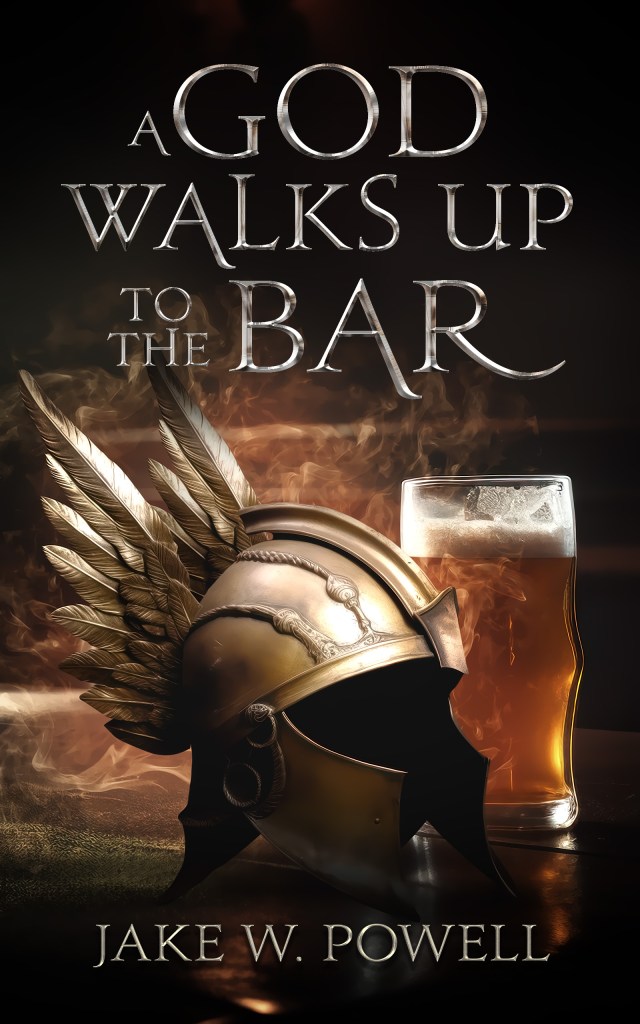
I am very excited to announce that my new book, The Trickster’s Lament, is now available on Amazon for both Kindle and paperback. This is my second ever published book and a sequel to my first, A God Walks Up to the Bar. I hope that my readers enjoy the further modern day adventures of the Greek god Hermes.

Synopsis:

“Hermes is not having the best time. He walks a fine line, and his duty as messenger of Olympus weighs heavily on him. Being a god in the modern age means living in a world that no longer believes in gods. How much can one deity accomplish when no one respects him anymore? And why do his instincts tell him that he, the son of Zeus, is losing favor with his own family?

Tensions abound. The upstart Young Gods play dangerous games using entire cities as their boards. Formless monsters strike from the nighttime shadows, terrorizing hapless mortals. Agents of rival pantheons scheme to thwart Olympus’ designs. In the thick of it all, Hermes does what he does best: trick, lie, and cheat his way to victory.

He may be disrespected. He may be kicked about. He may even be falling out with his pantheon. But Hermes is a trickster. He knows how to play dirty in a world that doesn’t play fair. But though he can best man, beast, and god, he isn’t prepared for his wiliest opponent yet: his own conscience.”

And for those who missed it the first time …

A God Walks Up to the Bar, my first foray into publishing, is also on Amazon.com. Interested in Hermes’s first recorded adventures battling half giants, skinwalkers, vampires, and other foes? Check it out!

As always, thanks for simply visiting my blog and sharing in my writing career and my various musings on life, the universe, and everything. Whether you click that subscribe button or not, I truly appreciate your taking the time to read my ramblings. Cheers.

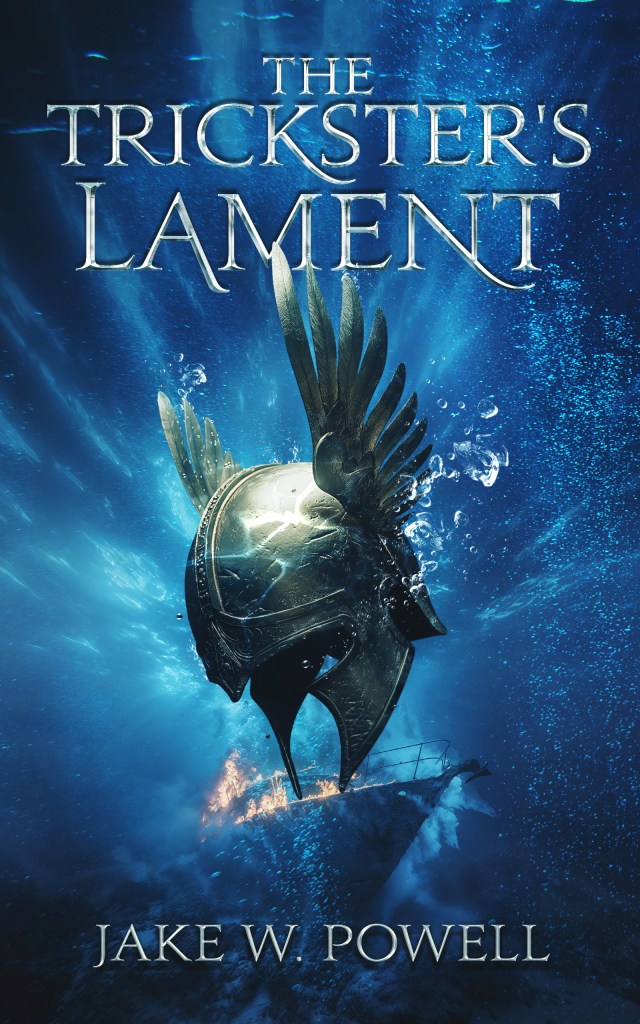
Cover Art for The Trickster’s Lament

It’s my pleasure and privilege to reveal to you the title and cover of my soon to be published second book, The Trickster’s Lament.

Per the synopsis:

“Hermes is not having the best time. He walks a fine line, and his duty as messenger of Olympus weighs heavily on him. Being a god in the modern age means living in a world that no longer believes in gods. How much can one deity accomplish when no one respects him anymore? And why do his instincts tell him that he, the son of Zeus, is losing favor with his own family?

Tensions abound. The upstart Young Gods play dangerous games using entire cities as their boards. Formless monsters strike from the nighttime shadows, terrorizing hapless mortals. Agents of rival pantheons scheme to thwart Olympus’ designs. In the thick of it all, Hermes does what he does best: trick, lie, and cheat his way to victory.

He may be disrespected. He may be kicked about. He may even be falling out with his pantheon. But Hermes is a trickster. He knows how to play dirty in a world that doesn’t play fair. But though he can best man, beast, and god, he isn’t prepared for his wiliest opponent yet: his own conscience.”

Look forward to The Trickster’s Lament release on Amazon.com later this month!

Many thanks for visiting my blog. I post updates on my writing career, I muse over storytelling and fiction, and I reflect on the curious and wonderful things in life.

What Writing My Second Book Has Taught Me

I’ve heard that writing your second book is harder than writing the first. Your first book may be a hit, but it may also be a fluke, a one and done deal. But moving on to the second? Ah, that’s when you find out if you really have the chops to be a writer.

Well, crafting my second book has gone mostly smoothly. The story came together much more easily, I’ve gained a better understanding of the characters and their motivations and personalities, and it’s been a fun ride. Heck, I got it finished in much less time than the first: about a year and a half from beginning to final draft. But I also made mistakes that I didn’t with my first project.

Now, why is that? Why did I order a paperback cover when I didn’t have my final page count ready? Why did I make silly oversights in editing that I only noticed after sending the book in for formatting?

The only answer I have thus far is that I was rushing. I jumped the gun, I got a little too lax, I was so fixed on the end goal that I didn’t pay attention to all the hurdles. I was impatient, and I didn’t even realize it.

Fortunately, I spotted these errors in time and fixed them. Lesson learned.

I thought I’d share my insights here for any other budding authors to read. Impatience is a bane of writers. Maybe you have just the one novel to write in your lifetime. You’ve spent years on it and are eager to finally see it published. Or maybe you have a series in mind, a long-running story told over several books, and you’re ready to move on to the next leg in the journey.

Either way, the temptation to push through and stop paying attention to details is strong. Resist it! A good novel takes time. You have plenty of it to perfect your story, and the copyright page, and the title, and the word count, and so forth. Don’t publish until you know that your book is exactly the way you want it.

Sweat the details. It saves so much trouble in the long run if you do.

Many thanks for visiting my blog. I post updates on my writing career, I muse over storytelling and fiction, and I reflect on the curious and wonderful things in life.

Open a Book

Open a book, go on an adventure. You don’t leave home, you don’t walk a road. But you go on a journey just the same, to places near and far, betwixt and between.

The past and future, earth and space, ruins and utopias, worlds both alien and familiar. The lives of great kings and scientists and heroes stretch out before you. Hear their words, see inside their minds.

Indeed, you go everywhere, do everything, see everyone. A universe of words is revealed to you. Travel here and there, hither and thither, as much as you can stand.

And at the end of the journey, you come back home, and realize you never left your chair.

Such is the wonder of opening a book.

Many thanks for visiting my blog. I post updates on my writing career, I muse over storytelling and fiction, and I reflect on the curious and wonderful things in life.

Putting Stories into the World and Learning to Let Them Go

Stories are precious things, especially to those who write them.

We write stories for all sorts of reasons: to tell a message, to work through a grief or hardship, as a gift for friends and family, or simply for the sake of doing so. Regardless of why, stories are very personal things.

And we all have a vision for our stories. We see it for what we want it to be. We see it all – or so we think. And then the moment of truth comes: time to publish. It’s out there, others are reading it, and they don’t see what we saw.

That’s applicability for you. We plan and plan, but readers make the story into something else, because they see themselves in the story. We all see ourselves, and so the narrative comes into focus through the lenses of our own lives.

It’s hard to let go of what we create, and even harder to hear others’ opinions of our work. They claim to understand and comprehend the deep analogies and whatnot, and we tell ourselves, “That’s not what I meant at all!”

It’s life, I suppose. And it’s something all writers will have to deal with sooner or later. But it’s not all bad. The words of readers reveal other lenses, other views and new possibilities. To be a writer is to spend so much time locked up inside yourself. Letting your story go out into the world allows you to see beyond your own mind.

Many thanks for visiting my blog. I post updates on my writing career, I muse over storytelling and fiction, and I reflect on the curious and wonderful things in life.

The Curious Art of NOT Writing the Story

I’m always thinking about writing and how to describe it to people who don’t write. It’s something that is both simple and complex to describe, because like most kinds of art, writing refuses to be boxed into simple definitions. Putting words on paper is what writing involves, but it is not what writing is.

One thing that writing is is the art of cutting away the unnecessary. Putting in too many or too few words is easy; adding just enough is hard. Authors spend their whole lives perfecting that technique.

And then my brain shifts gears and starts thinking: Can the same be said of stories in general? Everyone has at least one good story in them, but then there are those who have dozens, even hundreds of stories. Which ones do we tell, and which do we leave unsaid? In other words, which are the ones worth telling the world?

There are stories published that perhaps should not have been. On the other hand, there are also books written that will never see the light of day, maybe first attempts that authors are content to let sit in their drawer undisturbed (I’m not one of them. I published my first book, for better or for worse. You be the judge).

Some stories are complete in themselves, but get sequels that no one asked for. And some … This may be a strange thing to say, but I think that some stories can stay cozily confined within our own thoughts or just typed out on our computers and taken no further. Not every story needs to be told. But writers do need to write. It’s a hobby as well as a career.

Shifting through all the possibilities, the tons of tales that we think up, and deciding which we will commit our time to writing and which we must pass up on. That’s an art unto itself.

Many thanks for visiting my blog. I post updates on my writing career, I muse over storytelling and fiction, and I reflect on the curious and wonderful things in life.

Stories and Lies

Interesting thought for the day: All storytellers are liars.

Authors, poets, filmmakers, artists … We make things up. We show things to audiences that aren’t real.

But we’re liars who admit we’re liars. The things we tell in our stories are acknowledged as fiction. That’s why it’s called “fiction” and not “deception.”

There is an unspoken agreement between storyteller and audience: I will tell you something untrue, and you will treat it as something true until the story is ended. Audiences know that they are witnessing a fabrication, and so it is acceptable.

But stories do discuss real things – people, events, feelings, ideas, places – although the story itself isn’t true. Even if it is retelling a piece of history, it’s prefaced by the words “Based on a true story.”

Yet if it presents itself as real history, but isn’t, then it’s an actual lie.

Stories are lies that know they are lies and willingly admit it. And so they aren’t true lies, because they don’t pretend to be anything else.

Many thanks for visiting my blog. I post updates on my writing career, I muse over storytelling and fiction, and I reflect on the curious and wonderful things in life.