Writing Jerks

Why do jerks seem worse than villains? Villains are grand and powerful and fierce and evil. They deserve our disdain. But jerks are just plain petty. What’s worse? A dictator bent on conquering a nation, or a man who keys your car because you bumped him in the parking lot? Well, the former, obviously, but the latter certainly seems to steam people a heck of a lot more.

But I’m not here today to talk about “why’s,” but rather “how’s.” Namely: How do you write a jerk protagonist so that he’s likeable?

Think about it for a moment, writers. There are plenty of villains that people like. I’ve even written about it in a previous post. Mass murderers? Evil tyrants? Amoral thieves? They’ve all got fans. They’ve all got that special something called charisma. People will forgive a lot if you have charisma.

But jerks? They’re personal to the audience. We may never have met a murderer or a dictator (hopefully), but we all know a few knuckleheads with attitudes who stoop to the lowliest of cheap shots. Spend a week in customer service and you’ll meet jerks on the regular. They come in all flavors, but they all have something in common.

THEY AREN’T LIKEABLE.

Thus, going back to my first question, is there a way to write a protagonist who is unpleasant, rude, and otherwise just plain mean, and still make that character someone the audience can enjoy? Well, yes and no. The main thing about writing jerks is that if you keep them that way from start to finish, chances are you’re shooting yourself in the foot.

Consider a classic example of jerkdom in literature: A Christmas Carol’s Ebenezer Scrooge. A miserly, heartless, soulless businessman who has no mercy or pity for the poor. He’s on the up-and-up – he’s an honest man in the original story, believe it or not – but he has no redeeming traits. At first. The entire story is about Scrooge’s character development into a better person. And that’s the key to writing jerks: They shouldn’t still be jerks by the end of the story.

Side characters can stay jerks. Antagonists, of course, can remain jerks. But the protagonist should not remain static at the best of times. They evolve and mature. And if they start out as jerks and bullies, then they should show some sort of marked improvement by story’s end. Less of a jerk, kinder, more patient. Like Scrooge, they should learn something. There is nothing stopping you from writing a protagonist who remains the same come the conclusion, but if they were nasty and unlikeable to begin with, you risk leaving your audience with a sour last impression.

On the other hand, maybe the jerk not changing is the point. Maybe this is a more cynical piece, an introspective look into what makes a meanie tick – or maybe it’s just a comedy. Well, there is a way to make the audience side with the jerk, and that’s to introduce an even bigger jerk to square off against. Have a protagonist who’s belligerent and petty? Bring in someone else who’s even more so. It worked for British sitcom Fawlty Towers. Basil Fawlty is a Class-A Jerk through and through, but he frequently dances with people even worse than he is. See for yourself.

We like someone to root for, you see. If we’re given two flavors of unpleasantness, we’re naturally going to compare them. And if one is slightly less bad than the other, we’ll favor that one and despise the other. The lesser of two jerks, if you will.

There are those rare occasions where your story doesn’t require that the protagonist change for the better, or circumstances dictate that there isn’t a worse character to compare against. So, what to do? Well, you can make the jerk empathetic. That’s not saying you give the protagonist the capacity for empathy, but rather that you give them traits the audience can relate to. Humanize them a bit, just a little, so that they’re a tad more understandable. Maybe they are the way they are because of a bad childhood, or ill health, or they’re just plain unlucky.

Let us consider the case of Disney’s Donald Duck. He’s … not the most pleasant individual, especially in his 1930s and 1940s cartoon shorts. But oh, boy, does he have bad luck at every turn. Nothing turns out right for him. No wonder he has such a chip on his shoulder. If we had the rotten fortune that Donald does, we’d be short-tempered, irritable scoundrels, too.

So, there you have it. My two cents on writing jerk protagonists. It can be done. It has been done. You can do it, too.

If you just so happen to be enjoying my blog, feel free to subscribe. I post updates on my writing career, I muse over storytelling and fiction, and I reflect on the curious and wonderful things in life.
Quirks and Tics: Characterization through Minor Details

You ever think about how traits and habits can shape a character? Everyone has their own flavor of mannerisms: body posture, repeating gestures, facial expressions, verbal expressions, nervous habits. For the sake of simplicity, let’s call them “quirks.” They’re the little details that don’t play a part in the unfolding plot, but simply help flesh out the world you’re creating. Being visual cues, for the most part, they also aren’t always the easiest thing to describe in writing. Movies love them, though, and they can definitely help liven up a scene and make characters more relatable.

It’s all about humanizing your characters. Real people have habits and tics. They do or say things on a regular basis that are uniquely a part of them. You – yes, you – have habits and gestures of your own that make you, well, you. The devil is in the details, but so is good writing. Experienced authors can make even a bit character memorable by throwing in a couple of notable traits and letting those emblazon themselves in readers’ minds. Movies have it even easier. Being visual by nature, a film or TV show can display those quirks without pausing to describe them, letting such details blend more seamlessly into the narrative.

Mostly, quirks are all about worldbuilding, aren’t they? Not necessary to the plot, not vital to understanding the hero and supporting cast. They’re like sprinkles on ice cream. They’re a little something extra.

Or are they?

Quirks can be used as plot devices and can even deliver good payoffs. Someone recognizes her long-lost lover because of the specific way in which he twirls his hair. A secret agent’s habit of spinning his knife causes him to drop it and nearly trigger a motion-sensor alarm. A villain always unconsciously taps her fingers at the prospect of playing a game. A protagonist with OCD compulsively touches and counts poles on the sidewalk. He misses one and goes back for it – just in time to miss being run down by an oncoming car.

These are all examples taken from real movies and TV shows. Can you figure out where they come from?

Do you want your story to feel real? Do you want your characters to feel like people you might actually meet on the street? Or maybe you just want to challenge yourself with producing something a little more creative than past works? Consider using quirks to ad spice to your story. How? Well, take a look at the people you already know. Watch them carefully (but don’t be weird about it). Look at how they act and talk and move. Real life is good inspiration. Everyone has quirks.

Are there ways in which you have used quirks in your writing? Please feel free to share!

If you just so happen to be enjoying my blog, feel free to subscribe. I post updates on my writing career, I muse over storytelling and fiction, and I reflect on the curious and wonderful things in life.

Putting Your Best Foot Forward: Thoughts on Confidence

You ever see someone walking down the street with an easy stride, good posture, and a sure expression on their face? You think to yourself, “Man, they’ve got it together. They know they’re going places in life.” You ever question if they actually did know what they were doing and where they’d end up? After all, if they look like they know what they’re doing, they probably do, right?

Well, maybe not.

How often did you ask mom and dad questions about the world when you were a kid? And you took their answers as gospel truth. Parents always know why the sky is blue, and why the moon disappears during the day, and how car engines work, and when Santa is coming down the chimney on Christmas Eve. They were the all-knowing arbiters of wisdom.

Then we grew up and figured out that our parents were barely keeping it together. Blazes if they knew the right answers to a young child’s innocent curiosity. We become parents ourselves and end up playing the same part, only to discover that we can barely manage a coherent sentence in response to our children’s relentless torrent of questions.

But our parents always LOOKED like they knew what they were talking about. And because of that, we never thought to question anything they said. They could have told us the world really was black and white with no color in the 1950s, and our young selves would have believed them.

What about the inverse? An expert – in mathematics, let’s say – lectures in front of an audience. He’s giving one of those TED talks or what have you. He knows exactly what he’s talking about. He’s foremost in his field. But he stutters. He’s nervous being out in public like this. Consequently, he can’t explain the concepts very well. He has a nervous laugh and shuffles his feet. An expert? Sure. But we aren’t inclined to take him seriously. Not like Dad, who has no idea how photosynthesis works, but is able to bluff his three-year-old with a bold smile and a ready answer.

Confidence is a funny thing. It’s no guarantee of truth or accuracy, but it is such a vital component of how others perceive us. We trust confident people. They at least have the decency to look like they know what they’re about. And hey, if they trust their own skill, why shouldn’t we? Well, that way lies potential catastrophe, but that’s the point. We follow those who look like they know where they’re going. Confidence is no substitute for competence, but it is an important ingredient in leadership and successful undertakings.

Writing your book is one thing. Selling it is another. The Internet is full of ways to advertise, but if you don’t believe in the product yourself, why should others? If you don’t have the self-assurance that your story is worth reading, how are you going answer the question, “Why should I care?” If you don’t have any confidence, any trust in your book’s quality, people notice. And who wants to read a book that even the author doesn’t think is very good? Have a little faith in your work!

We live in a superficial world. Sad, but true. People look at our appearance and how we carry ourselves. Before they get to know us, they spot little details –shirt stains, unkempt hair, untied shoelaces. And thus, our self-presentation impresses itself on people’s memories for far longer than a good conversation or a well-informed lecture. Likewise, if any aspiring writers are trying to convince someone to read their book and looks nervous and withdrawn when discussing the thing, that’s what our would-be readers will remember, not that we actually wrote a good story that they’ll enjoy.

Is that fair? Not really. But it’s real. Writing requires skill and practice and patience. But to get people to read that story? That requires the belief that the story you told is worth sharing with others. It requires confidence to say that your story is worth the effort.

If you just so happen to be enjoying my blog, feel free to subscribe. I post updates on my writing career, I muse over storytelling and fiction, and I reflect on the curious and wonderful things in life.

Image: “BASE jump” by santimolina; Licensed under CC BY-NC-ND 2.0.

History: The Greatest Source of Inspiration for Any Writer

Fact is stranger than fiction, they say. And it’s true. But have you ever considered the inverse: Fiction is never stranger than fact.

No matter a writer’s imagination, no matter his ability to craft new worlds out of his own mind and populate it with characters who seem as real and unique as anyone you meet on the street, and no matter how engaging, grandiose, bizarre, or heartfelt the events portrayed in his work, he will never be able to surpass the parade of the unexpected that is world history.

History IS story. It’s right there in the word, isn’t it? And it’s real. Just think about that for a moment. Think about all the things you’ve read in the history books. Adventure. Romance. Mystery. Tragedy. War. Friendship. Triumph. Defeat. Despair. Hope. All of it is there, all of it waiting to be discovered by that one author seeking a mote of inspiration.

Where am I going with this? Just to say this: We writers have so much to draw from just by browsing the history section at our local library or bookstore. Heck, just go online. We live in the age of information. The World Wide Web contains everything. Try a quick surf of your hometown’s newspaper archives. Stories aplenty. Ideas in abundance.

And now I’m starting to think that there are so many tales in history that haven’t been given their due. Forgotten stories that need a time to shine. Eras and events that have been lost in the bustle of modern progress. Martin Scorsese’s Killers of the Flower Moon highlighted a time in Native American history that deserves more recognition. A terrible time, but one that should be known.

What else have we misplaced? What battles and victories waiting for their recognition? Unsung heroes waiting for their song to be written? Tragedies yet to be acknowledged? Villains who thought they got away with it?

Apologies, I’m just waxing poetical now. You get the idea. Writers don’t just write stories. We live at the tail end of the longest story ever written. All we have to do is look back a little ways for new tales from that saga to tell. Isn’t that a teensy bit amazing?

If you just so happen to be enjoying my blog, feel free to subscribe. I post updates on my writing career, I muse over storytelling and fiction, and I reflect on the curious and wonderful things in life.

Image: “Early printed vellum leaf” by Provenance Online Project; Licensed under CC0 1.0.

Stories for All Time: Universal Themes in Writing

Image: “Lonely Galaxy Lost in Space” by NASA Goddard Photo and Video, Licensed under CC BY 2.0.

Really, this topic is so vast that I could devote an entire week to it. When you consider that stories have been told for as long as humanity has existed, it’s small wonder that certain themes and morals endure the rise and fall of civilizations, and that common threads wind through the evolution of communication technologies.

Quite simply, certain themes in storytelling are universal. I’m sure you’ve thought of some just now. Good versus evil. The hero’s journey. Coming of age. Revenge. Forgiveness. Hope. War and peace. Etc., etc. Why? Because they’re broad. They appeal to everyone, because everyone has, at some point or another, dealt with these issues. They resonate with us, to use a common turn of phrase. Another way of putting it is that they are inherently familiar topics. And it doesn’t matter who you are or where you’re from, everybody has a concept of the hero or wants a story about hope. Everyone is familiar with war, and also with villainy. You don’t need cultural translation to understand that there are good things in the world and also very bad things.

So, some stories have that universal appeal. How do we know which ones? Well, it takes a bit of patience to find out, doesn’t it? When Charles Dickens wrote A Christmas Carol, he didn’t know his novella would be a staple of literature over 150 years later. Neither did the Greek poet Homer know that The Odyssey and The Iliad would still be studied to this very day.

Wait fifty years. Is the story still popular? More importantly, is it still relevant? Do people still care?

For every masterpiece, there must be ten thousand forgotten works. So many stories fade away with time. Sometimes, it’s due to bad luck or happenstance, and some never get a chance to be recognized. And some were a flash in the pan: Their plots were ripped from the headlines, centered around current events. What was hot and fresh that year gave them a brief celebrity. Then the world moved on, and these stories became anachronisms. Their identities were fixed in current events, and without that context they remain curiosities at best.

I won’t give any examples. Maybe you can think of a few yourself.

Universality and timelessness go hand-in-hand. The greatest stories don’t need to be shackled to any one era. They can be retold, again and again, in any age, at any time, because the core of their identity and popularity isn’t the bells and whistles of the current year. It is their basic, broad, foundational themes that reverberate throughout the ages. Sherlock Holmes is Sherlock Holmes, whether he’s in the 19th century or the 21st. Journey to the West has been retold as a post-apocalyptic video game. You can’t count the number of adaptations of Little Red Riding Hood on your hands and feet – you’ll run out of digits.

The very best stories can be told over and over again, and they have something to say to us every time.

Enjoying my blog? Don’t want to miss a single post? Subscribe for updates on when I post and follow my writing career, musings on fiction and storytelling, and reflections about life in general!

Why Writers Must Learn to Kill Their Babies (Less Morbid than It Sounds)

Okay, let me explain…

When I was taking film classes in college, my professor explained a key lesson that every writer must learn. They must learn when it is necessary to kill their babies.

You have an idea. It’s a brilliant, shining idea that came to you in an incandescent flash of inspiration. A magnificent idea that is the beating heart of your story. It is your motivation and driving force. The story would not exist except for this one concept.

It could be anything. A single scene. A character. A set piece. Even a single line of dialogue. Whatever it is, it was amazing enough to make you sit down and write.

It is your precious baby.

You finish the first draft of your story. You’re very pleased with it, especially how you incorporated your idea into the overall work. You send it out to readers for feedback. And the unexpected happens. They’re dubious about your baby. They don’t like it. They say that it doesn’t mesh with the rest of the story. In fact, it’s holding your story back from its full potential. It’s a liability.

Without realizing it, as you wrote and developed your setting, characters, and plot, they outgrew the original idea. That concept you love so much is no longer the plot’s beating heart. It is a tumor that threatens the quality of your narrative. The scene is out of place and unneeded. The character is completely detached from the rest of the cast. The set piece is just a waste of words. The line of dialogue is silly.

For the sake of the story, you must kill your baby.

If that sounds grotesque, it’s only to communicate how strongly writers can feel about their stories, and how painful it can be to remove something that can feel so personal to you. It’s a necessary culling that must be performed for the good of your writing. It is a sacrifice, one that almost every author must make at some point or another. And for those who aren’t willing to make the sacrifice, well, their story suffers for it. The readers might, too.

The lesson here is that something that seems like its working at the beginning of your project can become an utterly awful proposition by the end. A chef likes garlic, so he adds a ton of garlic to his casserole. Then he tastes the final product and gags. It was a good idea at the time, but …

Enjoying my blog? Don’t want to miss a single post? Subscribe for updates on when I post and follow my writing career, musings on fiction and storytelling, and reflections about life in general!

The Rule of Three: A Strange Ingredient for Storytellers

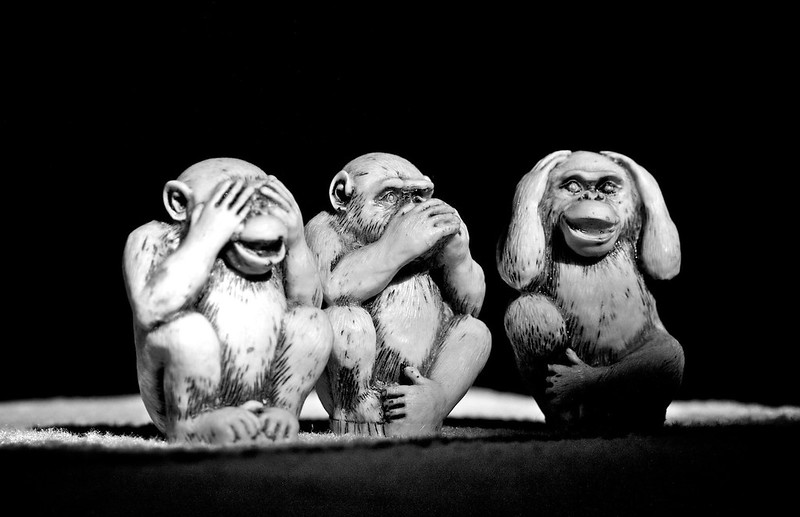
Image: “Three wise monkeys” by Anderson Mancini, licensed under CC BY 2.0.

What’s the most important number in the world? Let’s count.

One … two … three?

It’s an odd number to be fixated on. But we are. Look around you. Listen. Read. Everything comes in threes. We love things to be presented in trios.

Land, sea, sky. Birth, life, death. Child, adult, elder. Beginning, middle, end. Ready, set, go. Lights, camera, action. I came, I saw, I conquered. See no evil, hear no evil, speak no evil.

It’s a habit of humanity to divvy things up into threes. Maybe because it’s a nice prime number, like 5 or 7. There’s a pleasant sense of completeness in three, a satisfaction that you can’t quite get with two, and going up to four is a step too far. Three is everywhere, and it’s found a home in our collective psyche. Things always feel right when they’re grouped into threes. Stories feel right.

The number three is storytelling’s superstar. Stories rely on patterns, and the number three is the smallest number you can use to set up a pattern and then deviate from it. Take a glance at fairy tales and note how many times the third brother gets the prize, or how many trials the hero must overcome to succeed, or how many times the evil witch tries to stop him. Set up the expectation and then throw in a twist the third time around.

Good stories tend to be efficient with their time and words. Why go through the same pattern four times to set up the fifth’s deviation, when you can cut out two repetitions and get the same result? Maybe early oral storytellers were just lazy and hit on a good tactic to keep listeners engaged without wearing out their throats.

Either way, if you’re going to be a writer, consider the usefulness of the rule of three. Most stories are divided into three acts: The setup, the middle action, and the climax. Want to reinforce that a plot element is important? Mention it three times: Once to introduce it, a second time to remind your audience of its existence, and a third time for the payoff (alternatively, a third time to reinforce it in audience’s minds, and then give them the payoff).

Remember the oath that witnesses make in court? “Tell the truth, the whole truth, and nothing but the truth, so help me, God.” Here we see the principle in action: “Tell the truth” (introducing the concept to speak truthfully), “the whole truth” (reinforce the concept that you will be honest), “and nothing but the truth, so help me, God” (grinding it into your head that you will tell the truth, doggonit!)

As weird as the rule of three is if you think about it too hard, we’ve been raised on it for so long that it’s been hardwired into most societies. We tend to think in terms of threes when writing, when talking with friends, or even when giving a speech. It’s just such a common, reliable, and trustworthy trope. It’s in schools, it’s in media, it’s even in the academic community.

Ha, ha, yes, I’m so very clever. But you get the point. Don’t you? Need me to repeat it again?

In all seriousness, we humans do like patterns, and the rule of three is such a basic pattern that it fits pretty much anywhere. We recognize it, at least on a subconscious level, because we’ve been exposed to it since childhood. I can make that statement with confidence because it’s just. That. Widespread. And yes, I did just use the rule again to prove my point. Really, this whole article could drown in its own metatext.

Being so common, the rule of three is a reliable standby for writers both beginner and veteran. I use. You use it. And – Well, you get the idea.

The gods and beings of ancient myth never went away. They just moved on with the times.

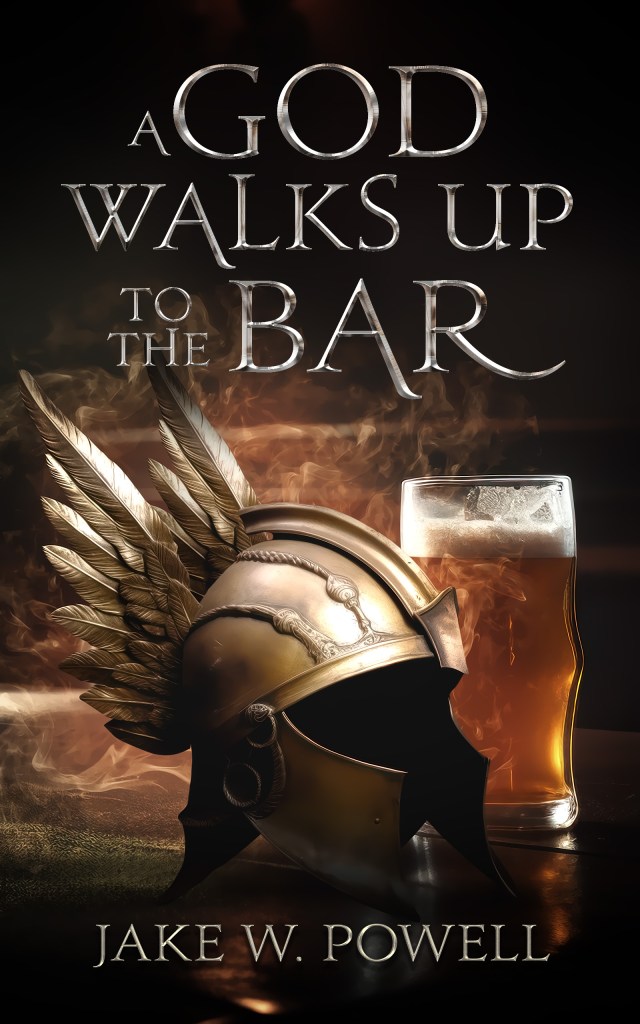
My book, A God Walks up to the Bar, is currently available on Amazon.com. Venture into the world of the Greek god Hermes, a world filled with demigods, vampires, nymphs, ogres, magic, and trickery. It’s a tough job, being a god!

Enjoying my blog? Don’t want to miss a single post? Subscribe for updates on when I post and follow my writing career, musings on fiction and storytelling, and reflections about life in general!

Why Writers Should Make Their Character Suffer

It is my duty as an author to make my characters suffer. I must put them through the wringer, submit them to the lash, and force them to endure severe physical and psychological torment. Nothing must come easy to them. My characters must endure doubts, confrontations, and existential crises. They must be tested to their utmost, then pushed even further.

Why? Because authors are sadistic monsters Because the testing of a character forces them to grow, and the pleasure of reading a story is to see its heroes overcome the challenges they face. The greater the challenge and the greater the suffering they endure in conquering that challenge, the greater the catharsis of victory for both hero and reader. And there’s also no small amount of pleasure in giving my characters that final victory. I personally like happy endings.

Suffering can bring out the best and worst in people, whether they be real or they be fictional. It’s an interesting experiment to put a written character to the test and see how they react. What happens if I put the protagonist into THIS terrible situation? Or make them confront THAT unpleasant truth? Struggles let us see what makes people tick. Test your mettle and see how strong you are … and grow stronger.

All that being said, it boils down to this: a story is only as interesting as its characters and the situations they find themselves in. If the characters are flawed and have to work through their problems, then great! The readers share in their triumphs and failures, empathize with their foibles, and root for their success. Characters who never struggle and always succeed perfectly in everything they do can have a place in a story, but you might want to think twice about making them the protagonist. In a word: Boring. Invincibility is fine against bullets and blades, but even Superman is weak against kryptonite.

Authors should toss their characters into the furnace every now and again. Let them work for what they want. It’s what readers are paying for after all, and we got to fill those pages somehow.

The gods and beings of ancient myth never went away. They just moved on with the times.

My book, A God Walks up to the Bar, is currently available on Amazon.com. Venture into the world of the Greek god Hermes, a world filled with demigods, vampires, nymphs, ogres, magic, and trickery. It’s a tough job, being a god!

Enjoying my blog? Don’t want to miss a single post? Subscribe for updates on when I post and follow my writing career, musings on fiction and storytelling, and reflections about life in general!

Antagonism: The Types of Conflict that Shape a Story

Featured Image: “Black Knight vs Blue Knight” by tinyfroglet is licensed under CC BY 2.0.

Funny thing about conflict: We don’t like it in real life, but we pay money to see people who aren’t real suffer. I mean, what good movie or book doesn’t have some sort of conflict at the heart of the story? The rebel leader fighting the evil empire, or the monster hunter confronting the vampire, or heck, the two lovers trying to overcome the forces keeping them apart. Conflict drives a story. Without it, there’s just nothing worth telling. No opposition, no struggle, no character arc, no story, no nothing.

With that in mind, it’s apparent that the source of conflict is pretty darn important. The protagonist wants something, and something else stands in their way. That “something else” is the antagonist, the source of the conflict. It’s not necessarily a villain. It’s not always another person. It may not even be a living thing. But it is opposed to the protagonist.

We humans are busy little storytellers. We’ve generated a wide variety of tales over the course of the millennia, and that means a variety of antagonistic forces have been invented. Let’s take a look at the basic types, shall we?

Firstly, we have the classic form of the antagonist: Man versus Man. It may not be an actual man against another man, but “Person versus Person” just lacks that dramatic je ne sais pas. Anyway, this is what most people think of when they think of the word “antagonist.” Darth Vader, Michael Myers, Dracula, the enemy army, werewolves, the high school principal, you name it. If it’s a unique, discrete entity, it falls under this category … usually. Mind you, however, that an antagonist is not necessarily a villain. They don’t have to be evil. Sure, Darth Vader is a classic antagonist and a legend of pop culture, but if the protagonist is an underdog football player trying to win the big game, the antagonist could be the arrogant captain of the opposing team: a jerk, but he doesn’t have to be a mustache-twirling, baby-kicking villain.

If it’s not Man versus Man, it just might be Man versus Nature. Think Robinson Crusoe. There is no one identifiable entity threatening the protagonist. Nature itself is the enemy. Maybe it’s a storm threatening a fishing community, a plague that scientists are racing to cure, or an asteroid on a collision course with Earth. Whatever it is, it’s generally a faceless threat that you can’t just beat up yourself.

Although, sometimes writers cheat and will throw in some form of threat that makes things more personal. Say, a pack of wolves that chase the protagonist throughout the story. Or maybe a really angry bear. Or a monstrous, man-eating shark (Hello, Jaws!). If there’s something to pinpoint as the source of the protagonist’s woes, it makes it easier for the audience to cheer for them when they beat it.

Man versus Society: Society is to blame! Here, we have a protagonist who is in some shape or form going up against their own culture. It could be going against expectations, fighting against injustice, or maybe just trying to flee an oppressive situation. Or maybe they’re rebels who want to defy norms and expectations as a means of proving their own individuality. Or maybe the protagonist’s actions aren’t justified at all, and the story shows why those norms exist. These sorts of conflicts can swing widely between the idealistic and the cynical. The protagonist wins, proving that society can’t keep you down. Or the protagonist wins, triggering a dystopian collapse. Or society wins, and the selfish protagonist learns an important lesson about sacrifice and duty. Or society wins, and the protagonist is reduced to just another cog in a life-sucking machine. Yeah, these stories can go all over the place, can’t they?

And finally, we have Man versus Self. The protagonist is their own worst enemy. Nobody is able to hinder their goals more than themself. Personally, I don’t see this particular form of conflict very often, but it’s there. I think it works best when combined with one of the three other antagonists above. The protagonist could succeed if only he would give himself a break or free himself from whatever chains are holding him back. Pretty good for a character study or more cerebral story rather than an action-focused piece. If you want to get really loopy, you could have the character’s inner demons manifest externally as something in the real world, usually in a symbolic way as something associated with their vices, or you could have a literal split-personality for them to talk to. All sorts of loopy possibilities.

And there you have it: A bare-bones breakdown of conflict and antagonists in a story. As basic as can be, but a solid foundation for any writer to use.

What other forms of conflict do you see in stories? Are there other types of antagonists you’ve found in media that you’d like to share?

The gods and beings of ancient myth never went away. They just moved on with the times.

My book, A God Walks up to the Bar, is currently available on Amazon.com. Venture into the world of the Greek god Hermes, a world filled with demigods, vampires, nymphs, ogres, magic, and trickery. It’s a tough job, being a god!

Enjoying my blog? Don’t want to miss a single post? Subscribe for updates on when I post and follow my writing career, musings on fiction and storytelling, and reflections about life in general!

Finding the Right Words

Sometimes I wish there was a checklist for writing the perfect story. If I had a step-by-step guide that included everything I needed to put into a book to make it a guaranteed success, it would make life so much easier. All I would have to do is check off each step, and bam, instant bestseller.

Naturally, it’s not that simple. Grammar and spelling are one thing. There are rules for sentence structure that can be looked up easily enough. But what about choosing the right words for the story?

How do I know just the perfect words for a description, or exactly how to phrase a piece of key dialogue? How do I write down something precisely as I want it to be read? I confess, I don’t fully know. I’ve studied creative writing in school and written poems and short stories. I’ve dissected classic literature until I was left with a mess of symbols and metaphors and analogies. As an aspiring author, I’m learning more than ever. But for all that education, writing fiction involves as much instinct and intuition as it does obeying the laws of grammar.

Words have power. I think we can all agree that words can encourage or depress us. There are pieces of writing that really move us, maybe even motivate us to take action. So, I’m like a guy holding a lit match. I have to be careful where I set it. Or maybe I’m more like a guy juggling 50,000 matches who has be verrrrry particular about where each one lands. Words are nothing to be trifled with, but the thing is, a writer really doesn’t know what the damage is until the reviews start coming in. Maybe it’d be useful if my draft spontaneously combusted. Then I’d know if I was doing it right or not.

Finding the right words is a bit of a crapshoot. I’ve only just really developed a feel for what my writing style is, and I’ve gotten beta readers to give me feedback that helps me see my own work more objectively. Even so, sometimes I feel like I’m groping in the dark. How exactly do I convey what I see in my mind’s eye? How do I communicate it? Even harder, what should I leave out to allow readers to fill in the blanks for themselves?

I don’t know if anyone ever gets it right the first time. To paraphrase Ernest Hemingway, the first draft of anything is crap. There’s always another go-around, and another, and another. It’s like a sculptor chipping away at the marble until the proper shape is carved out of the stone. It takes time, thought, and effort to find the right words.

Does that make writing boring and tedious? Not at all! It’s part of the fun for the writer. It’s a game of imagination combined with a jigsaw puzzle. You cook something up out of your own head, look at what ended up on paper, then try to fit the pieces together into something remotely resembling what you originally envisioned. It’s a challenge. I think we writers like challenges. We certainly like tormenting ourselves over finding just that perfect word to use in that one sentence on page 72 that we know only five people on Earth will ever notice.

Will I ever find the right words? The perfect words? Maybe. Maybe not. It’s worth the struggle to try.

Enjoy what you’re reading? Subscribe by email for updates on new posts and follow my writing career, musings on fiction and storytelling, and reflections about life in general.