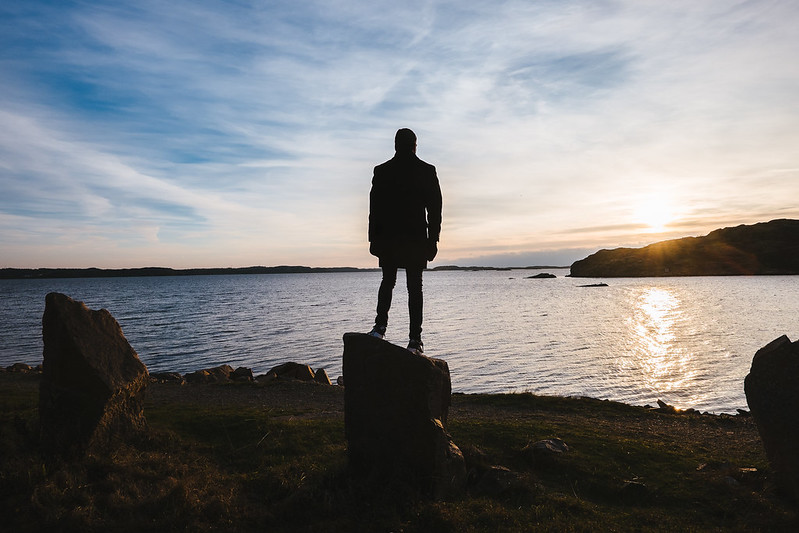
Thoughts on Living a Long Life

I’d be lying if I said I didn’t care if I live a long life so long as it was a “meaningful” or “productive” one. The survival instinct is strong. I want to live as long as I am able to because I value my life, I don’t want to sadden my friends and family, and I enjoy life. And even if life were miserable and burdensome, I would still want to live on, if not for my own sake, then for the sake of others.

And yet, the issue is more complex than that, because I also believe that better a short and healthy life than a long and poor one. To live 90 years and have half those years be spent in perpetual sickness brought on by poor life choices or chronic illness would be a terrible thing. Would I rather I spent my days in and out of the hospital like a revolving door?

It’s easy to be glib with phrases like “I would rather die” when battered by life, but the reality is that the vast majority of humanity wants to keep living regardless of quality of life. Life in and of itself matters.

To the extent upon which it depends on my choices, I want to live a long life. I want to live healthily and happily. And ultimately, I want to live, period. In suffering and in happiness, I want to live.

Life is a chain reaction. Our lives create ripples that touch others and, to perhaps an even greater degree, so do our deaths. Life is lived not only for myself, but for those around me. Even strangers are affected by my life, and mine by theirs. Not something to take lightly.

Ultimately, the concept of a long life is one of ups and downs, struggles and victories, joys and sorrows. Life is meant to be lived, for however long we are on this Earth.

***

Many thanks for visiting my blog. I post updates on my writing career, I muse over storytelling and fiction, and I reflect on the curious and wonderful things in life.

“Hermes is not having the best time. He walks a fine line, and his duty as messenger of Olympus weighs heavily on him. Being a god in the modern age means living in a world that no longer believes in gods. How much can one deity accomplish when no one respects him anymore? And why do his instincts tell him that he, the son of Zeus, is losing favor with his own family?

Tensions abound. The upstart Young Gods play dangerous games using entire cities as their boards. Formless monsters strike from the nighttime shadows, terrorizing hapless mortals. Agents of rival pantheons scheme to thwart Olympus’ designs. In the thick of it all, Hermes does what he does best: trick, lie, and cheat his way to victory.

Tolkien on Escapism

I was ranging the Internet tonight and came across this quote by J.R.R. Tolkien. Food for thought for writers, poets, and all other storytellers.

Fantasy is escapist, and that is its glory. If a soldier is imprisoned by the enemy, don’t we consider it his duty to escape?. . .If we value the freedom of mind and soul, if we’re partisans of liberty, then it’s our plain duty to escape, and to take as many people with us as we can!

J.R.R. Tolkien

***

Many thanks for visiting my blog. I post updates on my writing career, I muse over storytelling and fiction, and I reflect on the curious and wonderful things in life.

My latest book, The Trickster’s Lament, is currently available on Amazon in both Kindle and paperback format.

“Hermes is not having the best time. He walks a fine line, and his duty as messenger of Olympus weighs heavily on him. Being a god in the modern age means living in a world that no longer believes in gods. How much can one deity accomplish when no one respects him anymore? And why do his instincts tell him that he, the son of Zeus, is losing favor with his own family?

Tensions abound. The upstart Young Gods play dangerous games using entire cities as their boards. Formless monsters strike from the nighttime shadows, terrorizing hapless mortals. Agents of rival pantheons scheme to thwart Olympus’ designs. In the thick of it all, Hermes does what he does best: trick, lie, and cheat his way to victory.

Dreams in Life

We all have dreams. We have desires and goals we want to achieve. It might be something small or something grand, something that encompasses a single week or a whole lifetime. But we all have something we dream about.

How far do you go to achieve your dream? What are you willing to do? And what are you willing to sacrifice? Do you think about it all day long, but do nothing? Or do you work a little bit towards it every day?

How much do you dedicate to your dream? How much do you sacrifice? And when is the sacrifice too great? When does the dream become a tyrant that destroy your life rather than enrich it?

What place do dreams have in our lives? Do we seek them out at all costs? Or do we know when there are things even more important? Sometimes, we must not sacrifice for the dream, but sacrifice the dream itself. Life goes on. We go on.

But we never stop dreaming.

***

My new book, The Trickster’s Lament, is currently available on Amazon in both Kindle and paperback format.

“Hermes is not having the best time. He walks a fine line, and his duty as messenger of Olympus weighs heavily on him. Being a god in the modern age means living in a world that no longer believes in gods. How much can one deity accomplish when no one respects him anymore? And why do his instincts tell him that he, the son of Zeus, is losing favor with his own family?

Tensions abound. The upstart Young Gods play dangerous games using entire cities as their boards. Formless monsters strike from the nighttime shadows, terrorizing hapless mortals. Agents of rival pantheons scheme to thwart Olympus’ designs. In the thick of it all, Hermes does what he does best: trick, lie, and cheat his way to victory.

He may be disrespected. He may be kicked about. He may even be falling out with his pantheon. But Hermes is a trickster. He knows how to play dirty in a world that doesn’t play fair. But though he can best man, beast, and god, he isn’t prepared for his wiliest opponent yet: his own conscience.”

Many thanks for visiting my blog. I post updates on my writing career, I muse over storytelling and fiction, and I reflect on the curious and wonderful things in life.

Sleepless Opportunities

If you didn’t need sleep, what would you do with all the extra time?

Time enough at last!

Sleep takes up most of our lives. 7-9 hours every day. 14-15 hours left to do what we need to do – work, eat, chores, leisure. What if I had those extra 9 hours to myself? What if I could do whatever I wanted with all that extra time?

The strange thing is, I’m not sure if I would do much of anything. I’ve noticed that the amount of time I have to do something is directly proportional to how little I am motivated to do it. Perhaps it’s the same as being rich – one hundred dollars doesn’t mean much when you have one hundred million.

What I would try to do is to increase the amount of time that I exercise, and get more chores done, and maybe try out some recipes I’ve always wanted to make. And I’d certainly want to write more and read more and catch up on all the hobbies that have been nagging at my mind. But, I honestly don’t know if I would.

Time is precious. And less time motivates me to try to be more careful with it. I can’t do everything, so I endeavor to do what truly matters to me.

Many thanks for visiting my blog. I post updates on my writing career, I muse over storytelling and fiction, and I reflect on the curious and wonderful things in life.

What is a Masterpiece?

Masterpiece. It’s a word you hear often. So often, I feel that its meaning has been drained out of it. Like “genius” and “magnum opus,” it’s a label we often apply to something that we enjoy on a personal level, regardless of whether it deserves the title.

A little harsh? Probably. There’s nothing wrong with liking something. In fact, I encourage you to like lots of things. Enjoy life. But I like to overthink things and write them down, so why not dig a little deeper?

Masterpiece. It’s actually two words. Master. Piece. A master piece. In ye olden days, guilds and academies required their apprentices and journeymen to submit a masterpiece as part of their application to the status of master. Hence, they presented a piece that marked mastery of their craft, be it carpentry, smithing, jewelry, baking, or what have you. Proof and demonstration that they were worthy of attaining the highest rank, as judged by their superiors.

So, it was something that was measured against quantifiable standards. A masterpiece was actually a lot like today’s college senior capstones: a final paper or project that demonstrates the graduate’s understanding of their degree subject. Or perhaps more appropriately, it is like a doctorate or master’s thesis (and there’s the word “master” again!). That’s not really surprising, considering that guilds, like schools, train people for careers.

But the word’s meaning changed over time, as words are wont to do. Now, a masterpiece has come to hold an even more elevated meaning. It is not simply proof of an individual’s skill, but it is the apex of their skill. Mona Lisa is Leonardo da Vinci’s masterpiece. Not his first work, but widely considered his best. 1984 is George Orwell’s masterpiece, and Star Wars is George Lucas’s.

So what does the word mean nowadays? It means something superlative, something that represents the epitome of the creator’s talent and understanding of the art. It is applied to anything that can be considered great or notable. And in so doing, we have, oddly enough, brought the word down. A masterpiece is declared as such by critics who are not necessarily practitioners of the art. Anyone who favors a particular artist or author and is eager to share that love can declare their favorite work to be a masterpiece, regardless of what merit it actually represents. That happens with all words – their meanings change and are shaped by usage into something quite different, and will again in a hundred years or so – but looking back at a word’s origin can make you look at it a little differently. A little more carefully.

A masterpiece was originally something that proved the apprentice was worthy of the master’s rank as judged by his teachers. It was a stepping stone from a lower tier to a higher one. It was a gateway and a turning point in one’s life. It was something singular and unique. It was the masterpiece of your career. It was something special.

Call me grumpy, but I think we can be more mindful when using words like masterpiece. They are powerful words, and applying them more prudently can in turn make us consider the media we consume more carefully. A bit of critical thinking put into evaluating whether something is truly a master’s piece. And that’s good practice for any artist.

Many thanks for visiting my blog. I post updates on my writing career, I muse over storytelling and fiction, and I reflect on the curious and wonderful things in life.

The Importance of Silence

I’ve been thinking lately on how important silence is.

We need to embrace quietness every once in a while. I don’t mean locking ourselves in a noise-proofed room. I mean just taking time to not do anything for a few minutes. A few minutes of getting away from the hustle and the bustle and the honking traffic and the bombastic concerts and the blockbuster movies. A brief stretch of time containing nothing but the thoughts inside our own heads.

Why do I think that’s important? Well, as a creative type whose mind spins with new story ideas like a hamster running its wheel, being still for a couple minutes helps me recharge my mind. It revitalizes and refreshes me. Silence is rest. When I sleep at night, my body recharges its batteries. Silence helps me recharge my creative batteries, so to speak.

Silence can also be healthy simply for allowing us to exercise non-physical attributes, like patience and thoughtfulness. When we strip away all the noise of daily living, we’re left with our own thoughts. No outside influence or stimuli going into our brain. Just us. That can be a little scary, facing our own thoughts. But it’s good for us, too, to consider ourselves and rest our minds from the constant influx of media messages and the general racket of everyday busyness.

Or maybe I’m just biased. I’m an introvert, I like peace and quiet. Maybe more extroverted people are able to endure the busyness and noise better than I can. Never stopping to collect one’s thoughts sounds exhausting to me. I could sit in a chair and just think all day long.

Even so, if you’ve never tried it before, just take a couple minutes out of your day and do nothing. Turn down the TV or the computer, sit back, and enjoy quietness. See what it does for you. See for yourself if you agree that silence is important.

Enjoy what you’re reading? Subscribe by email for updates on new posts and follow my writing career, musings on fiction and storytelling, and reflections about life in general.