To strive for perfection is something that writers do. We put all our effort into writing stories that are perfectly plotted, that contain no plot holes or leaps of logic, that are devoid of unnecessary fluff, that are devoid of grammar and spelling mistakes. Perhaps even more, we want to write a story that everyone loves and that has no detractors whatsoever, a story that perfectly conveys the message we want to share with the world. We strive to be perfect, but we will never get there.
But this fact should not lead to discouragement. If an author wrote a book that everyone somehow agreed was perfect, what point would there be to continue writing anything else? If you’ve achieved the absolute height of the craft, why keep going?
Perfection is a hypothetical. We may use it as a target to direct our efforts, but we won’t ever “get there.” No, the best writers keep writing to refine their craft and to improve. Always improving, always discovering new ways to tell stories and make them exciting, interesting, impactful. I’m not a particularly good writer, but I look back on past work and see the maturity that’s taken place.
Aim for excellence. Aim for quality. Don’t worry about writing the next great American novel. Don’t despair at the mistakes you see in your work after it’s published. Recognize them sure, and learn from them. And then look forward to writing an even better novel next time.
Many thanks for visiting my blog. I post updates on my writing career, I muse over storytelling and fiction, and I reflect on the curious and wonderful things in life.
If there was a magic trick to becoming a better writer, if there was a special class or a magic book, I’d be recommending that here instead. But, obvious as it may sound, the only way to become a better writer is to, well, write.
It’s one of those facts of life that’s so simple that you think there must be a catch. There isn’t, except that it requires hard work and discipline. To become better at something, you need to do it as often as you can.
But, you might ask, what about writing classes? What about exercises? What about reading and research? Those are important, make no mistake. There are plenty of good resources for writers nowadays, especially online. There are tons of excellent blogs that I personally peruse for advice. But if you want to be the best writer you can be, you have to delve headfirst into turning that idea that’s been clattering inside your head into reality. You need to practice your craft.
Write, keep writing, and never stop writing. Practice, practice, practice. And after you write, go over what you’ve written. Look at it with a critical eye. Learn your strengths and recognize your weaknesses. Improve upon them. Seek feedback from friends and family and writer groups. And keep writing.
With every new project, with every completed draft, and with every review, you will improve. Don’t let up. Keep pushing yourself. Accept no substitutes.
Many thanks for visiting my blog. I post updates on my writing career, I muse over storytelling and fiction, and I reflect on the curious and wonderful things in life.
Do you remember your favorite book from your childhood?
In truth, there are so many books I loved as a child that I can’t remember them all. I just remember the hours spent in my room, lost in words and pictures. But there is one that does stick out in my memory.
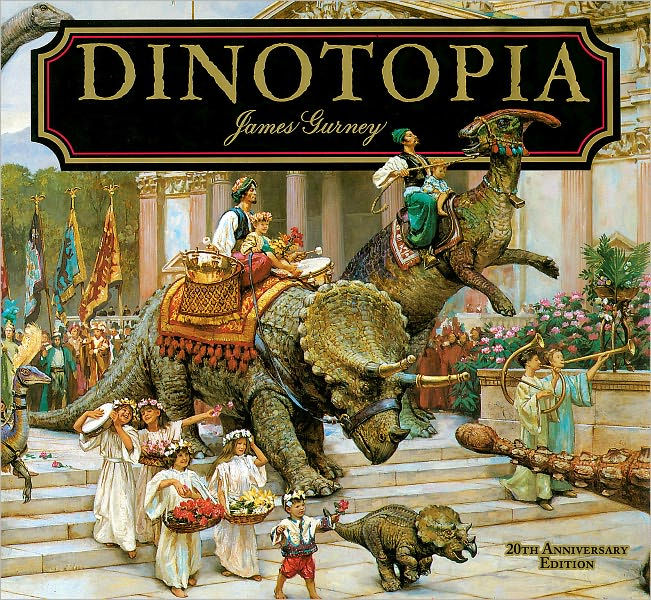
I have very fond memories of an illustrated book called Dinotopia: A Land Apart from Time. It has beautiful imagery, wonderful worldbuilding, and is a tour de force of creating a fully-realized fictional world, courtesy of National Geographic artist James Gurney.
Dinotopia is about an island hidden from the rest of the world where dinosaurs and humans live in peace and harmony. It is presented through the eyes of a 19th-century explorer and his son who are shipwrecked on the island and gradually become a part of its strange, beautiful, and intricate society. Gurney put a lot of thought into how such a world would function, not just the cities and the clothing and the festivals and the government, but such mundane things as bedding, waste disposal, and timekeeping.
And it’s gorgeous.
Remember what it was like to be a kid? When there were no strange grown-up responsibilities and nagging worries? Remember when nobody could take away your joy because you clung to it so fiercely? Dinotopia reminds me of those days, and it reminds me that we are still able to keep that joy throughout our lives.
Most of all, it reminds me how fun it is to curl up with a good book.
Many thanks for visiting my blog. I post updates on my writing career, I muse over storytelling and fiction, and I reflect on the curious and wonderful things in life.
There’s a fine line between being likeable and being charismatic. A likeable character – affable, friendly, trustworthy – is someone you want to be around for a chat and a drink. A charismatic character – inspiring, motivating, commanding – is someone you want to watch from a distance . There can be overlap, of course, but when writing a charismatic character, keep in mind that they don’t have to be nice. And a likeable character can be as dull as dirt, oddly enough. It depends on the reaction you’re trying to get out of your readers.
Understanding the type of character you’re writing and the feelings you’re trying to draw out of your readers is important. Likeability and charisma are just two of the facets found in any character, but they are important ones. Consider your protagonist. Does he draw others to himself? Does he make friends (and allies) easily? Why? Do you intend for him to be just plain affable and good-natured? Or maybe he is forceful and commanding, the type of person who gets what he wants through panache and strength of personality?
Knowing which you want determines which of the two traits you’re shooting for.
Likeable characters are, well, easy to like. And we like people who are like us. Most importantly, such characters possess empathy. They have hearts, and they not only understand how their actions affect others, they care about the consequences of those actions. And we generally like that in the people we’re in close contact with on a regular basis.
Charisma is awe. We don’t necessarily want to be around them constantly. We are amazed by them, but they are best enjoyed from a distance. They’re natural showmen, they get others pumped up and ready to see something spectacular. They represent what we want to be. A charismatic character can become a symbol or ideal to aspire towards.
Is there overlap? Absolutely. Many, many characters in fiction possess both traits. But even then, there tends to be a weight toward one or the other. Whether hero or villain – yes, villains can be easy to like, too – the two traits must be separated from one another to recognize them for what they are, and ultimately, to understand the impact you want the character to have on your reader.
Many thanks for visiting my blog. I post updates on my writing career, I muse over storytelling and fiction, and I reflect on the curious and wonderful things in life.
Many thanks for visiting my blog. I post updates on my writing career, I muse over storytelling and fiction, and I reflect on the curious and wonderful things in life.
I like dark stories. I like stories that are grim and violent and seemingly hopeless. I like stories where the heroes are battered, bruised, beaten, foiled, and know great loss. I like stories filled with injustice and overwhelming evil trying to smother out the good.
I don’t like the darkness for its own sake. It’s true that I enjoy battle scenes and war stories and am not averse to violence. But I don’t enjoy the blood for its own sake, either. And I’m no masochist who watches bitter stories simply to sit alone later on and feel bad about the state of the world.
I like dark stories because the lights in them shine all the brighter. The sun is easily ignored on a sunny day, but it makes itself known when it breaks through the storm clouds. Moments of compassion and hope are all the more meaningful in a story filled with sorrow and cruelty.
We know what good is when it is juxtaposed against evil. We know what heroes are when they stand in the face of the impossible. We know what hope is when it defies despair.
When a writer understands that a dark story can still be uplifting and not merely a means to rage impotently against the wrongs they have known in life, then that story can be something great. We learn that life can be cruel, but we don’t have to be.
Did you like what you just read? Are you a writer, or just looking for fun content? Do you want more, but are worried about missing new posts? Please subscribe! I post updates on my writing career, I muse over storytelling and fiction, and I reflect on the curious and wonderful things in life.
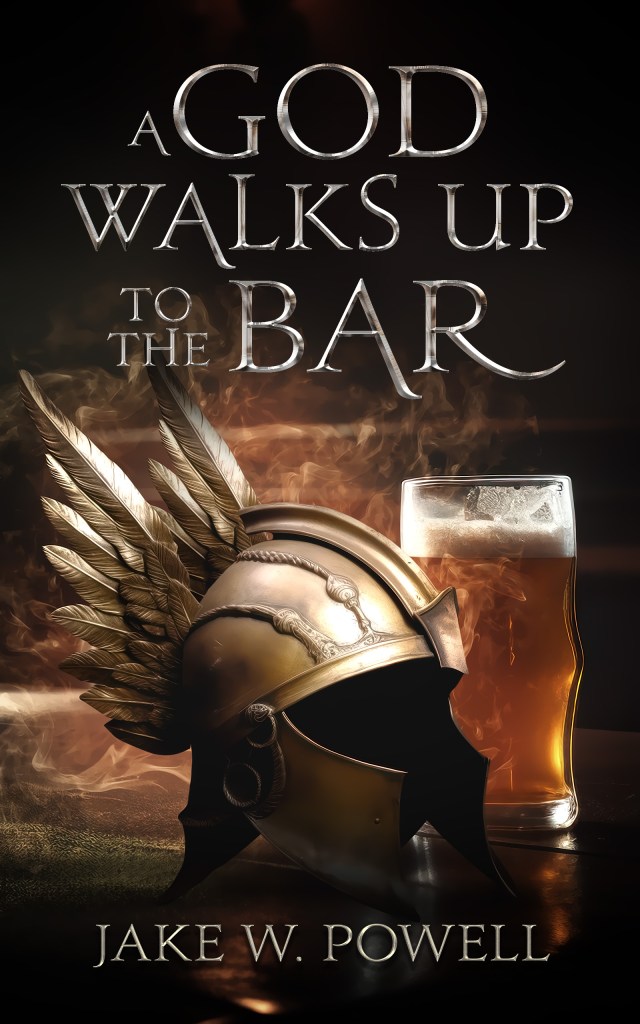
It hasn’t gone anywhere, and it won’t anytime soon! My first book, A God Walks Up to the Bar, is available on Amazon.com. Witness the modern day adventures of the Greek god Hermes in a world much like our own – plus with demigods, vampires, nymphs, ogres, and magic. The myths of old never went away, they just moved on with the times. It’s a tough job, being a god!
It’s the worst insult you can toss at a writer. It’s the deepest cut, the ultimate condemnation.
This reads like bad fan fiction.
Amateurish, incompetent, dubious, self-indulgent, outright moronic – these are the connotations those six words carry. Fan fiction is the respite of those who cannot write, but insist on doing so. Taking what others have already made and twisting it into their personal playground of poorly conceived plots. The refuge of the untalented.
Except it’s not true. Well, mostly.
Stories written by fans about their favorite movies or books or other franchises have garnered a collectively dismal reputation. They’re just a means for disgruntled people to “fix” stories they felt were ruined by the original creators or a way to make up romances between two characters that they happen to like. Now, these types of stories aren’t necessarily poor quality, but they tend to be made purely for the author’s own self-gratification. Consequently, quality isn’t an issue, only that the author gets what they want out of the story without regard for whether others will enjoy it (which beggars the question why it is posted online).
On the other hand, there is fan fiction that is comparable to published works, displaying not only raw talent but an understanding of plot structure, characterization, and reader engagement. Some of them are indeed so-called “fix fics” and romances, but just as many are original ideas, what-if scenarios, unofficial sequels, and other creative content. There’s the bad, the good, and the exceptional.
I wonder how many fan fiction writers could become successful mainstream authors if they so chose.
But what does this matter to you or me? What can aspiring writers who seek to publish, whether independently or through traditional publishers, find of worth in the world of fan fiction?
To put it plainly, writing fan fiction is really good practice for a writer.
I’ve written fan fiction. I wrote fan fiction before I published A God Walks Up to the Bar specifically to cut my teeth on writing for an audience. Fan fiction sites don’t require author names. You can make up any username or web appellation that you want. Anonymity can motivate shy writers, among whom I can be counted. The boldness inspired by a sobriquet can finally push you to take the plunge into getting your work out to the world. Plus, you get your first taste of criticism, good and bad, and develop the thick skin you’ll need and the ability to discern between worthwhile critiques and meaningless heckling.
If you’re a serious writer, fan fiction isn’t an exercise in self-indulgence. You want to tell a good story, and sometimes, building off a preexisting idea can be just the spark you need to flex your storytelling muscles. You can explore freely, experiment with writing styles to see what works for you and what doesn’t, and most importantly, you get to write. Practice, practice, practice. That’s how you improve as a writer.
And just as important, it’s completely free. The barrier of entry is even lower than for an indie publisher. No need for a budget to pay editors, beta readers, and cover artists. No need to maintain an author’s website. No need even for a business license! And the marketing is free, too. Fan fiction, by its nature, is about something already popular and well-known, so your writing can possibly attract more readers than your other, original works. Which is, well, not really fair, I suppose, but let’s try to stay optimistic here. More readers means more criticism means more improvement. Writing fan fiction is a fantastically low-risk method of developing your writing. It’s a great way to discover your own identity as an author without worrying about finances and other aspects of publishing.
All of which is to say, if you’re interested in getting into professional writing and feel you want to practice your skills and test the waters of public reception, fan fiction is a great starting point. And as someone who loves things to come full circle, I’ll just end by saying that someday, you may look back on these early experiments and chuckle … because now people are writing fan fiction about your work.
Did you like what you just read? Are you a writer, or just looking for fun content? Do you want more, but are worried about missing new posts? Please subscribe! I post updates on my writing career, I muse over storytelling and fiction, and I reflect on the curious and wonderful things in life.
It hasn’t gone anywhere, and it won’t anytime soon! My first book, A God Walks Up to the Bar, is available on Amazon.com. Witness the modern day adventures of the Greek god Hermes in a world much like our own – plus with demigods, vampires, nymphs, ogres, and magic. The myths of old never went away, they just moved on with the times. It’s a tough job, being a god!
We all have big dreams, and big dreams involve big projects, lots of planning, blood, sweat and tears. Writers want to be known, and they want to put out their best possible work into the world. That takes time. And as we are all acutely aware, we don’t have all the time in the world.
So, is it possible to embark on a writing project that is too ambitious? Can we overreach ourselves and fall short?
In the end, it depends on each one of us.
Ambition is not in and of itself a bad thing, mind you. The desire to improve and grow is a natural and good thing for a writer. But writing and publishing also require a fair dose of humility. We are not all going to become the next Hugh Howie or Brandon Sanderson. And they only reached the heights they did because they worked really hard for a really long time to get there. So, how hard are you willing to work? Just as important, how hard are you able to work? Time isn’t infinite, and you might genuinely be limited by work schedule, family, and other things that pop up in life. If you try to expend time and focus you don’t actually have to spare, yes, you are being overambitious.
What about experience? How many books have you written before? Planning to write an epic trilogy that will sell a thousand copies when it’s your very first published work? Maybe you want to back off on that plan for a while. Write some smaller books first, find your voice, build up your skill. The story of the one-off novel that becomes a literary masterpiece is very alluring, but let’s not assume it’s going to happen to us.
Yes, you have talent. I have talent. We all have talent, and we can sharpen that talent into something great and memorable. But desire is no substitute for talent. What we want and what we have to work with are very different things. If you don’t have the experience, get it. Then write your magnum opus.
Overambition is overreach. It is to push yourself beyond your capabilities. Writing is like exercise. You flex your storytelling muscles every time you do it. That helps you build bigger muscles that can handle a bigger workload and more complex stories. It’s discipline. Weightlifters don’t start off with 400 pound weights when they begin their training. They work their way up to it.
Is it possible to be too ambitious? Yes. But the measure of that ambition changes over time. What is too ambitious now may be achievable ten years later, because in ten years you’ll be a better author. Keep writing. Keep stretching your limits. Shoot for the moon, but don’t assume you’ll get there on your first shot.
If you just so happen to be enjoying my blog, feel free to subscribe. I post updates on my writing career, I muse over storytelling and fiction, and I reflect on the curious and wonderful things in life.
My first book, A God Walks up to the Bar, is available on Amazon.com. Witness the modern day adventures of the Greek god Hermes in a world much like our own – and with demigods, vampires, nymphs, ogres, and magic. The myths never went away, they just learned to move on with the times. It’s a tough job, being a god!
Feeling down in the dumps? Feeling like nothing you do is right or ever will be? If not, don’t worry, you will.
I’ve detected a pattern to discouragement in my life. It likes to come at certain times. I wonder if that’s true for everyone.
I find that nighttime is the worst for me. A couple of hours before bedtime, when I start to tire and my mind starts shutting down, fear and worry slither into my brain.
I need to start thinking about this. I haven’t done that yet. Do I have enough time to complete my book? Do I have enough money to pay for editing and publishing and marketing? Is it even any good?
It’s inevitable. For the writer, it can be debilitating. We work hard to finish our projects. We march on with stubborn determination to see our dreams through to the end. And we dread … not failure exactly. Inadequacy. Anyone can write, but can we write well? Or is it all just crap that would be better off hidden away in our computer’s hard drive, or better yet, in our own minds?
Even worse, what if it’s a good story, but nobody knows it exists? The unnoticed, inconsequential curiosity of the online store.
The night is a quiet and still time. My brain has time to process all these fears. When the excitement of the actual writing process stops, these nagging thoughts are heard most clearly.
But we don’t have to listen to such fears. They come, they stay a while, and then they leave. Yes, they do leave, if we press on regardless. Discouragement isn’t something we always have control over, but we can control how we act in response to it. Feelings of worry are not eternal. They only have real power to influence our life and work if we give them permission. Emotions run up and down. I look at my work today and feel it’s my best yet, and look at it tomorrow and cringe in disgust.
To continue writing in spite of that hollow feeling, to trudge along, to persevere through grim thoughts, this is is what we must do. Night isn’t forever.
Fear debilitates. Depression paralyzes. Writing is a joy for me, but I don’t feel excited about it all the time. Not 24/7. I have rough spots. I have times where I wonder if I should just leave it all behind. And I wait. I don’t act on those impulses of giving up, because I realize that they don’t last.
Writing is a marathon. Like athletes, we tire. We can feel inadequate and unable to rise up to the challenge. Write anyway. If you feel like crap, write. If you feel like nothing is coming to you, write something. A paragraph, a single sentence, anything so that you can say that you wrote for the day. Persevere. Be stubborn.
After night comes morning.
If you just so happen to be enjoying my blog, feel free to subscribe. I post updates on my writing career, I muse over storytelling and fiction, and I reflect on the curious and wonderful things in life.
My first book, A God Walks up to the Bar, is available on Amazon.com. Witness the modern day adventures of the Greek god Hermes in a world much like our own – and with demigods, vampires, nymphs, ogres, and magic. The myths never went away, they just learned to move on with the times. It’s a tough job, being a god!


 Jake W. Powell