Literature Adds to Reality …

Literature adds to reality, it does not simply describe it. It enriches the necessary competencies that daily life requires and provides; and in this respect, it irrigates the deserts that our lives have already become.

C . S. Lewis

***

Many thanks for visiting my blog. I post updates on my writing career, I muse over storytelling and fiction, and I sometimes post cool quotes by writers.

Ye Olden Internet Days

Do you remember life before the Internet?

I certainly remember life with less Internet, though I’m not quite old enough to remember a time predating it. I grew up in the days of dial-up when going online meant not being able to use landline phones (I remember those, too) and television had no online connection. In fact, quite a few things weren’t online. Phones weren’t, cars weren’t, watches weren’t, heck, even there wasn’t even Wifi.

Streaming certainly a thing. Once upon a time, watching Netflix meant having a physical copy mailed to you to rent and return. Speaking of TV and movies, you watched them on a channel, stuck a cassette into a VCR, or went to a movie theater. This was the days before YouTube, Instagram, Facebook, and Twitter. There was MySpace, but I never used that so I can’t say much about it.

I do remember early Internet sites fondly, for some reason. Wikis didn’t exist, so people made websites more or less from scratch. Fewer templates, though there was AngelFire and similar tools. No Wix or WordPress yet. Fan sites looked unique. Silly, too, at times, especially compared to today’s sleek designs. Graphics weren’t a big thing, so a web page was mostly a bunch of text and a few pictures. And we were happy with what we got, you young whippersnappers!

Anyway, I’m not that old, but technology has a habit of making you think you are. It moves very fast, and in another thirty years, we’ll probably look at today’s Internet as something akin to the abacus. Or maybe we’ll go back to using the abacus because our calculators keep spitting out ads after every sum.

Yeah, we didn’t get many ads back then, either. Heh.

***

Many thanks for visiting my blog. I post updates on my writing career, I muse over storytelling and fiction, and I reflect on the curious and wonderful things in life.
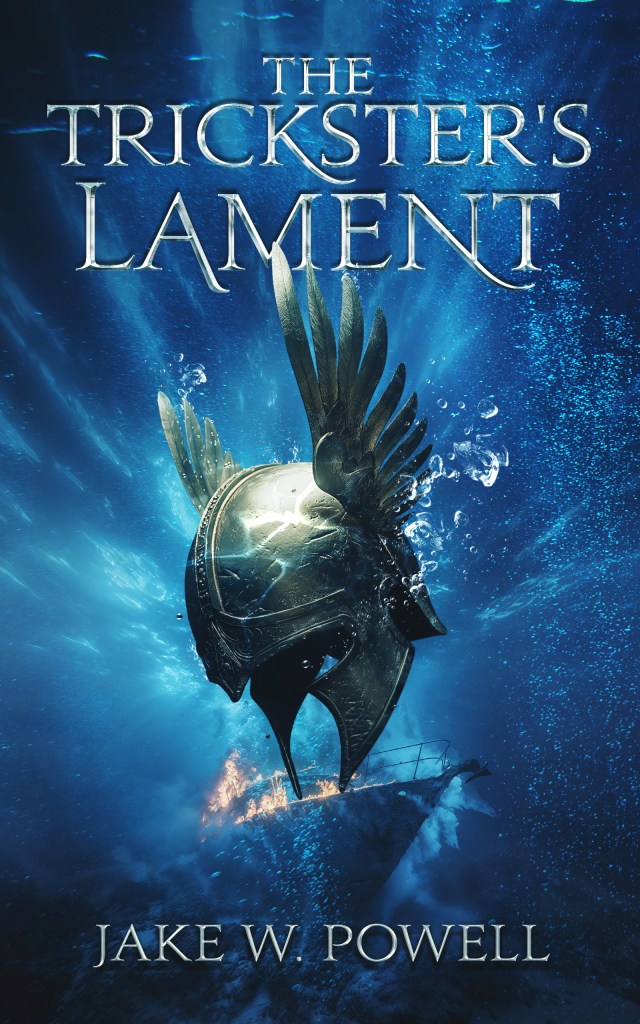
“Hermes is not having the best time. He walks a fine line, and his duty as messenger of Olympus weighs heavily on him. Being a god in the modern age means living in a world that no longer believes in gods. How much can one deity accomplish when no one respects him anymore? And why do his instincts tell him that he, the son of Zeus, is losing favor with his own family?

Tensions abound. The upstart Young Gods play dangerous games using entire cities as their boards. Formless monsters strike from the nighttime shadows, terrorizing hapless mortals. Agents of rival pantheons scheme to thwart Olympus’ designs. In the thick of it all, Hermes does what he does best: trick, lie, and cheat his way to victory.

Thoughts on The Giving Tree

Do you remember your favorite book from childhood?

I can’t say it was my favorite book as a child – I have too many of those to choose just one – but I remember The Giving Tree by Shel Silverstein with fondness. A sweet story of self-sacrifice, though as an adult I realize that it is controversial. But most stories are, especially when we pry them open, dissect them, and boil them down.

Maybe I’m just a sentimentalist who likes stories that are bittersweet. Maybe I’m naive. Or maybe I never perceived the concept that the boy was exploiting the tree because I grew up in a family where I was taught to say “please” and “thank you” and learned about responsibility. Maybe a story’s interpretation depends on the context of the reader’s life and experiences. We all see something different.

Either way, I liked the story. I was young and innocent and hadn’t received a college education yet, so I saw only good in it.

***

Many thanks for visiting my blog. I post updates on my writing career, I muse over storytelling and fiction, and I reflect on the curious and wonderful things in life.

“Hermes is not having the best time. He walks a fine line, and his duty as messenger of Olympus weighs heavily on him. Being a god in the modern age means living in a world that no longer believes in gods. How much can one deity accomplish when no one respects him anymore? And why do his instincts tell him that he, the son of Zeus, is losing favor with his own family?

Tensions abound. The upstart Young Gods play dangerous games using entire cities as their boards. Formless monsters strike from the nighttime shadows, terrorizing hapless mortals. Agents of rival pantheons scheme to thwart Olympus’ designs. In the thick of it all, Hermes does what he does best: trick, lie, and cheat his way to victory.

Charles Dickens on Writing

Charles Dickens knew what it is like to be a writer …

Prowling about the rooms, sitting down, getting up, stirring the fire, looking out the window, teasing my hair, sitting down to write, writing nothing, writing something and tearing it up…

***

Many thanks for visiting my blog. I post updates on my writing career, I muse over storytelling and fiction, and I reflect on the curious and wonderful things in life.

“Hermes is not having the best time. He walks a fine line, and his duty as messenger of Olympus weighs heavily on him. Being a god in the modern age means living in a world that no longer believes in gods. How much can one deity accomplish when no one respects him anymore? And why do his instincts tell him that he, the son of Zeus, is losing favor with his own family?

Tensions abound. The upstart Young Gods play dangerous games using entire cities as their boards. Formless monsters strike from the nighttime shadows, terrorizing hapless mortals. Agents of rival pantheons scheme to thwart Olympus’ designs. In the thick of it all, Hermes does what he does best: trick, lie, and cheat his way to victory.

Cloudy Days and Snowy Days

How do you feel about cold weather?

I feel like an anomaly, sometimes. I enjoy cold weather. When it’s sunny outside, I look out the window and think, “That’s nice.” But when it’s 60 degrees, overcast, and windy, then I get excited. I’m the kind of person who thinks anything over 60 degrees Fahrenheit is too hot. 70 degrees is an oven. 80 and over is akin to the surface of the sun and unfit for human habitation.

Maybe I just like cloudy days because I associate them with something more rough-and-tumble, a more adventurous atmosphere than the sleepy calm of sunny days. The smell of imminent rain, the distant crack of an oncoming thunderstorm, the stiff breeze running over my skin – I love it.

Cold and snowy days, on the other hand …

No, I don’t like snow that much. The cold I can handle, but snow is something best enjoyed from a distance, preferably from the inside of one’s own home. Snow looks pretty, but so do swans, and they are meanspirited cranks. Snow is slippery, deep, obstructive, and eventually turns to slush, which is just cold mud.

Give me cold, cloudy days, rather than cold, snowy days, please.

***

Many thanks for visiting my blog. I post updates on my writing career, I muse over storytelling and fiction, and I reflect on the curious and wonderful things in life.

“Hermes is not having the best time. He walks a fine line, and his duty as messenger of Olympus weighs heavily on him. Being a god in the modern age means living in a world that no longer believes in gods. How much can one deity accomplish when no one respects him anymore? And why do his instincts tell him that he, the son of Zeus, is losing favor with his own family?

Tensions abound. The upstart Young Gods play dangerous games using entire cities as their boards. Formless monsters strike from the nighttime shadows, terrorizing hapless mortals. Agents of rival pantheons scheme to thwart Olympus’ designs. In the thick of it all, Hermes does what he does best: trick, lie, and cheat his way to victory.

The Wrist That Would Not Break

Have you ever broken a bone?

As a matter of fact, I broke my leg when I was a kid. Had to wear a cast. Very painful and inconvenient, I can assure you, but this story isn’t about that. This is about the time when my doctor was convinced that I had broken my wrist.

So, I was a kid roughhousing with my friends, and I fell over and hurt my wrist. My mom takes me to the doctor, who looks it over and then sends me to a clinic to have an X-ray taken. The scan shows that there was no break, though I did have to wear a sort of partial-glove thing to keep my wrist straight and rigid. Presumably in case it did decide to break.

My doctor, however, was not a man easily dissuaded. I went in for another appointment, he inspected my wrist, then sent me over for another X-ray. No change.

I come in for a third appointment. My wrist appears to still be intact. But how can one know without an X-ray? Third time’s the charm. Off I go to have my wrist scanned for signs of a might-be-hiding-in-plain-sight crack in my wrist. Three X-ray scans, and my wrist still wasn’t broken.

In fact, the man in charge of the clinic came to speak with me in person to confirm if the X-rays had been deceived and my wrist was in fact broken. It in fact was not.

Looking back, I might have at least done my primary doctor the favor of discreetly breaking my own wrist to justify his vigilance. But that’s the sort of idea that only comes later in life with much wisdom and imagination. The fact is, my wrist truly, sincerely, and stubbornly refused to break, no matter how many X-rays it was subjected to.

***

Many thanks for visiting my blog. I post updates on my writing career, I muse over storytelling and fiction, and I reflect on the curious and wonderful things in life.

“Hermes is not having the best time. He walks a fine line, and his duty as messenger of Olympus weighs heavily on him. Being a god in the modern age means living in a world that no longer believes in gods. How much can one deity accomplish when no one respects him anymore? And why do his instincts tell him that he, the son of Zeus, is losing favor with his own family?

Tensions abound. The upstart Young Gods play dangerous games using entire cities as their boards. Formless monsters strike from the nighttime shadows, terrorizing hapless mortals. Agents of rival pantheons scheme to thwart Olympus’ designs. In the thick of it all, Hermes does what he does best: trick, lie, and cheat his way to victory.

Bachelors Need to Clean, Too

What’s one small improvement you can make in your life?

Consistently cleaning my home every week.

The stereotype about bachelors is that they’re messy fellows living in pigsties. Cleanliness is supposedly a foreign concept to the unmarried male. Well, I don’t live in a sty, nor do I have a pile of unwashed clothes taking up half my bedroom, nor do I have strange species of mold growing in my refrigerator. I’m … adequately tidy. But I could stand to clean just a bit more often.

Go figure. Some of us grow up being taught to perform our daily chores diligently every week, then we become adults, move out, and regress into Neanderthals. Maybe independence isn’t all it’s cracked up to be. It’s certainly no excuse for lack of self-discipline.

Regardless, performing my cleaning chores on a regular basis is a small but significant improvement I can make in my everyday life.

***

Many thanks for visiting my blog. I post updates on my writing career, I muse over storytelling and fiction, and I reflect on the curious and wonderful things in life.

“Hermes is not having the best time. He walks a fine line, and his duty as messenger of Olympus weighs heavily on him. Being a god in the modern age means living in a world that no longer believes in gods. How much can one deity accomplish when no one respects him anymore? And why do his instincts tell him that he, the son of Zeus, is losing favor with his own family?

Tensions abound. The upstart Young Gods play dangerous games using entire cities as their boards. Formless monsters strike from the nighttime shadows, terrorizing hapless mortals. Agents of rival pantheons scheme to thwart Olympus’ designs. In the thick of it all, Hermes does what he does best: trick, lie, and cheat his way to victory.

One Day of Horsing Around

What’s a job you would like to do for just one day?

I’m content with where I am in life, but if I could choose a single job to do for just one day, I would like to work on a horse ranch. I like horses, but I’ve never really been around them that much (so maybe I just like the idea of horses). Plus, my day job involves sitting at a desk all day, so I would very much appreciate being able to get off my rump and do something more physical, for once.

Of course, not really being a person who works around animals much, while I say now that I like horses, I can’t guarantee how much I’d like them at the end of the day! But that’s the point. I want to do something different and see what it is like for me. I want to challenge myself by stepping outside my comfort zone and seeing what it’s like on the other side of the fence. Is the grass really greener, or would I go running back to my office?

***

Many thanks for visiting my blog. I post updates on my writing career, I muse over storytelling and fiction, and I reflect on the curious and wonderful things in life.

“Hermes is not having the best time. He walks a fine line, and his duty as messenger of Olympus weighs heavily on him. Being a god in the modern age means living in a world that no longer believes in gods. How much can one deity accomplish when no one respects him anymore? And why do his instincts tell him that he, the son of Zeus, is losing favor with his own family?

Tensions abound. The upstart Young Gods play dangerous games using entire cities as their boards. Formless monsters strike from the nighttime shadows, terrorizing hapless mortals. Agents of rival pantheons scheme to thwart Olympus’ designs. In the thick of it all, Hermes does what he does best: trick, lie, and cheat his way to victory.

Exposed: More Risks of Being a Writer

In my last post, I talked a bit about the material risks of pursuing a writing career: the money and time involved. Now, I’d like to talk about more abstract risks.

Courage

To write is to put pieces of yourself into all your work. An author writes from the soul, baring his thoughts, beliefs, joys, and hopes to a world that may very well look on it all with indifference or contempt. That is a huge risk, especially if your work is meant to sway hearts and minds. You are, for all intents and purposes, metaphorically standing naked before the world. Making your work public is an act of courage.

Disappointment

How have you responded to tepid reception to your book or short story? How long have you labored to complete it, only for it to not live up to your expectations? It happens. It has happened to the greatest authors of the ages. To write for yourself and then tuck away the results can bring some pleasure, but if you make it available to the world, you may find that the world doesn’t see it with the same fondness. It doesn’t mean that you lack talent or diligence, it is simply the way that life turns sometimes.

Time (again)

Well, well, aren’t I a cheat? Putting up “Time” two posts in a row? But I’m talking about it in a different context here. I’ve already dwelt on how writing means putting in the time. But writers are also fighting against time. Every artist does, I suppose. We have so many ideas. Loads and loads, enough to last more than a lifetime. But we only have a lifetime, so we must face the truth that we won’t be able to complete every project that we want to before the end. So, which projects will you focus on? What are your most precious ideas that must be given form and shape? Choose wisely.

Again, apologies if my latest post was a little grim for your liking. To be an author is a great thing, but it carried its own struggles. Worthwhile things always do. I greatly enjoy writing and publishing, even as I acknowledge that it carries immense frustration sometimes. Even so, for those of us who write, we push forward. Don’t stop, even if it seems as if the risks outweigh the rewards. Keep writing.

***

Many thanks for visiting my blog. I post updates on my writing career, I muse over storytelling and fiction, and I reflect on the curious and wonderful things in life.

“Hermes is not having the best time. He walks a fine line, and his duty as messenger of Olympus weighs heavily on him. Being a god in the modern age means living in a world that no longer believes in gods. How much can one deity accomplish when no one respects him anymore? And why do his instincts tell him that he, the son of Zeus, is losing favor with his own family?

Tensions abound. The upstart Young Gods play dangerous games using entire cities as their boards. Formless monsters strike from the nighttime shadows, terrorizing hapless mortals. Agents of rival pantheons scheme to thwart Olympus’ designs. In the thick of it all, Hermes does what he does best: trick, lie, and cheat his way to victory.

Sacrifices: Thoughts on the Risks of Being A Writer

Nothing ventured, nothing gained.

There’s truth in these words. Our victories in life are almost always the result of placing ourselves in situations where we stand to lose. We take risks. Writing is no different.

Today, I’d like to reflect on two particularly big risks related to writing: money and time.

Money

Writing requires money. If you want to make your book publicly available, you’re going have to fork over the cash. That’s the way of things. I write and publish books as a hobby, not to make a living, which is a good thing because I’m nowhere near to making a profit off of the copies I’ve sold so far. On the other hand, high expenses seem to be the mark of any good hobby … But I digress.

Writing a book doesn’t cost anything, except perhaps the price of a good computer and keyboard (or pen and paper if you are so inclined), but editing does, as does cover art, formatting, and printing or releasing in eBook form. That’s thousands of dollars that may or may not be recouped. If you wish to write to support yourself, remember that there’s no guarantee you will do more than break even for a long time. And you may never. So be certain that you also enjoy writing for its own sake!

Time

Writing is not a quick and easy activity. Don’t expect to be the author who dashes out an award-winning novel after a single furious weekend session. At least, don’t expect to do that and have time for anything else. Like eating and sleeping, for example.

Investing time is a little scary, because unlike money, you can’t get it back in any way, shape or form. We pay our dues of time to that which we value above all else. Ask any writer: you are going to spend many long hours at your desk brainstorming, outlining, drafting, redrafting, formatting, and agonizing over the perfect words to fill out that final paragraph. And your book may or may not be successful. That’s risky. Your writing requires sacrificed time. Are you ready to make that sacrifice?

And now, I have either scared you away from ever publishing your stories or you have considered these factors and are determined to carry on regardless. Good for you! I’m not trying to be a doomsayer, I just wanted to share the realities of being an author. Time and money. Mundane and annoying, but that’s because writing, like every job, is in fact a job. It has its dull moments of drudgery. It is also one of the most incredible, exciting, wondrous, and most fulfilling acts of creativity available to humankind. It is risky business, writing a book. It also brings great rewards.

***

Many thanks for visiting my blog. I post updates on my writing career, I muse over storytelling and fiction, and I reflect on the curious and wonderful things in life.

“Hermes is not having the best time. He walks a fine line, and his duty as messenger of Olympus weighs heavily on him. Being a god in the modern age means living in a world that no longer believes in gods. How much can one deity accomplish when no one respects him anymore? And why do his instincts tell him that he, the son of Zeus, is losing favor with his own family?

Tensions abound. The upstart Young Gods play dangerous games using entire cities as their boards. Formless monsters strike from the nighttime shadows, terrorizing hapless mortals. Agents of rival pantheons scheme to thwart Olympus’ designs. In the thick of it all, Hermes does what he does best: trick, lie, and cheat his way to victory.