My Top Ten Favorite Movies

WordPress’s daily prompt made me think long and hard today …

These are my top ten favorite movies (in no particular order):

Porco Rosso – One of Studio Ghibli’s lesser known creations, a lowkey, introspective movie set in 1930s Italy. The protagonist is an ace pilot cursed to have the face of a pig. Why? Well, symbolism abounds, as do themes of survivor’s guilt, redemption and freedom. Also beautiful flying scenes, as per Studio Ghibli’s usual standard.

The Count of Monte Cristo (2002) – A great adaptation of Alexandre Dumas’s classic tale of revenge and its consequences. Less character study and more swashbuckling action, but it’s very well-choreographed swashbuckling, and the movie has an overall more optimistic tone than the novel.

Disney’s Beauty and the Beast – I grew up with Disney and will always have a soft spot for its animated films from the 1990s, but this one is my favorite. If you had to tie me to a chair to watch a romance, make it this movie.

Coraline – And if you had to tie me to a chair to watch a spooky animated movie, make it this one. A children’s film that manages to avoid cheap jokes and talking down to its audience, and most importantly, can also be enjoyed by adults. Very bizarre and surreal in a way that still makes a lick of sense.

The Rocketeer – Good old-fashioned pulp fiction adventure, based on a comic book character that surprisingly was less than a decade old at the time. Man with jetpack fights mafia thugs and Nazis. Straightforward, upbeat, and refreshingly earnest compared to the sardonic self-commentary of many of today’s superhero films.

Stargate – Ancient aliens done right – as science fiction. Very good flick that doesn’t try to reinvent the wheel, it just fills itself with likeable characters fighting an eeeeevil villain amidst great special effects. Sparked off an even better television show that ranks among my favorite TV series.

John Wick – A bit of a cheat, since I like the entire series, but I’ll stick with the first one for the purpose of this list. After a decade of jitter cam action antics, filmmakers realized that they could make stylish, creative action sequences and keep the camera steady. The action (and violence) generally takes precedence over the story, but the story that we see is actually quite poignant and painful in its humanity, as many of the best action films tend to be.

Tombstone – A manly Western starring manly men with manly mustaches. Joking aside, it’s a great film for everyone. Based on real-life events surrounding 19th-century lawman Wyatt Earp’s time in the town of Tombstone, Arizona, this film is made and memorialized by its cast. Really, really great acting all around, dialogue that sticks in your brain, and memorably tense confrontations between heroes and villains. Only in this film could the words, “Well, bye,” be made a stupendously amazing line.

The 7th Voyage of Sinbad – We’re going old school now. A 1950s fantasy flick with special effects by Ray Harryhausen, the man, the myth, the legend. Modern visual effects wouldn’t exist without him, nor half the monster designs you and I take for granted these days. The visuals are the real star here; the story is typical “Arabian Nights” fare: Sinbad the sailor fights evil sorcerer to save princess. Features a fire-breathing dragon, perpetually angry cyclops, and most famously, a swordfight with a living skeleton. This is the foundation of modern fantasy visuals as we know it, you young whippersnappers!

Hook – This movie’s premise is very bold: Tell a story about Peter Pan growing up. Sounds like a disaster on paper (and to be fair, this movie is a bit divisive, I understand), but I always enjoyed it. Robin Williams makes the film work with his acting chops, and the film is more grounded in James Barrie’s original story than you might suspect, and indeed more so than many later Peter Pan adaptations. Dustin Hoffman’s Captain Hook is a treat – even if he’s not my favorite version of Hook, he serves as a great foil to Williams. Also probably my favorite realization of Neverland on film – colorful, fantastical and like something out of a storybook.

***

Many thanks for visiting my blog. I post updates on my writing career, I muse over storytelling and fiction, and I reflect on the curious and wonderful things in life.
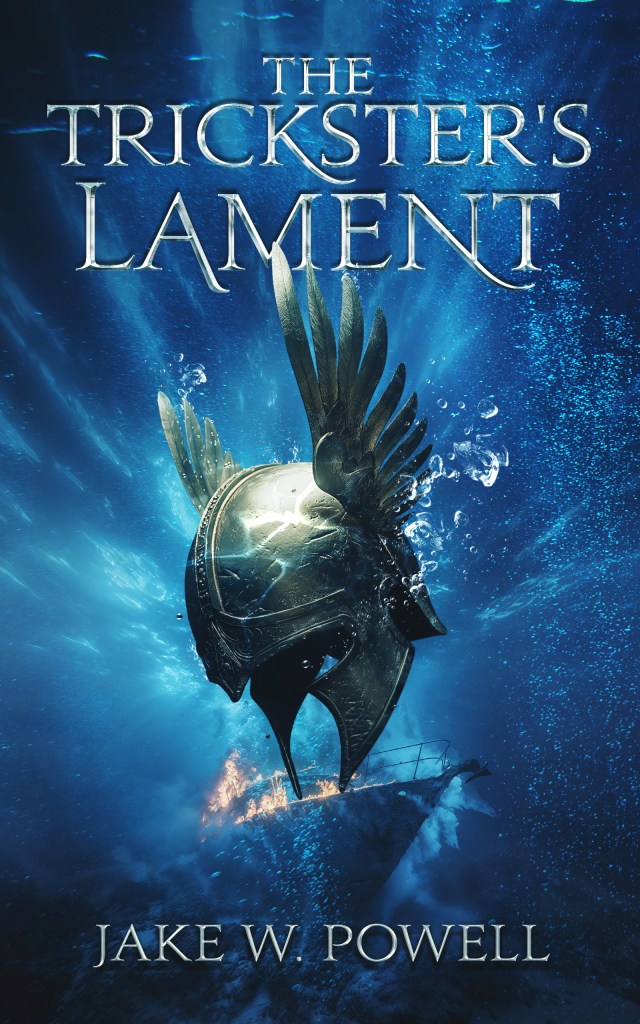
“Hermes is not having the best time. He walks a fine line, and his duty as messenger of Olympus weighs heavily on him. Being a god in the modern age means living in a world that no longer believes in gods. How much can one deity accomplish when no one respects him anymore? And why do his instincts tell him that he, the son of Zeus, is losing favor with his own family?

Tensions abound. The upstart Young Gods play dangerous games using entire cities as their boards. Formless monsters strike from the nighttime shadows, terrorizing hapless mortals. Agents of rival pantheons scheme to thwart Olympus’ designs. In the thick of it all, Hermes does what he does best: trick, lie, and cheat his way to victory.

Writing is a Whitewater Rapid, Writing is a Block of Marble

What do you enjoy most about writing?

Writing is an act of creation. It is the free exercise of imagination and the production of things unseen, undreamt, uncertain until that very moment. It is as dynamic as a mountain river and just as unpredictable. It ebbs and flows. Currents crisscross one another and pull me in this direction, and now in the other. I love it. I plunge into the unknown when I sit down to write. For all the preparations and outlines and forethought, which are important, I still don’t truly know what will happen.

I love the surprise. I love the way that my imagination detaches from my logical mind and soars on its own. And then, after I return to Earth and the giddiness fades, comes the really fun part: editing.

Editing is taking the uncouth block of marble that is my first draft and refining it into something I can show in public. I am an editor at heart. The initial draft, that whitewater rafting down the river of raw imagination, must be balanced against the delicate chiseling of the editing process. Careful carving, doing away with what isn’t needed, making my work into something better. I love the careful precision and attention to detail.

Truth be told, I just love making up stories. Good stories, bad stories, stories that teach, stories that entertain. Like rivers and stone, riding the rapids and nicking away at the marble, are stories made.

***

Many thanks for visiting my blog. I post updates on my writing career, I muse over storytelling and fiction, and I reflect on the curious and wonderful things in life.

“Hermes is not having the best time. He walks a fine line, and his duty as messenger of Olympus weighs heavily on him. Being a god in the modern age means living in a world that no longer believes in gods. How much can one deity accomplish when no one respects him anymore? And why do his instincts tell him that he, the son of Zeus, is losing favor with his own family?

Tensions abound. The upstart Young Gods play dangerous games using entire cities as their boards. Formless monsters strike from the nighttime shadows, terrorizing hapless mortals. Agents of rival pantheons scheme to thwart Olympus’ designs. In the thick of it all, Hermes does what he does best: trick, lie, and cheat his way to victory.

Where Are My Glasses?

What is the most important thing to carry with you all the time?

What do I carry with me? That question can be a profound one. What abstract qualities do I carry that sustain me through the day? What precious items do I keep with me at all times that show what I truly value?

Well, it could be a profound question. Or it could be remarkably mundane and ordinary. Let’s go in that direction. There’s time for profundity later.

I always carry my glasses. Why? Because I need them. I can’t see well without them. I’d say that’s pretty important, wouldn’t you? My glasses are a part of me, whether I like it or not, and so they are either on my face or close at hand all the time.

It’s not emotional. It’s not soul-stirring. It’s not philosophical. But it’s real. If I didn’t have my glasses, I’d be straining to read these words as I’m writing them. If I couldn’t find them, I’d be tearing apart my room looking for them, crying fruitlessly, “Where are my glasses?”

***

Many thanks for visiting my blog. I post updates on my writing career, I muse over storytelling and fiction, and I reflect on the curious and wonderful things in life.

“Hermes is not having the best time. He walks a fine line, and his duty as messenger of Olympus weighs heavily on him. Being a god in the modern age means living in a world that no longer believes in gods. How much can one deity accomplish when no one respects him anymore? And why do his instincts tell him that he, the son of Zeus, is losing favor with his own family?

Tensions abound. The upstart Young Gods play dangerous games using entire cities as their boards. Formless monsters strike from the nighttime shadows, terrorizing hapless mortals. Agents of rival pantheons scheme to thwart Olympus’ designs. In the thick of it all, Hermes does what he does best: trick, lie, and cheat his way to victory.

Finding Your Time to Write

Everyone has a time when they are at their best for writing. Everyone has that time of day when they can “get in the groove.” Whether morning or evening, when the sun is rising or when it is setting, or anytime in between, we all have sweet spots when we find it easiest to settle down and write.

But we can’t always write during that sweet time. Life comes calling. Work. Chores. Errands. Family emergencies. Social obligations. Life doesn’t always allow us to write when we want to. What to do?

Here are some of my own thoughts:

  1. Make the most of the time you have – Be diligent when you are able to sit down and work on your projects. Set goals for yourself: hitting a certain word count per day, completing a chapter, and so forth. This is especially useful if you know ahead of time that your free time is constrained.
  2. Be flexible – We all have a time of the day when we are at our literary best, but we ought not feel that that’s the only time we are allowed to write. Experiment with other times and see what else works for you. You might be surprised at how adaptive you can be.
  3. Analyze your priorities – Work is one thing, playtime is another. You might have more time to write than you think, but you devote it to something else, whether a hobby, entertainment or even napping. Ask yourself how important your writing truly is to you. Are you willing to give up a little more time to devote to it?
  4. Persevere – And sometimes, no matter what, you just can’t get into the groove because you’re a night owl who can only squeeze in a paragraph or two at the crack of dawn. Soldier on. Don’t give up, and keep writing anyway. Perseverance is vital. If you truly want to make the craft a part of your life, there will be tough days along with the good. Soldier on.

***

“Hermes is not having the best time. He walks a fine line, and his duty as messenger of Olympus weighs heavily on him. Being a god in the modern age means living in a world that no longer believes in gods. How much can one deity accomplish when no one respects him anymore? And why do his instincts tell him that he, the son of Zeus, is losing favor with his own family?

Tensions abound. The upstart Young Gods play dangerous games using entire cities as their boards. Formless monsters strike from the nighttime shadows, terrorizing hapless mortals. Agents of rival pantheons scheme to thwart Olympus’ designs. In the thick of it all, Hermes does what he does best: trick, lie, and cheat his way to victory.

One Smile at a Time

Did you give someone a smile today? A small hello, a gentle smirk?

Did you bid someone “Good morning” and “How do you do?” Did you let a stranger know that you noticed them and cared?

It is a precious thing in today’s age. A little hello can lead to big changes. A drop of kindness can spread through the heart. A word has power, even if that word is “Hi.”

Give someone a smile. A real smile, a polite smile, a warm smile, a pleasant smile. And back up that smile with a word. A scant few seconds of your life given over to another. Nothing lost, but maybe something gained.

***

Many thanks for visiting my blog. I post updates on my writing career, I muse over storytelling and fiction, and I reflect on the curious and wonderful things in life.

“Hermes is not having the best time. He walks a fine line, and his duty as messenger of Olympus weighs heavily on him. Being a god in the modern age means living in a world that no longer believes in gods. How much can one deity accomplish when no one respects him anymore? And why do his instincts tell him that he, the son of Zeus, is losing favor with his own family?

Tensions abound. The upstart Young Gods play dangerous games using entire cities as their boards. Formless monsters strike from the nighttime shadows, terrorizing hapless mortals. Agents of rival pantheons scheme to thwart Olympus’ designs. In the thick of it all, Hermes does what he does best: trick, lie, and cheat his way to victory.

Charley Horse

Charley Horse is riding again

Up and down, up and down

Fast enough to make my head spin

Riding hard and fast as the stormy wind

He rides in the night silent as a lamb

I don’t hear him coming

Then bam!

He tramples my leg, turns it outside in

I scowl and I seethe and I hang on tight

Charley Horse ain’t slowing down

I hold on fast and try to rein in his might

But Charley Horse is away. He’ll be back again.

***

Many thanks for visiting my blog. I post updates on my writing career, I muse over storytelling and fiction, and I reflect on the curious and wonderful things in life.

“Hermes is not having the best time. He walks a fine line, and his duty as messenger of Olympus weighs heavily on him. Being a god in the modern age means living in a world that no longer believes in gods. How much can one deity accomplish when no one respects him anymore? And why do his instincts tell him that he, the son of Zeus, is losing favor with his own family?

Tensions abound. The upstart Young Gods play dangerous games using entire cities as their boards. Formless monsters strike from the nighttime shadows, terrorizing hapless mortals. Agents of rival pantheons scheme to thwart Olympus’ designs. In the thick of it all, Hermes does what he does best: trick, lie, and cheat his way to victory.

Dogs and Cats

Dogs or cats?

Dogs. Definitely dogs. I love dogs. They’re jolly, gregarious and always ready to play. Dogs are cool. I like them in all varieties.

Well, except for small dogs. Little dogs lean a bit too much toward the yappy side for me. But retrievers, German shepherds and their ilk are totally fine.

Cats are chill, but sometimes too chill. They walk across your lap when you’re sitting on the couch, and if you try to move them, their claws dig into your pants. Cats are a little too aloof for my tastes.

I’m an introspective guy myself, and I like my privacy, but cats sometimes just flat out pretend you don’t exist. I also sometimes pretend people around me don’t exist, but nobody ever said that was a good thing. I don’t need the animal kingdom to reinforce a bad habit.

So, I prefer dogs. They enjoy life. And they always look like they’re smiling.

***

Many thanks for visiting my blog. I post updates on my writing career, I muse over storytelling and fiction, and I reflect on the curious and wonderful things in life.

“Hermes is not having the best time. He walks a fine line, and his duty as messenger of Olympus weighs heavily on him. Being a god in the modern age means living in a world that no longer believes in gods. How much can one deity accomplish when no one respects him anymore? And why do his instincts tell him that he, the son of Zeus, is losing favor with his own family?

Tensions abound. The upstart Young Gods play dangerous games using entire cities as their boards. Formless monsters strike from the nighttime shadows, terrorizing hapless mortals. Agents of rival pantheons scheme to thwart Olympus’ designs. In the thick of it all, Hermes does what he does best: trick, lie, and cheat his way to victory.

As I Grow Older, These Grow in Value

What do you think gets better with age?

Aging is not a curse nor a tragedy. It is a fact of life, and like all things in life, brings both good and bad. Indeed, age brings many good things with it. Many things grow in joy and fulfillment as we grow older. Here are just a few:

  1. Friendship. As I grow older, I value my friends all the more. A fresh, new friendship is like an apple that hasn’t quite ripened. It may be a little sweet and hold promise, but it hasn’t yet reached full maturity. A friend who has been at your side for years is more precious than a brother or sister, and you can have full confidence they will stick with you through thick and thin, as they have for so many years already.
  2. Health. As we get older, our health can get a little rickety. I am grateful that I can get out of bed unassisted, that I can walk from one side of town to the other, and that I can take a breath without pain. Does that sound a little morbid? But I value every moment of good health, and strive to make the most of it. A child takes his good health for granted. With age comes an awareness of mortality, and with it, a deeply held joy in a robust life.
  3. Memories. The longer we live, the more memories we are given. Memories can be like old friends – or prodding critics – and reflecting on them helps us discover how full our lives truly are. Even if we think we lived a dull, uneventful life, looking back on our memories reminds us that nobody is uninteresting or boring. We all have memories that span the gamut from comedy to triumph to tragedy to drama to wonder. We all live, and we all remember.
  4. Time. Ah, time. The great equalizer. It bows to no one’s will or demands, no one’s wishful thinking or logical arguments. Time is an unceasing gear, turning with heedless inevitability. In other words, you can’t get more of it. I value time now more than I did as a ten-year-old, because I have less of it. Time is a nonrenewable resource. Make the most of it! I treasure moments that can never come again, for their fleeting nature makes them precious.

What about you? What do you think gets better as you age? What do you value more as you get older?

***

Many thanks for visiting my blog. I post updates on my writing career, I muse over storytelling and fiction, and I reflect on the curious and wonderful things in life.

“Hermes is not having the best time. He walks a fine line, and his duty as messenger of Olympus weighs heavily on him. Being a god in the modern age means living in a world that no longer believes in gods. How much can one deity accomplish when no one respects him anymore? And why do his instincts tell him that he, the son of Zeus, is losing favor with his own family?

Tensions abound. The upstart Young Gods play dangerous games using entire cities as their boards. Formless monsters strike from the nighttime shadows, terrorizing hapless mortals. Agents of rival pantheons scheme to thwart Olympus’ designs. In the thick of it all, Hermes does what he does best: trick, lie, and cheat his way to victory.

Dinner with History’s Nameless

If you could host a dinner and anyone you invite was sure to come, who would you invite?

If I could invite anyone … I wouldn’t let a thing like time get in the way.

I would invite people long dead to learn their stories and the shape of history. Not famous people or those mentioned in the history books. The nameless, the common people, those whose names never made it into a textbook.

  1. A laborer who worked on the Great Pyramid of Giza. I would ask him how the pyramids were built, and what it was like to build one of them. I would ask what life was like for the common man in the ancient times of Egypt.
  2. A Viking from the 10th century. What were the raids like? What was your culture like? How do you see yourself, and how do you want others to see you?
  3. A peasant from 15th century Japan. What was it like to live during the Warring States period? I would ask him about daily life in Japan and how peasants related to samurai and other higher-ranking castes.
  4. Nez Perce, Comanche, Pueblo, Inuit, and Mohawk tribal members from before the first Europeans arrived in North America. I would ask them what their cultures were like, how they got on with their neighbors, and what North America was like before written history.
  5. One of Thomas Edison’s employees. Not the man himself, but someone who worked under him. What was it like? What was he like? And how did you contribute to his company?
  6. One of the first theater-goers to see Walt Disney’s Snow White and the Seven Dwarfs in 1937. I would want to know what the first audience’s impressions of the film was. And I would want to know what they thought Disney would do next.
  7. One of Microsoft’s first ever employees. I would love to know what his or her vision for the company was, what working under Bill Gates was like, and what it was like to build the first home computers.

And that would just be my first dinner party …

***

Many thanks for visiting my blog. I post updates on my writing career, I muse over storytelling and fiction, and I reflect on the curious and wonderful things in life.

“Hermes is not having the best time. He walks a fine line, and his duty as messenger of Olympus weighs heavily on him. Being a god in the modern age means living in a world that no longer believes in gods. How much can one deity accomplish when no one respects him anymore? And why do his instincts tell him that he, the son of Zeus, is losing favor with his own family?

Tensions abound. The upstart Young Gods play dangerous games using entire cities as their boards. Formless monsters strike from the nighttime shadows, terrorizing hapless mortals. Agents of rival pantheons scheme to thwart Olympus’ designs. In the thick of it all, Hermes does what he does best: trick, lie, and cheat his way to victory.

A Reflection on Eclectic Interests

What are you an authority on?

Truth be told, I’ve never considered myself an authority on anything. Oh, sure, I write a blog and share my thoughts and insights on life, writing, and sundry subjects, but I don’t consider myself an expert on any of them. I certainly wouldn’t call myself an authority on writing, and I probably never will. I’m just sharing my experiences, for better or for worse.

To achieve mastery in an artistic pursuit is something I pursue, but it is not a goal I expect to ever achieve. I don’t think it is obtainable. The journey and the gradual improvement of skill over time is what makes such a thing worthwhile.

I’m just a guy with things to say who started a blog. Thanks for reading it, by the way!

That being said, there are things I know about more than others. You know, the kinds of intellectual scree that are useful for a game of Trivial Pursuit, to rekindle the embers of a dying conversation, or perhaps to insert into a livestream chat. I have an unhealthy knowledge of pop culture, for example, particularly video games and tabletop gaming.

I also have an interest in animation history. I have a keen interest in modern Japanese history – enough that I took a master’s degree in Japanese Studies. Actually, reading what I just wrote, I can conclude that I like history in general. The hard sciences scare me, but I’m always up for a discussion about the liberal arts. Go figure.

Jack of all trades, master of none? Yes, yes, I am.

What about you? Are there any subjects you consider yourself an authority on or have a wide range of knowledge about?

***

Many thanks for visiting my blog. I post updates on my writing career, I muse over storytelling and fiction, and I reflect on the curious and wonderful things in life.

“Hermes is not having the best time. He walks a fine line, and his duty as messenger of Olympus weighs heavily on him. Being a god in the modern age means living in a world that no longer believes in gods. How much can one deity accomplish when no one respects him anymore? And why do his instincts tell him that he, the son of Zeus, is losing favor with his own family?

Tensions abound. The upstart Young Gods play dangerous games using entire cities as their boards. Formless monsters strike from the nighttime shadows, terrorizing hapless mortals. Agents of rival pantheons scheme to thwart Olympus’ designs. In the thick of it all, Hermes does what he does best: trick, lie, and cheat his way to victory.