What Makes a Teacher Great

The best teachers have no interest in being loved. Does that surprise you? Do you think that a teacher should want to be liked by his pupils? But that is not a teacher’s duty. Teachers teach. Easy lessons, hard lessons, the things that make a student stretch out beyond his comfort zone to grasp. A teacher pushes. Students do not always like being pushed.

Teachers are willing to endure ill-favor if it means the ones they teach are able to grow. Whether the elementary teacher who hushes whispered chatter and silences cell phones, the music instructor who demands the apprentice practice hours a night without fail, or the drill sergeant who shouts in cadets’ faces to strengthen their nerves, the best teachers do not mistake pleasantness for effectiveness.

Pleasant feelings are fleeting. Lessons well-learned are forever. A teacher who truly cares is one who places little value on popularity, and everything on the education of their students. Teachers lay a foundation in the minds of the taught. They ensure that deep roots are sunk, and that knowledge and experience grow ever higher. They nurture the student’s mind, and they test it. They see far beyond today’s temporary comforts. They see their student as they could be in ten, twenty, thirty years’ time.

What makes a teacher great? The desire and ability to make others great.

***

Many thanks for visiting my blog. I post updates on my writing career, I muse over storytelling and fiction, and I reflect on the curious and wonderful things in life.
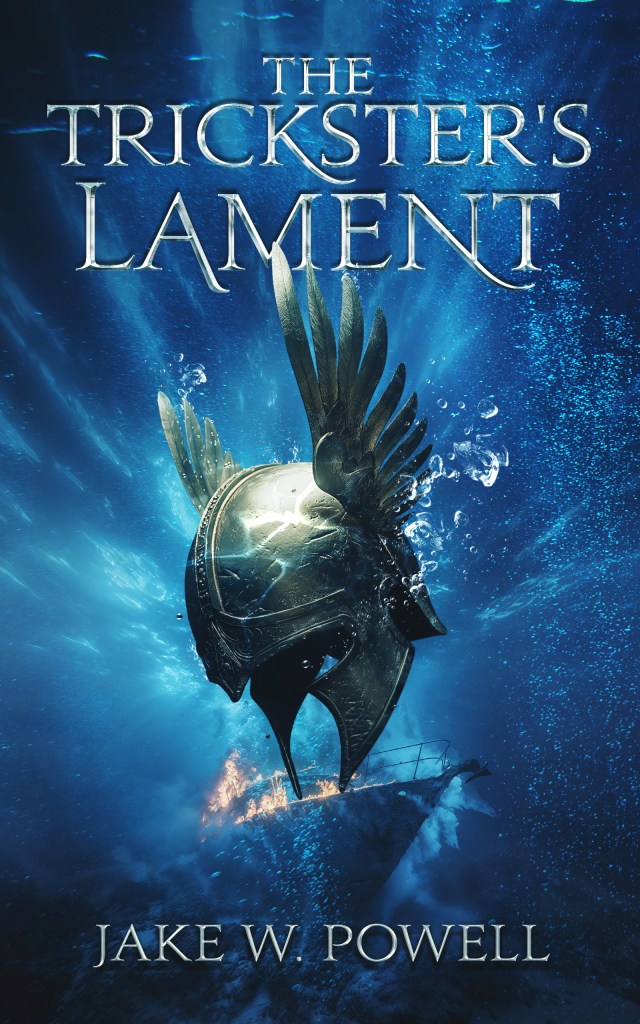
“Hermes is not having the best time. He walks a fine line, and his duty as messenger of Olympus weighs heavily on him. Being a god in the modern age means living in a world that no longer believes in gods. How much can one deity accomplish when no one respects him anymore? And why do his instincts tell him that he, the son of Zeus, is losing favor with his own family?

Tensions abound. The upstart Young Gods play dangerous games using entire cities as their boards. Formless monsters strike from the nighttime shadows, terrorizing hapless mortals. Agents of rival pantheons scheme to thwart Olympus’ designs. In the thick of it all, Hermes does what he does best: trick, lie, and cheat his way to victory.

The Memories of Childhood

I remember the smell of freshly baked peanut butter cookies in the kitchen wafting like a warm summer breeze. I remember how they crumbled in my hand as I ate them, little bits of delicious debris, and how there were always enough to last a week or more. I plucked them out of the Tupperware container one by one, day by day, a child’s guilty pleasure.

I remember the sound of my father mowing the lawn, a sawing roar yet somehow comforting. I remember the pungent odor of freshly cut grass coming through my open window, and I remember him manhandling the lawnmower up the steep hill in our backyard.

I remember walking through the forest park, the pine needles blanketing the ground like slivers of gold. I remember the tall trees that shaded me, and the baseball diamond at the park’s edge, where my parents and I used to buy hot dogs before returning home.

I remember the day after I had my wisdom teeth removed. My mind was a drowsy blur from anesthetics. I remember how my numb jaw felt like a lump of dead meat that didn’t hurt even when I pinched hard. I held a bag of frozen peas against it when the feeling and the pain started coming back.

I remember when I first became a writer. My parents owned a word processor, and I used it to write stories about my action figures. I printed them out and hung them on my wall, so proud of my work. I started my first novel, and never got past the fifth page. I remember getting my first computer, a great, gray blocky thing, and using it to write new stories. A child’s fancies that watered a ripe imagination.

I remember much, much more. More than could ever be committed to blog or paper. My childhood is over. The memories endure.

***

“Hermes is not having the best time. He walks a fine line, and his duty as messenger of Olympus weighs heavily on him. Being a god in the modern age means living in a world that no longer believes in gods. How much can one deity accomplish when no one respects him anymore? And why do his instincts tell him that he, the son of Zeus, is losing favor with his own family?

Tensions abound. The upstart Young Gods play dangerous games using entire cities as their boards. Formless monsters strike from the nighttime shadows, terrorizing hapless mortals. Agents of rival pantheons scheme to thwart Olympus’ designs. In the thick of it all, Hermes does what he does best: trick, lie, and cheat his way to victory.

Writers Need Their Comfy Chairs

What is the oldest thing you own that you still use daily?

My chairs.

Writing requires a good and comfy chair to sit in. If you’re going to be at it for hours at a time typing away on your computer, you need to be sitting on something that won’t give you an aching back or sore bottom. Something that you don’t even notice you’re sitting in.

Likewise if you’re relaxing while watching TV, or even just taking a nap.

I really like my chairs. I have a desk chair and a lounge chair, the latter of which is by far the older. I don’t quite remember when I first got it, but it was a gift, and one that is still appreciated. True, it’s not that terribly old in the grand scheme of things, maybe only a decade or a little less, but we all sit down on a daily basis, don’t we? And it has served me well when I need to rest my eyelids.

My desk chair, meanwhile, is what I use when writing. A little worn, a little nicked and scratched, but always reliable. Better than laying on my knees at the desk, eh? And always there for me, like a good chair should be.

Well, maybe they are both showing their age with the wear and tear, and maybe they are getting what one might call “tatty,” but there’s a certain charm, a certain curious attachment that one grows for ragged things. Familiarity is a powerful thing.

They’re still comfortable.

***

“Hermes is not having the best time. He walks a fine line, and his duty as messenger of Olympus weighs heavily on him. Being a god in the modern age means living in a world that no longer believes in gods. How much can one deity accomplish when no one respects him anymore? And why do his instincts tell him that he, the son of Zeus, is losing favor with his own family?

Tensions abound. The upstart Young Gods play dangerous games using entire cities as their boards. Formless monsters strike from the nighttime shadows, terrorizing hapless mortals. Agents of rival pantheons scheme to thwart Olympus’ designs. In the thick of it all, Hermes does what he does best: trick, lie, and cheat his way to victory.

Have You Thought About Your Toothbrush Today?

Let us consider the toothbrush.

No one does until one needs a toothbrush. Then one calls out for salvation from cavities and bad breath. The toothbrush is an unsung hero. No one goes through the day anticipating that most exciting and thrilling of activities – oh, yes, isn’t it just! – that is brushing their teeth.

Some things are so ordinary, so utterly normal, that they slip beneath notice. But we must be thankful for the toothbrush. Without it, we would all dwell in a mire of poor hygiene. Only when we don’t have something do we understand how important it is.

Toothbrushes, floss, old slippers, fluffy carpets, dishcloths – mundane, lowly, easily forgotten, yet so, so precious in their own odd ways.

***

Many thanks for visiting my blog. I post updates on my writing career, I muse over storytelling and fiction, and I reflect on the curious and wonderful things in life.

“Hermes is not having the best time. He walks a fine line, and his duty as messenger of Olympus weighs heavily on him. Being a god in the modern age means living in a world that no longer believes in gods. How much can one deity accomplish when no one respects him anymore? And why do his instincts tell him that he, the son of Zeus, is losing favor with his own family?

Tensions abound. The upstart Young Gods play dangerous games using entire cities as their boards. Formless monsters strike from the nighttime shadows, terrorizing hapless mortals. Agents of rival pantheons scheme to thwart Olympus’ designs. In the thick of it all, Hermes does what he does best: trick, lie, and cheat his way to victory.

When I Retire …

How do you want to retire?

It’s never too early to plan for retirement, is it? Well, it’s never a bad idea to think ahead, at least.

How do I want to retire? Alive would be a good start. Wait, that’s kind of morbid. Let me start over ….

When I retire, I want to be healthy, active and with the ability to continue sallying forth to enjoy life. I really look forward to being able to travel more. And to do that, I need to be in good shape physically and psychologically. I also need to have money, of course, but that’s what saving up for retirement is all about.

But I don’t just want to engage in fun activities. I want to have fun with other people. What’s the point of retiring if you’re going to be alone, anyway? Friends and family get old with you, right? So why not enjoy a life without workdays together?

Retirement is something that I do look forward to, and I want to be ready for it. I want to be the sort of person who can get the most out of a life where weekends are a strange, distant, obsolete concept.

***

Many thanks for visiting my blog. I post updates on my writing career, I muse over storytelling and fiction, and I reflect on the curious and wonderful things in life.

“Hermes is not having the best time. He walks a fine line, and his duty as messenger of Olympus weighs heavily on him. Being a god in the modern age means living in a world that no longer believes in gods. How much can one deity accomplish when no one respects him anymore? And why do his instincts tell him that he, the son of Zeus, is losing favor with his own family?

Tensions abound. The upstart Young Gods play dangerous games using entire cities as their boards. Formless monsters strike from the nighttime shadows, terrorizing hapless mortals. Agents of rival pantheons scheme to thwart Olympus’ designs. In the thick of it all, Hermes does what he does best: trick, lie, and cheat his way to victory.

Dealing with Writer’s Burnout

Writing is exciting. It is also exhausting. Crafting a story is an intense and intellectual endeavor that requires concentration, creativity, time, energy and the ability to make hard decisions. Small wonder that artists are called tortured souls. Creating anything means removing pieces of yourself and putting them into your work.

It is enjoyable, though. I don’t write because I have to, but because I want to. I also sometimes want to tear it all down and forget any of it ever happened.

No, this isn’t holding two contradictory thoughts at once. It isn’t doublethink. It’s the reality of dealing with burnout. Working hard on something, anything, that you enjoy will still lead to periods of tiredness, discouragement and an unwillingness to continue. It’s natural, I think. At least, that’s the impression I get.

I am working on my third book, and I was initially surprised that it is much harder to write than the first two. But there’s a reason for this. I’ve been writing about the same characters and setting for a while. Variety helps. After book #3 about the adventures of Hermes, I’ll get away from this series for a while, work on something fresh and different, give my brain a chance to stretch.

Feeling like you can’t put a word to a page isn’t something to dread. Whether it’s burnout, writer’s block, or just exhaustion after a busy day, it happens to all writers. Be kind to yourself. Don’t push yourself to finish if it’s going to result in a sloppy product. And certainly don’t push yourself at the expense of your own health.

Sometimes, we just need to get away from the story for a bit and let the ideas churn in our subconscious. It will still be there when we come back.

***

Many thanks for visiting my blog. I post updates on my writing career, I muse over storytelling and fiction, and I reflect on the curious and wonderful things in life.

“Hermes is not having the best time. He walks a fine line, and his duty as messenger of Olympus weighs heavily on him. Being a god in the modern age means living in a world that no longer believes in gods. How much can one deity accomplish when no one respects him anymore? And why do his instincts tell him that he, the son of Zeus, is losing favor with his own family?

Tensions abound. The upstart Young Gods play dangerous games using entire cities as their boards. Formless monsters strike from the nighttime shadows, terrorizing hapless mortals. Agents of rival pantheons scheme to thwart Olympus’ designs. In the thick of it all, Hermes does what he does best: trick, lie, and cheat his way to victory.

Literature Adds to Reality …

Literature adds to reality, it does not simply describe it. It enriches the necessary competencies that daily life requires and provides; and in this respect, it irrigates the deserts that our lives have already become.

C . S. Lewis

***

Many thanks for visiting my blog. I post updates on my writing career, I muse over storytelling and fiction, and I sometimes post cool quotes by writers.

Ye Olden Internet Days

Do you remember life before the Internet?

I certainly remember life with less Internet, though I’m not quite old enough to remember a time predating it. I grew up in the days of dial-up when going online meant not being able to use landline phones (I remember those, too) and television had no online connection. In fact, quite a few things weren’t online. Phones weren’t, cars weren’t, watches weren’t, heck, even there wasn’t even Wifi.

Streaming certainly a thing. Once upon a time, watching Netflix meant having a physical copy mailed to you to rent and return. Speaking of TV and movies, you watched them on a channel, stuck a cassette into a VCR, or went to a movie theater. This was the days before YouTube, Instagram, Facebook, and Twitter. There was MySpace, but I never used that so I can’t say much about it.

I do remember early Internet sites fondly, for some reason. Wikis didn’t exist, so people made websites more or less from scratch. Fewer templates, though there was AngelFire and similar tools. No Wix or WordPress yet. Fan sites looked unique. Silly, too, at times, especially compared to today’s sleek designs. Graphics weren’t a big thing, so a web page was mostly a bunch of text and a few pictures. And we were happy with what we got, you young whippersnappers!

Anyway, I’m not that old, but technology has a habit of making you think you are. It moves very fast, and in another thirty years, we’ll probably look at today’s Internet as something akin to the abacus. Or maybe we’ll go back to using the abacus because our calculators keep spitting out ads after every sum.

Yeah, we didn’t get many ads back then, either. Heh.

***

Many thanks for visiting my blog. I post updates on my writing career, I muse over storytelling and fiction, and I reflect on the curious and wonderful things in life.

“Hermes is not having the best time. He walks a fine line, and his duty as messenger of Olympus weighs heavily on him. Being a god in the modern age means living in a world that no longer believes in gods. How much can one deity accomplish when no one respects him anymore? And why do his instincts tell him that he, the son of Zeus, is losing favor with his own family?

Tensions abound. The upstart Young Gods play dangerous games using entire cities as their boards. Formless monsters strike from the nighttime shadows, terrorizing hapless mortals. Agents of rival pantheons scheme to thwart Olympus’ designs. In the thick of it all, Hermes does what he does best: trick, lie, and cheat his way to victory.

Thoughts on The Giving Tree

Do you remember your favorite book from childhood?

I can’t say it was my favorite book as a child – I have too many of those to choose just one – but I remember The Giving Tree by Shel Silverstein with fondness. A sweet story of self-sacrifice, though as an adult I realize that it is controversial. But most stories are, especially when we pry them open, dissect them, and boil them down.

Maybe I’m just a sentimentalist who likes stories that are bittersweet. Maybe I’m naive. Or maybe I never perceived the concept that the boy was exploiting the tree because I grew up in a family where I was taught to say “please” and “thank you” and learned about responsibility. Maybe a story’s interpretation depends on the context of the reader’s life and experiences. We all see something different.

Either way, I liked the story. I was young and innocent and hadn’t received a college education yet, so I saw only good in it.

***

Many thanks for visiting my blog. I post updates on my writing career, I muse over storytelling and fiction, and I reflect on the curious and wonderful things in life.

“Hermes is not having the best time. He walks a fine line, and his duty as messenger of Olympus weighs heavily on him. Being a god in the modern age means living in a world that no longer believes in gods. How much can one deity accomplish when no one respects him anymore? And why do his instincts tell him that he, the son of Zeus, is losing favor with his own family?

Tensions abound. The upstart Young Gods play dangerous games using entire cities as their boards. Formless monsters strike from the nighttime shadows, terrorizing hapless mortals. Agents of rival pantheons scheme to thwart Olympus’ designs. In the thick of it all, Hermes does what he does best: trick, lie, and cheat his way to victory.

Charles Dickens on Writing

Charles Dickens knew what it is like to be a writer …

Prowling about the rooms, sitting down, getting up, stirring the fire, looking out the window, teasing my hair, sitting down to write, writing nothing, writing something and tearing it up…

***

Many thanks for visiting my blog. I post updates on my writing career, I muse over storytelling and fiction, and I reflect on the curious and wonderful things in life.

“Hermes is not having the best time. He walks a fine line, and his duty as messenger of Olympus weighs heavily on him. Being a god in the modern age means living in a world that no longer believes in gods. How much can one deity accomplish when no one respects him anymore? And why do his instincts tell him that he, the son of Zeus, is losing favor with his own family?

Tensions abound. The upstart Young Gods play dangerous games using entire cities as their boards. Formless monsters strike from the nighttime shadows, terrorizing hapless mortals. Agents of rival pantheons scheme to thwart Olympus’ designs. In the thick of it all, Hermes does what he does best: trick, lie, and cheat his way to victory.