T.S. Eliot on Writing

Whoever said that writing is easy? If you ever feel discouraged or inadequate as a writer, remember that it’s not just you.

What profession is more trying than that of author? After you finish a piece of work it only seems good to you for a few weeks; or if it seems good at all you are convinced that it is the last you will be able to write; and if it seems bad you wonder whether everything you have done isn’t poor stuff really; and it is one kind of agony while you are writing, and another kind when you aren’t.

T. S. Eliot

***

Many thanks for visiting my blog. I post updates on my writing career, I muse over storytelling and fiction, and I reflect on the curious and wonderful things in life.

“Hermes is not having the best time. He walks a fine line, and his duty as messenger of Olympus weighs heavily on him. Being a god in the modern age means living in a world that no longer believes in gods. How much can one deity accomplish when no one respects him anymore? And why do his instincts tell him that he, the son of Zeus, is losing favor with his own family?

Tensions abound. The upstart Young Gods play dangerous games using entire cities as their boards. Formless monsters strike from the nighttime shadows, terrorizing hapless mortals. Agents of rival pantheons scheme to thwart Olympus’ designs. In the thick of it all, Hermes does what he does best: trick, lie, and cheat his way to victory.

What Matters Most: Establishing A Story’s Stakes

In every story, there are stakes. Something may be lost, something may be gained. The story’s conflict means something. Without stakes, without the risk of failure, a story isn’t very interesting. Who cares if the One Ring is destroyed in the fires of Mount Doom if Sauron isn’t a threat? Who cares about the Galactic Empire if they’re a paper tiger who can’t even threaten one planet?

You need to establish the stakes early on. That is to say, you need to establish what will happen if the heroes lose: Sauron conquers Middle Earth and reduces everyone to slavery. The Galactic Empire uses the Death Star to destroy any planet that opposes it. The heroes’ actions must matter.

Of course, not all stories have such a grand scope. To Kill a Mockingbird doesn’t deal with world-rattling threats, but Atticus Finch is struggling to prove an innocent man didn’t commit the crime he is accused of. The Grapes of Wrath centers around a family trying to establish a new life in California and not fall apart in the process. These are more personal stakes, but no less important.

That’s another thing about establishing stakes. They must be appropriate to the story. Personally, I think that, first and foremost, the stakes must be appropriate to the protagonist. We are reading about a character, and what matters to them must matter to us. If the stake is nothing more than Jim trying to get his kite into the air, then, by golly, that’s what the reader should care about, too.

Sometimes the stakes in a story increase. Maybe Jim gets drafted into World War II. Well, that’s a major shift. What’s at stake now? Survival? Capturing the enemy base? Maybe. But what is most appropriate is what directly affects Jim’s personal journey. It’s not just about fighting the enemy, any more than it was about flying the kite. It’s about Jim’s character growth.

It was never about getting the kite into the air. It’s not about fighting the war, not really. Those are the circumstances, but the story is about Jim learning to persevere and attain self-confidence. He never really felt that he was capable of getting that kite in the air. He feels that he can’t contribute to the war. The kite and the war represent the same thing: obstacles to Jim’s goal of becoming a confident, mature adult.

Okay, I’ll leave it up to one of you out there to write that story.

Writers don’t play hopscotch with the stakes. Even when they are raised to something more serious, they still form a core that drives the narrative. Every new stake is connected to the protagonist’s central conflict, each one a facet of his or her inner struggle.

It’s not about building up the biggest, most dire conflict imaginable: “The world will end! The evil empire will rule! The plague will kill us all!” It’s about character. It’s about what matters most to the protagonist.

***

Many thanks for visiting my blog. I post updates on my writing career, I muse over storytelling and fiction, and I reflect on the curious and wonderful things in life.

“Hermes is not having the best time. He walks a fine line, and his duty as messenger of Olympus weighs heavily on him. Being a god in the modern age means living in a world that no longer believes in gods. How much can one deity accomplish when no one respects him anymore? And why do his instincts tell him that he, the son of Zeus, is losing favor with his own family?

Tensions abound. The upstart Young Gods play dangerous games using entire cities as their boards. Formless monsters strike from the nighttime shadows, terrorizing hapless mortals. Agents of rival pantheons scheme to thwart Olympus’ designs. In the thick of it all, Hermes does what he does best: trick, lie, and cheat his way to victory.

Stephen King on Writing

I came across this quote today by Stephen King. It struck a chord with me.

“Description begins in the writer’s imagination, but should finish in the reader’s.”

This is a trap I am still learning how to avoid. The temptation to describe absolutely everything in meticulous and inane detail is something that, while appealing to the writer, can do extensive damage to the story. We as writers should not be tyrants over our reader’s minds. Describe enough to convey the point, but leave some left over for the readers to fill in the blanks.

After all, we all had our fill of obsession with details in high school literature class.

***

Many thanks for visiting my blog. I post updates on my writing career, I muse over storytelling and fiction, and I reflect on the curious and wonderful things in life.

“Hermes is not having the best time. He walks a fine line, and his duty as messenger of Olympus weighs heavily on him. Being a god in the modern age means living in a world that no longer believes in gods. How much can one deity accomplish when no one respects him anymore? And why do his instincts tell him that he, the son of Zeus, is losing favor with his own family?

Tensions abound. The upstart Young Gods play dangerous games using entire cities as their boards. Formless monsters strike from the nighttime shadows, terrorizing hapless mortals. Agents of rival pantheons scheme to thwart Olympus’ designs. In the thick of it all, Hermes does what he does best: trick, lie, and cheat his way to victory.

Finding Your Time to Write

Everyone has a time when they are at their best for writing. Everyone has that time of day when they can “get in the groove.” Whether morning or evening, when the sun is rising or when it is setting, or anytime in between, we all have sweet spots when we find it easiest to settle down and write.

But we can’t always write during that sweet time. Life comes calling. Work. Chores. Errands. Family emergencies. Social obligations. Life doesn’t always allow us to write when we want to. What to do?

Here are some of my own thoughts:

  1. Make the most of the time you have – Be diligent when you are able to sit down and work on your projects. Set goals for yourself: hitting a certain word count per day, completing a chapter, and so forth. This is especially useful if you know ahead of time that your free time is constrained.
  2. Be flexible – We all have a time of the day when we are at our literary best, but we ought not feel that that’s the only time we are allowed to write. Experiment with other times and see what else works for you. You might be surprised at how adaptive you can be.
  3. Analyze your priorities – Work is one thing, playtime is another. You might have more time to write than you think, but you devote it to something else, whether a hobby, entertainment or even napping. Ask yourself how important your writing truly is to you. Are you willing to give up a little more time to devote to it?
  4. Persevere – And sometimes, no matter what, you just can’t get into the groove because you’re a night owl who can only squeeze in a paragraph or two at the crack of dawn. Soldier on. Don’t give up, and keep writing anyway. Perseverance is vital. If you truly want to make the craft a part of your life, there will be tough days along with the good. Soldier on.

***

“Hermes is not having the best time. He walks a fine line, and his duty as messenger of Olympus weighs heavily on him. Being a god in the modern age means living in a world that no longer believes in gods. How much can one deity accomplish when no one respects him anymore? And why do his instincts tell him that he, the son of Zeus, is losing favor with his own family?

Tensions abound. The upstart Young Gods play dangerous games using entire cities as their boards. Formless monsters strike from the nighttime shadows, terrorizing hapless mortals. Agents of rival pantheons scheme to thwart Olympus’ designs. In the thick of it all, Hermes does what he does best: trick, lie, and cheat his way to victory.

Exposed: More Risks of Being a Writer

In my last post, I talked a bit about the material risks of pursuing a writing career: the money and time involved. Now, I’d like to talk about more abstract risks.

Courage

To write is to put pieces of yourself into all your work. An author writes from the soul, baring his thoughts, beliefs, joys, and hopes to a world that may very well look on it all with indifference or contempt. That is a huge risk, especially if your work is meant to sway hearts and minds. You are, for all intents and purposes, metaphorically standing naked before the world. Making your work public is an act of courage.

Disappointment

How have you responded to tepid reception to your book or short story? How long have you labored to complete it, only for it to not live up to your expectations? It happens. It has happened to the greatest authors of the ages. To write for yourself and then tuck away the results can bring some pleasure, but if you make it available to the world, you may find that the world doesn’t see it with the same fondness. It doesn’t mean that you lack talent or diligence, it is simply the way that life turns sometimes.

Time (again)

Well, well, aren’t I a cheat? Putting up “Time” two posts in a row? But I’m talking about it in a different context here. I’ve already dwelt on how writing means putting in the time. But writers are also fighting against time. Every artist does, I suppose. We have so many ideas. Loads and loads, enough to last more than a lifetime. But we only have a lifetime, so we must face the truth that we won’t be able to complete every project that we want to before the end. So, which projects will you focus on? What are your most precious ideas that must be given form and shape? Choose wisely.

Again, apologies if my latest post was a little grim for your liking. To be an author is a great thing, but it carried its own struggles. Worthwhile things always do. I greatly enjoy writing and publishing, even as I acknowledge that it carries immense frustration sometimes. Even so, for those of us who write, we push forward. Don’t stop, even if it seems as if the risks outweigh the rewards. Keep writing.

***

Many thanks for visiting my blog. I post updates on my writing career, I muse over storytelling and fiction, and I reflect on the curious and wonderful things in life.

“Hermes is not having the best time. He walks a fine line, and his duty as messenger of Olympus weighs heavily on him. Being a god in the modern age means living in a world that no longer believes in gods. How much can one deity accomplish when no one respects him anymore? And why do his instincts tell him that he, the son of Zeus, is losing favor with his own family?

Tensions abound. The upstart Young Gods play dangerous games using entire cities as their boards. Formless monsters strike from the nighttime shadows, terrorizing hapless mortals. Agents of rival pantheons scheme to thwart Olympus’ designs. In the thick of it all, Hermes does what he does best: trick, lie, and cheat his way to victory.

Sacrifices: Thoughts on the Risks of Being A Writer

Nothing ventured, nothing gained.

There’s truth in these words. Our victories in life are almost always the result of placing ourselves in situations where we stand to lose. We take risks. Writing is no different.

Today, I’d like to reflect on two particularly big risks related to writing: money and time.

Money

Writing requires money. If you want to make your book publicly available, you’re going have to fork over the cash. That’s the way of things. I write and publish books as a hobby, not to make a living, which is a good thing because I’m nowhere near to making a profit off of the copies I’ve sold so far. On the other hand, high expenses seem to be the mark of any good hobby … But I digress.

Writing a book doesn’t cost anything, except perhaps the price of a good computer and keyboard (or pen and paper if you are so inclined), but editing does, as does cover art, formatting, and printing or releasing in eBook form. That’s thousands of dollars that may or may not be recouped. If you wish to write to support yourself, remember that there’s no guarantee you will do more than break even for a long time. And you may never. So be certain that you also enjoy writing for its own sake!

Time

Writing is not a quick and easy activity. Don’t expect to be the author who dashes out an award-winning novel after a single furious weekend session. At least, don’t expect to do that and have time for anything else. Like eating and sleeping, for example.

Investing time is a little scary, because unlike money, you can’t get it back in any way, shape or form. We pay our dues of time to that which we value above all else. Ask any writer: you are going to spend many long hours at your desk brainstorming, outlining, drafting, redrafting, formatting, and agonizing over the perfect words to fill out that final paragraph. And your book may or may not be successful. That’s risky. Your writing requires sacrificed time. Are you ready to make that sacrifice?

And now, I have either scared you away from ever publishing your stories or you have considered these factors and are determined to carry on regardless. Good for you! I’m not trying to be a doomsayer, I just wanted to share the realities of being an author. Time and money. Mundane and annoying, but that’s because writing, like every job, is in fact a job. It has its dull moments of drudgery. It is also one of the most incredible, exciting, wondrous, and most fulfilling acts of creativity available to humankind. It is risky business, writing a book. It also brings great rewards.

***

Many thanks for visiting my blog. I post updates on my writing career, I muse over storytelling and fiction, and I reflect on the curious and wonderful things in life.

“Hermes is not having the best time. He walks a fine line, and his duty as messenger of Olympus weighs heavily on him. Being a god in the modern age means living in a world that no longer believes in gods. How much can one deity accomplish when no one respects him anymore? And why do his instincts tell him that he, the son of Zeus, is losing favor with his own family?

Tensions abound. The upstart Young Gods play dangerous games using entire cities as their boards. Formless monsters strike from the nighttime shadows, terrorizing hapless mortals. Agents of rival pantheons scheme to thwart Olympus’ designs. In the thick of it all, Hermes does what he does best: trick, lie, and cheat his way to victory.

Writers, Mix It Up

I’ve started on the third installment in my urban fantasy series. Everyone writes at different speeds, and I’m somewhere in the middle of the pack, I think. I published my first book in August 2023 and published my second in January of this year. I hope to finish this third installment by the end of next year.

Maybe I am a slow writer, after all, but when you have a job and other commitments, you can’t be a writer 24/7, unfortunately.

Anyway, I’m happy with my work, but after finishing this current project, I think I’ll take a break from Hermes’ adventures. I’m in the mood to try something new. And that’s healthy, I’m finding. Writing about the same thing is kind of like exercising. If you keep exercising the same muscle group over and over, you end up hurting yourself rather than strengthening yourself.

So, I want to mix it up. I want to write different stories after finishing book #3 and stretch my talents. Broaden my horizons and various other cliches. It’ll be fun, and it’s good practice to try something new.

***

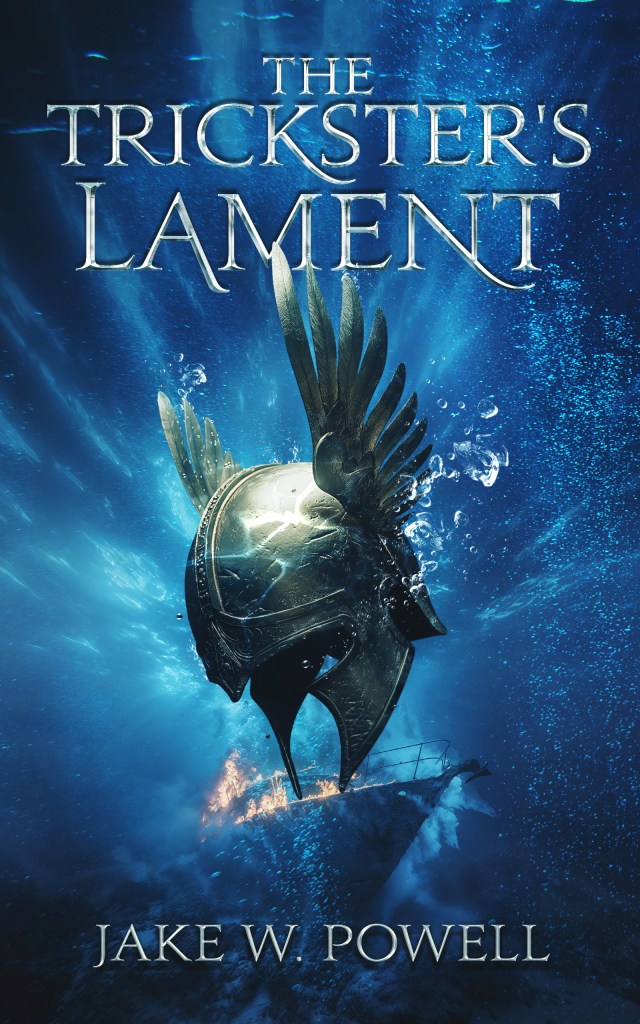
My book, The Trickster’s Lament, is currently available on Amazon in both Kindle and paperback format.

“Hermes is not having the best time. He walks a fine line, and his duty as messenger of Olympus weighs heavily on him. Being a god in the modern age means living in a world that no longer believes in gods. How much can one deity accomplish when no one respects him anymore? And why do his instincts tell him that he, the son of Zeus, is losing favor with his own family?

Tensions abound. The upstart Young Gods play dangerous games using entire cities as their boards. Formless monsters strike from the nighttime shadows, terrorizing hapless mortals. Agents of rival pantheons scheme to thwart Olympus’ designs. In the thick of it all, Hermes does what he does best: trick, lie, and cheat his way to victory.

Many thanks for visiting my blog. I post updates on my writing career, I muse over storytelling and fiction, and I reflect on the curious and wonderful things in life.

What Writing My Second Book Has Taught Me

I’ve heard that writing your second book is harder than writing the first. Your first book may be a hit, but it may also be a fluke, a one and done deal. But moving on to the second? Ah, that’s when you find out if you really have the chops to be a writer.

Well, crafting my second book has gone mostly smoothly. The story came together much more easily, I’ve gained a better understanding of the characters and their motivations and personalities, and it’s been a fun ride. Heck, I got it finished in much less time than the first: about a year and a half from beginning to final draft. But I also made mistakes that I didn’t with my first project.

Now, why is that? Why did I order a paperback cover when I didn’t have my final page count ready? Why did I make silly oversights in editing that I only noticed after sending the book in for formatting?

The only answer I have thus far is that I was rushing. I jumped the gun, I got a little too lax, I was so fixed on the end goal that I didn’t pay attention to all the hurdles. I was impatient, and I didn’t even realize it.

Fortunately, I spotted these errors in time and fixed them. Lesson learned.

I thought I’d share my insights here for any other budding authors to read. Impatience is a bane of writers. Maybe you have just the one novel to write in your lifetime. You’ve spent years on it and are eager to finally see it published. Or maybe you have a series in mind, a long-running story told over several books, and you’re ready to move on to the next leg in the journey.

Either way, the temptation to push through and stop paying attention to details is strong. Resist it! A good novel takes time. You have plenty of it to perfect your story, and the copyright page, and the title, and the word count, and so forth. Don’t publish until you know that your book is exactly the way you want it.

Sweat the details. It saves so much trouble in the long run if you do.

Many thanks for visiting my blog. I post updates on my writing career, I muse over storytelling and fiction, and I reflect on the curious and wonderful things in life.

Improve Your Writing … By Writing

If there was a magic trick to becoming a better writer, if there was a special class or a magic book, I’d be recommending that here instead. But, obvious as it may sound, the only way to become a better writer is to, well, write.

It’s one of those facts of life that’s so simple that you think there must be a catch. There isn’t, except that it requires hard work and discipline. To become better at something, you need to do it as often as you can.

But, you might ask, what about writing classes? What about exercises? What about reading and research? Those are important, make no mistake. There are plenty of good resources for writers nowadays, especially online. There are tons of excellent blogs that I personally peruse for advice. But if you want to be the best writer you can be, you have to delve headfirst into turning that idea that’s been clattering inside your head into reality. You need to practice your craft.

Write, keep writing, and never stop writing. Practice, practice, practice. And after you write, go over what you’ve written. Look at it with a critical eye. Learn your strengths and recognize your weaknesses. Improve upon them. Seek feedback from friends and family and writer groups. And keep writing.

With every new project, with every completed draft, and with every review, you will improve. Don’t let up. Keep pushing yourself. Accept no substitutes.

Many thanks for visiting my blog. I post updates on my writing career, I muse over storytelling and fiction, and I reflect on the curious and wonderful things in life.