What Matters Most: Establishing A Story’s Stakes

In every story, there are stakes. Something may be lost, something may be gained. The story’s conflict means something. Without stakes, without the risk of failure, a story isn’t very interesting. Who cares if the One Ring is destroyed in the fires of Mount Doom if Sauron isn’t a threat? Who cares about the Galactic Empire if they’re a paper tiger who can’t even threaten one planet?

You need to establish the stakes early on. That is to say, you need to establish what will happen if the heroes lose: Sauron conquers Middle Earth and reduces everyone to slavery. The Galactic Empire uses the Death Star to destroy any planet that opposes it. The heroes’ actions must matter.

Of course, not all stories have such a grand scope. To Kill a Mockingbird doesn’t deal with world-rattling threats, but Atticus Finch is struggling to prove an innocent man didn’t commit the crime he is accused of. The Grapes of Wrath centers around a family trying to establish a new life in California and not fall apart in the process. These are more personal stakes, but no less important.

That’s another thing about establishing stakes. They must be appropriate to the story. Personally, I think that, first and foremost, the stakes must be appropriate to the protagonist. We are reading about a character, and what matters to them must matter to us. If the stake is nothing more than Jim trying to get his kite into the air, then, by golly, that’s what the reader should care about, too.

Sometimes the stakes in a story increase. Maybe Jim gets drafted into World War II. Well, that’s a major shift. What’s at stake now? Survival? Capturing the enemy base? Maybe. But what is most appropriate is what directly affects Jim’s personal journey. It’s not just about fighting the enemy, any more than it was about flying the kite. It’s about Jim’s character growth.

It was never about getting the kite into the air. It’s not about fighting the war, not really. Those are the circumstances, but the story is about Jim learning to persevere and attain self-confidence. He never really felt that he was capable of getting that kite in the air. He feels that he can’t contribute to the war. The kite and the war represent the same thing: obstacles to Jim’s goal of becoming a confident, mature adult.

Okay, I’ll leave it up to one of you out there to write that story.

Writers don’t play hopscotch with the stakes. Even when they are raised to something more serious, they still form a core that drives the narrative. Every new stake is connected to the protagonist’s central conflict, each one a facet of his or her inner struggle.

It’s not about building up the biggest, most dire conflict imaginable: “The world will end! The evil empire will rule! The plague will kill us all!” It’s about character. It’s about what matters most to the protagonist.

***

Many thanks for visiting my blog. I post updates on my writing career, I muse over storytelling and fiction, and I reflect on the curious and wonderful things in life.
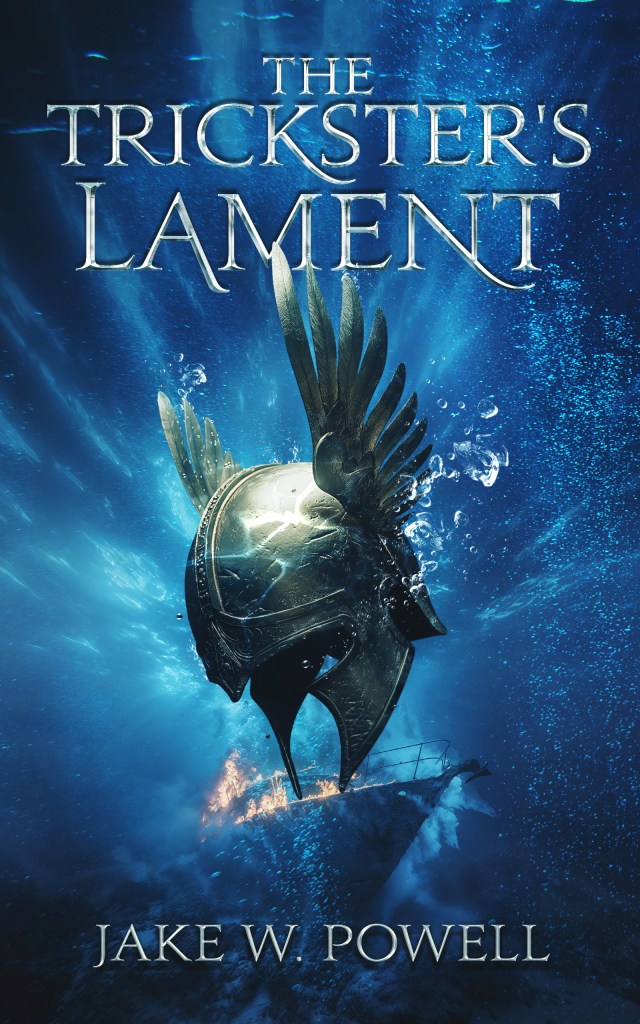
“Hermes is not having the best time. He walks a fine line, and his duty as messenger of Olympus weighs heavily on him. Being a god in the modern age means living in a world that no longer believes in gods. How much can one deity accomplish when no one respects him anymore? And why do his instincts tell him that he, the son of Zeus, is losing favor with his own family?

Tensions abound. The upstart Young Gods play dangerous games using entire cities as their boards. Formless monsters strike from the nighttime shadows, terrorizing hapless mortals. Agents of rival pantheons scheme to thwart Olympus’ designs. In the thick of it all, Hermes does what he does best: trick, lie, and cheat his way to victory.

Finding Your Time to Write

Everyone has a time when they are at their best for writing. Everyone has that time of day when they can “get in the groove.” Whether morning or evening, when the sun is rising or when it is setting, or anytime in between, we all have sweet spots when we find it easiest to settle down and write.

But we can’t always write during that sweet time. Life comes calling. Work. Chores. Errands. Family emergencies. Social obligations. Life doesn’t always allow us to write when we want to. What to do?

Here are some of my own thoughts:

  1. Make the most of the time you have – Be diligent when you are able to sit down and work on your projects. Set goals for yourself: hitting a certain word count per day, completing a chapter, and so forth. This is especially useful if you know ahead of time that your free time is constrained.
  2. Be flexible – We all have a time of the day when we are at our literary best, but we ought not feel that that’s the only time we are allowed to write. Experiment with other times and see what else works for you. You might be surprised at how adaptive you can be.
  3. Analyze your priorities – Work is one thing, playtime is another. You might have more time to write than you think, but you devote it to something else, whether a hobby, entertainment or even napping. Ask yourself how important your writing truly is to you. Are you willing to give up a little more time to devote to it?
  4. Persevere – And sometimes, no matter what, you just can’t get into the groove because you’re a night owl who can only squeeze in a paragraph or two at the crack of dawn. Soldier on. Don’t give up, and keep writing anyway. Perseverance is vital. If you truly want to make the craft a part of your life, there will be tough days along with the good. Soldier on.

***

“Hermes is not having the best time. He walks a fine line, and his duty as messenger of Olympus weighs heavily on him. Being a god in the modern age means living in a world that no longer believes in gods. How much can one deity accomplish when no one respects him anymore? And why do his instincts tell him that he, the son of Zeus, is losing favor with his own family?

Tensions abound. The upstart Young Gods play dangerous games using entire cities as their boards. Formless monsters strike from the nighttime shadows, terrorizing hapless mortals. Agents of rival pantheons scheme to thwart Olympus’ designs. In the thick of it all, Hermes does what he does best: trick, lie, and cheat his way to victory.

How to Write the Best Novel Ever

Looking for how to be the greatest author who ever lived? Need some quick and easy advice on the quick and easy way to become rich and famous? Just follow these ten tips without question, and you will become an author that nobody will forget! Absolutely not satire!

  1. Plagiarize other writers. Sharing is caring. Besides, they did the really hard part, so why not be efficient? If they didn’t want people using their stuff, they wouldn’t have made it public, now, would they?
  2. Use the most complicated, flowery language you can. Pull words from the dictionary with at least four syllables. Use really big words never used in casual conversation and sprinkle them liberally throughout your story. That way, everybody knows how smart you are.
  3. Don’t use consistent characterization. People aren’t consistent in real life, so why should they be in fiction? Don’t worry if your protagonist acts contradictory to established personality and goals. Just have them do whatever with no real rhyme or reason. It’s not like readers actually care about that sort of thing.
  4. Write maybe once or twice a month. Why stress yourself out? Write whenever you feel like. After all, you can only write well if you’re “in the zone.” Writing every day regardless of how you feel is just plain silly and definitely bad for your skin.
  5. Editing is a waste of time. Reviewing your work for typos, story flow and all that other stuff is dumb. Why compromise your original vision by changing all your hard work? Even worse is submitting your novel to editing by other people. Didn’t your parents teach you to never trust strangers?
  6. Novels are only good if they have lots of symbolism. They taught us that in high school literature class, so it must be true. Symbolism is way more important than storytelling, so make sure everything in your novel is symbolic: the color of people’s clothes, their names, their hairstyle, and especially innocuous, minor details that are otherwise irrelevant to the story. Everything is symbolic and has Deep Meaning™.
  7. Constructive criticism is dumb and bad and should be ignored. If someone doesn’t like something in your book and suggests how to improve it, they’re just jealous and probably want to sabotage you. Surround yourself with people who compliment everything you do and listen to them exclusively. But remember, per tip #5, don’t let them actually touch your book.
  8. Bigger books are better, so write as many words as you can and don’t cut any out. Refer to tip #2. All the hard copy versions of the world’s greatest novels are big enough to be used as doorstoppers. So, obviously, you want to write a huge book with lots of words. NEVER use 3 words when you can use 30.
  9. Draw your own cover art. Why bother letting someone else draw your vision? Save time and money by drawing the art yourself! You know what you want, and it’s guaranteed to be memorable.
  10. Include a gimmick. Everybody writes the same old boring way, so make yourself stick out. Write only in present tense, or make each character’s lines a different color, or write the pages out of order, or write sentences backwards. People like that kind of fun and will definitely appreciate all the extra effort you put in.

Ultimately, it is up to you on whether to make the correct decision and follow this free advice. Remember, this is ABSOLUTELY not satire designed to point out things that can hinder a book’s quality or a humorous article designed to make people laugh. This is absolutely serious stuff and following these steps will make you the best writer in the history of the universe and rich enough to buy a whole nation. Everyone will love and adore you forever as you achieve authorial apotheosis.

I repeat, this is in no way satire, and taking this advice seriously will not lead to you angrily arguing with people over your book’s reviews on Amazon.

And no, I am not crossing my fingers behind my back. My hand is itchy.

***

My new book, The Trickster’s Lament, is currently available on Amazon in both Kindle and paperback format.

“Hermes is not having the best time. He walks a fine line, and his duty as messenger of Olympus weighs heavily on him. Being a god in the modern age means living in a world that no longer believes in gods. How much can one deity accomplish when no one respects him anymore? And why do his instincts tell him that he, the son of Zeus, is losing favor with his own family?

Tensions abound. The upstart Young Gods play dangerous games using entire cities as their boards. Formless monsters strike from the nighttime shadows, terrorizing hapless mortals. Agents of rival pantheons scheme to thwart Olympus’ designs. In the thick of it all, Hermes does what he does best: trick, lie, and cheat his way to victory.

He may be disrespected. He may be kicked about. He may even be falling out with his pantheon. But Hermes is a trickster. He knows how to play dirty in a world that doesn’t play fair. But though he can best man, beast, and god, he isn’t prepared for his wiliest opponent yet: his own conscience.”

Many thanks for visiting my blog. I post updates on my writing career, I muse over storytelling and fiction, and I reflect on the curious and wonderful things in life.