Over the Next Hill: Tribute to Mankind’s Curiosity

The history of humanity is the history of crossing over the next hill.

Where are we without curiosity? Caves and mud huts. One day, someone steps outside with a mind filled with questions. What is over that next hill? What is in that valley? What is beyond that forest? Anther follows, and another. Further afield we walk, driven not by necessity but because we want to know.

Questions follow questions. Can I eat that? Can I grow it? Why does this reed make a sound when I blow through it? Food and music are discovered. Someone finds a sturdy stick. A walking stick, and soon a weapon. Lines are draw on sandy ground, then painted onto rock and hides. Maps are made to chart the wanderer’s path.

We cross the last hill and find a sea. But now is not the time to stop. Wood floats, this is known. A little later, and mankind sails out on boats across the water to find out what lies on the other side. They learn how to make the stars their guide. Navigation becomes more than simple wandering.

Where people grow tired and rest, they find new fruits and vegetables and animals. The nomad becomes the gardener and herdsman. Someone notices those mangy wolves following the camp for scraps. Someone tames them.

People build huts of straw and wood, of stone and brick. Cities appear. Curiosity turns inwards. How to make life better? Clever hands produce answers: the wheel, the hammer, the nail, the net, the plough, the saddle.

Not all stay in cities. Others keep wandering, looking for the next hill and sea and valley. They wander far afield, planting new cultures wherever they stop awhile. Downriver and up mountain and across desert. Because they can. Because they must know what is there.

The whole earth is charted. Mankind does not rest. The ocean deeps call out. The stars wink at humanity, inviting it to pay them a visit. Steam and electricity are harnessed. Fire no longer warms the camp, but lifts man and woman on ships of steel into the airless void to visit the moon. Other ships carry them beneath the ocean into the lightless abyss to glimpse its moody depths.

It is the never-ending journey. Why? Reasons are given, some long and eloquent, others little more than a careless shrug. Because we must know. Because we are curious creatures. Because we can scarce imagine what new mystery awaits us over the next hill.

If you just so happen to be enjoying my blog, feel free to subscribe. I post updates on my writing career, I muse over storytelling and fiction, and I reflect on the curious and wonderful things in life.

Image: “A view of hills and sky” by World Bank Photo Collection; Licensed under CC BY-NC-ND 2.0.

Writing Characters You Don’t Agree With

Writing characters require us to dive into their heads and figure out their backstories, beliefs, and personalities. It’s a fun diversion in and of itself to discover a character, much less to incorporate those discoveries into a greater narrative. Learning more about our protagonists can make us as attached to them as we hope our readers will be.

But what about writing people who are … less than agreeable? Or worse, who don’t share our values and principles? What about writing those whose motivations and beliefs are diametrically opposed to our own? What is it like to dig around in the head of someone who we don’t agree with?

It can feel almost like a betrayal of ourselves. He can’t say that, I don’t believe in it! She can’t do this, it’s not part of who I am! But putting yourself into your writing doesn’t necessarily mean you are your writing. You are creating a world with words, and that world will be filled with a motley mix of individuals who all possess their own strong personalities.

This can apply to antagonists and villains, but really, it includes any character you write. They play roles in a story, and sometimes those roles require them to be someone drastically different from yourself. Can that be awkward? Sure. Maybe there’s the nagging feeling in the back of your head that writing a character who deviates from your own worldview is somehow condoning things you don’t agree with. But if the story demands it and it develops your world, then it must be done. It’s not betrayal, it’s the mark of a maturing writer. I write people who do and say things I don’t personally find tasteful, but which do fit their own personality. I’m not that person. They’re a work of fiction, after all.

Besides, characters who disagree with you are likely to disagree with other characters, and that creates conflict. And conflict is how you keep a story going.

Even if you don’t agree with a character, they’re still yours and serve a purpose in the story. So, roll up your sleeves and figure out what to do with them. The first thing is to put yourself into their shoes. Think like them for a bit, practice seeing the world through different eyes. How do they feel about this thing or that other individual? How do they feel about your protagonist? Why?

Learning a bit of empathy and a bit about other worldviews certainly helps, as does reading good literature and learning from example how other authors write. It’s valuable to learn how to write characters whose voice and opinions don’t echo your own. Why? Because it is too easy to put yourself into every character and have everyone essentially act and believe as you do. And that makes a story boring and predictable.

And besides, for all that characters have a habit of taking on a life of their own, you are ultimately the final authority here. Like a director herding meddlesome actors, you learn to work with your cast and guide them toward your vision.

Ultimately, story is king. It comes first, and we do what we must to tell it. It’s all part of growing as writers.

If you just so happen to be enjoying my blog, feel free to subscribe. I post updates on my writing career, I muse over storytelling and fiction, and I reflect on the curious and wonderful things in life.

Writing Jerks

Why do jerks seem worse than villains? Villains are grand and powerful and fierce and evil. They deserve our disdain. But jerks are just plain petty. What’s worse? A dictator bent on conquering a nation, or a man who keys your car because you bumped him in the parking lot? Well, the former, obviously, but the latter certainly seems to steam people a heck of a lot more.

But I’m not here today to talk about “why’s,” but rather “how’s.” Namely: How do you write a jerk protagonist so that he’s likeable?

Think about it for a moment, writers. There are plenty of villains that people like. I’ve even written about it in a previous post. Mass murderers? Evil tyrants? Amoral thieves? They’ve all got fans. They’ve all got that special something called charisma. People will forgive a lot if you have charisma.

But jerks? They’re personal to the audience. We may never have met a murderer or a dictator (hopefully), but we all know a few knuckleheads with attitudes who stoop to the lowliest of cheap shots. Spend a week in customer service and you’ll meet jerks on the regular. They come in all flavors, but they all have something in common.

THEY AREN’T LIKEABLE.

Thus, going back to my first question, is there a way to write a protagonist who is unpleasant, rude, and otherwise just plain mean, and still make that character someone the audience can enjoy? Well, yes and no. The main thing about writing jerks is that if you keep them that way from start to finish, chances are you’re shooting yourself in the foot.

Consider a classic example of jerkdom in literature: A Christmas Carol’s Ebenezer Scrooge. A miserly, heartless, soulless businessman who has no mercy or pity for the poor. He’s on the up-and-up – he’s an honest man in the original story, believe it or not – but he has no redeeming traits. At first. The entire story is about Scrooge’s character development into a better person. And that’s the key to writing jerks: They shouldn’t still be jerks by the end of the story.

Side characters can stay jerks. Antagonists, of course, can remain jerks. But the protagonist should not remain static at the best of times. They evolve and mature. And if they start out as jerks and bullies, then they should show some sort of marked improvement by story’s end. Less of a jerk, kinder, more patient. Like Scrooge, they should learn something. There is nothing stopping you from writing a protagonist who remains the same come the conclusion, but if they were nasty and unlikeable to begin with, you risk leaving your audience with a sour last impression.

On the other hand, maybe the jerk not changing is the point. Maybe this is a more cynical piece, an introspective look into what makes a meanie tick – or maybe it’s just a comedy. Well, there is a way to make the audience side with the jerk, and that’s to introduce an even bigger jerk to square off against. Have a protagonist who’s belligerent and petty? Bring in someone else who’s even more so. It worked for British sitcom Fawlty Towers. Basil Fawlty is a Class-A Jerk through and through, but he frequently dances with people even worse than he is. See for yourself.

We like someone to root for, you see. If we’re given two flavors of unpleasantness, we’re naturally going to compare them. And if one is slightly less bad than the other, we’ll favor that one and despise the other. The lesser of two jerks, if you will.

There are those rare occasions where your story doesn’t require that the protagonist change for the better, or circumstances dictate that there isn’t a worse character to compare against. So, what to do? Well, you can make the jerk empathetic. That’s not saying you give the protagonist the capacity for empathy, but rather that you give them traits the audience can relate to. Humanize them a bit, just a little, so that they’re a tad more understandable. Maybe they are the way they are because of a bad childhood, or ill health, or they’re just plain unlucky.

Let us consider the case of Disney’s Donald Duck. He’s … not the most pleasant individual, especially in his 1930s and 1940s cartoon shorts. But oh, boy, does he have bad luck at every turn. Nothing turns out right for him. No wonder he has such a chip on his shoulder. If we had the rotten fortune that Donald does, we’d be short-tempered, irritable scoundrels, too.

So, there you have it. My two cents on writing jerk protagonists. It can be done. It has been done. You can do it, too.

If you just so happen to be enjoying my blog, feel free to subscribe. I post updates on my writing career, I muse over storytelling and fiction, and I reflect on the curious and wonderful things in life.

Keep Soldiering On!

The snow is here. Winter continues its dismal march. I walk through slush and ice in the dark to work every morning, and return home at twilight. I don’t see much of daylight. It’s a dreary time of year. Makes it hard to write and create.

But the days are getting longer! The dismal darkness won’t last forever. I’ll see the sun again on a daily basis, and enjoy the cheer of spring.

No deep reflections today, or musings on storytelling. Just a piece of encouragement to all you creators out there to keep creating. Keep motoring on when things feel gloomy. This, too, shall pass, and tomorrow will be a little bit brighter.

New Year’s Resolutions? I Resolve Not To!

New Year’s Day is a day famous for resolutions. The day when people work up the courage to swear to permanent change in their lives. To resolve to start doing this, stop doing that, and make some adjustments to these other things. A time for fresh starts.

Now, let’s be honest with ourselves. How many of you have ever kept a resolution all the way through the entire year? If you have, you have my deep and abiding respect. You are a rare breed.

I don’t believe in New Year’s resolutions. I defy this societal concept. No, I’m not being contrary for contrariness’s sake, I just don’t understand the need for it. Why wait until one day out of 365 (or 366) when you can always decide to change TODAY? That is, if you really want to improve yourself. Maybe it’s just more comfortable to say, as little orphan Annie sings, “There’s always tomorrow.” And tomorrow always seems to be such a long time coming.

That being said, it’s all well and good to come up with new goals on New Year’s Day. It’s tempting to look out across the vastness of the new year, all those blank days ripe with promise, and imagine to oneself how this time you’ll do it differently. You’ll be better this year, just wait and see. You make that silent resolution to yourself. On the same day, of course, when everyone parties hard till midnight and carouses and gets drunk and gets into car accidents. A hangover and a car repair bill. An excellent start to the new year.

Some people take resolutions very seriously. And to those people who can keep them throughout the year, I say more power to you. Like I already said, you are a rare breed. Most people make a few half-hearted mentions of a few things in life they want to be different, then forget all about it in a couple weeks (or a couple drinks).

Which isn’t to say that the idea behind New Year’s resolutions is a bad thing. We should always strive to improve ourselves. But maturity and growth is a gradual process, not something that happens in leaps and spurts. It takes a lot of effort to change something about ourselves. We stubbornly cling to bad habits and thoughts because they’ve stuck with us for so long. A single day of swearing off a habit isn’t going to make much difference. You got to work at it every day. You got to practice. Change is slow.

So, I don’t bother with New Year’s resolutions. Why should I, when I can make that resolution any day of the year? Sometimes, I make the same resolution multiple times in a week or a month, because I stumble. We all stumble, especially after making a big show of the big changes in our lives. Life likes to set us up like that. It’s like setting the cute baby seal free into the ocean with cameras rolling and – oh, there’s the shark waiting to spoil the moment.

I will make resolutions as many days as it takes to improve myself for the better and change my bad habits. No one-and-done deals. One day’s quick and easy promises aren’t enough.

If you just so happen to be enjoying my blog, feel free to subscribe. I post updates on my writing career, I muse over storytelling and fiction, and I reflect on the curious and wonderful things in life.

Image: “Fireworks – Adelaide Skyshow 2010” by anthonycramp; Licensed under CC BY 2.0.

Why Do You Create?

Christmas vacation has given me more time than usual to spend on my writing and passion. That needling desire – that need – to write is stronger than ever within me. With this awareness fresh in mind, I want to ask a question to my readers. No need to answer in the comments if you don’t want to, of course. This is just something to ponder when you have a moment.

Why do you create?

This isn’t just a question for authors, or for artists, sculptors, songwriters, musicians, poets, filmmakers, and those who doodle in their notebooks during class. This is for all who feel the urge to create something, to tinker with something, to take something apart and put it back together again.

This is for those who enjoy the act of producing and modifying and bringing into being a thing that wasn’t there before. The car mechanics, the dance choreographers, the sketchers, the gardeners, the woodcarvers, the fashion designers, the computer programmers, the origami enthusiasts, the crocheters, the embroiderers, and the engravers. The shoemakers, the tailors, the welders, the carpenters, the jewelers, and the chemists. The people who sing in the shower and the people who love decorating for Christmas. The people who color coordinate their clothes and the ones who sew blankets for their friends’ children. This is for all of you.

Why do you create?

What is this burning desire? This all-consuming thought that strikes us out of the blue: I want to make something. Why? What does it do for you? What is this amazing, crazy facet of human nature, this ability and impulse to make something new in the world?

And what happens if we don’t answer the desire? How do you feel if you can’t create, or if you experience a blockage?

Just a thought to ponder as the new year approaches. Whatever the answer, I wish you luck with your creations, and the fervent hope you can share them with others. To create is a gift, and the best gifts are shared with others.

If you just so happen to be enjoying my blog, feel free to subscribe. I post updates on my writing career, I muse over storytelling and fiction, and I reflect on the curious and wonderful things in life.

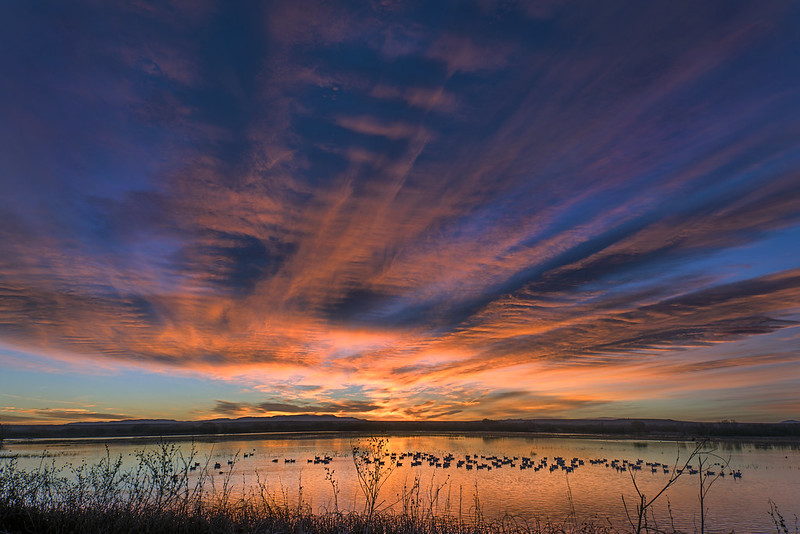
Image: “Another Bosque Sunrise” by snowpeak; Licensed under CC BY 2.0.

Quirks and Tics: Characterization through Minor Details

You ever think about how traits and habits can shape a character? Everyone has their own flavor of mannerisms: body posture, repeating gestures, facial expressions, verbal expressions, nervous habits. For the sake of simplicity, let’s call them “quirks.” They’re the little details that don’t play a part in the unfolding plot, but simply help flesh out the world you’re creating. Being visual cues, for the most part, they also aren’t always the easiest thing to describe in writing. Movies love them, though, and they can definitely help liven up a scene and make characters more relatable.

It’s all about humanizing your characters. Real people have habits and tics. They do or say things on a regular basis that are uniquely a part of them. You – yes, you – have habits and gestures of your own that make you, well, you. The devil is in the details, but so is good writing. Experienced authors can make even a bit character memorable by throwing in a couple of notable traits and letting those emblazon themselves in readers’ minds. Movies have it even easier. Being visual by nature, a film or TV show can display those quirks without pausing to describe them, letting such details blend more seamlessly into the narrative.

Mostly, quirks are all about worldbuilding, aren’t they? Not necessary to the plot, not vital to understanding the hero and supporting cast. They’re like sprinkles on ice cream. They’re a little something extra.

Or are they?

Quirks can be used as plot devices and can even deliver good payoffs. Someone recognizes her long-lost lover because of the specific way in which he twirls his hair. A secret agent’s habit of spinning his knife causes him to drop it and nearly trigger a motion-sensor alarm. A villain always unconsciously taps her fingers at the prospect of playing a game. A protagonist with OCD compulsively touches and counts poles on the sidewalk. He misses one and goes back for it – just in time to miss being run down by an oncoming car.

These are all examples taken from real movies and TV shows. Can you figure out where they come from?

Do you want your story to feel real? Do you want your characters to feel like people you might actually meet on the street? Or maybe you just want to challenge yourself with producing something a little more creative than past works? Consider using quirks to ad spice to your story. How? Well, take a look at the people you already know. Watch them carefully (but don’t be weird about it). Look at how they act and talk and move. Real life is good inspiration. Everyone has quirks.

Are there ways in which you have used quirks in your writing? Please feel free to share!

If you just so happen to be enjoying my blog, feel free to subscribe. I post updates on my writing career, I muse over storytelling and fiction, and I reflect on the curious and wonderful things in life.

Writing Your First Draft: The Vomit Draft

Having gotten halfway through the first draft of my second book, I look back on the progress I’ve already made and have mixed feelings about it. On the one hand, I’m fairly confident my skill has improved somewhat since my first book. On the other hand, I see the myriad flaws still there and wish I could write a perfect book straight out of the gate. But writing is a feat where one plays the tortoise more than the hare. Slow and steady wins the race.

Also, the first draft of anything is going to be garbage no matter how hard you try. It’s just the nature of the beast.

In fact, I’ve come up with a nickname for first drafts: the vomit draft.

The first bout of writing isn’t necessarily pretty or neat. In fact, it can be downright ugly as you not only try to type out a coherent story, but also struggle with phrasing, dialogue, vocabulary, writer’s block, and coming to the grim realization that your story’s direction is slowly but surely veering away from your original vision. It’s a beautiful mess.

Knowing this, my goal in the first draft isn’t to write a masterpiece. It’s to just get all the words written. Spewing them out as they come to mind, as it were. Hence, the vomit draft.

We got to start somewhere, right?

Sometimes, I get frustrated and think that the garbage I’m writing is going to stay garbage regardless of rewrites. Sometimes, I go through a brief existential crisis as I wonder if being a writer is even my calling in life and maybe I should just stick to my day job. Sometimes, my mind struggles with even the most basic words. Who will want to read this?

But that’s not what the vomit draft is about. Making your story readable comes later. Right now, just get it all out. No holding back, no second-guessing, no graceful prose. Just write something to fill in the pages. It’s the foundation for what comes later. Every beautiful building is built upon a pool of poured cement. It’s not pretty, and it isn’t supposed to be.

Fortunately, nobody ever has to see our vomit drafts except ourselves. And we get a small consolation in knowing that this sorry state of affairs can and will become something much, much better.

If you just so happen to be enjoying my blog, feel free to subscribe. I post updates on my writing career, I muse over storytelling and fiction, and I reflect on the curious and wonderful things in life.

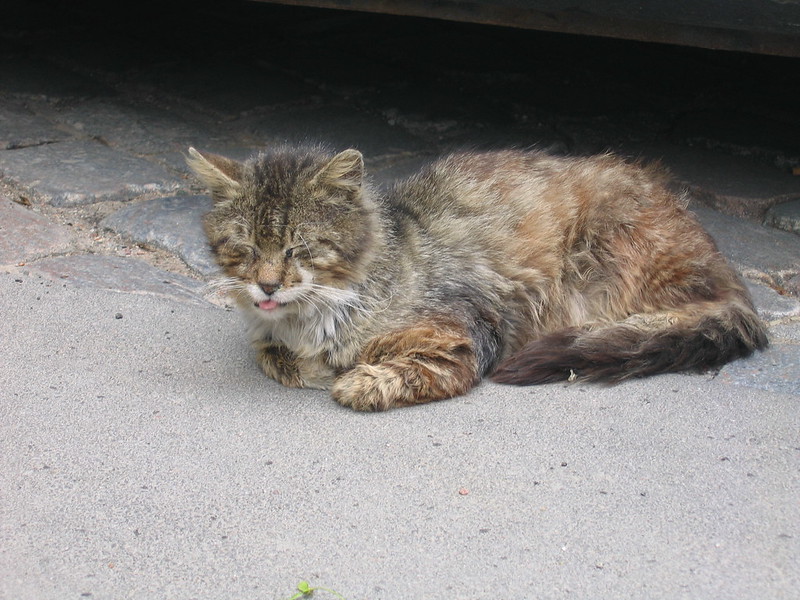
Image: “A sick cat” by wwhyte1968; Licensed under CC BY-SA 2.0.

History: The Greatest Source of Inspiration for Any Writer

Fact is stranger than fiction, they say. And it’s true. But have you ever considered the inverse: Fiction is never stranger than fact.

No matter a writer’s imagination, no matter his ability to craft new worlds out of his own mind and populate it with characters who seem as real and unique as anyone you meet on the street, and no matter how engaging, grandiose, bizarre, or heartfelt the events portrayed in his work, he will never be able to surpass the parade of the unexpected that is world history.

History IS story. It’s right there in the word, isn’t it? And it’s real. Just think about that for a moment. Think about all the things you’ve read in the history books. Adventure. Romance. Mystery. Tragedy. War. Friendship. Triumph. Defeat. Despair. Hope. All of it is there, all of it waiting to be discovered by that one author seeking a mote of inspiration.

Where am I going with this? Just to say this: We writers have so much to draw from just by browsing the history section at our local library or bookstore. Heck, just go online. We live in the age of information. The World Wide Web contains everything. Try a quick surf of your hometown’s newspaper archives. Stories aplenty. Ideas in abundance.

And now I’m starting to think that there are so many tales in history that haven’t been given their due. Forgotten stories that need a time to shine. Eras and events that have been lost in the bustle of modern progress. Martin Scorsese’s Killers of the Flower Moon highlighted a time in Native American history that deserves more recognition. A terrible time, but one that should be known.

What else have we misplaced? What battles and victories waiting for their recognition? Unsung heroes waiting for their song to be written? Tragedies yet to be acknowledged? Villains who thought they got away with it?

Apologies, I’m just waxing poetical now. You get the idea. Writers don’t just write stories. We live at the tail end of the longest story ever written. All we have to do is look back a little ways for new tales from that saga to tell. Isn’t that a teensy bit amazing?

If you just so happen to be enjoying my blog, feel free to subscribe. I post updates on my writing career, I muse over storytelling and fiction, and I reflect on the curious and wonderful things in life.

Image: “Early printed vellum leaf” by Provenance Online Project; Licensed under CC0 1.0.

Thankful for the Unexpected

You walk through life. Everything is going according to plan. Every day like the one before – the grating yet comforting grind of monotony. Then BAM. You’re caught by a curveball. A piece of bad news or a freak event. Something you could never have possibly foreseen. Your plans implode, and you’re left with your head spinning.

On the other hand …

Something joyous happens, something spectacular that you never dared hope for. It’s the greatest news ever, the most wonderful unplanned thing to happen to you. Your plans are upended in the best way possible.

What do you do when life hands you the unexpected? I like plans. I like organization. I like to go through life knowing what’s going to happen next. When something pops up that isn’t part of the plan, I bristle. Even good things, sometimes. My control freak tendencies take a hit from things in life beyond my control. The older I get, the more thankful I am for that.

I could go on about how life is a test and molds us and so forth, but let’s dispense with the cliches. What I’m most thankful for is that the unexpected in life – good and bad – show us who we really are. We dig deep when confronted with a crisis to prove our real mettle. A disaster buffets us, and cracks in our supposed good character can appear. We get to know ourselves a little better. No need to fret, though. Knowing that they are there gives us a chance to address them.

I don’t believe that anyone can truly know themselves fully. Our “real” selves are a bit of a mystery to our own minds. We humans are simply simply too complex and too multilayered to be able to completely comprehend ourselves, much less others. But we do get glimpses of insight every now and then. Life isn’t the only thing full of the unexpected. We can defy our own expectations. We accomplish things we didn’t know we could, we possess virtues we never, ever suspected we had, and we also display vices we never thought we possessed.

Okay, life is a test at times. But testing isn’t meant to break. I’m very glad that life has thrown curve balls at me. I’d be stagnating in my own self-satisfaction if I didn’t know where and how I could improve. Always room for growth and all that jazz.

This naturally extends to writing. No great writer ever rested on his or her laurels. They keep improving, working, pushing themselves to become better. And writing is a career where you put yourself into the public’s eye. Readers can detect if you’re improving or not. Scary, no? And no writer can ever 100% predict how readers will react. What form will the criticism take? What will be the readers’ reactions? Are we ready? Can we ever be ready? But we roll with the punches as best we can and figure out what went right and what went wrong. And we write a better story next time.

Expect the unexpected. Welcome it. You’re going to be thrown for a loop someday anyway. Might as well as learn to embrace the good that comes from it.

Enjoying my blog? Don’t want to miss a single post? Subscribe for updates on when I post and follow my writing career, musings on fiction and storytelling, and reflections about life in general!

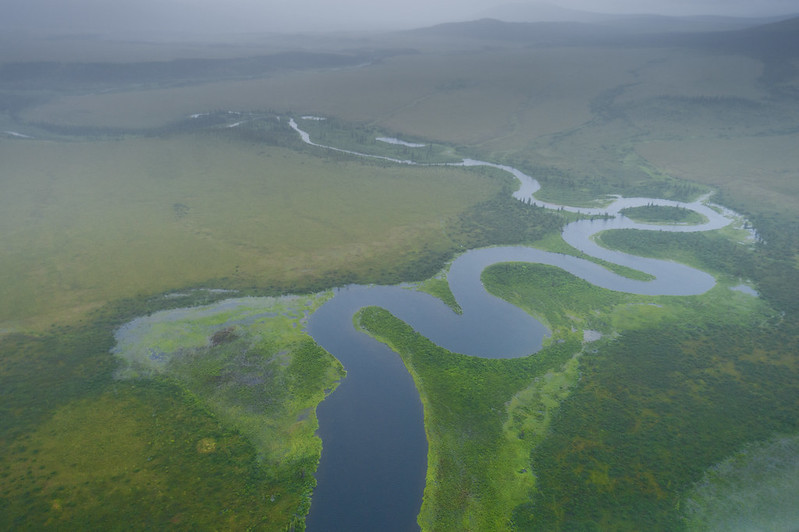
Image: “River meander, outside of Kobuk Valley National Park” by AlaskaNPS; Licensed under Public Domain Mark 1.0.