If you could host a dinner and anyone you invite was sure to come, who would you invite?
If I could invite anyone … I wouldn’t let a thing like time get in the way.
I would invite people long dead to learn their stories and the shape of history. Not famous people or those mentioned in the history books. The nameless, the common people, those whose names never made it into a textbook.
- A laborer who worked on the Great Pyramid of Giza. I would ask him how the pyramids were built, and what it was like to build one of them. I would ask what life was like for the common man in the ancient times of Egypt.
- A Viking from the 10th century. What were the raids like? What was your culture like? How do you see yourself, and how do you want others to see you?
- A peasant from 15th century Japan. What was it like to live during the Warring States period? I would ask him about daily life in Japan and how peasants related to samurai and other higher-ranking castes.
- Nez Perce, Comanche, Pueblo, Inuit, and Mohawk tribal members from before the first Europeans arrived in North America. I would ask them what their cultures were like, how they got on with their neighbors, and what North America was like before written history.
- One of Thomas Edison’s employees. Not the man himself, but someone who worked under him. What was it like? What was he like? And how did you contribute to his company?
- One of the first theater-goers to see Walt Disney’s Snow White and the Seven Dwarfs in 1937. I would want to know what the first audience’s impressions of the film was. And I would want to know what they thought Disney would do next.
- One of Microsoft’s first ever employees. I would love to know what his or her vision for the company was, what working under Bill Gates was like, and what it was like to build the first home computers.
And that would just be my first dinner party …
***
Many thanks for visiting my blog. I post updates on my writing career, I muse over storytelling and fiction, and I reflect on the curious and wonderful things in life.
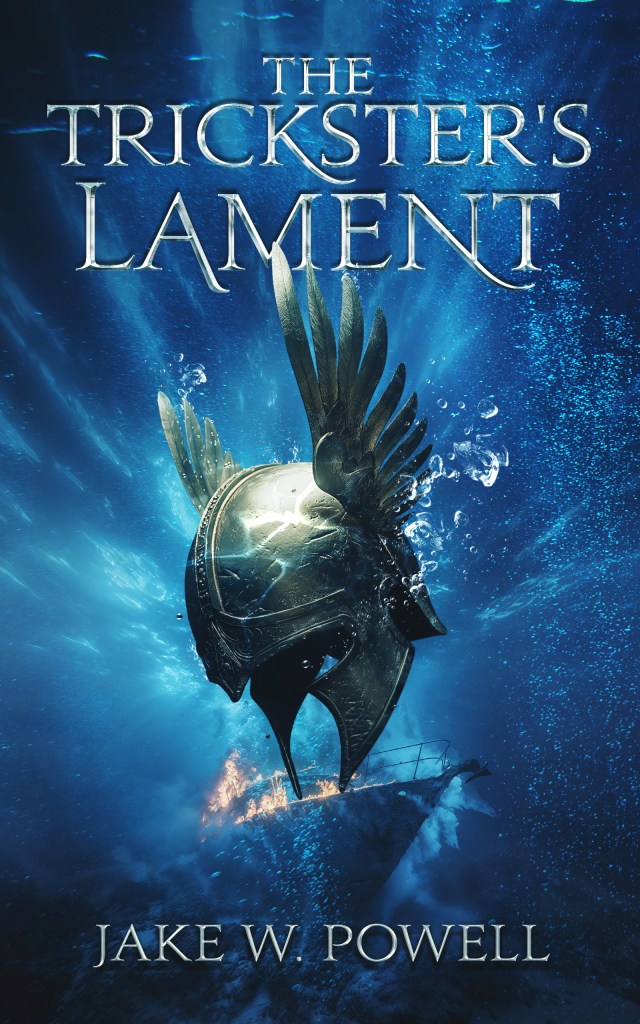
“Hermes is not having the best time. He walks a fine line, and his duty as messenger of Olympus weighs heavily on him. Being a god in the modern age means living in a world that no longer believes in gods. How much can one deity accomplish when no one respects him anymore? And why do his instincts tell him that he, the son of Zeus, is losing favor with his own family?
Tensions abound. The upstart Young Gods play dangerous games using entire cities as their boards. Formless monsters strike from the nighttime shadows, terrorizing hapless mortals. Agents of rival pantheons scheme to thwart Olympus’ designs. In the thick of it all, Hermes does what he does best: trick, lie, and cheat his way to victory.“
 Jake W. Powell
Cool how do you put your photos in your blogs?
LikeLike
Select “Image” when inserting a new block on your post.
LikeLike
Thank you.
Sent from Yahoo Mail for iPhone
LikeLike
Okay thank you Jake.
LikeLike