Villains: Why We Love Such Hateful Scoundrels

Image: Dick Dastardly, doomed to villainy from the day he was named. Wacky Races promotional material, courtesy of Wikipedia, fair use

Last week, I talked about antagonists and their importance to a good story. If you read it, you may have noted that I said antagonists are not necessarily villains. Antagonists are just a roadblock to the hero’s goal.

Today we are going to talk about villains.

What’s the difference? Simple. Villains are EEEEVVVIIILLL. They’re monstrous, greedy, murderous, and rude. They slaughter villages, rob innocents of all their possessions, conquer nations, and say really mean things. We love to hate them. We love villains. Why do we love villains? Why like something so vile?

That question gave me some food for thought, and here’s what I’ve come up with.

1: Villains are charismatic.

Darth Vader knows how to make an entrance. He strides down a hallway littered with corpses, black cape flourishing behind him. His breath is a low mechanical wheeze, and his face is concealed behind a skull-like mask. He casually strangles a rebel while interrogating him, takes charge of every situation, strangles fellow Imperials from a distance while cracking morbidly dry jokes, and in general is a terrifying threat to everyone he meets.

He’s a monster. But he’s a cool monster. He gets the cool armor, the cool lines, every appearance is accompanied by John Williams’s Imperial March, and if he’s not the mascot of the Star Wars franchise, he’s pretty dang close. Why? Because Vader has charisma. He’s memorable, he has stage presence, he has the physical acting of David Prowse and the rumbling baritone of James Earl Jones. Who doesn’t know who Darth Vader is? And how many little kids dress up as this cold-blooded mass murderer every Halloween? Oh, bitter irony! But such is the effect of a charismatic villain.

2. Villains are interesting.

We like to watch or read about interesting people. Ergo, we like to watch or read about interesting villains. Villains with unusual motives, or memorable quirks, or empathetic traits. We like villains who stick out from the mass of mundanity. We like villains who can keep us invested in the plot.

Take old Norman Bates, for example. He’s a psychotic serial killer. Well, nothing new there, fiction loves its depraved killers. But he’s a hotel owner with a split personality, that of his deceased domineering mother, who takes control and kills any woman that Norman expresses an interest in. Well, that’s certainly one form of interesting. What’s more, half the plot of Alfred Hitchcock’s Psycho follows him as the main character. And we learn that, sick as he is, he is a tad pitiable as well. That makes him, dare I say, quite interesting to watch.

We generally consume fiction for the purpose of being entertained. And a key part of entertainment consists of simply holding our attention. The best villains grab our attention and never let go. We look forward to seeing them onscreen, especially if they end up more endearing than the cardboard heroes.

3. Villains drive the plot.

Maybe, on some unconscious level, we like villains because we recognize how necessary they are. Villains, like all antagonists, drive the story. If they don’t start it, they at the very least keep it going. Conflict is key, and villains by their nature stir up conflict.

Take the Evil Queen from Disney’s Snow White and the Seven Dwarfs, for instance. There would be no story if she hadn’t gone up to her magic mirror and asked “Who is the fairest of them all?” And then tried to kill Snow White when she learned the girl was fairer than her. Then Snow White wouldn’t have ended up in the dwarfs’ cabin, and the Evil Queen wouldn’t have pursued her disguised as an old hag, and we wouldn’t have had the dwarfs’ climactic scene chasing her up the cliff during a thunderstorm.

There would be no movie. And we would not be entertained.

The gods and beings of ancient myth never went away. They just moved on with the times.

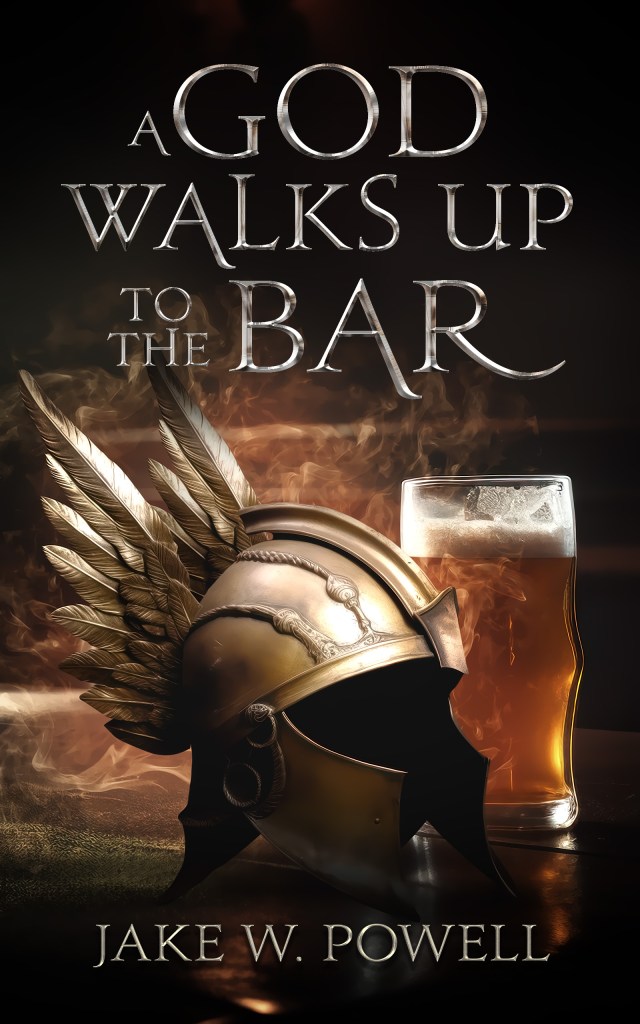
My book, A God Walks up to the Bar, is currently available on Amazon.com. Venture into the world of the Greek god Hermes, a world filled with demigods, vampires, nymphs, ogres, magic, and trickery. It’s a tough job, being a god!

Enjoying my blog? Don’t want to miss a single post? Subscribe for updates on when I post and follow my writing career, musings on fiction and storytelling, and reflections about life in general!

Antagonism: The Types of Conflict that Shape a Story

Featured Image: “Black Knight vs Blue Knight” by tinyfroglet is licensed under CC BY 2.0.

Funny thing about conflict: We don’t like it in real life, but we pay money to see people who aren’t real suffer. I mean, what good movie or book doesn’t have some sort of conflict at the heart of the story? The rebel leader fighting the evil empire, or the monster hunter confronting the vampire, or heck, the two lovers trying to overcome the forces keeping them apart. Conflict drives a story. Without it, there’s just nothing worth telling. No opposition, no struggle, no character arc, no story, no nothing.

With that in mind, it’s apparent that the source of conflict is pretty darn important. The protagonist wants something, and something else stands in their way. That “something else” is the antagonist, the source of the conflict. It’s not necessarily a villain. It’s not always another person. It may not even be a living thing. But it is opposed to the protagonist.

We humans are busy little storytellers. We’ve generated a wide variety of tales over the course of the millennia, and that means a variety of antagonistic forces have been invented. Let’s take a look at the basic types, shall we?

Firstly, we have the classic form of the antagonist: Man versus Man. It may not be an actual man against another man, but “Person versus Person” just lacks that dramatic je ne sais pas. Anyway, this is what most people think of when they think of the word “antagonist.” Darth Vader, Michael Myers, Dracula, the enemy army, werewolves, the high school principal, you name it. If it’s a unique, discrete entity, it falls under this category … usually. Mind you, however, that an antagonist is not necessarily a villain. They don’t have to be evil. Sure, Darth Vader is a classic antagonist and a legend of pop culture, but if the protagonist is an underdog football player trying to win the big game, the antagonist could be the arrogant captain of the opposing team: a jerk, but he doesn’t have to be a mustache-twirling, baby-kicking villain.

If it’s not Man versus Man, it just might be Man versus Nature. Think Robinson Crusoe. There is no one identifiable entity threatening the protagonist. Nature itself is the enemy. Maybe it’s a storm threatening a fishing community, a plague that scientists are racing to cure, or an asteroid on a collision course with Earth. Whatever it is, it’s generally a faceless threat that you can’t just beat up yourself.

Although, sometimes writers cheat and will throw in some form of threat that makes things more personal. Say, a pack of wolves that chase the protagonist throughout the story. Or maybe a really angry bear. Or a monstrous, man-eating shark (Hello, Jaws!). If there’s something to pinpoint as the source of the protagonist’s woes, it makes it easier for the audience to cheer for them when they beat it.

Man versus Society: Society is to blame! Here, we have a protagonist who is in some shape or form going up against their own culture. It could be going against expectations, fighting against injustice, or maybe just trying to flee an oppressive situation. Or maybe they’re rebels who want to defy norms and expectations as a means of proving their own individuality. Or maybe the protagonist’s actions aren’t justified at all, and the story shows why those norms exist. These sorts of conflicts can swing widely between the idealistic and the cynical. The protagonist wins, proving that society can’t keep you down. Or the protagonist wins, triggering a dystopian collapse. Or society wins, and the selfish protagonist learns an important lesson about sacrifice and duty. Or society wins, and the protagonist is reduced to just another cog in a life-sucking machine. Yeah, these stories can go all over the place, can’t they?

And finally, we have Man versus Self. The protagonist is their own worst enemy. Nobody is able to hinder their goals more than themself. Personally, I don’t see this particular form of conflict very often, but it’s there. I think it works best when combined with one of the three other antagonists above. The protagonist could succeed if only he would give himself a break or free himself from whatever chains are holding him back. Pretty good for a character study or more cerebral story rather than an action-focused piece. If you want to get really loopy, you could have the character’s inner demons manifest externally as something in the real world, usually in a symbolic way as something associated with their vices, or you could have a literal split-personality for them to talk to. All sorts of loopy possibilities.

And there you have it: A bare-bones breakdown of conflict and antagonists in a story. As basic as can be, but a solid foundation for any writer to use.

What other forms of conflict do you see in stories? Are there other types of antagonists you’ve found in media that you’d like to share?

The gods and beings of ancient myth never went away. They just moved on with the times.

My book, A God Walks up to the Bar, is currently available on Amazon.com. Venture into the world of the Greek god Hermes, a world filled with demigods, vampires, nymphs, ogres, magic, and trickery. It’s a tough job, being a god!

Enjoying my blog? Don’t want to miss a single post? Subscribe for updates on when I post and follow my writing career, musings on fiction and storytelling, and reflections about life in general!

Lessons I Learned Writing My First Book, Part 5: Humility

What’s the greatest challenge you face as a writer? The hours of hard work spent crafting your story? Pushing back against writer’s block? Trying to research a key piece of your book that you can’t quite get right? Finding a publisher? Finding the money to publish independently?

After all the effort you put into your book, there comes a point where you crave vindication of your efforts. After everything is said and done, you put it out onto the market and …

Where’s the jubilee? Where’s the praise? It’s MY book, it’s MY effort. Don’t I deserve it?

And here comes a hard truth: No, you actually don’t.       

We should all dream big, because big dreams encourage us to strive for excellence. But dreams alone are not the key to any sort of success. Hard work, diligence, and consistency are far greater allies in that regard. It’s easy to look at examples of literary success and think that somehow, through the mere act of wanting, we not only are able to join them, we deserve to join them. To stand up there with Hugh Howey, Brandon Sanderson, Dan Abnett, Jim Butcher, Ursula K. Le Guin, Terry Pratchett, et al.

Or, going even further, to see ourselves as the next William Faulkner or Charles Dickens or F. Scott Fitzgerald. And then we complete our book, we’re proud of it, and we put in on the market and … it’s another book.

A good book, maybe, but there are no laurels or songs or movie deals. It’s a book. One among hundreds of thousands. Roll up your sleeves if you want to get more notice, because it won’t get noticed by itself. You’re an author. Not THE author, not the greatest author. An author.

Harsh? Maybe. But eating humble pie is a bittersweet affair. Reflecting on my journey to where I am now, I’m darn proud of what I’ve done. I enjoyed writing my book, and I’m enjoying starting my second one. If I wanted glory, I’d pursue a different profession.

It still stings a little, though.

Humility comes in many different forms. Sometimes it whirls in and knocks us off our haughty high ground. Sometimes it’s a series of events that remind us we’re not as self-important as we thought. Sometimes, it’s doing something that others look down on as unimportant. It’s not something that’s enjoyable to learn (a running theme with my past few articles, I’m noticing) but, as I’ve already said before, it’s necessary. Pride and egotism can take a good job and hard-earned goodwill built up with your audience and turn it to ash. We’ve all seen it. Maybe you’ve even been there before.

Keeping ourselves in perspective can, I hope, help us to understand our place in the very big and crowded world of publishing and, rather than discourage us with delusions of insignificance, drive us to work harder toward a successful and fulfilling career. Humility helps us see ourselves clearly and to see the things we can do to make ourselves the best people we can be.

The gods and beings of ancient myth never went away. They just moved on with the times.

My book, A God Walks up to the Bar, is currently available on Amazon.com. Venture into the world of the Greek god Hermes, a world filled with demigods, vampires, nymphs, ogres, magic, and trickery. It’s a tough job, being a god!

Enjoying my blog? Don’t want to miss a single post? Subscribe for updates on when I post and follow my writing career, musings on fiction and storytelling, and reflections about life in general!

Lessons I Learned Writing My First Book, Part 4: Patience

Waiting, waiting, waiting. All things come to those who wait, or so they say. It’s a bit glib, isn’t it? Besides, waiting is only half the game.

Patience isn’t just about waiting. It’s about focus. It’s about working without complaint. It’s about denying yourself instant gratification in favor of long-term benefits. It’s about enduring the terrible uncertainty of whether your hard work will pay off.

It’s not … fun, per se. It’s useful. And, in the words of knowing parents everywhere, patience “builds character.”

As you may have already gathered from my previous ramblings, writing isn’t a fast process. Therefore, it takes patience. And I learned to be so while writing and publishing my book. But you know what? The writing part wasn’t where patience came into play for me. I LIKE writing, so it never felt dull or slow.

The real test was submitting my work for beta reading and editing. Not because the people I worked with took an unduly long time to respond, mind you. I’ve had the pleasure of working with great people. But it tested ME. Waiting for critiques, I could only think, “What will others think of my book? Is it good enough? Is it bad?” And I couldn’t get instant feedback and sate my desires to know. I had to sit back and wait.

There’s fear in the waiting, sometimes. Patience requires a modicum of courage. The horrible question, “What if?” pervades our minds when we think about what COULD happen. And the longer we wait for something, anything, the more “What if?” needles our minds. What if my book is bad and nobody likes it? What if I don’t get to my child’s rehearsal in time because of this red light? What if I can’t get off work in time because of this one slow customer? And so on and so on.

So, I was tested. I had to wait in inaction for a little while. I didn’t like it, but watcha gonna do? And there is a certain cathartic relief when your patience pays off and the wait is over. Delayed gratification and all that.

Discipline, perseverance, and patience. These qualities are like muscles. They must be exercised on a regular basis to grow strong. My last lesson, however, is the hardest because it is something we can’t directly govern. Life is happy to teach it, and we either learn … or we don’t. I’ll discuss it in more detail in my next post.

The gods and beings of ancient myth never went away. They just moved on with the times.

My book, A God Walks up to the Bar, is currently available on Amazon.com. Venture into the world of the Greek god Hermes, a world filled with demigods, vampires, nymphs, ogres, magic, and trickery. It’s a tough job, being a god!

Enjoying my blog? Don’t want to miss a single post? Subscribe for updates on when I post and follow my writing career, musings on fiction and storytelling, and reflections about life in general!

Lessons I Learned Writing My First Book, Part 3: Perseverance

Seventy-eight, seventy-nine, eighty …

Do you like doing pushups? What about arm curls? Or squats?

Eighty-five, eighty-six, eighty … eighty-seven …

They can take a lot out of you. How often have you been tempted to stop halfway through your exercise routine?

Ninety … ninety … ninety-FIVE … Ninety … SIX.

Or have you only gone as far as you could before the burn set in?

Ninety-NINE … ONE … HUNDRED.

Perseverance is when you keep going even when your body and mind don’t want to.

There’s an element of stubbornness in persistent people. They refuse to give up or go home when things are looking down, when the weather is cruddy, when they just want to curl up and sleep the afternoon away. Perseverance is the tenacious insistence on never leaving a task half-done.

Writers need to persevere. We need to never give up no matter the circumstances. How many books have been left half-finished, never to be read by others? How many books have never been written at all?

The most important thing, I’ve found, is to focus on the end goal. It’s easier (not easy, mind you, but certainly more bearable) to stick with it when you know how close you are to the end. And as I look back, I see how quickly that work time passed. Rather than focusing on present difficulties with drafting my book or stumbling over writer’s block, I quietly focused on the goal of finishing and publishing. It really does help.

Sometimes, I felt like I had nothing worthwhile to say, or that nothing I did say could measure up to other authors. What do you do during such times? You motor on. Perseverance is, quite simply, never giving up.

There’s a lot of books that will never be written. I take satisfaction in putting one more out into the world.

The gods and beings of ancient myth never went away. They just moved on with the times.

My book, A God Walks up to the Bar, is currently available on Amazon.com. Venture into the world of the Greek god Hermes, a world filled with demigods, vampires, nymphs, ogres, magic, and trickery. It’s a tough job, being a god!

Enjoying my blog? Don’t want to miss a single post? Subscribe for updates on when I post and follow my writing career, musings on fiction and storytelling, and reflections about life in general!
Lessons I Learned Writing My First Book, Part 2: Discipline

You’re running at a steady pace. You’ve been running for the past thirty minutes. Sweat streams down your back and drips from your brow onto your nose and neck. The marathon is halfway done. Only halfway. Your thoughts stray. You think of a cold glass of water. You think of resting – just for a moment – and catching your breath. Or maybe longer than a moment. You ran half a marathon. That’s good enough.

But you don’t stop. You keep running. You stumble and nearly trip. You regain your balance. You find your rhythm again and keep running. You feel out of breath. Now, the temptation to stop feels more like a necessity. Can’t finish the marathon if you can’t breathe. You feel like you’ll faint from exhaustion.

You remember your breathing exercises. You’ve trained for this. And you find your second wind. A burst of new energy propels you forward. You keep running. At last, you reach the end.

Marathons are a discipline. They take training, practice, and the determination to finish what you started. Writing is the same way. Crafting a book isn’t a quick sprint. It’s not a pole vault or long jump where you throw all of your strength into a few seconds of exertion. Writers must pace themselves and must be willing to get up every day, sit down at their computer, avoid the temptation to get hooked on Youtube or Facebook, and write their word count for the day.

For all that we exalt discipline and admire it in people, it’s not exactly the most well-practiced quality. We like people who accomplish great things: maybe build a skyscraper, or paint a masterpiece, or simply make a million bucks. We look at those people and we think how much patience and hard work must have gone into their achievements. We see the results of discipline, and think we should give it a go, but so many of us just can’t push ourselves. Why? Because discipline sucks.

It’s a slow-burning candle. It isn’t fancy and it isn’t glamorous. The results of discipline are glamorous. That fancy skyscraper, that painting, those million dollars. Wowee! I want that! But putting in the work is a pain.

Writing isn’t exactly a glamorous, exciting process either. Silently typing away at a computer doesn’t make for a great show. It’s not something you show off to others. “Look, Bob, watch me write my story! Isn’t it so cool?” Yeah, nobody’s going to care about the process. They want to see the end product.

Do you want to write? I mean really write, as a lifelong hobby or career? Do you envision yourself as a published author? That vision is the end result of discipline. You must train yourself to write on a schedule that works for you. Every day, every couple days, whatever you find works best. And then you must train yourself to be consistent about it. It’s not always pleasant, especially starting out, but it does get easier over time.

I have a day job. I had to find the time to write. Frequently, coming home from work, I didn’t want to. But I did it anyway. And the end result is, I wrote a book! I published it! I accomplished what I set out to do!

I don’t meant to scare away any of you potential writers out there. But writing can feel like a chore at times. Even so, when we set our minds to doing the things we love, we’ll make the time and effort to do them. But it does take dedication. Dreams are all well and good, but they’re nothing without action, and discipline demands action. Even a dream job has its drudgery, right?

And it’s sweeter in the end, to run toward your goal and finally reach it after a long, tiring run.

The gods and beings of ancient myth never went away. They just moved on with the times.

My book, A God Walks up to the Bar, is currently available on Amazon.com. Venture into the world of the Greek god Hermes, a world filled with demigods, vampires, nymphs, ogres, magic, and trickery. It’s a tough job, being a god!

Enjoying my blog? Don’t want to miss a single post? Subscribe for updates on when I post and follow my writing career, musings on fiction and storytelling, and reflections about life in general!
Lessons I Learned Writing My First Book, Part 1

My first book was quite the educational experience. There’s nothing quite like diving into a new challenge and learning as you go. It’s sink or swim, sometimes, and not knowing quite what you’re doing is as exhilarating as it is terrifying!

So, I’ve made it through, and looking back on the years-long trek, I realize that I actually may have learned a thing or two. Not just the technical aspects of writing, but general takeaways, as well. So, for all you fellow authors out there, and those of you who are thinking of entering the wonderful world of writing, here are my lessons learned from writing my first book.

First and foremost: Discipline. Writing takes effort. More than that, it takes the willingness to sit down and just do the work. It takes a willingness to push yourself beyond your boundaries, to organize a time that’s best for writing, and just do it. Dedication is a big part of being an author, because writing takes time, and time is precious, right? You got to be willing to make that sacrifice.

Writing also taught me perseverance. I felt like I was running a marathon when I was writing my book. It’s not a quick and easy thing when writing a book of any length. This isn’t a blog article or a social media post. I was in it for the long haul, and sometimes I just felt apathetic about what I was doing. I wondered if there was even a point to writing, if it would mean anything in the end. That’s when I had to roll up my sleeves and keep going. You got to be willing to motor on.

Thirdly, I learned patience. Writing takes lots and lots of patience. Whether words come easily to you when you write or not, the process is not necessarily a quick one. Maybe that first draft takes no time at all, but then you got to go back and revise. And revise again. And again. And then you get it read by beta readers. And by editors. And then you go back and write a new draft. You got to be willing to be patient to make your story the best it can be.

And finally, the hardest lesson of all: Humility. To be a published writer means putting your work – and yourself – out there for all to see. That makes you feel quite vulnerable at times. Putting out your book invites criticism and commentary, some positive, some not. When I first gave out drafts of my book to be read by others, I got a heaping helping of flaws and bad habits set down before me. It’s not pleasant, but it’s needed. You got to be willing to admit you’re not perfect and develop a tough skin to take necessary criticism.

That’s the quick summary. Over the next week or so, I’d like to dive deeper into each lesson and go into more detail about how I grew over the course of this book. I hope you all enjoy it!

The gods and beings of ancient myth never went away. They just moved on with the times.

My book, A God Walks up to the Bar, is currently available on Amazon.com. Venture into the world of the Greek god Hermes, a world filled with demigods, vampires, nymphs, ogres, magic, and trickery. It’s a tough job, being a god!

Enjoying my blog? Don’t want to miss a single post? Subscribe for updates on when I post and follow my writing career, musings on fiction and storytelling, and reflections about life in general!

My Book is Now Available!

Hello, all! My first book, A God Walks Up to the Bar, is now available for purchase on Amazon.com! This has been a long time in the making, and I am proud to share it with you all.

Thank you for your continued support of this blog and my writing, and for joining me on my writer’s journey. I hope that this book is but the first of many!

Update on Book Publication Date

Hello, all,

As some of you may have already noticed, my book, A God Walks Up to the Bar, is not up for sale on Amazon.com yet. I deeply, deeply apologize that it is not yet available, especially after the hype I built up.

I’m encountering some technical issues with posting my book that I hope will be resolved ASAP. By the latest, I estimate that it will up by August 14th. Of course, when it IS available for purchase, I’ll be sure to let you all know.

Thanks for your patience, and please look forward to it!

It’s Almost Here!

The gods and beings of ancient myth never went away. They just moved on with the times.

Hermes is a busy god. Messenger of Olympus, trusted agent of Lord Zeus, and irredeemable scamp and trickster. Through wit and cunning, he puts out the fires and conflicts that threaten the fragile stability of the supernatural world. And he does so with style.

Half-giant thugs, vampire crimelords, hot-headed werewolves, freakish chimeras: so many beings slip through the cracks of a world that long stopped believing in legends. And when you look like a pretty-faced youth who stands five foot eight inches tall, not many take you seriously. Sometimes, even a god’s only defense is a sharp tongue and even sharper mind.

If you’re lucky, when the day is over and everyone gathers for a cold drink at the bar, you might run into Hermes and hear tales of his adventures as a myth living in the modern world.

A God Walks Up to the Bar, my first-ever published book, will be available for Kindle on Amazon.com starting Saturday, August 12th!